Эптон Синклер - Oil!
Здесь есть возможность читать онлайн «Эптон Синклер - Oil!» весь текст электронной книги совершенно бесплатно (целиком полную версию без сокращений). В некоторых случаях можно слушать аудио, скачать через торрент в формате fb2 и присутствует краткое содержание. Год выпуска: 1927, ISBN: 1927, Издательство: Amereon Ltd, Жанр: Проза, на английском языке. Описание произведения, (предисловие) а так же отзывы посетителей доступны на портале библиотеки ЛибКат.
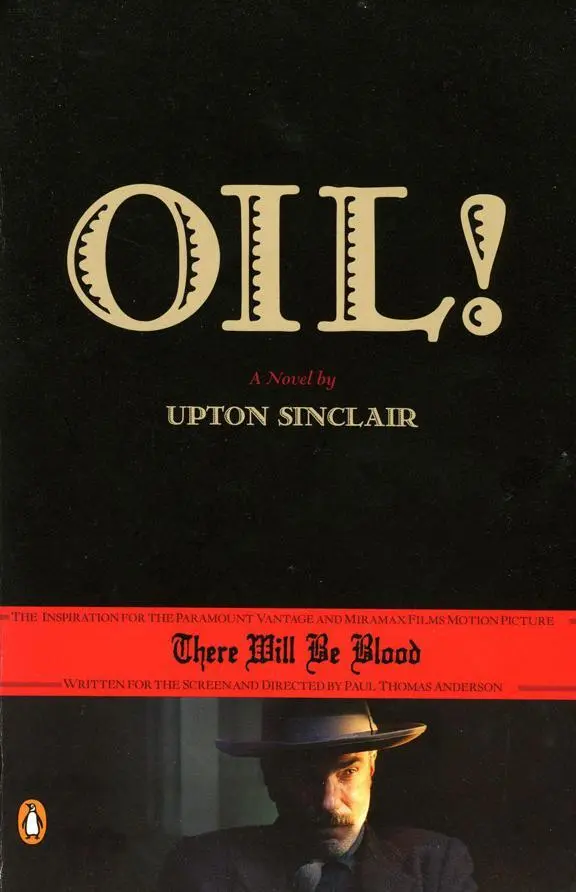
- Название:Oil!
- Автор:
- Издательство:Amereon Ltd
- Жанр:
- Год:1927
- ISBN:9780848823917
- Рейтинг книги:3 / 5. Голосов: 1
-
Избранное:Добавить в избранное
- Отзывы:
-
Ваша оценка:
Oil!: краткое содержание, описание и аннотация
Предлагаем к чтению аннотацию, описание, краткое содержание или предисловие (зависит от того, что написал сам автор книги «Oil!»). Если вы не нашли необходимую информацию о книге — напишите в комментариях, мы постараемся отыскать её.
In Oil! Upton Sinclair fashioned a novel out of the oil scandals of the Harding administration, providing in the process a detailed picture of the development of the oil industry in Southern California. Bribery of public officials, class warfare, and international rivalry over oil production are the context for Sinclair's story of a genial independent oil developer and his son, whose sympathy with the oilfield workers and socialist organizers fuels a running debate with his father. Senators, small investors, oil magnates, a Hollywood film star, and a crusading evangelist people the pages of this lively novel.
Oil! — читать онлайн бесплатно полную книгу (весь текст) целиком
Ниже представлен текст книги, разбитый по страницам. Система сохранения места последней прочитанной страницы, позволяет с удобством читать онлайн бесплатно книгу «Oil!», без необходимости каждый раз заново искать на чём Вы остановились. Поставьте закладку, и сможете в любой момент перейти на страницу, на которой закончили чтение.
Интервал:
Закладка:
Congress had adjourned for the summer, and Verne was going back. But he wanted Dad to stay for a while, because that Canadian corporation was the most vulnerable of all the oil men’s actions; it had never done anything except to distribute that two million dollars of bribes. It was more than ever important to keep the story down, because the government was proceeding to bring suits for the return of all the naval reserves. That would tie up the profits in the courts—all that good money, by Jees, it was terrible!
Dad would stay, of course; and Bunny would have to stay with him. To make matters easier, the great Schmolsky came along, fresh from the job of buying most of the great German moving picture stars—another step in the process of taking over the industry. Annabelle appealed to him, and he was a good sport, he said yes, it was a damn shame the way old Jim had been treated, and it was fine of the kid to stick by him—the Jews are strong for the family; so Schmolsky would arrange several premieres for “The Golden Couch” in Europe, and Vee might spend a long holiday with her Bunny-rabbit. Lest Schmolsky should forget about the matter, Annabelle made him dictate a cablegram right then; so Bunny saw a demonstration of what it means to have influential friends! It was good business as well as good nature, of course; because, when the world’s darlings have these glory-progresses, a publicity man precedes them from one great capital to the next, and the news of the crowds and the clamor is cabled back to the United States, and takes the front page every time.
Bunny could salve his conscience, because nobody needed him at home. The magazine was getting along all right. Fifty-two issues had been published, more than half of them of Rachel’s own editing; it was something to count upon, the same as the sunrise—and it was the most interesting paper in the world!
Also Paul was out of immediate trouble. One of the nineteen men arrested at the Communist convention had been convicted and had appealed; the cases of the rest were held up until that one was decided, and meantime Paul and the others were out on bail. Ruth wrote Bunny the news; it was a torment to have a twenty year jail sentence hanging over you, but they were getting used to it. Ruth was going on with her nurse’s work, and getting along fine. Paul had gone on a long journey—she was not at liberty to say where.
But the capitalist press was at liberty, and did so. From time to time you would read in the French papers items of news about Russia, made, of course, to sound as hateful as possible. Soon after getting Ruth’s letter, the papers reported that there had been a dispute among the American Communists as to tactics, and the two factions had carried their case to the chiefs of the Third International. There were half a dozen leaders of the American party now in Moscow, and one of those named was Paul Watkins, under indictment at home for participation in an illegal convention.
Several interesting events came along, to keep them busy in their exile. First, Aunt Emma fell in love; yes, by golly, when it comes to such things, you jist never can tell what will happen to either ladies or gentlemen! It was a respectable elderly hardware merchant from Nebraska, who was occupying his leisure collecting cameos. Maybe Aunt Emma reminded him of one; anyhow, after beauing her around for several months, he suddenly popped the question, and they had a quiet family wedding, and went off on a honeymoon—to Nebraska!
It left Dad quite lonesome; but presently he hunted up an adventure for himself, and that was stranger still—you couldn’t have guessed it in a million years. SPOOKS!! It happened that Bunny went off one evening to a meeting at which the Socialists and the Communists engaged in violent warfare, as appeared to be their custom in Paris; and when he got back, he found that Dad was not in his room. Next morning the old man told about it—hesitatingly, with not a little embarrassment. Just what did Bunny think about Spiritualism? Bunny said he didn’t think at all, he didn’t know; and Dad revealed that he had had an amazing experience—a long talk last night with Grandma!
Holy smoke! said Bunny; and Dad said yes, he might well be surprised, but there was jist no getting away from it. She had told him all about his childhood, described the ranch where they had lived, and asked all about her paintings, what had he done with that one of the Germans drinking out of steins, and did he still have the one of the mansion with the fountain in front and the carriage with the two horses and the lady and gentleman sitting in it? She had called him “Little Jim,” and it was all so real, it had made tears come into Dad’s eyes.
Bunny wanted to know, where had this happened, and Dad told him, there was a lady living in this hotel, Mrs. Olivier—she was a lady from Boston who had been married to a Frenchman, and her husband had died a year or two ago. Dad had got to talking with her, and she had told him about being a Spiritualist, and how she had a famous medium who gave seances in her rooms here in the hotel, and she had invited Dad to attend, and that was the way of it. Most amazing things had happened, there had been horns floating in the air, and voices coming out of them, and lights flickering about; then the ghosts had appeared, and finally this old lady ghost, who had asked for “Little Jim,” and started right off to tell these things that had taken Dad’s breath away. How could a medium possibly have known such things?
Well, here was Dad with something to occupy his time! Of course he went to the next seance, and the next; very soon he was learning all the patter of the Spiritualists, taking it as seriously as a religion. You could see how it was—he had got along without any religion, so long as he was well and busy, but now that he was old and tired and sick, he craved something to lean on. He was shame-faced about it, afraid his son would ridicule him. But after all, did Bunny know any reason why the soul might not survive after death? Bunny didn’t, and thereupon Dad invited him to go to a seance. Obviously, this was something more important than Socialism. If it was really true that we lived forever, why then it would be easy to endure any temporary discomfort, it was hardly worth arguing about such things as money. This from J. Arnold Ross!
Bunny, who always tried to oblige, went to a seance, and witnessed the strange phenomena. He knew that such things can be done by sleight of hand, and that he had no way of telling the difference; no chance was given in this company, made up of believers in a state of emotional exaltation. So one session was enough, and he went back to the Socialists. But let Dad be a Spiritualist if it made him happy!
Not so Bertie, who found out about it, and went into a regular tantrum. What did Bunny mean by letting his father fall into such hands? It was the worst kind of swindling in the world! And that woman, Mrs. Olivier, it was perfectly obvious what her scheme was—she wanted to marry Dad! Here Bertie and Bunny had worked all their lives to help him accumulate a fortune and save it—and a designing adventuress would jump in and grab the money, and Bunny hadn’t even sense enough to know what was happening! Never had he seen his sister so mad in her whole life—she called him a fool seven times running—when he said that the Spiritualist widow might have her share, if only she could help the poor old man to find happiness.
Then another strange affair for them to discuss: one you would have found still harder to guess! The American newspapers in Paris published a despatch from Angel City, setting forth that Eli Watkins, self-styled prophet of religion, was believed to be drowned. He had gone swimming at the beach, leaving his clothing in a hotel room, and had never been seen since; a search was being made for the body. That was all the news for a time; and Dad shook his head, and said, golly, what a strange thing—a man whose God had saved so many others, but couldn’t save His own prophet! What would become of that big Tabernacle, that had been Eli’s personal property?
Читать дальшеИнтервал:
Закладка:
Похожие книги на «Oil!»
Представляем Вашему вниманию похожие книги на «Oil!» списком для выбора. Мы отобрали схожую по названию и смыслу литературу в надежде предоставить читателям больше вариантов отыскать новые, интересные, ещё непрочитанные произведения.





Обсуждение, отзывы о книге «Oil!» и просто собственные мнения читателей. Оставьте ваши комментарии, напишите, что Вы думаете о произведении, его смысле или главных героях. Укажите что конкретно понравилось, а что нет, и почему Вы так считаете.