Charlie Brooker - Inside Black Mirror
Здесь есть возможность читать онлайн «Charlie Brooker - Inside Black Mirror» весь текст электронной книги совершенно бесплатно (целиком полную версию без сокращений). В некоторых случаях можно слушать аудио, скачать через торрент в формате fb2 и присутствует краткое содержание. Город: London, Год выпуска: 2018, ISBN: 2018, Издательство: Ebury Publishing, Жанр: cine, на английском языке. Описание произведения, (предисловие) а так же отзывы посетителей доступны на портале библиотеки ЛибКат.
- Название:Inside Black Mirror
- Автор:
- Издательство:Ebury Publishing
- Жанр:
- Год:2018
- Город:London
- ISBN:978-15-2910-258-1
- Рейтинг книги:3 / 5. Голосов: 1
-
Избранное:Добавить в избранное
- Отзывы:
-
Ваша оценка:
Inside Black Mirror: краткое содержание, описание и аннотация
Предлагаем к чтению аннотацию, описание, краткое содержание или предисловие (зависит от того, что написал сам автор книги «Inside Black Mirror»). Если вы не нашли необходимую информацию о книге — напишите в комментариях, мы постараемся отыскать её.
This first official book logs the entire Black Mirror journey, from its origins in creator Charlie Brooker’s mind to its current status as one of the biggest cult TV shows to emerge from the UK. Alongside a collection of astonishing behind-the-scenes imagery and ephemera, Brooker and producer Annabel Jones will detail the creative genesis, inspiration and thought process behind each film for the first time, while key actors, directors and other creative talents relive their own involvement. cite – The Hollywood Reporter cite – Telegraph
Inside Black Mirror — читать онлайн бесплатно полную книгу (весь текст) целиком
Ниже представлен текст книги, разбитый по страницам. Система сохранения места последней прочитанной страницы, позволяет с удобством читать онлайн бесплатно книгу «Inside Black Mirror», без необходимости каждый раз заново искать на чём Вы остановились. Поставьте закладку, и сможете в любой момент перейти на страницу, на которой закончили чтение.
Интервал:
Закладка:
CROCODILE
In Conversation
Charlie Brooker – writer and executive producer
Annabel Jones – executive producer
John Hillcoat – director
Morgan Kennedy – co-production designer
Joel Collins – series production designer
Sanne Wohlenberg – producer
Jodie Foster – director, Arkangel
After a heavy night of clubbing, Mia and her boyfriend Rob run down and kill a cyclist in the middle of nowhere. Rob persuades Mia to help him dispose of the body, but 15 years later he becomes consumed with guilt. Having started a family and a successful career, Mia argues against making amends for the past. When she accidentally kills Rob, she sinks into an increasingly extreme and violent downward spiral.
Charlie Brooker:Somewhere around 2005, I was on a bike in Clapham Junction in London, waiting for the lights to change, when a man ran across the road and got hit by a car. I rang for an ambulance straight away and then had to stand over him whilst the operator talked to me on the phone, asking questions about whether he was breathing and so on. It was nasty. His head was open…
Some time later, the police came to take a statement about what I’d seen, because there was going to be a case about whether this motorist was speeding. And I realised how difficult it is. They asked how fast the car was going, and I thought it was a bit fast… but was it speeding? What colour was it? God, I couldn’t even remember.
Wouldn’t it be useful if there was a gadget that let you corroborate what all the witnesses actually saw? You might actually get an accurate picture in that crowdsourced Wikipedia way. And this seemed very Black Mirror .
The original story for Crocodile had somebody witness an accident. A magic memory machine was used to build up their picture of what happened. But when this person was two years old, they had witnessed their mother’s murder, and so they became obsessed with remembering the face of the killer. That storyline felt too predictable, even though we did have a fun twist.
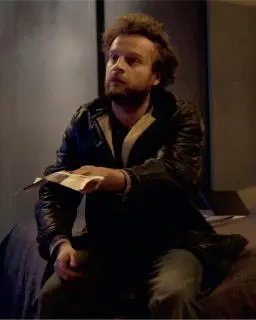
Annabel Jones:It also didn’t feel like a Black Mirror set up: the mother butchered to death in front of her child. We don’t tend to be that melodramatic.
Charlie Brooker:I became fixated on doing this story in a different way, because I knew there was a good idea here. Then a writers’ room session produced the notion of someone having dark memories hidden away, of something bad that they had done. Suddenly the key went click in the door. Within about 30 minutes, all the basic ideas had been sketched out, right down to the twist. I went off and pretty much broke my record for writing a script. The first draft was more blackly comic, with a similar tone to [the Coen Brothers’ 1996 film] Fargo .
Annabel Jones:It was more deliciously horrible. It played more on the humorous inevitability of the story.
Charlie Brooker:The first draft was set in Scotland. A guy called Merv and a friend accidentally knocked someone over while pissed up and drugged up, but it was much more comic.
The darker tonal shift began with the arrival of director John Hillcoat, whose work included the 2009 film adaptation of Cormac McCarthy’s novel The Road . John had been feeling disillusioned with Hollywood.
John Hillcoat (director):The golden age of cinema was when the industry was not afraid of the dark, or of mature themes for mature audiences, or character-driven films. The Crocodile script dealt with a deeply human story that so much of cinema shies away from, so when Black Mirror came to my door, I was ready to jump in. I knew that I would not be under the lash for being ‘too dark’, or pursuing a core journey coming from the central characters’ choices, their actions and reactions.
Charlie Brooker:John’s got a weird habit of attaching an image to every email he sends. He had an almost inexhaustible supply of disturbing photographs or paintings of crocodiles. One was of a crocodile with a severed hand in its mouth. Quite upsetting.
Annabel Jones:John’s such an actor’s director, so if anyone was going to lead our protagonist through and hold onto the tone, it was him. He also does such wonderful landscapes, as seen in The Road : the sense of isolation and the way the environment creeps into the character.
John Hillcoat: Crocodile is a pitch-black comedy of errors. Yet crucially it’s really about how human beings actually work and how we would respond to something the tech revolution may well bring into our lives, sooner than we would ever expect.
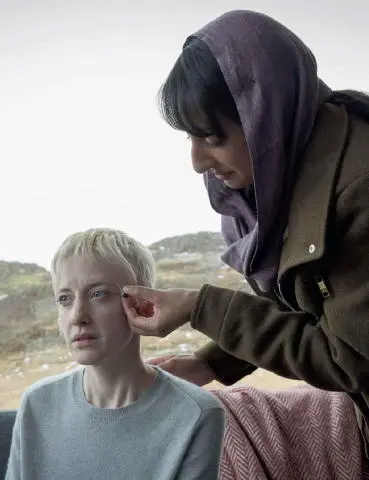
Charlie and Annabel seemed open to exploring the pros and cons of turning our male lead into a strong professional woman. Andrea Riseborough helped convince Charlie and Annabel, as she independently came to the same conclusion. She put forward the most compelling arguments for why she had to play the role of Mia. We felt a male would be more expected.
Annabel Jones:We’d sent the script to Andrea for the insurance investigator’s role. She said, “I enjoyed the script, but actually I think the protagonist should be a woman.” We wondered if we could believe that a woman would have the physicality to move a dead body, and Andrea’s quite slim as well, but her point back was, “If you’re desperate enough, you will find that inner power.” She felt there was something very interesting in that, so we went with it. And you can see it in her performance, in Mia’s determination. Her whole life rests on having to dispose of a body, and to carry on.
Charlie Brooker:This change made it more refreshing, because the panicking male murderer is practically a trope. And then, when we made Mia’s ex-boyfriend Rob lost and broken all these years after the accident, that shifted it slightly out of the more comically heightened Fargo -esque world.
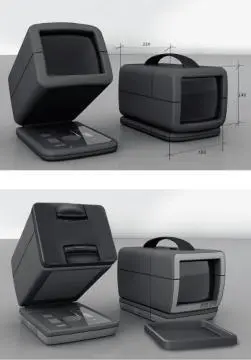
Morgan Kennedy (co-production designer):For the memory reader device, we offered quite a few initial designs, but Charlie had something in his mind that he wanted to emulate – an old-school 80s Space Invaders game, which is square and boxy and pretty basic-looking.
Joel Collins (series production designer):The memory reader could have been more sci-fi and over-designed, but we simplified it down to something like a slide viewer. Laptop screens are very flat these days, with everything on the surface, but with that one we wanted a lens on the front, and deep within it are your memories.
Morgan Kennedy:What we ended up with reminded me a bit of the portable TVs I remember seeing as a kid in the 80s. I then went back and redesigned some of the other bits of tech – particularly the driverless pizza truck – so that it had that same boxy square design.
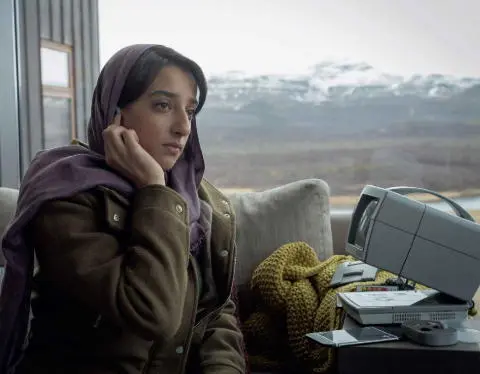
Sanne Wohlenberg (producer):We came to feel that Iceland was a striking and isolated backdrop that would really suit Crocodile . The country’s rugged and extreme nature, together with its beauty, would be the perfect world for Mia to find herself in.
Читать дальшеИнтервал:
Закладка:
Похожие книги на «Inside Black Mirror»
Представляем Вашему вниманию похожие книги на «Inside Black Mirror» списком для выбора. Мы отобрали схожую по названию и смыслу литературу в надежде предоставить читателям больше вариантов отыскать новые, интересные, ещё непрочитанные произведения.


Обсуждение, отзывы о книге «Inside Black Mirror» и просто собственные мнения читателей. Оставьте ваши комментарии, напишите, что Вы думаете о произведении, его смысле или главных героях. Укажите что конкретно понравилось, а что нет, и почему Вы так считаете.