Charlie Brooker - Inside Black Mirror
Здесь есть возможность читать онлайн «Charlie Brooker - Inside Black Mirror» весь текст электронной книги совершенно бесплатно (целиком полную версию без сокращений). В некоторых случаях можно слушать аудио, скачать через торрент в формате fb2 и присутствует краткое содержание. Город: London, Год выпуска: 2018, ISBN: 2018, Издательство: Ebury Publishing, Жанр: cine, на английском языке. Описание произведения, (предисловие) а так же отзывы посетителей доступны на портале библиотеки ЛибКат.
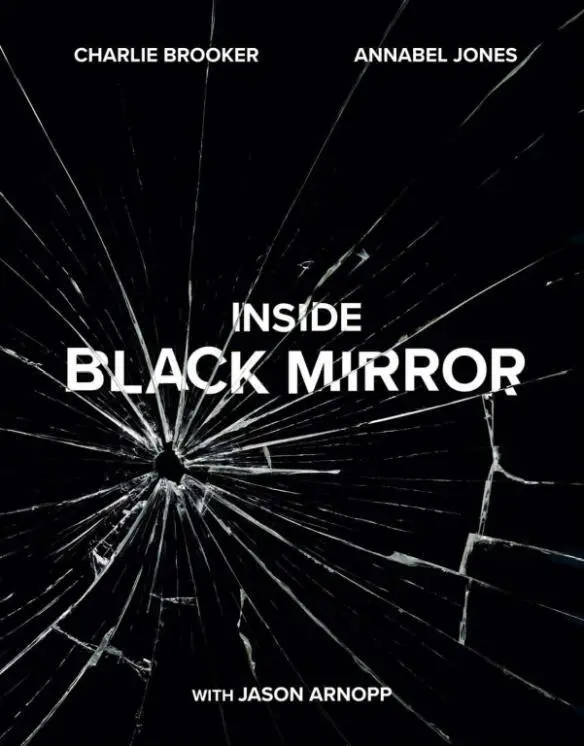
- Название:Inside Black Mirror
- Автор:
- Издательство:Ebury Publishing
- Жанр:
- Год:2018
- Город:London
- ISBN:978-15-2910-258-1
- Рейтинг книги:3 / 5. Голосов: 1
-
Избранное:Добавить в избранное
- Отзывы:
-
Ваша оценка:
Inside Black Mirror: краткое содержание, описание и аннотация
Предлагаем к чтению аннотацию, описание, краткое содержание или предисловие (зависит от того, что написал сам автор книги «Inside Black Mirror»). Если вы не нашли необходимую информацию о книге — напишите в комментариях, мы постараемся отыскать её.
This first official book logs the entire Black Mirror journey, from its origins in creator Charlie Brooker’s mind to its current status as one of the biggest cult TV shows to emerge from the UK. Alongside a collection of astonishing behind-the-scenes imagery and ephemera, Brooker and producer Annabel Jones will detail the creative genesis, inspiration and thought process behind each film for the first time, while key actors, directors and other creative talents relive their own involvement. cite – The Hollywood Reporter cite – Telegraph
Inside Black Mirror — читать онлайн бесплатно полную книгу (весь текст) целиком
Ниже представлен текст книги, разбитый по страницам. Система сохранения места последней прочитанной страницы, позволяет с удобством читать онлайн бесплатно книгу «Inside Black Mirror», без необходимости каждый раз заново искать на чём Вы остановились. Поставьте закладку, и сможете в любой момент перейти на страницу, на которой закончили чтение.
Интервал:
Закладка:
Obviously Arkangel isn’t autobiographical, but I really wanted this to be as real as possible. There’s a trajectory, where we start off with a family we recognise, and then little by little, see the mother cross the line. I totally understand both Sara and Marie, because I was a daughter and I’m a mother! You can get away with a double perspective: it is at once the mother’s story and told through the daughter’s eyes. Their relationship is so messed up, they don’t know where one starts and the other ends. Marie is watching this weird, vicarious movie at all times, walking the world in her daughter’s shoes.
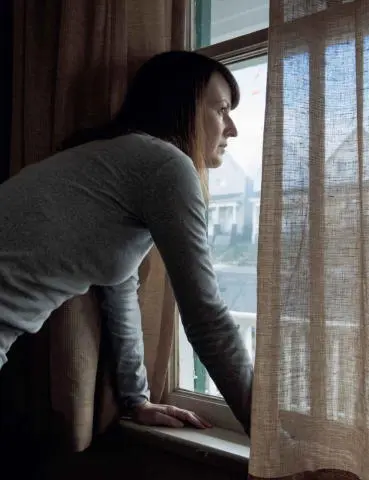
Charlie Brooker:Before I became a parent, my response to anyone wanting to restrict content for the sake of children would’ve been, “Oh boohoo, fuck off. Just be a better parent, then, and don’t let your kid watch The Terminator .” And then, of course, cut to a couple of years later. I’d put YouTube on for one of my kids who was three or something, to fucking shut them up for five minutes while I do something. Being a nostalgic old prick, I’d looked up old Mr Man cartoons. I walked out of the room and it started playing the next video and the next and the next. And then, algorithmically, it somehow ended up showing him the trailer for John Carpenter’s The Thing . So I walked back in and he didn’t look happy. I thought, “Oh no! What have I done?” And then you think, “Oh right, I should restrict that, then. I need to start imposing controls on what he can see.”
And then you think, “What if he’s walking down the street and someone says ‘fuck’? Or somebody gets hit by a car in front of him? Or we walk past an alleyway where a mad person’s having sex with a dog? I don’t want him seeing all of that stuff. I’m just describing an everyday walk in the neighbourhood here, obviously.
‘Whatever she sees, I see, and I am watching you . So you stay away’
– MarieAnnabel Jones:When we first heard that Jodie was interested in directing the episode, we were suspicious, like, “Really? Yeah but really ?” And then we were quite intimidated. The first time we Skyped with her, Charlie and I were freaked out. Since we’d obviously only ever seen her on a screen, it was like one of her film characters had been programmed to talk to us. Like when she plays the ruthless defence secretary in [the 2013 sci-fi thriller] Elysium and she’s sitting in the chair talking into the screen, but more terrifying.
Because Jodie had a better understanding of blue-collar America than we did, she had strong thoughts on where she wanted it to be set. She also wanted to get into Marie’s character: that sense of the economic struggle that a single mum might be having. The loneliness of that world and the pressures, which all fed her reliance on the Arkangel system.
Jodie Foster:It’s always difficult for directors to work with producers, and especially on something where it’s so quick like this, because you don’t get to know somebody. But Annabel and Charlie really want a directorial vision for the film, and that’s very rare on television. So this was one of the nicest collaborations I’ve ever had with producers. Sometimes I think it’s because they’re English: they have such a nice way of disagreeing with you. They’re so diplomatic, it makes me smile!
Annabel Jones:To try and give us an authentic blue-collar America, we were filming in a small industrial area outside of Toronto. We can’t actually afford to shoot in America. I felt quite sorry for Jodie, because Trump was elected during our first week of filming and she desperately wanted to be with her family and friends. Instead, she was having to work with children and animals in Canada.
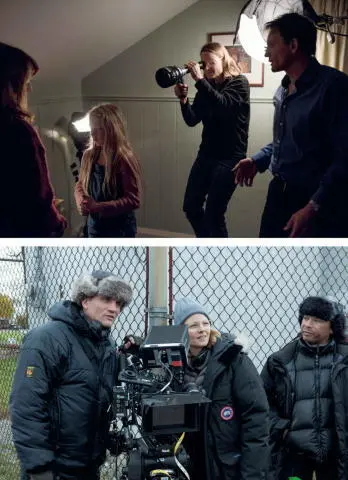
Jodie Foster:We were going to talk about America five years in the future. The question was, where is our country headed? So there was something wonderful about this idea of a rundown town, almost like the way Pittsburgh was after all the steel mills left. A place that used to have a foundation and a glory, but didn’t turn out to be much. And that’s really how Marie feels about herself. Her father looks at his daughter’s life and thinks, “Wow, what a failure.”
La La Land and Mad Men ’s Rosemarie DeWitt was cast as mother Marie, while up-and-coming Australian actress Brenna Harding auditioned for the role of Sara.
Brenna Harding (actor):I did a two-scene ‘self tape’ for the UK casting agent. Jodie asked us to also do a little speaking to camera, but I stuffed up by misinterpreting the instructions. I thought she wanted us to talk to camera in character, rather than as ourselves. So I constructed this whole two-minute monologue as Sara, speaking to camera about her mum and all this stuff. It really helped me get into the character’s mind, but I was so annoyed at Jodie! It seemed like a big ask, but y’know, it was Jodie Foster, so it didn’t seem that surprising that she would ask for something a bit out of the box…
Jodie Foster:Haha, oh God! Yes, I just wanted Brenna to say anything to camera as herself, off the top of her head. The poor thing, she feels like she totally made a fool of herself, but when I saw her tape I was like, “That is so brave! She’s my girl.”
Brenna Harding:That was probably the best example of a happy accident I’ve ever had in my life. Jodie is fiercely intelligent and approaches scripts, scenes and directing with enormous intelligence and insight. She’s very measured and aware and focused and calm and confident, after all these years of experience. She’s the only director who’s ever had higher expectations for me than I’ve had for myself.
Jodie Foster:Brenna is an extraordinary actress, such a hard worker, a great collaborator and a lovely person. But of course, Arkangel is about the combination of Brenna and the three little girls. The one thing no-one can ever forget about the movie Boyhood is how the children all looked so much alike, because they were the same child! So it was very important that our four Saras looked alike and had this similar quality, so that the audience had that relationship with them.
Obviously, working with a four-year-old is difficult! Aniya [Hodge, who plays the three-year-old Sara] is wonderful, but you definitely get some grey hairs working with toddlers.
Brenna Harding:Jodie, Rosemary and I talked a lot about the comparisons between Marie and our own mothers, and we agreed that Marie is on the more intense end of the spectrum when it comes to being a concerned parent. That’s just inherent in her personality.
Annabel Jones:The intention was never that Marie was overly neurotic or controlling – it was more about the slippery slope. Marie censors unpleasant things from Sara’s life, which ultimately leads to the girl feeling emotionally detached and having problems engaging with people. And then Marie realises this has to end. But then, cut to years later where suddenly she’s terrified and doesn’t know where her daughter is, so what are you going to do? Marie desperately wants to confirm that Sara’s not dead or kidnapped or whatever, and maybe help her. When she turns that device back on, that’s the turning point of the film.
Читать дальшеИнтервал:
Закладка:
Похожие книги на «Inside Black Mirror»
Представляем Вашему вниманию похожие книги на «Inside Black Mirror» списком для выбора. Мы отобрали схожую по названию и смыслу литературу в надежде предоставить читателям больше вариантов отыскать новые, интересные, ещё непрочитанные произведения.


Обсуждение, отзывы о книге «Inside Black Mirror» и просто собственные мнения читателей. Оставьте ваши комментарии, напишите, что Вы думаете о произведении, его смысле или главных героях. Укажите что конкретно понравилось, а что нет, и почему Вы так считаете.