Charlie Brooker - Inside Black Mirror
Здесь есть возможность читать онлайн «Charlie Brooker - Inside Black Mirror» весь текст электронной книги совершенно бесплатно (целиком полную версию без сокращений). В некоторых случаях можно слушать аудио, скачать через торрент в формате fb2 и присутствует краткое содержание. Город: London, Год выпуска: 2018, ISBN: 2018, Издательство: Ebury Publishing, Жанр: cine, на английском языке. Описание произведения, (предисловие) а так же отзывы посетителей доступны на портале библиотеки ЛибКат.
- Название:Inside Black Mirror
- Автор:
- Издательство:Ebury Publishing
- Жанр:
- Год:2018
- Город:London
- ISBN:978-15-2910-258-1
- Рейтинг книги:3 / 5. Голосов: 1
-
Избранное:Добавить в избранное
- Отзывы:
-
Ваша оценка:
Inside Black Mirror: краткое содержание, описание и аннотация
Предлагаем к чтению аннотацию, описание, краткое содержание или предисловие (зависит от того, что написал сам автор книги «Inside Black Mirror»). Если вы не нашли необходимую информацию о книге — напишите в комментариях, мы постараемся отыскать её.
This first official book logs the entire Black Mirror journey, from its origins in creator Charlie Brooker’s mind to its current status as one of the biggest cult TV shows to emerge from the UK. Alongside a collection of astonishing behind-the-scenes imagery and ephemera, Brooker and producer Annabel Jones will detail the creative genesis, inspiration and thought process behind each film for the first time, while key actors, directors and other creative talents relive their own involvement. cite – The Hollywood Reporter cite – Telegraph
Inside Black Mirror — читать онлайн бесплатно полную книгу (весь текст) целиком
Ниже представлен текст книги, разбитый по страницам. Система сохранения места последней прочитанной страницы, позволяет с удобством читать онлайн бесплатно книгу «Inside Black Mirror», без необходимости каждый раз заново искать на чём Вы остановились. Поставьте закладку, и сможете в любой момент перейти на страницу, на которой закончили чтение.
Интервал:
Закладка:
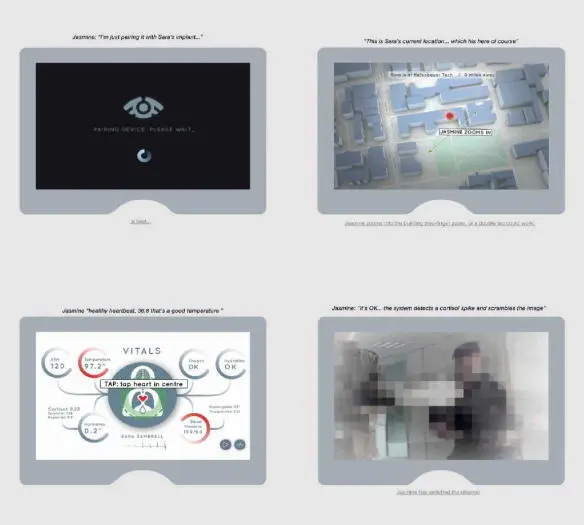
Charlie Brooker:I’m not at the point yet where I have to worry about what my kids might independently go out and do in the world, because I pretty much still have to wipe their bums. So with Arkangel , I was just projecting ahead. I could understand the scenario where you’re terrified that your daughter has gone missing. So you’d switch the thing back on again, because of course you would.
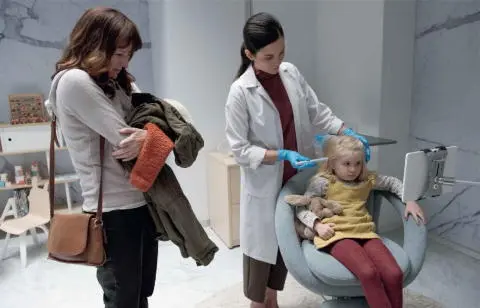
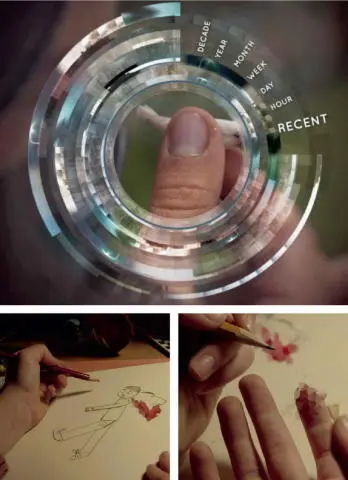
Jodie Foster:I think Marie is an unusually concerned mother. Every hint is there from the very beginning. There she is, about to give birth, and the first thing she says is how she’s sorry she couldn’t have a vaginal birth and is about to have a C-section. She feels such a disappointment, so we already see that she is somebody who has a terrible opinion of herself. And when they take the child away, to clean the baby, her first reaction is panic.
Brenna Harding:Once your child starts to become independent and live their own life, that’s when you need to turn off the unit. The Arkangel system could be okay with toddlers, but once children get to an age when they’re going to school on their own, that’s when they need to be experiencing independence purely, because that’s really important for development. It’s hard to draw a line in the sand and specify an age, but the line is absolutely drawn at drugging your child!
Marie isn’t watching for fun: she’s genuinely concerned for her daughter’s well-being, but she continues to watch and that’s ethically ambiguous. The teenage years are so crucial to becoming a fully formed adult and the Arkangel system hinders that so much.
Jodie Foster:Marie crosses the line, the minute her daughter starts to individuate by lying to her. We all know our children lie to us, and individuation is a good moment: it shows that they see themselves as different from you. They’re assuming their own lives.
Charlie Brooker:Marie probably crosses the line when she marches into the furniture store and confronts Trick, because she’s now acting on the information she has. She’d known Sara’s seeing this boy and she wasn’t happy about it, but now she’s seen her daughter doing coke, so that’s the point at which she’s like, “I’ve got to do something about this.”
Annabel Jones:Marie sees Trick giving the coke to Sara, but of course she doesn’t see the intro of Sara almost forcing him to give it to her. So Marie feels that her daughter would never do something like this, and is being led astray by this guy.
Jodie Foster:The relationship between Sara and Trick always needed to feel like that messy, first-love indie movie experience.
Brenna Harding:Owen Teague’s casting influenced Trick a lot as a character. Trick was not how I’d imagined him at all. There was just this beautiful connection between him and Sara. That’s part of the reason it’s so heartbreaking when Marie sabotages that situation, because they’ve found something special. They’re like two old souls who connected, but it got ruined. Owen’s soft, measured and polite: a genuinely lovely human.
Jodie Foster:Trick was written in a way that made you distrust him. He was a kid from the bad side of the tracks and so you were genuinely worried for Sara. But we really got the right guy with Owen: someone who looks tougher than he is, but also has that sweetness. If there were changes to the script during the process, it was because I wanted to make sure I was on Sara’s side, and that she had the right to choose the boy she fell in love with. It was an imperfect, but true, first love.
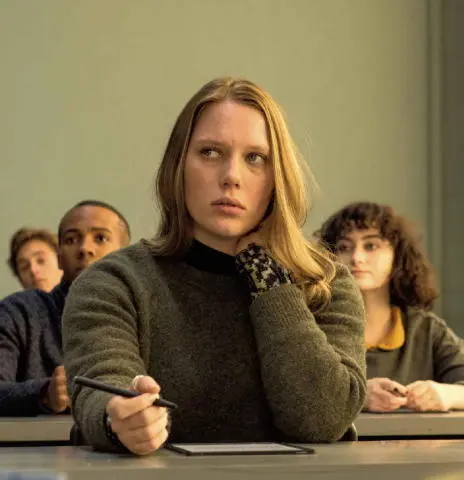
Brenna Harding:Sara’s final violent reaction can be read in many different ways. For me, it comes from a personal place, from the violation of her privacy and her body. The way I justified it as a performer was that betrayal by the person closest to her.
Jodie Foster:If you create a false reality for your child, under the guise of protecting them, you’re altering the natural course of how a person discovers their own life. You’re breaking their independence and controlling them. You’re actually enabling the thing you hoped wouldn’t happen, which is that they have to abandon you and leave you. And there’s a necessity for the violence of that rupture, because of the control that’s been exacted. So I would say that ending is more of a parable.
It was important that the violence should burst out and be as enormous as it was. We grappled with this in the editing room, in terms of how far we should go. Sara has the scrambler on, so she’s not experiencing the same level of violence that we see objectively. What she’s feeling is the exterior manifestation of her emotional interior.
Rosemarie DeWitt is a friend of mine, but on her first day on set as Marie I did something you’re never supposed to do, throwing an actor straight into the most dramatic scene that happens at the end. We put blood all over her, then had her running out of the house screaming for Sara. We were losing the light, we only had a few minutes to get it and we were on hand-held camera. So I got a lot of grief from Ro for that!
Jodie Foster:There is an ambiguity to our final shot, with not being able to see who’s in the truck. And then, when she closes the door, we cut to this Pretenders song. If there was one thing we all had a lot of conversations about, it was that song, because it changes the tone. It’s a plaintive song and it’s tough, but it takes us back to the mother’s perspective, so there’s almost this Black Mirror -esque wink.
Charlie Brooker:Originally in the script it was just a small car. Not that I’m implying anything about truck drivers, but getting into one doesn’t seem like a good thing for Sara to do. Also, what it does imply immediately is that she’s going a long way.
Annabel Jones:She’s not coming back. What you want from the ending is the sense that Marie now has no control. The focus is slightly more on her, abandoned, left behind.
Brenna Harding:I feel a mixture of nervous trepidation and excitement for Sara, because there’s a lot of amazing things to learn about yourself when you become independent and self-sufficient. She’s an incredibly creative mind, she’s wise, she’s got social skills. I think she’ll connect with people and find herself where she needs to be. That’s a very optimistic interpretation, and I don’t necessarily think it’s the one that’s being communicated in that final shot! Maybe one day she’ll reconnect with Marie, but it’s a pretty huge betrayal. She’ll be just fine on her own, but I don’t think Marie will. One of the hardest things about the episode is that Marie dug her own grave.
Интервал:
Закладка:
Похожие книги на «Inside Black Mirror»
Представляем Вашему вниманию похожие книги на «Inside Black Mirror» списком для выбора. Мы отобрали схожую по названию и смыслу литературу в надежде предоставить читателям больше вариантов отыскать новые, интересные, ещё непрочитанные произведения.





Обсуждение, отзывы о книге «Inside Black Mirror» и просто собственные мнения читателей. Оставьте ваши комментарии, напишите, что Вы думаете о произведении, его смысле или главных героях. Укажите что конкретно понравилось, а что нет, и почему Вы так считаете.