T. Binyon - Pushkin
Здесь есть возможность читать онлайн «T. Binyon - Pushkin» — ознакомительный отрывок электронной книги совершенно бесплатно, а после прочтения отрывка купить полную версию. В некоторых случаях можно слушать аудио, скачать через торрент в формате fb2 и присутствует краткое содержание. Жанр: unrecognised, на английском языке. Описание произведения, (предисловие) а так же отзывы посетителей доступны на портале библиотеки ЛибКат.
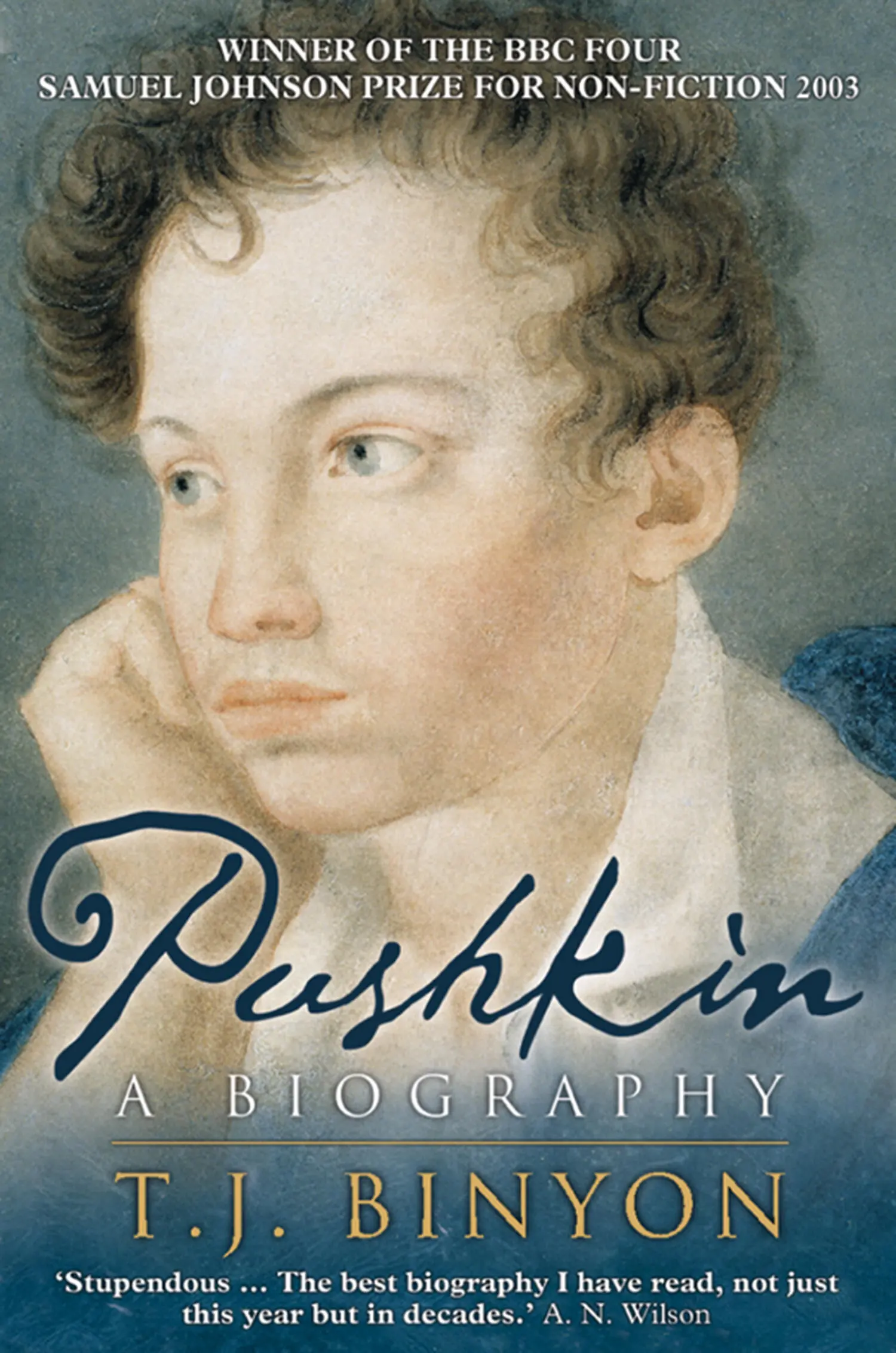
- Название:Pushkin
- Автор:
- Жанр:
- Год:неизвестен
- ISBN:нет данных
- Рейтинг книги:4 / 5. Голосов: 1
-
Избранное:Добавить в избранное
- Отзывы:
-
Ваша оценка:
Pushkin: краткое содержание, описание и аннотация
Предлагаем к чтению аннотацию, описание, краткое содержание или предисловие (зависит от того, что написал сам автор книги «Pushkin»). Если вы не нашли необходимую информацию о книге — напишите в комментариях, мы постараемся отыскать её.
Pushkin — читать онлайн ознакомительный отрывок
Ниже представлен текст книги, разбитый по страницам. Система сохранения места последней прочитанной страницы, позволяет с удобством читать онлайн бесплатно книгу «Pushkin», без необходимости каждый раз заново искать на чём Вы остановились. Поставьте закладку, и сможете в любой момент перейти на страницу, на которой закончили чтение.
Интервал:
Закладка:
âTell me, my dear, is my Prisoner making a sensation?â he asked his brother in October 1822. âHas it produced a scandal , Orlov writes, that is the essential. I hope the critics will not leave the Prisonerâs character in peace, he was created for them, my dear fellow.â 96 He was to be disappointed: there was no critical polemic over the poem, as there had been over Ruslan and Lyudmila. The Byronic poem had ceased to be a novelty; Pushkinâs reputation was now more firmly established, and, above all, The Prisoner did not have that awkward contrast between present-day narrator and past narrative which had worried some critics, nor that equally awkward comic intent, which had worried others. Praise was almost unanimous. In September Pushkinâs uncle wrote to Vyazemsky: âHere is what our La Fontaine [Dmitriev] writes to our Livy [Karamzin]: âYesterday I read in one breath The Prisoner of the Caucasus and from the bottom of my heart wished the young poet a long life! What a prospect! Right at the beginning two proper narrative poems, and what sweetness in the verse! Everything is picturesque, full of feeling and wit!â I confess, that reading this letter, I shed a tear of joy.â 97 Karamzin was slightly less enthusiastic. âIn the poem of that liberal Pushkin The Prisoner of the Caucasus the style is picturesque: I am dissatisfied only with the love intrigue. He really has a splendid talent: what a pity that there is no order and peace in his soul and not the slightest sense in his head.â 98 Of the critics only Mikhail Pogodin, in the Herald of Europe , descended to the kind of pedantic quibbling that had characterized reviews of Ruslan. Of the lines âNeath his wet burka , in the smoky hut/The traveller enjoys peaceful sleepâ (I, 321â2), he remarks: âHe would be better advised to throw off his wet burka [a felt cloak, worn in the Caucasus], and dry himself.â 99 Pushkinâs comment, when meditating corrections for a second edition, was: âA burka is waterproof and gets wet only on the surface, therefore one can sleep under it when one has nothing better to cover oneself with.â 100
Where dissatisfaction was felt, it was, as in Karamzinâs case, with the love intrigue: the character of the hero, and the fate of the heroine. In the second edition of 1828 Pushkin inserted a note: âThe author also agrees with the general opinion of the critics, who justifiably condemned the character of the prisonerâ; 101 and in 1830 wrote: âThe Prisoner of the Caucasus is the first, unsuccessful attempt at character, which I had difficulty in managing; it was received better than anything I had written, thanks to some elegiac and descriptive verses. But on the other hand Nikolay and Aleksandr Raevsky and I had a good laugh over it.â 102 âThe character of the Prisoner is not a success; this proves that I am not cut out to be the hero of a Romantic poem. In him I wanted to portray that indifference to life and its pleasures, that premature senility of soul, which have become characteristic traits of nineteenth-century youth,â he wrote to Gorchakov. 103 Criticism of the fate of the Circassian maiden, however, he met with some irony: to Vyazemsky, after thanking him for his review * â âYou cannot imagine how pleasant it is to read the opinion of an intelligent person about oneselfâ â he wrote: â[Chaadaev] gave me a dressing-down for the prisoner, he finds him insufficiently blasé; unfortunately Chaadaev is a connoisseur in that respect [â¦] Others are annoyed that the Prisoner did not throw himself into the water to pull out my Circassian girl â yes, you try; I have swum in Caucasian rivers, â youâll drown yourself before you find anything; my prisoner is an intelligent man, sensible, not in love with the Circassian girl â he is right not to drown himself.â 104
âIn general I am very dissatisfied with my poem and consider it far inferior to Ruslan,â he told Gorchakov. 105 He was right: The Prisoner has none of the wit, the gaiety and the grace of the earlier poem; he was not âcut out to be the hero of a Romantic poemâ. But a combination of circumstances â his reading of Byron, his acquaintance with Aleksandr Raevsky, his exile â had led him down a blind alley: it was still to take him some time to retrace his steps fully. A significant move in this direction took place when, on 9 May 1823, he began Eugene Onegin. At the head of the first stanza in the manuscript this date is noted with a large, portentously shaped and heavily inked numeral. It was a significant, indeed fatidic date in Pushkinâs life: on 9 May 1820, according to his calendar, his exile from St Petersburg had begun. He usually worked on the poem in the early morning, before getting up. Visitors found him, as Liprandi had glimpsed him in Izmail, sitting cross-legged on his bed, surrounded by scraps of papers, ânow meditative, now bursting with laughter over a stanzaâ. 106 âAt my leisure I am writing a new poem, Eugene Onegin , in which I am transported by bile,â he told Turgenev some months later. 107
Meanwhile changes in the regionâs administration were taking place. On 7 May 1823 Alexander signed an order freeing Inzov from his duties and appointing Count Mikhail Vorontsov governor-general of New Russia and of Bessarabia. Informing Vyazemsky of this, Turgenev wrote: âI do not yet know whether the Arabian devil* will be transferred to him. He was, it seems, appointed to Inzov personally.â âHave you spoken to Vorontsov about Pushkin?â Vyazemsky asked. âIt is absolutely necessary that he should take him on. Petition him, good people! All the more as Pushkin really does want to settle down, and boredom and vexation are bad counsellors.â Turgenevâs agitation was successful. âThis is what happened about Pushkin. Knowing politics and fearing the powerful of this world, consequently Vorontsov as well, I did not want to speak to him, but said to Nesselrode under the guise of doubt, whom should he be with: Vorontsov or Inzov. Count Nesselrode affirmed the former, and I advised him to tell Vorontsov of this. No sooner said than done. Afterwards I myself spoke twice with Vorontsov, explained Pushkin to him and what was necessary for his salvation. All, it seems, should go well. A Maecenas, the climate, the sea, historical reminiscences â there is everything; there is no lack of talent, as long as he does not choke to death.â 108
Unaware of these machinations, Pushkin had successfully requested permission to spend some time in Odessa: the excuse being that he needed to take sea baths for his health. He arrived at the beginning of July and put up at the Hotel du Nord on Italyanskaya Street. âI left my Moldavia and appeared in Europe â the restaurants and Italian opera reminded me of old times and by God refreshed my soulâ. Vorontsov and his suite arrived on the evening of 21 July. The following day Vorontsov summoned him to his presence. âHe receives me very affably, declares to me that I am being transferred to his command, that I will remain in Odessa â this seems fine to me â but a new sadness wrung my bosom â I began to regret my abandoned chains.â * On the twenty-fourth a large ball was given in honour of Vorontsov by the Odessa Chamber of Commerce; on the twenty-sixth Vorontsov and his suite, now including Pushkin, left for Kishinev, where, two days later, Inzov handed over his post to his successor. Pushkin had time to collect his salary before accompanying the new governor-general back to Odessa at the beginning of August. âI travelled to Kishinev for a few days, spent them in indescribably elegiac fashion â and, having left there for good, sighed after Kishinev.â 109
Читать дальшеИнтервал:
Закладка:
Похожие книги на «Pushkin»
Представляем Вашему вниманию похожие книги на «Pushkin» списком для выбора. Мы отобрали схожую по названию и смыслу литературу в надежде предоставить читателям больше вариантов отыскать новые, интересные, ещё непрочитанные произведения.











Обсуждение, отзывы о книге «Pushkin» и просто собственные мнения читателей. Оставьте ваши комментарии, напишите, что Вы думаете о произведении, его смысле или главных героях. Укажите что конкретно понравилось, а что нет, и почему Вы так считаете.