T. Binyon - Pushkin
Здесь есть возможность читать онлайн «T. Binyon - Pushkin» — ознакомительный отрывок электронной книги совершенно бесплатно, а после прочтения отрывка купить полную версию. В некоторых случаях можно слушать аудио, скачать через торрент в формате fb2 и присутствует краткое содержание. Жанр: unrecognised, на английском языке. Описание произведения, (предисловие) а так же отзывы посетителей доступны на портале библиотеки ЛибКат.
- Название:Pushkin
- Автор:
- Жанр:
- Год:неизвестен
- ISBN:нет данных
- Рейтинг книги:4 / 5. Голосов: 1
-
Избранное:Добавить в избранное
- Отзывы:
-
Ваша оценка:
Pushkin: краткое содержание, описание и аннотация
Предлагаем к чтению аннотацию, описание, краткое содержание или предисловие (зависит от того, что написал сам автор книги «Pushkin»). Если вы не нашли необходимую информацию о книге — напишите в комментариях, мы постараемся отыскать её.
Pushkin — читать онлайн ознакомительный отрывок
Ниже представлен текст книги, разбитый по страницам. Система сохранения места последней прочитанной страницы, позволяет с удобством читать онлайн бесплатно книгу «Pushkin», без необходимости каждый раз заново искать на чём Вы остановились. Поставьте закладку, и сможете в любой момент перейти на страницу, на которой закончили чтение.
Интервал:
Закладка:
In December 1820 Pushkin had written from Kamenka to Gnedich, the publisher of Ruslan and Lyudmila , to tell him that his next narrative poem, The Prisoner of the Caucasus , was nearly completed. He was unduly optimistic; it was not until the following March that he wrote again. âThe setting of my poem should have been the banks of the noisy Terek, on the frontier of Georgia, in the remote valleys of the Caucasus â I placed my hero in the monotonous plains where I myself spent two months â where far distant from one another four mountains rise, the last spur of the Caucasus; â there are no more than 700 lines in the whole poem â I will send it you soon â so that you might do with it what you like.â 81 Before long, however, he was having second thoughts; he was in need of money and, compared to Gnedich, had made little out of Ruslan. In September he wrote to Grech, editor of Son of the Fatherland. âI wanted to send you an extract from my Caucasian Prisoner, but am too lazy to copy it out; would you like to buy the poem from me in one piece? It is 800 lines long; each line is four feet wide; it is chopped into two cantos. I am letting it go cheaply, so that the goods do not get stale.â 82 Unfortunately, Gnedich got wind of the offer. âYou tell me that Gnedich is angry with me,â he wrote to his brother in January 1822, âhe is right â I should have gone to him with my new narrative poem â but my head was spinning â I had not heard from him for a long time; I had to write to Grech â and using this dependable occasion * I offered him the Captive ⦠Besides, Gnedich will not haggle with me, nor I with Gnedich, each of us over-concerned with his own advantage, whereas I would have haggled as shamelessly with Grech as with any other bearded connoisseur of the literary imagination.â 83 He also made an attempt to sell the poem directly to book-sellers in St Petersburg, but, offered a derisory sum, had to fall back on Gnedich. On 29 April he sent him the manuscript, accompanying it with a letter which began âParve (nec invideo) sine me, liber, ibis in urbem,/Heu mihi! quo domino non licet ireâ â the opening lines of Ovidâs Tristia , â â and continued: âExalted poet, enlightened connoisseur of poets, I hand over to you my Caucasian prisoner [â¦] Call this work a fable, a story, a poem or call it nothing at all, publish it in two cantos or in only one, with a preface or without; I put it completely at your disposal.â 84
Pushkinâs friends knew that he had been at work on a successor to Ruslan : âPushkin has written another long poem, The Prisoner of the Caucasus,â Turgenev had told Dmitriev the previous May; âbut he has not mended his behaviour: he is determined to resemble Byron not in talent alone.â 85 When the manuscript arrived in St Petersburg, it was bitterly fought over. âI have not set eyes on the Caucasian captive,â Zhukovsky complained to Gnedich at the end of May; âTurgenev, who has no interest in reading himself, but only in taking other peopleâs verse around on visits, has decided not to send me the poem, since he is afraid of letting it out of his claws, lest I (and not he) should show it to someone. I beg you to let me have it as soon as possible; I will not keep it for more than a day and will return it immediately.â 86 Turgenev eventually did take the poem out to Zhukovsky in Pavlovsk, but Vyazemsky, who had been clamouring for it â âThe Captive , for Godâs sake, just for one post,â he implored Turgenev 87 â had to wait until publication.
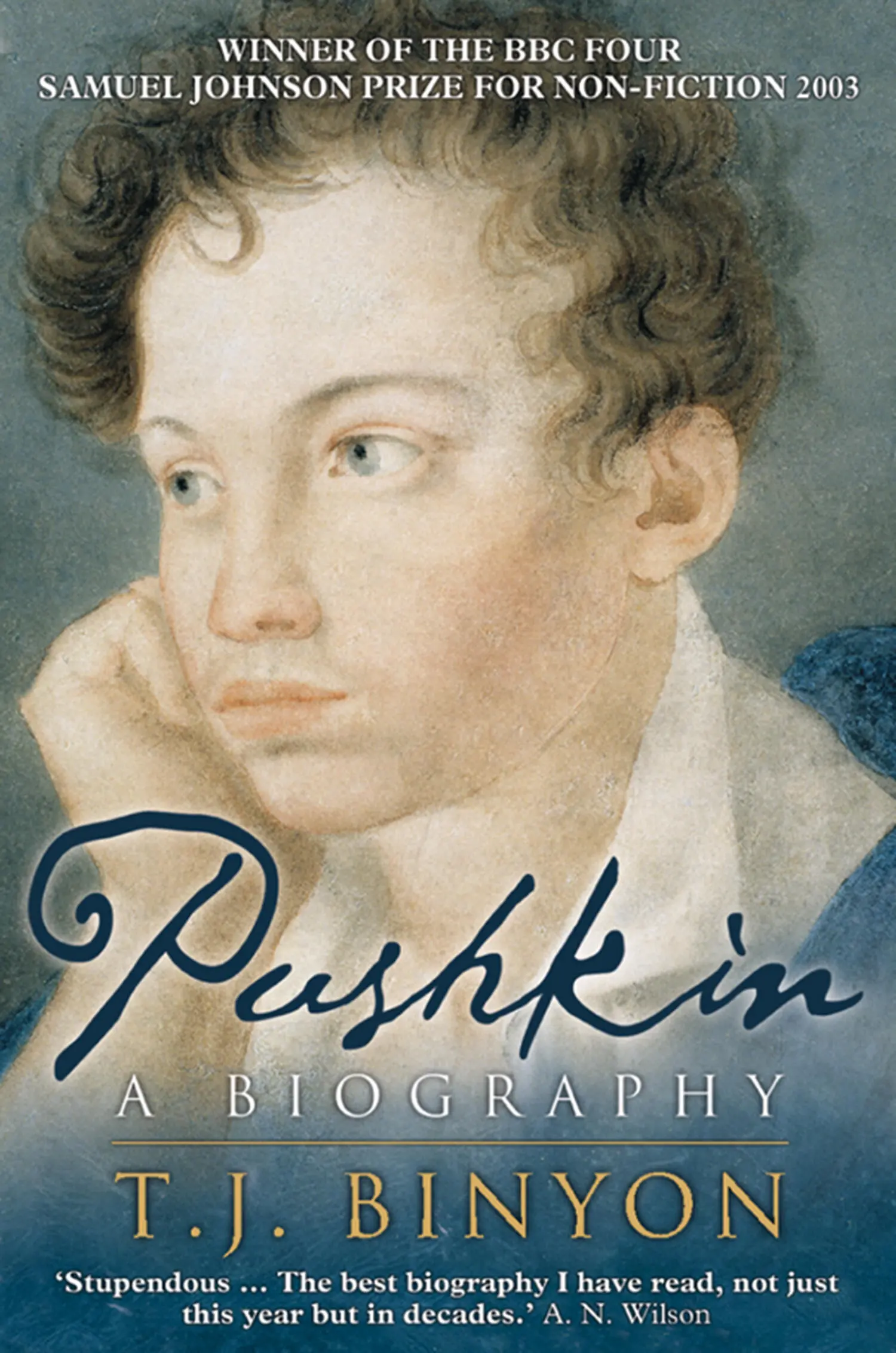
The Prisoner of the Caucasus came out on 14 August â a small book of fifty-three pages, costing five roubles, or seven if on vellum. A note at the end of the poem read: âThe editors have added a portrait of the author, drawn from him in youth. They believe that it is pleasing to preserve the youthful features of a poet whose first works are marked by so unusual a talent.â 88 The portrait, engraved by Geitman, depicts Pushkin âat fifteen, as a Lycéen, in a shirt, as Byron was then drawn, with his chin on his hand, in meditationâ. 89 Gnedich, more expeditious than before, sent him a single copy of the poem in September, together with a copy of Zhukovskyâs translation of Byronâs The Prisoner of Chillon. Pushkin wrote to him on 27 September: âThe Prisoners have arrived â and I thank you cordially, dear Nikolay Ivanovich [â¦] Aleksandr Pushkin is lithographed in masterly fashion, but I do not know whether it is like him, the editorsâ note is very flattering, but I do not know whether it is just.â 90 The edition â probably of 1,200 copies â sold out with remarkable speed: in 1825 Pletnev, searching for a copy to send to Pushkin in Mikhailovskoe, could not find one. Of the profit Gnedich sent Pushkin 500 roubles, keeping, it has been calculated, 5,000 for himself. 91 This time he had been too sharp. The following August Pushkin wrote to Vyazemsky; âGnedich wants to buy a second edition of Ruslan and The Prisoner of the Caucasus from me â but timeo danaos,* i.e., I am afraid lest he should treat me as before.â 92 Gnedich did not get the rights: The Prisoner was the last of Pushkinâs works he published.
Its plot is not difficult to recapitulate: a Russian journeying in the Caucasus is captured by a Circassian tribe; a young girl falls in love with the captive, but he cannot return her feeling. Nevertheless, she aids him to escape: he swims the river and reaches the Russian lines; she drowns herself. In a letter to Lev describing his journey through the Caucasus Pushkin had toyed with the fancy of a Russian general falling prey to a Circassianâs lasso. The fancy becomes real in the poemâs opening lines; but the plot might also owe something to Chateaubriandâs Atala (1801), in which an American Indian, made prisoner by another tribe and about to be burnt at the stake, is freed by a native girl, with whom he flees; she later commits suicide. The poemâs hero is a Byronic figure, and the poem itself resembles Byronâs eastern poems, The Bride of Abydos, The Giaour and particularly The Corsair. Pushkin, however, undercuts Romantic ideology with an ironic paradox: fleeing the corruption and deceit of society to search for freedom in a wild and exotic region peopled by man in his natural state, the hero becomes a prisoner of the mountain tribesmen who incarnate his ideal. There is, too, a peculiar ideological discrepancy between the poem and its epilogue, written in Odessa in May 1821. This preaches an imperial message, celebrating the pacification of the Caucasus, and praising the Russian generals who forcibly subdued the tribes. Vyazemsky was shocked. âIt is a pity that Pushkin should have bloodied the final lines of his story,â he wrote to Turgenev. âWhat kind of heroes are Kotlyarevsky and Ermolov? What is good in the fact that he âlike a black plague,/Destroyed, annihilated the tribesâ? Such fame causes oneâs blood to freeze in oneâs veins, and oneâs hair to stand on end. If we had educated the tribes, then there would be something to sing. Poetry is not the ally of executioners; they may be necessary in politics, and then it is for the judgement of history to decide whether it was justified or not; but the hymns of a poet should never be eulogies of butchery. I am annoyed with Pushkin, such enthusiasm is a real anachronism.â 93
Anachronistic or not, these were definitely Pushkinâs views. âThe Caucasian region, the sultry frontier of Asia, is curious in every respect,â he had written in 1820. âErmolov has filled it with his name and beneficent genius. The savage Circassians have become frightened; their ancient audacity is disappearing. The roads are becoming safer by the hour, and the numerous convoys are superfluous. One must hope that this conquered region, which up to now has brought no real good to Russia, will soon through safe trading bring us close to the Persians, and in future wars will not be an obstacle to us â and, perhaps, Napoleonâs chimerical plan for the conquest of India will come true for us.â 94 He obviously could see no contradiction between his fiery support of Greek independence and his equally fiery desire to eradicate Caucasian independence; nor between his whole-hearted support of the government here and his equally whole-hearted denunciation of the government everywhere else. In fact, some of the Decembrists shared his view that the Caucasus could not be independent: Pestel, in his Russian Justice , writes that some neighbouring lands âmust be united to Russia for the firm establishment of state securityâ, and names among them: âthose lands of the Caucasian mountain peoples, not subject to Russia, which lie to the north of the Persian and Turkish frontiers, including the western littoral of the Caucasus, presently belonging to Turkeyâ. 95 They did not, however, share his chimerical Indian plan, nor the pleasure â the real stumbling-block for Vyazemsky â which he apparently took in genocide.
Читать дальшеИнтервал:
Закладка:
Похожие книги на «Pushkin»
Представляем Вашему вниманию похожие книги на «Pushkin» списком для выбора. Мы отобрали схожую по названию и смыслу литературу в надежде предоставить читателям больше вариантов отыскать новые, интересные, ещё непрочитанные произведения.









Обсуждение, отзывы о книге «Pushkin» и просто собственные мнения читателей. Оставьте ваши комментарии, напишите, что Вы думаете о произведении, его смысле или главных героях. Укажите что конкретно понравилось, а что нет, и почему Вы так считаете.