Peter Marren - Nature Conservation
Здесь есть возможность читать онлайн «Peter Marren - Nature Conservation» — ознакомительный отрывок электронной книги совершенно бесплатно, а после прочтения отрывка купить полную версию. В некоторых случаях можно слушать аудио, скачать через торрент в формате fb2 и присутствует краткое содержание. Жанр: unrecognised, на английском языке. Описание произведения, (предисловие) а так же отзывы посетителей доступны на портале библиотеки ЛибКат.
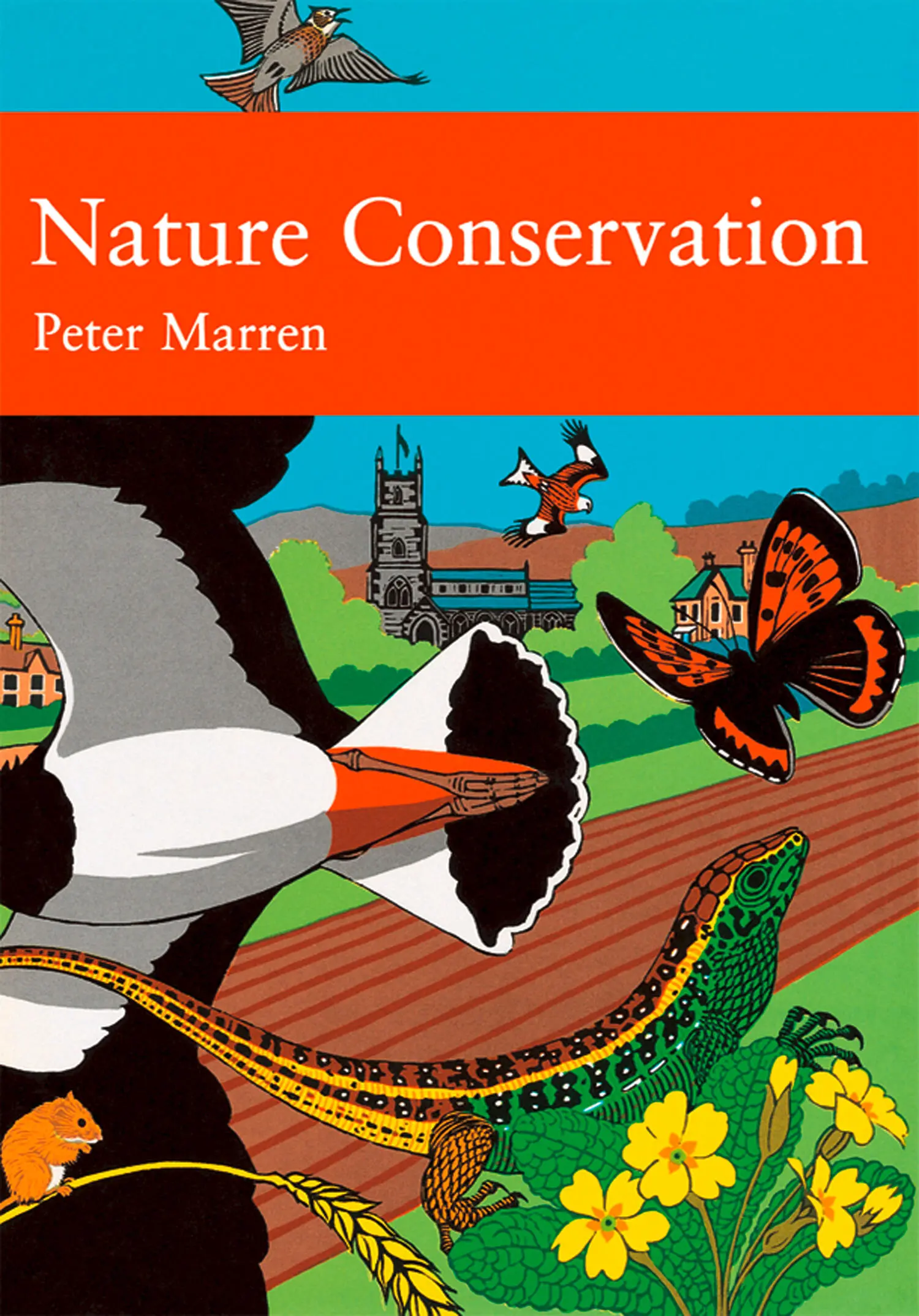
- Название:Nature Conservation
- Автор:
- Жанр:
- Год:неизвестен
- ISBN:нет данных
- Рейтинг книги:3 / 5. Голосов: 1
-
Избранное:Добавить в избранное
- Отзывы:
-
Ваша оценка:
Nature Conservation: краткое содержание, описание и аннотация
Предлагаем к чтению аннотацию, описание, краткое содержание или предисловие (зависит от того, что написал сам автор книги «Nature Conservation»). Если вы не нашли необходимую информацию о книге — напишите в комментариях, мы постараемся отыскать её.
Nature Conservation — читать онлайн ознакомительный отрывок
Ниже представлен текст книги, разбитый по страницам. Система сохранения места последней прочитанной страницы, позволяет с удобством читать онлайн бесплатно книгу «Nature Conservation», без необходимости каждый раз заново искать на чём Вы остановились. Поставьте закладку, и сможете в любой момент перейти на страницу, на которой закончили чтение.
Интервал:
Закладка:
Countryside Council for Wales (CCW)
Headquarters: Plas Penrhos, Ffordd Penrhos, Bangor, Gwynedd LL57 2LQ Vision: under review (May 2001)
The Countryside Council for Wales was formed in 1991 by merging the Countryside Commission and the NCC within the Principality. Unlike Scottish Natural Heritage, ‘CCW’ had no custom-made legislation, just a ragbag of texts from Acts dating back to 1949. Unlike English Nature, it started with a serious staff imbalance. While over 100 staff from NCC took new jobs (or continued their old ones) in CCW, only four from the smaller Countryside Commission decided to stay on. And so CCW had to start with a recruitment drive. Having evolved in different ways, the NCC and the Commission were chalk and cheese, and welding them together was no easy task. The NCC had statutory powers, and enforced them. The Countryside Commission was more of a clap-happy, grant-aid body. Sir Derek Barber compared them with monks and gypsies, all right in their own way, but not natural partners.
CCW was warned to be ‘mindful of the culture and economy of rural Wales’. It would have to build on the Welsh NCC’s relatively strong links with farmers and Welsh institutions. CCW inherited the NCC’s headquarters at Bangor, and decided against a move to Cardiff. Apparently this was only because the minister responsible wanted the CCW and its job opportunities to lie in his own constituency, but to outsiders it seemed to signal CCW’s affiliation with the rural, Welsh-speaking heartland rather than the industrial south. Small, culturally homogeneous countries have advantages denied to larger ones. People know one another; there is a lot of cross-participation and a pervading sense of identity. It is important to ‘belong’, and to be seen to be ‘people-centred’. CCW might have been straining a little too hard in describing its goal as ‘ a beautiful land washed by clean seas and streams, under a clear sky; supporting its full diversity of life, including our own, each species in its proper abundance, for the enjoyment of everybody and the contented work of its rural and sea-faring people ’. But behind this embarrassing guff there was an open-faced willingness to start afresh, and in a spirit of community.
CCW is much the smallest of the three country agencies, and began life with a relatively miserly budget of £14.5 million. With that it has to administer over 1,000 SSSIs covering about 10 per cent of the land surface of Wales, attend to all matters of rural access and carry out government policy on environment-sensitive farming. Its governing council was, like the others, well stuffed with farmers, businessmen and ‘portfolio collectors’, but scarcely anyone whom a conservationist would regard as a conservationist. Presumably CCW relied on their worldly wisdom more than their knowledge of the natural world. CCW’s chairman for the first ten years, Michael Griffith, was a Welsh establishment figure with farming interests and, it is said, a gift for getting on with ministers of all hues and opinions. The present chairman is another prominent farmer, a former chairman of the NFU in Wales. CCW’s first two chief executives both had a professional background in countryside planning rather than nature conservation, Ian Mercer in local government and National Parks, Paul Loveluck in the Welsh Office and the Welsh Tourist Board. Inevitably, therefore, it was the ‘holistic’ view of things that prevailed (‘I work for the rural communities of Wales, not for wildlife,’ was a phrase often heard on CCW corridors, perhaps to annoy the ‘Victorian naturalists’ from the former NCC). Senior posts were found for people with no background in nature conservation. People who ran processes were more highly valued than those who worked on the product. Some believed that core wildlife activities were being neglected at the expense of access work that overlapped with the remit of local authorities. Any blurring of functional boundaries held political dangers for a small, newly established body.
CCW went through much the same time-consuming reorganisations as its big sisters in Scotland and England. It organised its staff into Area Teams and Policy Groups, and delegated authority downwards while reserving all important decisions (and, it is said, many trivial ones also) to headquarters. Like English Nature, CCW was keener on mitigation than confrontation, especially where jobs were at stake. For example, it bent over backwards to accommodate the development of the ‘Lucky Goldstar’ electronics factory on part of the Gwent Levels SSSI. On the other hand a series of high-profile cases gave CCW a chance to make itself useful, such as the proposed orimulsion plant in Pembrokeshire, which it successfully opposed, and the wreck of the Sea Empress, from which it drew worthwhile lessons. CCW’s bilingual reports generally seem more down-to-earth and better written than the grammatically strained productions of English Nature and Scottish Natural Heritage, perhaps because they are concerned more with events and issues than with internal administration.
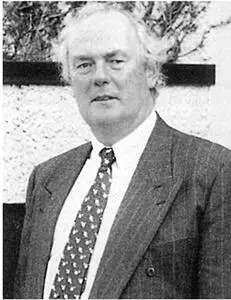
John Lloyd Jones, chairman of CCW. (CCW)
Among CCW’s most distinctive policies are its championing of environment-friendly schemes such as Coed Cymru , introduced in 1985 to regenerate Wales’ scattered natural woodlands, and its administration of Tir Cymen (now renamed Tir Gofal ), Wales’ integrated agri-environmental scheme. Judging by the desire of the Welsh Office, and later the Welsh Assembly, to take over Tir Cymen , it has been a success. Like SNH,
CCW has also done its best to promote the Welsh countryside as ‘a leisure resource’, producing a stream of colourful publications, and devoting loving attention to matters like footpaths and signs. Some grumble that in its determined wooing of ‘customers’ and ‘partners’, CCW has been neglecting its statutory role of protecting wildlife. Possible signs of weakness are CCW’s failure to publish comprehensive data on the condition of SSSIs (although it admits that most of the National Nature Reserves in its care are in unfavourable condition), and its slow progress on Biodiversity Action compared with its sister agencies, earning it a black mark in the review, Biodiversity Counts . It has had to struggle hard to retain its authority, and seems much less firmly entrenched in Welsh affairs than its English and Scottish sisters.
The relationship of CCW with the turbulent political climate of Wales in the 1990s is a story in itself, which I continue on p. 54.
Joint Nature Conservation Committee (JNCC)
Headquarters: Monkstone House, City Road, Peterborough PE1 1JY Mission: it is not allowed to have one.
The JNCC is the forum through which the three country nature conservation agencies deliver their statutory responsibilities for Great Britain as a whole, and internationally. These are primarily the drawing up of ‘Euro-sites’ for the Natura 2000 network (SPAs, SACs), the setting of common standards, and advising government on Great Britain-related nature conservation matters. Its committee, chaired by Sir Angus Stirling, formerly the National Trust’s director, consists of three independent members, along with two representatives from each of the country agencies, and one each from the Countryside Agency and the ‘Council for Nature Conservation and the Countryside’ (CNCC) in Northern Ireland. The JNCC is based in Peterborough, with a small sub office in Aberdeen, specialising in seabirds and cetaceans. All members of its staff are assigned from one of the three country agencies. In 2000, it had 84 staff and a budget of £4,735,000. Among the Committee’s projects were some grand-scale surveys inherited from the NCC, especially the Marine Nature Conservation Review, the Geological Conservation Review and the Seabirds at Sea project. JNCC also runs the National Biodiversity Network and publishes British Red Data Books, as well as a stream of scientific reports. Its most important task was co-ordinating the UK proposals for Special Areas of Conservation (SACs), based on submissions by the four country agencies (including Northern Ireland). Denied any real corporate identity, the JNCC is nonetheless the principal centre of scientific know-how in British nature conservation.
Читать дальшеИнтервал:
Закладка:
Похожие книги на «Nature Conservation»
Представляем Вашему вниманию похожие книги на «Nature Conservation» списком для выбора. Мы отобрали схожую по названию и смыслу литературу в надежде предоставить читателям больше вариантов отыскать новые, интересные, ещё непрочитанные произведения.





![Various - Birds and Nature, Vol. 12 No. 5 [December 1902]](/books/745517/various-birds-and-nature-vol-12-no-5-december-thumb.webp)
![Various - Birds and Nature Vol. 11 No. 2 [February 1902]](/books/745533/various-birds-and-nature-vol-11-no-2-february-1-thumb.webp)
Обсуждение, отзывы о книге «Nature Conservation» и просто собственные мнения читателей. Оставьте ваши комментарии, напишите, что Вы думаете о произведении, его смысле или главных героях. Укажите что конкретно понравилось, а что нет, и почему Вы так считаете.