Peter Marren - Nature Conservation
Здесь есть возможность читать онлайн «Peter Marren - Nature Conservation» — ознакомительный отрывок электронной книги совершенно бесплатно, а после прочтения отрывка купить полную версию. В некоторых случаях можно слушать аудио, скачать через торрент в формате fb2 и присутствует краткое содержание. Жанр: unrecognised, на английском языке. Описание произведения, (предисловие) а так же отзывы посетителей доступны на портале библиотеки ЛибКат.
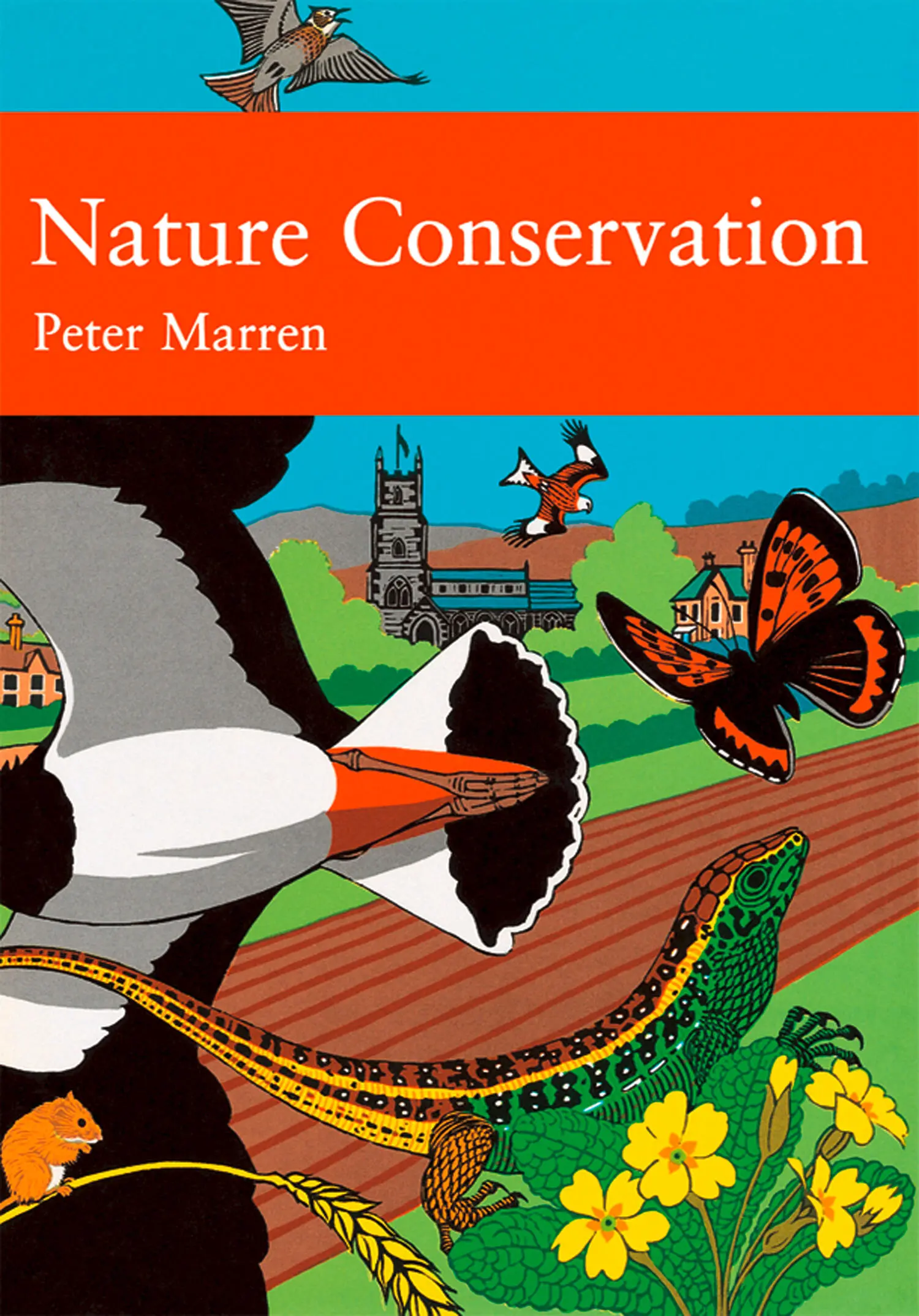
- Название:Nature Conservation
- Автор:
- Жанр:
- Год:неизвестен
- ISBN:нет данных
- Рейтинг книги:3 / 5. Голосов: 1
-
Избранное:Добавить в избранное
- Отзывы:
-
Ваша оценка:
Nature Conservation: краткое содержание, описание и аннотация
Предлагаем к чтению аннотацию, описание, краткое содержание или предисловие (зависит от того, что написал сам автор книги «Nature Conservation»). Если вы не нашли необходимую информацию о книге — напишите в комментариях, мы постараемся отыскать её.
Nature Conservation — читать онлайн ознакомительный отрывок
Ниже представлен текст книги, разбитый по страницам. Система сохранения места последней прочитанной страницы, позволяет с удобством читать онлайн бесплатно книгу «Nature Conservation», без необходимости каждый раз заново искать на чём Вы остановились. Поставьте закладку, и сможете в любой момент перейти на страницу, на которой закончили чтение.
Интервал:
Закладка:
The JNCC has a problem: it lacks an independent budget and its own staff. Its annual grant has to be ‘ring-fenced’ from the three agencies, who, along with their control of the purse strings, also dominate its committee. Their influence has not been benign. From the start, the JNCC was seen as a refuge for reactionaries from the old NCC who refused to move with the times. Senior refugees from the NCC’s scientific team quickly discovered how much they had lost influence. People with international reputations found themselves pitched into low status jobs, or dispensed with altogether once a Treasury review, brought at the request of English Nature, had scrapped half of the JNCC’s senior posts and humiliatingly downgraded its director’s post. The JNCC’s first chairman, Sir Fred Holliday, a former NCC chairman, resigned after five months, complaining that he had been kept in the dark over the Scottish SSSI appeals procedure. In 1996, its new chairman, Lord Selborne, traded a leaner structure – downsizing its staff from 104 to 66 – for more autonomy within its core responsibilities. Even so, the JNCC was visibly struggling against the devolution tide. The four country agencies often failed to reach a consensus view, or indeed take much interest in matters of UK concern. As this book went to press, a government review body has recommended that the JNCC became a separate body within the newly organised government department, DEFRA (the Department of the Environment, Food and Rural Affairs).
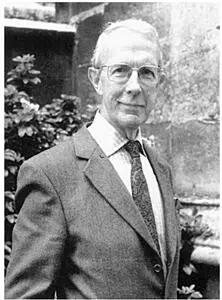
Sir Angus Stirling, chairman of the JNCC. (JNCC)
The whip hand: the agencies and their budgets
As the smallest of the country agencies, the Countryside Council for Wales might have expected a struggle to make its mark. It also had the bad luck to receive a right-wing ideologue as Secretary of State in the person of John Redwood. Towards the end of 1994, Redwood took a hard look at the role of CCW. It is said that he was outraged to notice that a third of CCW’s budget went on staff salaries. In fact this was normal for a nature conservation agency, or, indeed, any government agency, but others had been cleverer at disguising it. As far as Redwood was concerned, CCW was both overmanned and overstretched. It should be ‘encouraged to concentrate on its core functions’. In May 1995, the Welsh Office produced an ‘Action Plan for CCW’ which proposed to reduce its running costs over the next two years by handing over supposedly peripheral activities, such as the funding of Country Parks, to local authorities. It also proposed to ‘privatise’ some National Nature Reserves and hand over CCW’s flagship Tir Cymen scheme to the Welsh Office. Furthermore, CCW was ordered to cut down its travelling and stay in more, with the help of computer technology. To encourage it in all these things, CCW’s budget was cut by a third.
Redwood’s attack was badly received, not just in nature conservation circles but also, much to his surprise, by parts of the Welsh establishment and the media. This was linked to a related matter, Redwood’s refusal to implement new, more environment-friendly planning guidelines, thus creating an undesirable divergence of approach on planning matters between England and Wales. John Redwood failed to find much empathy with the Welsh; as John Major expressed it in his memoirs, Redwood did not take to the Welsh people, ‘nor they to him’.
Ironically, the Redwood fracas helped to put CCW on the map and sparked a good deal of favourable publicity for its work. When Redwood resigned in order to challenge John Major as Conservative Party leader, William Hague, his more politically astute successor, demonstrated a change of tack by visiting some of CCW’s offices, and talking to staff in a friendly spirit. There is a story that, on his visit to Snowdon, the fit young Hague simply tore up the mountain, leaving CCW’s warden, a heavy smoker, trailing far behind. CCW was able to stave off corporate starvation by negotiating an EU Life fund to supplement its budget, thus pioneering a rich and, until then, surprisingly neglected alternative source of income. An ostentatious display of good housekeeping was rewarded in 1996 by a 20 per cent increase in grant-in-aid, bringing things more or less back to normal. But that was not the end of CCW’s financial tribulations. Its funding body passed from the Welsh Office to the Welsh Assembly in 1999. The architect of the Welsh Assembly, Ron Davies, had been a strong supporter of wildlife conservation in Wales, and his ‘moment of madness’ in Brixton was also a misfortune for CCW. Its Corporate Plan was rejected by the Assembly with the warning that the agency might have to muddle along for a while without a pay rise. Other warning signs were First Secretary Alun Michael’s dismissal of CCW’s request for the Assembly to debate its new ‘vision’, A Living Environment for Wales . There was talk about restructuring environmental activity in Wales, for example, by merging CCW with the Environment Agency, and having another look at the possibility of hiving off some of its functions to local authorities.
English Nature nurtured more constructive relations with its paymasters. In 1992 it was given an extra million pounds for restoring peatlands and to speed up the designation of EU Special Protection Areas for birds. The National Audit Office in 1994, and the Commons Public Accounts Committee in 1995, made critical comments about some aspects of its business, but on the whole supported EN’s strategic approach to its tasks and wholehearted use of business language. EN endured a lean year in 1996, but fought off a further cut the year after. The incoming Labour Government’s Comprehensive Spending Review increased EN’s grant-in-aid by 16 per cent to £44.6 million, followed by another generous increase in 1998, coinciding with the appointment of Barbara Young as chairman.
Scottish Natural Heritage has had to tread carefully. The generous settlement it received in 1992 was tempered by an awareness that its every move was being shadowed by the Scottish Office, which expected SNH to be a ‘people-friendly’ body and avoid the controversies of the recent past. That it was as vulnerable as CCW to hostile trimming measures became clear in 1995, when the Scottish Secretary Ian Lang decided to carry out the dreaded ‘high level review’. He was purportedly concerned about SNH’s involvement in wider issues like agriculture and transport, and looked down his nose at the £800,000 it had spent fighting the proposed super-quarry at Lingerbay on Harris. His successor, Michael Forsyth, was similarly put out when he learned that SNH had spent £1.8 million buying out the peat-cutting rights at Flanders Moss, which, to make matters worse, lay in his own constituency (in his view, that sort of public money should be spent on schools and hospitals). Like Redwood, Lang wanted SNH to concentrate on its core activities and to trim what he saw as peripheral matters, such as public access to the countryside. But even if it had, the savings would have been insignificant. At the end of 1996, in which its budget had been cut by 10 per cent, SNH published its answer in Natural Priorities . This was a fairly defiant restatement of SNH’s responsibilities over a broad range of heritage issues, and even hinted that it could do with a bit more co-operation from the all-powerful Scottish Office’s environment, agriculture and fisheries departments. But the net was tightening. In 1998, chief executive Roger Crofts estimated that SNH’s spending power had fallen by nearly a third since its establishment in 1992.
Читать дальшеИнтервал:
Закладка:
Похожие книги на «Nature Conservation»
Представляем Вашему вниманию похожие книги на «Nature Conservation» списком для выбора. Мы отобрали схожую по названию и смыслу литературу в надежде предоставить читателям больше вариантов отыскать новые, интересные, ещё непрочитанные произведения.



![Various - Birds and Nature, Vol. 12 No. 5 [December 1902]](/books/745517/various-birds-and-nature-vol-12-no-5-december-thumb.webp)
![Various - Birds and Nature Vol. 11 No. 2 [February 1902]](/books/745533/various-birds-and-nature-vol-11-no-2-february-1-thumb.webp)
Обсуждение, отзывы о книге «Nature Conservation» и просто собственные мнения читателей. Оставьте ваши комментарии, напишите, что Вы думаете о произведении, его смысле или главных героях. Укажите что конкретно понравилось, а что нет, и почему Вы так считаете.