Peter Marren - Nature Conservation
Здесь есть возможность читать онлайн «Peter Marren - Nature Conservation» — ознакомительный отрывок электронной книги совершенно бесплатно, а после прочтения отрывка купить полную версию. В некоторых случаях можно слушать аудио, скачать через торрент в формате fb2 и присутствует краткое содержание. Жанр: unrecognised, на английском языке. Описание произведения, (предисловие) а так же отзывы посетителей доступны на портале библиотеки ЛибКат.
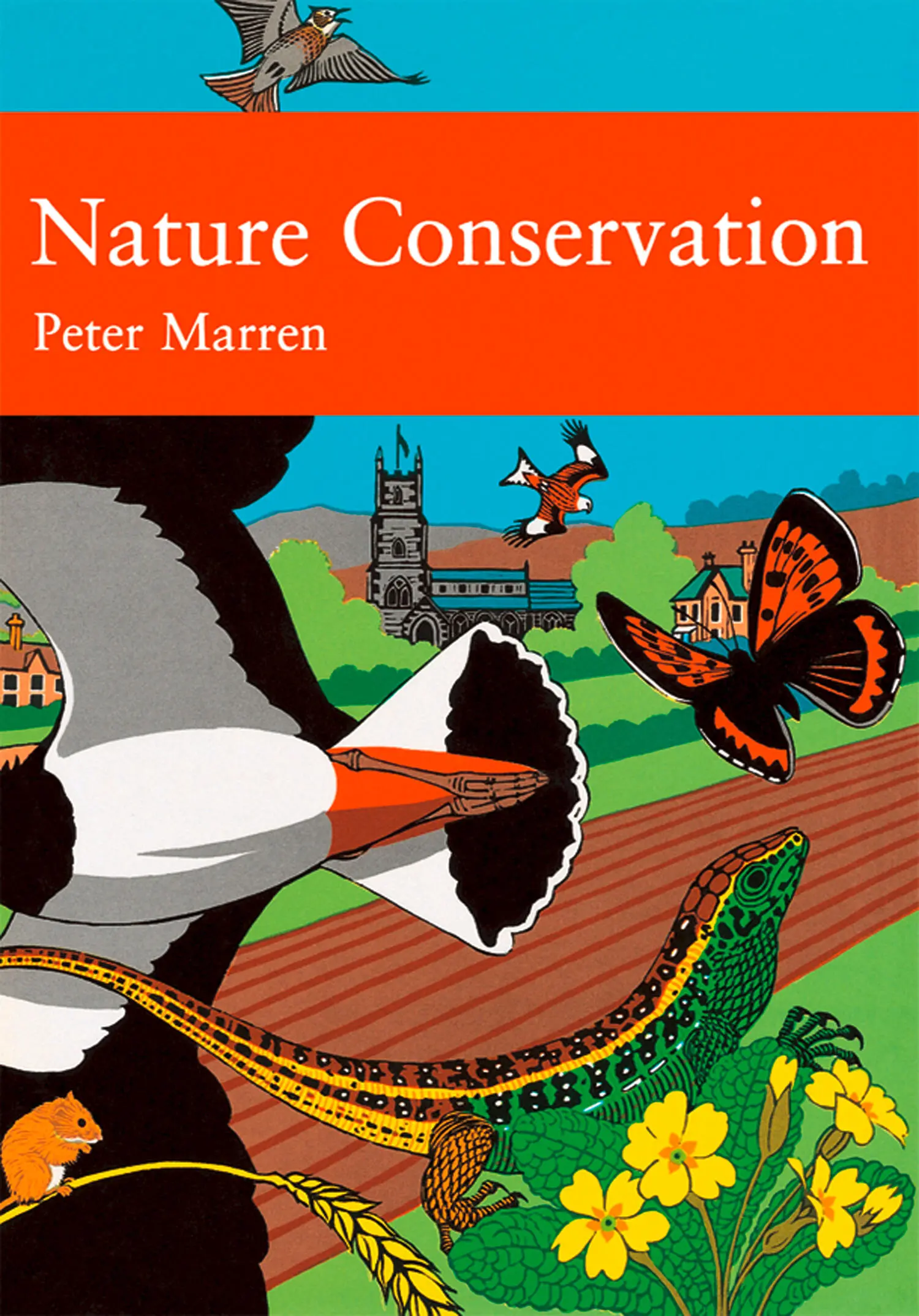
- Название:Nature Conservation
- Автор:
- Жанр:
- Год:неизвестен
- ISBN:нет данных
- Рейтинг книги:3 / 5. Голосов: 1
-
Избранное:Добавить в избранное
- Отзывы:
-
Ваша оценка:
Nature Conservation: краткое содержание, описание и аннотация
Предлагаем к чтению аннотацию, описание, краткое содержание или предисловие (зависит от того, что написал сам автор книги «Nature Conservation»). Если вы не нашли необходимую информацию о книге — напишите в комментариях, мы постараемся отыскать её.
Nature Conservation — читать онлайн ознакомительный отрывок
Ниже представлен текст книги, разбитый по страницам. Система сохранения места последней прочитанной страницы, позволяет с удобством читать онлайн бесплатно книгу «Nature Conservation», без необходимости каждый раз заново искать на чём Вы остановились. Поставьте закладку, и сможете в любой момент перейти на страницу, на которой закончили чтение.
Интервал:
Закладка:
Creating the new agencies took many months, during which the enabling legislation, the (to some, grossly misnamed) Environment Protection Bill, passed through Parliament, and the NCC made its internal rearrangements. Separate arrangements were needed under Scottish law, and so an interim body, the Nature Conservancy Council for Scotland was set up before the Scottish Natural Heritage was established by Act of Parliament in 1992. From that point onwards, the history of official nature conservation in Britain diverges sharply. Because of the interest in the new country agencies’ performance, I will present them in some detail. They form an interesting case study of conservation and politics in a devolved government. In Scotland and Wales particularly it has led to a much greater emphasis on popular ‘countryside’ issues, and less on wildlife as an exclusive activity. In England, too, there have been obvious attempts to trim one’s sails to the prevailing wind, with an ostentatious use of business methods and a culture of confrontation-avoidance. Let us take a look at each of them, and the JNCC, starting with English Nature.
NCC’s spending in 1988 (in £,000s)
| Income | ||
|---|---|---|
| From government grant-in-aid | 36,105 | |
| Other income | 2,461 | (mainly from sales of publications rents and research undertaken on repayment terms) |
| £38,566 | ||
| Expenditure | ||
| Staff salaries and overheads | 14,310 | |
| Management agreements | 7,287 | |
| Scientific support | 4,992 | (including 3,736 for research contracts) |
| Grants | 2,510 | (made up of 1,109 for land purchase, and the rest staff posts and projects, mainly to voluntary bodies) |
| Maintenance of NNRs | 1,399 | |
| Depreciation | 1,089 | |
| Other operating charges | 7,280 | (e.g. staff support, books and equipment, accommodation, phones) |
| £38,867 |
From NCC 15th Annual Report 1 April 1988-31 March 1989
English Nature
Headquarters: Northminster House, Peterborough PE1 1UA.
Vision: ‘ To sustain and enrich the wildlife and natural features of England for everyone ’.
Slogan: ‘ Working today for nature tomorrow ’.
English Nature began its corporate life on 2 April 1991 (April Fool’s Day was a public holiday that year) with a budget of £32 million to manage 141 National Nature Reserves, administer 3,500 SSSIs and pay the salaries of 724 permanent staff. Most of the latter were inherited from the NCC, including a disproportionate number of scientific administrators, and only 90 were new appointments. EN’s Council was, as before, appointed on the basis of individual expertise, and intended to produce a balance of expertise across the range of its functions. However, they were now paid a modest salary and given specific jobs to do. From 1996, under the new rules established by the Nolan Report, new Council posts were advertised. All of them had to be approved by the chairman, a political appointee. What was noticeable about EN’s first Council was that only one was a reputable scientist. None were prominently affiliated to a voluntary body, nor could any of them be described as even remotely radical. This Council was less grand than the NCC’s: fewer big landowners, no wildlife celebrities, and no MPs. In 1995, at the request of Lord Cranbrook, EN’s chief executive, Derek Langslow, became a full member, unlike his predecessors who just sat in on meetings and spoke when required. This made him a powerful figure in English Nature’s affairs.
English Nature inherited the structure of the NCC, with its various administrative branches, regional offices and headquarters in Peterborough. Externally the change from NCC to English Nature was brought about simply by taking down one sign and erecting another. An agency designed to serve Great Britain could, with a little readjustment, easily be scaled down to England alone. English Nature could, if it wished, carry on with business as usual. Even its official title remained the Nature Conservancy Council (for England); the name ‘English Nature’ was only legalised in 2000.
In the event, it opted for a radical administrative shakedown. The new administration was keen to present a more businesslike face to the world with a strategic approach in which aims would be related to ‘visions’ and goals, and tied to performance indicators monitored in successive corporate plans. A deliberate attempt was made to break down the NCC’s hermetic regions and branches into ‘teams’, each with their own budget and business plan. At Northminster House, partition walls were removed, and the warren of tiny offices replaced by big open plan rooms in which scientists, technicians and administrators worked cheek byjowl. There were also significant semantic changes. English Nature saw landowners and voluntary bodies as its ‘customers’; its work as a ‘service’ – one of its motto-like phrases was that ‘People’s needs should be discovered and used as a guide to the service provided’. Its predecessors had considered themselves to be a wildlife service. English Nature was overjoyed to receive one of John Major’s Citizen Charter marks for good customer service. Henceforward English Nature’s publications bore the mark like a medal.
American corporatism comes to nature conservation. This card, carried by English Nature staff in the late 1990s, borrows the language of big corporations (‘strategic change’, ‘inside track’, ‘empower/accredit’).
English Nature’s tougher organisation was mirrored in its presentations. Its annual reports seemed more eager to talk up the achievements of English Nature as a business than to review broader events in nature conservation. Looking back at EN’s first ten years, Michael Scott considered that the ‘strategic approach’ had engendered more bureaucracy along with tighter administrative control: ‘Senior staff talk more about recruitment levels, philosophy statements, strategic management initiatives and rolling reviews than about practical policies on the ground’ (Scott 1992). Nor was EN’s much-vaunted ‘philosophy statement’ exactly inspiring to outsiders, with its talk of ‘developing employee potential’ and achieving ‘efficient and effective use of resources through the operation of planning systems’. To those, like the postgraduates who listened in on EN’s lectures on corporate strategy, it might have sounded impressively professional, but, with the best will in the world, it didn’t sound much fun ; and to some they seemed to have more to do with what happened behind the dark-glass windows of Northminster House than out there in the English countryside.
The internal changes were not as radical as they looked. English Nature’s statutory responsibilities were much the same as the NCC’s, and the focus was still on SSSIs, grants and nature reserves. But now that the SSSI notification treadmill had at last ceased to grind, staff could turn their attention towards more positive schemes and participate more in ‘wider countryside’ matters. English Nature reorganised its grant-aid projects into a Wildlife Enhancement Scheme for SSSIs and a Reserves Enhancement Scheme for nature reserves. Both were based on standard acreage payments, and every attempt was made to make them straightforward and prompt. They were intended to be incentives for wildlife-friendly management, for example, low-density, rough grazing on grasslands and heaths, or to fund management schemes on nature reserves. The take-up rate was good. The trouble was that they were never enough to cover more than a fraction of SSSIs. Meanwhile EN’s grant-aid for land purchase virtually dried up. Country wildlife trusts turned to the more lucrative Heritage Lottery Fund instead.
Читать дальшеИнтервал:
Закладка:
Похожие книги на «Nature Conservation»
Представляем Вашему вниманию похожие книги на «Nature Conservation» списком для выбора. Мы отобрали схожую по названию и смыслу литературу в надежде предоставить читателям больше вариантов отыскать новые, интересные, ещё непрочитанные произведения.





![Various - Birds and Nature, Vol. 12 No. 5 [December 1902]](/books/745517/various-birds-and-nature-vol-12-no-5-december-thumb.webp)
![Various - Birds and Nature Vol. 11 No. 2 [February 1902]](/books/745533/various-birds-and-nature-vol-11-no-2-february-1-thumb.webp)
Обсуждение, отзывы о книге «Nature Conservation» и просто собственные мнения читателей. Оставьте ваши комментарии, напишите, что Вы думаете о произведении, его смысле или главных героях. Укажите что конкретно понравилось, а что нет, и почему Вы так считаете.