Peter Marren - Nature Conservation
Здесь есть возможность читать онлайн «Peter Marren - Nature Conservation» — ознакомительный отрывок электронной книги совершенно бесплатно, а после прочтения отрывка купить полную версию. В некоторых случаях можно слушать аудио, скачать через торрент в формате fb2 и присутствует краткое содержание. Жанр: unrecognised, на английском языке. Описание произведения, (предисловие) а так же отзывы посетителей доступны на портале библиотеки ЛибКат.
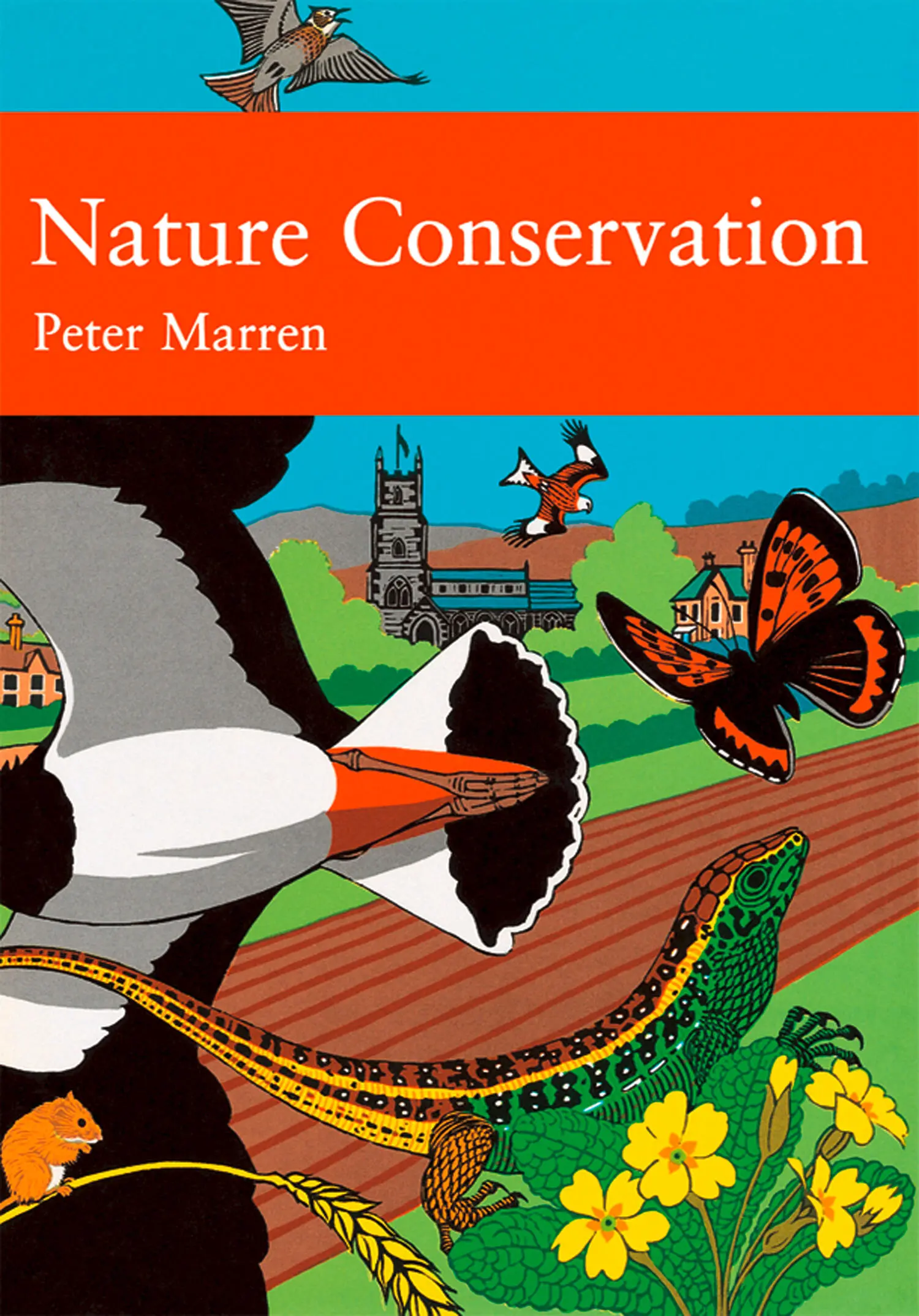
- Название:Nature Conservation
- Автор:
- Жанр:
- Год:неизвестен
- ISBN:нет данных
- Рейтинг книги:3 / 5. Голосов: 1
-
Избранное:Добавить в избранное
- Отзывы:
-
Ваша оценка:
Nature Conservation: краткое содержание, описание и аннотация
Предлагаем к чтению аннотацию, описание, краткое содержание или предисловие (зависит от того, что написал сам автор книги «Nature Conservation»). Если вы не нашли необходимую информацию о книге — напишите в комментариях, мы постараемся отыскать её.
Nature Conservation — читать онлайн ознакомительный отрывок
Ниже представлен текст книги, разбитый по страницам. Система сохранения места последней прочитанной страницы, позволяет с удобством читать онлайн бесплатно книгу «Nature Conservation», без необходимости каждый раз заново искать на чём Вы остановились. Поставьте закладку, и сможете в любой момент перейти на страницу, на которой закончили чтение.
Интервал:
Закладка:
J. Morton Boyd, Scottish director of the NCC, at Creag Meagaidh, which he helped save from afforestation. (Des Thompson)
The break-up of the NCC
Replying to an arranged Parliamentary question on 11 July 1989, Nicholas Ridley told a near-empty House of Commons that he had decided to break up the Nature Conservancy Council. In its place he would introduce legislation for separate nature conservation agencies in England, Scotland and Wales. I well remember the shock. Just the previous week we had attended a ceremony to mark the retirement of Derek Ratcliffe, Chief Scientist of the NCC since its establishment 16 years before. ‘Things will never be quite the same again,’ we thought, little suspecting just how different they would be. I was in the canteen at the NCC’s headquarters at Northminster House as a rumour spread over the cause of the emergency Council meeting upstairs. The hurried patter of feet on the third floor, doors banging, chairs scraping, voices raised, all signalled unusual excitement. NCC’s chairman, Sir William Wilkinson, had, it seemed, been given a week’s notice of the announcement, but had not been allowed to tell anyone. He used the time to appeal to the Prime Minister, but she backed her minister. Council had had only one day’s official notice, although some of them did not seem very surprised, and a few welcomed it. We, the staff, were caught completely unawares. As Forestry and British Timber magazine gloated, ‘it was, no doubt, to spare the NCC the horrors of anticipation that the Ridley guillotine crashed down upon it last week. There was no warning, no crowds, no tumbrils, no (or very little) mourning. The end of the Peterborough empire came silently and swiftly’.
No mourning from foresters may be, but it sent a seismic shudder, shortly to be followed by an outpouring of rage, through the nature conservation world. ‘At no time was NCC given notice of such extreme dissatisfaction with its performance as to register a threat to its corporate existence’, wrote Donald Mackay, a former undersecretary at the Scottish Office (Mackay 1995). The only clue in Ridley’s statement was that there were apparently ‘great differences between the circumstances and needs of England, Scotland and Wales…There are increasing feelings that [the present] arrangements are inefficient, insensitive and mean that conservation issues in both Scotland and Wales are determined with too little regard for the particular requirements in these countries’. Evidently, then, events in Scotland and Wales had propelled the announcement.
The sentence had been done in haste. Ridley was about to move from Environment to Energy, where he was sacked a year later for making offensive remarks about the Germans. Nothing had been thought through. The implication was that, as far as nature conservation was concerned, England, Scotland and Wales would now go their separate ways, but left hanging was the not unimportant matter of who would represent Britain internationally and who would referee common standards within the new agencies. Moreover, far from being more efficient, a devolved system implied endless duplication (actually, triplication) and waste. ‘What would you rather have?’ asked Wilkinson, ‘a peatland expert for Great Britain, or three under-resourced experts in England, Scotland and Wales? It’s obvious isn’t it?’ Behind Wilkinson’s disappointment and frustration was the knowledge that his Council had been about to introduce a ‘federal’ system of administration that, he thought, would largely have answered the genuine problems being experienced in Scotland and Wales.
Some of the smoke from Ridley’s 1989 bombshell has since cleared. At issue was the NCC’s unpopularity in Scotland, and in particular its opposition to afforestation. Things came to the crunch in 1987 when, alarmed at the rate of afforestation in the hitherto untouched blanket bogs of far away Sutherland and Caithness (see Chapter 7), the NCC called for a moratorium on further planting in the area. Fatally, the NCC decided to hold its press conference in London, not in Edinburgh or Inverness, lending substance to the accusation that the NCC was an English body, with no right to ban development in Scotland, especially when jobs were at stake. It is alleged that there was a reluctance on the part of the NCC’s Scottish headquarters to host the press conference; its Scottish director, John Francis, had taken diplomatic leave. The Scottish media took more interest in a spoiling statement by the Highlands and Islands Development Board, whose chief took the opportunity to call for a separate Scottish NCC. The Scottish press took up the cry, and from that day on another ‘split’ was probably inevitable. The MP Tam Dalyell was in no doubt that this was why the NCC was broken up: ‘It originated out of a need that had nothing whatsoever to do with the best interests of the environment. It was about another need entirely, that is, the need for politicians to give the impression that they were doing something about devolving power to the Scots as a sop to keep us happy’ (Dalyell 1989).
Just as the Scots resented ‘interference’ from Peterborough, so the Secretary of State for the Environment resented having to pay for things outside his direct control (for DoE’s writ ran only in England and Wales). According to Mackay, Ridley, growing alarmed at the anticipated costs of compensating forestry companies in Caithness, suggested to his Cabinet colleague, Malcolm Rifkind, that Scotland should receive its own conservation agency and shoulder the burden itself. With the Conservative party’s popularity at an all-time low in Scotland, Rifkind must have seen political advantages in such a gesture, and ordered his Scottish Development Department to prepare a plan for detaching the Scottish part of the NCC and merging it with the Countryside Commission for Scotland. The case for Scotland automatically created a similar case for Wales. It seems, though, that Wales received its own devolved agency without ever having asked for one.
The secrecy in which all this took place is surprising, but it enabled ministers to rush the measure through before the inevitable opposition could get going – an early example of political ‘spin’. The NCC had few influential friends north of the Border, where voluntary nature conservation bodies were weak. Moreover, the afforestation issue had encouraged separatist notions among the NCC’s own Scotland Committee and staff. Broadly speaking they saw the future of wild nature in Scotland in terms of sustainable development and integrated land use, which in some vague way should reflect the value-judgements of the Scottish people. It made little sense to draw lines around ‘sites’ in the Highlands where wild land was more or less continuous. Hence they saw more merit in processes – making allies and finding common ground – than in site-based conservation, which, as they saw it, only served to entrench conflict. That, at least, is what I construe from the statement of the chairman of the NCC’s Scotland Committee, Alexander Trotter, at the break-up, that ‘It has been clear to me for some time that the existing system is cumbersome to operate and that decision making seemed remote from the people of Scotland’.
Some of the opposition to the break-up was blunted by the obvious appeal of combining nature and landscape conservation in Scotland and Wales. Many believed that the severance of wildlife and countryside matters back in 1949 had been a fundamental error, and that in a farmed environment like the British countryside they were inseparable. However, Ridley refused to contemplate their merger in England, arguing that the administrative costs would outweigh any possible advantages (a view the Parliamentary committee concurred with when the question was reopened in 1995). The main objection, apart from the well-founded fear that science-based nature conservation had suffered another tremendous, perhaps fatal, body blow, was the void that had opened up at the Great Britain level. Following a report by a House of Lords committee under Lord Carver, Ridley’s successor, Chris Patten accepted the idea of a joint co-ordinating committee to advise the Government on matters with a nationwide or international dimension. This became the Joint Nature Conservation Committee or JNCC, a semiautonomous science rump whose budget would be ‘ring-fenced’ by contributions from three new country agencies. Some of the NCC’s senior scientists ended up in the JNCC, only to find they were scientists no longer but ‘managers’.
Читать дальшеИнтервал:
Закладка:
Похожие книги на «Nature Conservation»
Представляем Вашему вниманию похожие книги на «Nature Conservation» списком для выбора. Мы отобрали схожую по названию и смыслу литературу в надежде предоставить читателям больше вариантов отыскать новые, интересные, ещё непрочитанные произведения.




![Various - Birds and Nature, Vol. 12 No. 5 [December 1902]](/books/745517/various-birds-and-nature-vol-12-no-5-december-thumb.webp)
![Various - Birds and Nature Vol. 11 No. 2 [February 1902]](/books/745533/various-birds-and-nature-vol-11-no-2-february-1-thumb.webp)
Обсуждение, отзывы о книге «Nature Conservation» и просто собственные мнения читателей. Оставьте ваши комментарии, напишите, что Вы думаете о произведении, его смысле или главных героях. Укажите что конкретно понравилось, а что нет, и почему Вы так считаете.