Marvin Rausand - Risk Assessment
Здесь есть возможность читать онлайн «Marvin Rausand - Risk Assessment» — ознакомительный отрывок электронной книги совершенно бесплатно, а после прочтения отрывка купить полную версию. В некоторых случаях можно слушать аудио, скачать через торрент в формате fb2 и присутствует краткое содержание. Жанр: unrecognised, на английском языке. Описание произведения, (предисловие) а так же отзывы посетителей доступны на портале библиотеки ЛибКат.
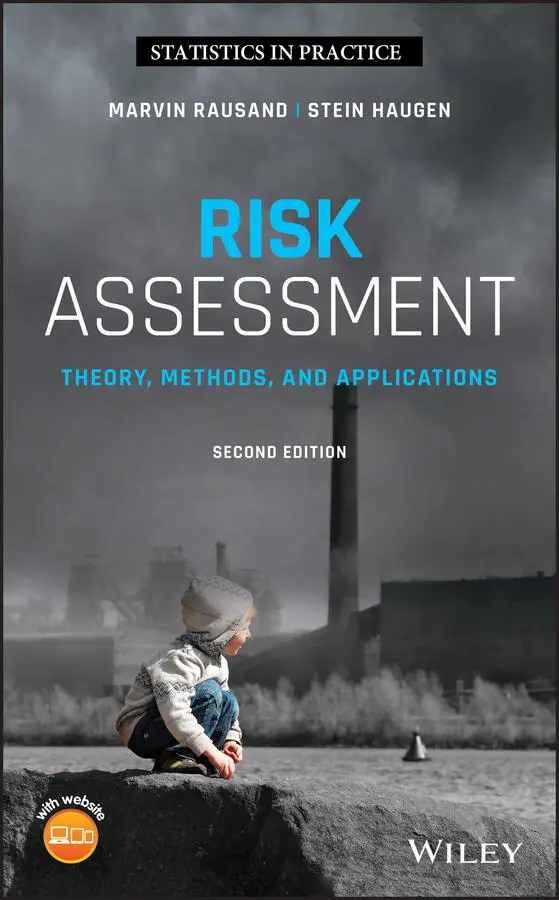
- Название:Risk Assessment
- Автор:
- Жанр:
- Год:неизвестен
- ISBN:нет данных
- Рейтинг книги:3 / 5. Голосов: 1
-
Избранное:Добавить в избранное
- Отзывы:
-
Ваша оценка:
Risk Assessment: краткое содержание, описание и аннотация
Предлагаем к чтению аннотацию, описание, краткое содержание или предисловие (зависит от того, что написал сам автор книги «Risk Assessment»). Если вы не нашли необходимую информацию о книге — напишите в комментариях, мы постараемся отыскать её.
2nd Edition
The book begins with an introduction of risk analysis, assessment, and management, and includes a new section on the history of risk analysis. It covers hazards and threats, how to measure and evaluate risk, and risk management. It also adds new sections on risk governance and risk-informed decision making; combining accident theories and criteria for evaluating data sources; and subjective probabilities. The risk assessment process is covered, as are how to establish context; planning and preparing; and identification, analysis, and evaluation of risk.
also offers new coverage of safe job analysis and semi-quantitative methods, and it discusses barrier management and HRA methods for offshore application. Finally, it looks at dynamic risk analysis, security and life-cycle use of risk.
Serves as a practical and modern guide to the current applications of risk analysis and assessment, supports key standards, and supplements legislation related to risk analysis Updated and revised to align with ISO 31000 Risk Management and other new standards and includes new chapters on security, dynamic risk analysis, as well as life-cycle use of risk analysis Provides in-depth coverage on hazard identification, methodologically outlining the steps for use of checklists, conducting preliminary hazard analysis, and job safety analysis Presents new coverage on the history of risk analysis, criteria for evaluating data sources, risk-informed decision making, subjective probabilities, semi-quantitative methods, and barrier management Contains more applications and examples, new and revised problems throughout, and detailed appendices that outline key terms and acronyms Supplemented with a book companion website containing Solutions to problems, presentation material and an Instructor Manual
is ideal for courses on risk analysis/risk assessment and systems engineering at the upper-undergraduate and graduate levels. It is also an excellent reference and resource for engineers, researchers, consultants, and practitioners who carry out risk assessment techniques in their everyday work.
Risk Assessment — читать онлайн ознакомительный отрывок
Ниже представлен текст книги, разбитый по страницам. Система сохранения места последней прочитанной страницы, позволяет с удобством читать онлайн бесплатно книгу «Risk Assessment», без необходимости каждый раз заново искать на чём Вы остановились. Поставьте закладку, и сможете в любой момент перейти на страницу, на которой закончили чтение.
Интервал:
Закладка:
8 2.8 In this chapter, reference accident scenario, worst‐case accident scenario, and worst credible accident scenario are defined.(a) What are the differences between these three?(b)b Do you see any challenges in defining these scenarios in a practical case?
9 2.9 What are the differences between the two concepts robustness and vulnerability?
10 2.10 There are numerous definitions of the word “risk” and Section 2.2provides a definition and lists some alternatives. Compare the alternative definitions of risk provided and see how they differ from the definition used in the book.
11 2.11 Search the Internet for the word “risk” to see how this is used in different contexts, e.g. in media, and how the everyday use of the word compares to the formal definition. Some examples to look for are situations where risk is used synonymous with hazard, safety performance, and frequency.
12 2.12 Compare the terms incident and hazardous event and discuss the similarities and differences between these terms. Use practical examples and discuss the terms based on these rather than discussing purely from a theoretical viewpoint.
13 2.13 Assume that a bicycle has a brake system with a handle on the handlebars, a wire running from the handle to the brake pads, and finally brake pads that make contact with the wheel when the handle is pulled. Identify relevant failures, failure modes, and failure mechanisms for the brake system. Classify the failures according to the cause of the failure and the degree of the failure.
14 2.14 Consider the hazardous event “Car hits back of car in front while driving” and describe this event in a bow‐tie. Identify relevant barriers.
15 2.15 Consider the hazardous event “Fire in student flat” and describe this event in a bow‐tie. Identify relevant barriers.
16 2.16 Compare Definitions 2.31and 2.33for safety and security, respectively. Discuss the difference between these two definitions and suggest an alternative definition for security.
References
1 ARAMIS (2004). Accidental Risk Assessment Methodology for Industries in the Context of the Seveso II Directive. Technical report EVSG1‐CT‐2001‐00036. Fifth Framework Programme of the European Community, Energy, Environment and Sustainable Development.
2 Aven, T. and Renn, O. (2009). On risk defined as an event where the outcome is uncertain. Journal of Risk Research 12 (1): 1–11.
3 Bayes, T. (1763). An essay towards solving a problem in the doctrine of chances. Philosophical Transactions of the Royal Society of London 53: 370–418.
4 Bernstein, P.L. (1998). Against the Gods: The Remarkable Story of Risk. Hoboken, NJ: Wiley.
5 Foster, H.D. (1993). Resilience theory and system evaluation. In: Verification and Validation of Complex Systems: Human Factors Issues (ed. J.A. Wise, V.D. Hopkin, and P. Stager), 35–60. Berlin: Springer.
6 Garrick, B.J. (2008). Quantifying and Controlling Catastrophic Risks. San Diego, CA: Academic Press.
7 Herrera, I.A., Håbrekke, S., Kråkenes, T. et al. (2010). Helicopter Safety Study (HSS‐3). Research report SINTEF A15753. Trondheim, Norway: SINTEF.
8 Hollnagel, E., Woods, D.D., and Leveson, N. (2006). Resilience Engineering: Concepts and Precepts. Aldershot: Ashgate.
9 IAEA (2002). Procedures for Conducting Probabilistic Safety Assessment for Non‐Reactor Nuclear Facilities. Technical report IAEA‐TECDOC‐1267. Vienna, Austria: International Atomic Energy Agency.
10 ISO 12100 (2010). Safety of machinery – general principles for design: risk assessment and risk reduction, International standard ISO 12100. Geneva: International Organization for Standardization.
11 ISO 31000 (2018). Risk management – guidelines, International standard. Geneva: International Organization for Standardization.
12 ISO Guide 73 (2009). Risk management – vocabulary, Guide. Geneva: International Organization for Standardization.
13 Jaynes, E.T. (2003). Probability Theory: The Logic of Science. Cambridge: Cambridge University Press.
14 Johansen, I.L. (2010). Foundations of Risk Assessment. ROSS report 201002. Trondheim, Norway: Norwegian University of Science and Technology.
15 Kaplan, S. (1997). The words of risk analysis. Risk Analysis 17: 407–417.
16 Kaplan, S. and Garrick, B.J. (1981). On the quantitative definition of risk. Risk Analysis 1 (1): 11–27.
17 Khan, F.I. and Abbasi, S.A. (2002). A criterion for developing credible accident scenarios for risk assessment. Journal of Loss Prevention in the Process Industries 15 (6): 467–475.
18 Kim, D., Kim, J., and Moon, I. (2006). Integration of accident scenario generation and multiobjective optimization for safety‐cost decision making in chemical processes. Journal of Loss Prevention in the Process Industries 19 (6): 705–713.
19 Klinke, A. and Renn, O. (2002). A new approach to risk evaluation and management: risk‐based, precaution‐based, and discourse‐based strategies. Risk Analysis 22 (6): 1071–1094.
20 Leveson, N. (2004). A new accident model for engineering safer systems. Safety Science 42 (4): 237–270.
21 Lindley, D.V. (2007). Understanding Uncertainty. Hoboken, NJ: Wiley.
22 Lupton, D. (1999). Risk. London: Routledge.
23 MIL‐STD‐882E (2012). Standard practice for system safety. Washington, DC: U.S. Department of Defense.
24 Perrow, C. (1984). Normal Accidents: Living with High‐Risk Technologies. New York: Basic Books.
25 Phimister, J.R., Bier, V.M., and Kunreuther, H.C. (eds.) (2004). Accident Precursor Analysis and Management: Reducing Technological Risk Through Diligence. Washington, DC: National Academies Press.
26 Rausand, M., Høyland, A., and Barros, A. (2020). System Reliability Theory: Models, Statistical Methods, and Applications, 3e. Hoboken, NJ: Wiley.
27 Reason, J. (1997). Managing the Risks of Organizational Accidents. Aldershot: Ashgate.
28 Rosa, E.A. (1998). Metatheoretical foundations for post‐normal risk. Journal of Risk Research 1 (1): 15–44.
29 Rosness, R., Guttormsen, G., Steiro, T. et al. (2004). Organizational Accidents and Resilient Organizations: Five Perspectives. STF38 A04403. Trondheim, Norway: SINTEF.
30 Royal Society (1992). Risk: Analysis, Perception and Management. London: Report of a Royal Society study group, Royal Society.
31 Suchman, E.A. (1961). A conceptual analysis of the accident problem. Social Problems 8 (3): 241–246.
32 Treasury Board (2001). Integrated Risk Management Framework. Catalogue Number BT22‐78/2001. Ottawa, Canada: Treasury Board of Canada. ISBN: 0‐622‐65673‐3.
33 U.S. DOE (1996). Process Safety Management for Highly Hazardous Chemicals. DOE‐HDBK‐1101‐86. Washington, DC: U.S. Department of Energy.
Notes
1 1 The tolerability of risk is discussed in Chapter 5.
2 2 The main terms are defined and discussed later in this chapter.
3 3 Human errors are discussed further in Chapter 15.
Chapter 3 Main Elements of Risk Assessment
3.1 Introduction
The terms “risk analysis” and “risk assessment” are used several times in Chapters 1 and 2 without any proper definition. We define the terms as follows:
Definition 3.1(Risk analysis)
A systematic study to identify and describe what can go wrong and what the causes, the likelihoods, and the consequences might be.
A risk analysis is, according to Definition 3.1, aimed at providing answers to the three questions used to define risk.
Definition 3.2 (Risk assessment)
The process of planning, preparing, performing, and reporting a risk analysis, and evaluating the results against risk acceptance criteria.
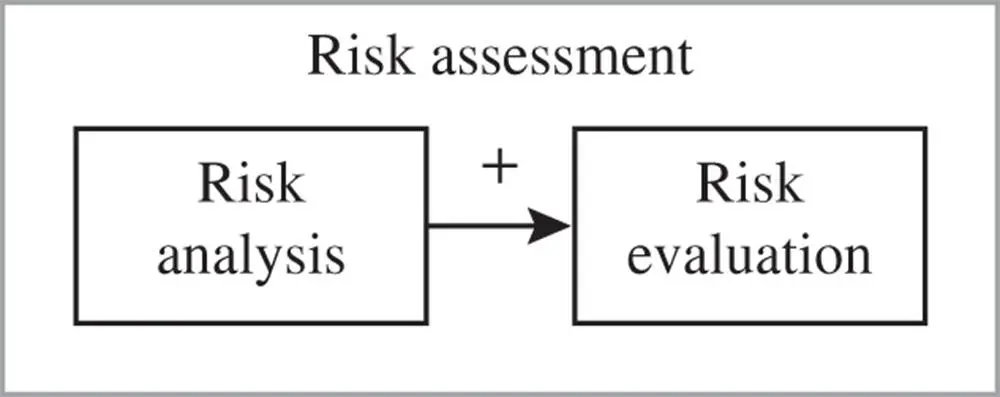 Figure 3.1Risk assessment as a combination of risk analysis and risk evaluation.
Интервал:
Закладка:
Похожие книги на «Risk Assessment»
Представляем Вашему вниманию похожие книги на «Risk Assessment» списком для выбора. Мы отобрали схожую по названию и смыслу литературу в надежде предоставить читателям больше вариантов отыскать новые, интересные, ещё непрочитанные произведения.





Обсуждение, отзывы о книге «Risk Assessment» и просто собственные мнения читателей. Оставьте ваши комментарии, напишите, что Вы думаете о произведении, его смысле или главных героях. Укажите что конкретно понравилось, а что нет, и почему Вы так считаете.