Marvin Rausand - Risk Assessment
Здесь есть возможность читать онлайн «Marvin Rausand - Risk Assessment» — ознакомительный отрывок электронной книги совершенно бесплатно, а после прочтения отрывка купить полную версию. В некоторых случаях можно слушать аудио, скачать через торрент в формате fb2 и присутствует краткое содержание. Жанр: unrecognised, на английском языке. Описание произведения, (предисловие) а так же отзывы посетителей доступны на портале библиотеки ЛибКат.
- Название:Risk Assessment
- Автор:
- Жанр:
- Год:неизвестен
- ISBN:нет данных
- Рейтинг книги:3 / 5. Голосов: 1
-
Избранное:Добавить в избранное
- Отзывы:
-
Ваша оценка:
Risk Assessment: краткое содержание, описание и аннотация
Предлагаем к чтению аннотацию, описание, краткое содержание или предисловие (зависит от того, что написал сам автор книги «Risk Assessment»). Если вы не нашли необходимую информацию о книге — напишите в комментариях, мы постараемся отыскать её.
2nd Edition
The book begins with an introduction of risk analysis, assessment, and management, and includes a new section on the history of risk analysis. It covers hazards and threats, how to measure and evaluate risk, and risk management. It also adds new sections on risk governance and risk-informed decision making; combining accident theories and criteria for evaluating data sources; and subjective probabilities. The risk assessment process is covered, as are how to establish context; planning and preparing; and identification, analysis, and evaluation of risk.
also offers new coverage of safe job analysis and semi-quantitative methods, and it discusses barrier management and HRA methods for offshore application. Finally, it looks at dynamic risk analysis, security and life-cycle use of risk.
Serves as a practical and modern guide to the current applications of risk analysis and assessment, supports key standards, and supplements legislation related to risk analysis Updated and revised to align with ISO 31000 Risk Management and other new standards and includes new chapters on security, dynamic risk analysis, as well as life-cycle use of risk analysis Provides in-depth coverage on hazard identification, methodologically outlining the steps for use of checklists, conducting preliminary hazard analysis, and job safety analysis Presents new coverage on the history of risk analysis, criteria for evaluating data sources, risk-informed decision making, subjective probabilities, semi-quantitative methods, and barrier management Contains more applications and examples, new and revised problems throughout, and detailed appendices that outline key terms and acronyms Supplemented with a book companion website containing Solutions to problems, presentation material and an Instructor Manual
is ideal for courses on risk analysis/risk assessment and systems engineering at the upper-undergraduate and graduate levels. It is also an excellent reference and resource for engineers, researchers, consultants, and practitioners who carry out risk assessment techniques in their everyday work.
Risk Assessment — читать онлайн ознакомительный отрывок
Ниже представлен текст книги, разбитый по страницам. Система сохранения места последней прочитанной страницы, позволяет с удобством читать онлайн бесплатно книгу «Risk Assessment», без необходимости каждый раз заново искать на чём Вы остановились. Поставьте закладку, и сможете в любой момент перейти на страницу, на которой закончили чтение.
Интервал:
Закладка:
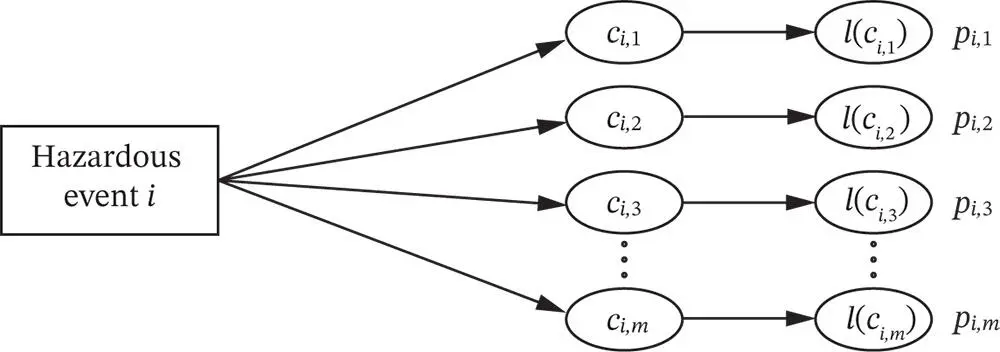 Figure 2.6Loss spectrum for a hazardous event
  .
.
In this case, it may be meaningful to talk about the mean consequence or mean loss if the hazardous event should occur
(2.9) 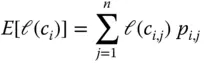
Observe that ( 2.9) is the conditional mean loss given that the specified hazardous event has occurred. The minimum and maximum loss and the standard deviation may easily be provided. In cases where the consequences cannot be easily measured with a common unit, it is considered much more meaningful to present the entire consequence spectrum to the decision‐maker, primarily for the whole study object but also for the most critical hazardous events (or end states).
2.5.5 Time of Recording Consequences
Some of the consequences of an accident may occur immediately, whereas others may not materialize until years after the accident. People are, for example, still (claimed to be) dying of cancer in 2019 as a consequence of the Chernobyl accident in 1986. A large quantity of nuclear fallout was released and spread as far as northern Norway. During the accident, only a few persons were harmed physically, but several years after the accident, a number of people developed cancer and died from the fallout. The same applies for other accidents involving hazardous materials, and notably for the Bhopal accident that took place 23 December 1984, in Bhopal, India. When we assess the consequences of an accident, it is therefore important not only to consider the immediate consequences but also to consider the delayed effects.
2.5.6 Severity
In some cases, it is useful to define a limited set of possible consequence classes or categories and use these rather than a continuous spectrum of consequences. The term severity is sometimes used to describe these classes:
Definition 2.29 (Severity)
Seriousness of the consequences of an event expressed either as a financial value or as a category.
The categories may be, for example, catastrophic , severe loss , major damage , damage , or minor damage . Each category has to be described to ensure the categories are understood by all relevant stakeholders. This is discussed further in Chapter 6.
2.6 Additional Terms
This section defines a number of terms that are associated to risk and that are treated in more detail in later chapters of the book.
2.6.1 Barriers
Most well‐designed systems have barriers that can prevent or reduce the probability of hazardous events, or stop or mitigate their consequences.
Definition 2.30 (Barrier)
Physical or engineered system or human action (based on specific procedures or administrative controls) that is implemented to prevent, control, or impede energy released from reaching the assets and causing harm.
Barriers are also called safeguards, protection layers, defenses, controls , or countermeasures . Barriers are discussed in more detail in Chapter 14. Some categories of barriers are listed in Table 2.9.
Table 2.9Categories of barriers.
| Physical barriers – Equipment and engineering design– Personal protective equipment (e.g. clothes, hard hats, and glasses)– Fire walls, shields– Safety devices (e.g. relief valves, emergency shutdown systems, and fire extinguishers)– Warning devices (e.g. fire and gas alarms) | Organizational barriers – Hazard identification and analyses– Line management oversight– Supervision– Inspection and testing– Work planning– Work procedures– Training– Knowledge and skills– Rules and regulations |
2.6.2 Safety
Safety is a problematic concept that is used with many different meanings. Many standards and guidelines related to risk assessment use the word safety but avoid defining the concept. An exception is MIL‐STD‐882E (2012), where safety is defined as “freedom from those conditions that can cause death, injury, occupational illness, damage to or loss of equipment or property, or damage to the environment.” According to this definition, safety implies that all hazards are removed and that no assets will be harmed. This implies that risk is zero. For most practical systems, safety is therefore not attainable, and may be considered a Utopia.
Many risk analysts feel that the definition of safety in MIL‐STD‐882E is not of any practical use and that we need a definition such that safety is an attainable state. The following definition is therefore proposed:
Definition 2.31(Safety)
A state where the risk has been reduced to a level that is as low as reasonably practicable (ALARP) and where the remaining risk is generally accepted.
This definition implies that a system or an activity is safe if the risk related to the system/activity is considered to be acceptable. Safety is therefore a relative condition that is based on a judgment of the acceptability of risk. The meaning of acceptable risk and ALARP is discussed further in Chapter 5.
From Definition 2.31, safety is closely dependent on risk because it is the risk level that determines whether a system is safe or not. An important distinction between risk and safety, as defined above, is that safety is a state that either is reached or not, whereas risk is measured on a continuous scale and can be high, medium, or low or measured or expressed in other ways. This means that even if a system is safe , there will still be risk.
2.6.3 Safety Performance
In this book, we use the word risk to describe our uncertainty about adverse events that may occur in the future . Sometimes, decision‐makers may be wondering “whether the estimated risk in the coming period (e.g. five years) is higher or lower than the risk was in the past period.” With our definition of risk, speaking of risk in the past has no meaning. This is because when a period is over, there is no uncertainty related to what happened in that period. We therefore need another term that can be used to describe what happened in a past period – and we use the term safety performance .
Definition 2.32 (Safety performance)
An account of all accidents that occurred in a specified (past) time period, together with frequencies and consequences observed for each type of accident.
In this way, the estimated risk in the coming period can be compared to the safety performance in the past period.
Remark 2.7 (Was the risk analysis wrong?)
Observe that the occurrence of events and accidents is – at least partly – a random process. If the risk in the coming period is estimated to be rather high, and by the end of that period, we find that the safety performance in the period showed no accidents, this does not necessarily mean that the risk analysis was wrong. The same argument can also be used the other way around. In particular for major accident risk, it can be claimed that risk analyses are hardly ever wrong (although they may not always be right)!
Читать дальшеИнтервал:
Закладка:
Похожие книги на «Risk Assessment»
Представляем Вашему вниманию похожие книги на «Risk Assessment» списком для выбора. Мы отобрали схожую по названию и смыслу литературу в надежде предоставить читателям больше вариантов отыскать новые, интересные, ещё непрочитанные произведения.






Обсуждение, отзывы о книге «Risk Assessment» и просто собственные мнения читателей. Оставьте ваши комментарии, напишите, что Вы думаете о произведении, его смысле или главных героях. Укажите что конкретно понравилось, а что нет, и почему Вы так считаете.