Fog Computing
Здесь есть возможность читать онлайн «Fog Computing» — ознакомительный отрывок электронной книги совершенно бесплатно, а после прочтения отрывка купить полную версию. В некоторых случаях можно слушать аудио, скачать через торрент в формате fb2 и присутствует краткое содержание. Жанр: unrecognised, на английском языке. Описание произведения, (предисловие) а так же отзывы посетителей доступны на портале библиотеки ЛибКат.
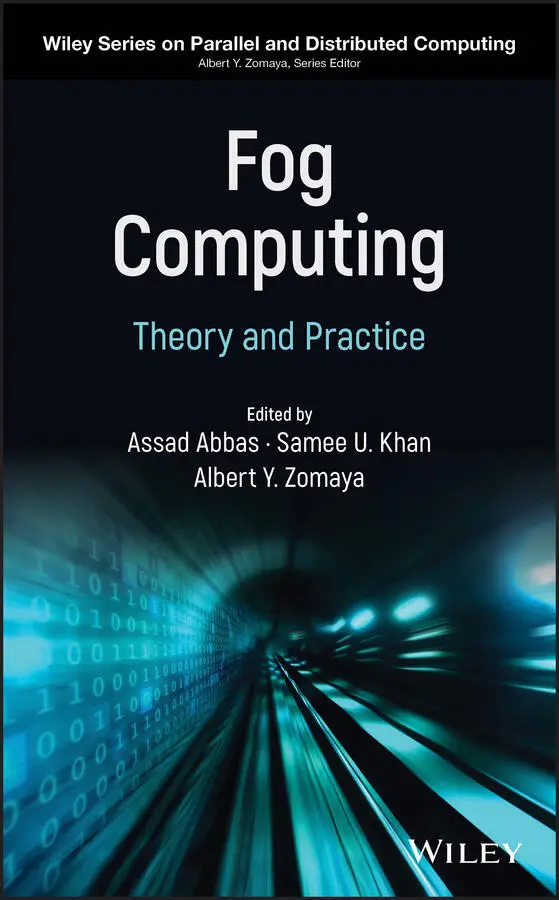
- Название:Fog Computing
- Автор:
- Жанр:
- Год:неизвестен
- ISBN:нет данных
- Рейтинг книги:5 / 5. Голосов: 1
-
Избранное:Добавить в избранное
- Отзывы:
-
Ваша оценка:
Fog Computing: краткое содержание, описание и аннотация
Предлагаем к чтению аннотацию, описание, краткое содержание или предисловие (зависит от того, что написал сам автор книги «Fog Computing»). Если вы не нашли необходимую информацию о книге — напишите в комментариях, мы постараемся отыскать её.
focuses on the technological aspects of employing fog computing in various application domains, such as smart healthcare, industrial process control and improvement, smart cities, and virtual learning environments. In addition, the Machine-to-Machine (M2M) communication methods for fog computing environments are covered in depth.
Presented in two parts—Fog Computing Systems and Architectures, and Fog Computing Techniques and Application—this book covers such important topics as energy efficiency and Quality of Service (QoS) issues, reliability and fault tolerance, load balancing, and scheduling in fog computing systems. It also devotes special attention to emerging trends and the industry needs associated with utilizing the mobile edge computing, Internet of Things (IoT), resource and pricing estimation, and virtualization in the fog environments.
Includes chapters on deep learning, mobile edge computing, smart grid, and intelligent transportation systems beyond the theoretical and foundational concepts Explores real-time traffic surveillance from video streams and interoperability of fog computing architectures Presents the latest research on data quality in the IoT, privacy, security, and trust issues in fog computing
provides a platform for researchers, practitioners, and graduate students from computer science, computer engineering, and various other disciplines to gain a deep understanding of fog computing.
Fog Computing — читать онлайн ознакомительный отрывок
Ниже представлен текст книги, разбитый по страницам. Система сохранения места последней прочитанной страницы, позволяет с удобством читать онлайн бесплатно книгу «Fog Computing», без необходимости каждый раз заново искать на чём Вы остановились. Поставьте закладку, и сможете в любой момент перейти на страницу, на которой закончили чтение.
Интервал:
Закладка:
Library of Congress Cataloging-in-Publication data applied for
ISBN: 9781119551690
Cover Design: Wiley
Cover Image: © Khing Choy/Shutterstock
1 Mobile Fog Computing
Chii Chang, Amnir Hadachi, Jakob Mass, and Satish Narayana Srirama
Institute of Computer Science, University of Tartu, Estonia
1.1 Introduction
The Internet of Things (IoT) paradigm motivates various next-generation applications in the domains of smart home, smart city, smart agriculture, smart manufacturing, smart mobility, and so forth [1], where the online systems are capable of managing physical objects, such as home appliances, public facilities, farming equipment or production line machines via the Internet. Moreover, mobile objects, such as land vehicles (e.g. cars, trucks, buses, etc.), maritime transports (e.g. ships, boats, vessels, etc.), unmanned aerial vehicles (UAVs; e.g. drones), and user equipment (UE; e.g. smartphones, tablets, mobile Internet terminals, etc.), have become the indispensable elements in IoT to assist a broad range of mobile IoT applications.
Mobile IoT applications emphasize the connectivity and the interoperability among the IoT infrastructure and the mobile objects. For example, in an Internet of Vehicles (IoVs) application [2], the IoT-based smart traffic infrastructure provides the connected roadside units (RSUs) that assist the smart cars to exchange the current traffic situation of the city center toward reducing the chance of traffic accidents and issues. As another example, classic disaster recovery activities of a city require numerous manned operations to monitor the disaster conditions, which involve high risk for human workers. Conversely, by integrating an Internet of Drones (IoD) [3], the smart city government can dispatch a number of drones to monitor and to execute the tasks without sending human workers to the frontline. Unexceptionally, mobile IoT also has benefited maritime activities in terms of improving the information exchange among the vessels and the central maritime management system, hastening the overall process speed of fishery or marine scientific activities [4].
Besides the public applications, mobile IoT plays an important role in personal applications, such as Internet of Medical Things (IoMT) applications [5], which utilize both inbuilt sensors of the UE (e.g. smartphone) and the UE-connected body sensors attached on the patient to collect health-related data and forward the data to the central system of the hospital via the mobile Internet connection of the UE.
Explicitly, the mobile IoT applications described above are time-critical applications that require rapid responses. However, the classic IoT system architecture, which relies on the distant central management system to perform the decision making, has faced its limitation to achieve the timely response due to latency issues deriving from the dynamic network condition between the front-end IoT devices and the back-end central server. Furthermore, the large number of connected mobile IoT devices have raised the challenges of mobile Big Data [6] that increase the burden of the central server and hence, lead to bottleneck issues. In order to improve the agility and to achieve the goal of ultra-low latency, researchers have introduced fog computing architecture [1].
Fog computing architecture (the fog) distributes the tasks from the distant central management system in the cloud to the intermediate nodes (e.g. routers, switches, hubs, etc.), which contain computational resources, to reduce the latency caused by transmitting messages between the front-end IoT devices and the back-end cloud. Specifically, the fog provides five basic mechanisms: storage, compute, acceleration, networking, and control toward enhancing IoT systems in five subjects: security, cognition, agility, low latency, and efficiency [1]. For example, in IoV application, the central server can migrate the best route determination function from the cloud to the roadside fog nodes to assist the travel of the connected vehicles. As another example, in an outdoor-based IoMT application, the hospital system can distribute the health measurement function and the alarm function to the UE in order to perform timely determination of the patient's health condition and to perform an alarm to catch the proximal passengers' attention when the patient is having an incident.
Here, we use the term mobile fog computing (MFC) to describe the fog-assisted mobile IoT applications.
MFC brings numerous advantages to mobile IoT in terms of rapidness, ultra-low latency, substitutability and sustainability, efficiency, and self-awareness. However, the dynamic nature of MFC environment raises many challenges in terms of resource and network heterogeneity, the mobility of the participative entities, the cost of operation, and so forth. In general, the static fog computing frameworks designed for applications, such as the smart home or smart factory would not fully address the MFC-specific challenges because they have different perspectives from the involved entities and the topology. For example, a classic fog computing framework, which may involve a thin mobile client-side application for smartphone users, would not consider how to provide a reliable fog service to the high-speed moving vehicles. Moreover, the classic fog computing framework also would not consider how to provide a reliable fog service to vessels at sea where the telecommunication base stations are not available, and the satellite Internet is too expensive.
The goal of this chapter is to provide an introduction and guidance to MFC developments. Specifically, different from the existing works [7, 8] related to MFC, this chapter discusses MFC in four major application domains: land vehicular fog computing (LV-Fog), marine fog computing (Marine Fog), unmanned aerial vehicular fog computing (UAV-Fog), and user equipment-based fog computing (UE-fog).
The rest of the chapter is organized as follows: Section 1.2clarifies the term MFC . Section 1.3breaks MFC down into four application domains and describes their characteristics. Section 1.4enlists the wireless communication technologies used in the mentioned application domains, while Section 1.5proposes a taxonomy of nonfunctional requirements for MFC. Open research challenges, both domain-oriented and generic, are identified in Section 1.6, and finally, Section 1.7concludes this chapter.
1.2 Mobile Fog Computing and Related Models
In this chapter, MFC has its specific definition and it is not an exchangeable terminology with the other similar terms, such as mobile cloud computing (MCC) or multi-access (mobile) edge computing (MEC). In order to clarify the meaning of MFC, one needs to understand the aspects of the parties who introduced or adapted the terminologies. Commonly, MCC refers to a system that assists mobile devices (e.g. smartphones) to offload their resource-intensive computational tasks to either distant cloud [7] or to the proximity-based cloudlet [8].
Fundamentally, MEC is an European Telecommunications Standards Institute (ETSI) standard aimed to introduce an open standard for telecommunication service providers to integrate and to provide infrastructure as a service (IaaS), platform as a service (PaaS), or software as a service (SaaS) cloud services from the industrial integrated routers or switches of their cellular base stations. Explicitly, MEC is an implementation approach rather than a software architecture model. Further, as stated by ETSI, ETSI and OpenFog are collaborating to enable the MEC standard and the OpenFog Reference Architecture standard (IEEE 1934) to complement each other [9].
Читать дальшеИнтервал:
Закладка:
Похожие книги на «Fog Computing»
Представляем Вашему вниманию похожие книги на «Fog Computing» списком для выбора. Мы отобрали схожую по названию и смыслу литературу в надежде предоставить читателям больше вариантов отыскать новые, интересные, ещё непрочитанные произведения.






Обсуждение, отзывы о книге «Fog Computing» и просто собственные мнения читателей. Оставьте ваши комментарии, напишите, что Вы думаете о произведении, его смысле или главных героях. Укажите что конкретно понравилось, а что нет, и почему Вы так считаете.