Hafiz M. H. Babu - Reversible and DNA Computing
Здесь есть возможность читать онлайн «Hafiz M. H. Babu - Reversible and DNA Computing» — ознакомительный отрывок электронной книги совершенно бесплатно, а после прочтения отрывка купить полную версию. В некоторых случаях можно слушать аудио, скачать через торрент в формате fb2 и присутствует краткое содержание. Жанр: unrecognised, на английском языке. Описание произведения, (предисловие) а так же отзывы посетителей доступны на портале библиотеки ЛибКат.
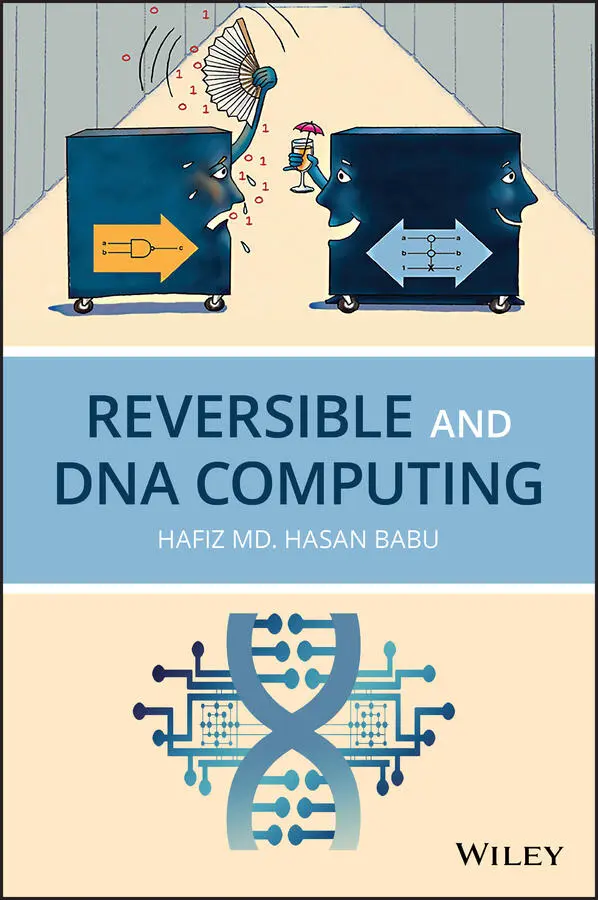
- Название:Reversible and DNA Computing
- Автор:
- Жанр:
- Год:неизвестен
- ISBN:нет данных
- Рейтинг книги:3 / 5. Голосов: 1
-
Избранное:Добавить в избранное
- Отзывы:
-
Ваша оценка:
Reversible and DNA Computing: краткое содержание, описание и аннотация
Предлагаем к чтению аннотацию, описание, краткое содержание или предисловие (зависит от того, что написал сам автор книги «Reversible and DNA Computing»). Если вы не нашли необходимую информацию о книге — напишите в комментариях, мы постараемся отыскать её.
Reversible and DNA Computing — читать онлайн ознакомительный отрывок
Ниже представлен текст книги, разбитый по страницам. Система сохранения места последней прочитанной страницы, позволяет с удобством читать онлайн бесплатно книгу «Reversible and DNA Computing», без необходимости каждый раз заново искать на чём Вы остановились. Поставьте закладку, и сможете в любой момент перейти на страницу, на которой закончили чтение.
Интервал:
Закладка:
Editorial Office
The Atrium, Southern Gate, Chichester, West Sussex, PO19 8SQ, UK
For details of our global editorial offices, customer services, and more information about Wiley products visit us at www.wiley.com.
Wiley also publishes its books in a variety of electronic formats and by print‐on‐demand. Some content that appears in standard print versions of this book may not be available in other formats.
Limit of Liability/Disclaimer of Warranty
While the publisher and authors have used their best efforts in preparing this work, they make no representations or warranties with respect to the accuracy or completeness of the contents of this work and specifically disclaim all warranties, including without limitation any implied warranties of merchantability or fitness for a particular purpose. No warranty may be created or extended by sales representatives, written sales materials or promotional statements for this work. The fact that an organization, website, or product is referred to in this work as a citation and/or potential source of further information does not mean that the publisher and authors endorse the information or services the organization, website, or product may provide or recommendations it may make. This work is sold with the understanding that the publisher is not engaged in rendering professional services. The advice and strategies contained herein may not be suitable for your situation. You should consult with a specialist where appropriate. Further, readers should be aware that websites listed in this work may have changed or disappeared between when this work was written and when it is read. Neither the publisher nor authors shall be liable for any loss of profit or any other commercial damages, including but not limited to special, incidental, consequential, or other damages.
Library of Congress Cataloging‐in‐Publication Data
Names: Babu, Hafiz Md. H., 1966‐ author.
Title: Reversible and DNA computing / Hafiz Md. Hasan Babu, University of
Dhaka, Bangladesh.
Description: First edition. | Hoboken, NJ : John Wiley & Sons, Inc., [2020]
| Includes bibliographical references and index.
Identifiers: LCCN 2020009452 (print) | LCCN 2020009453 (ebook) | ISBN
9781119679424 (hardback) | ISBN 9781119679363 (adobe pdf) | ISBN
9781119679431 (epub)
Subjects: LCSH: Molecular computers.
Classification: LCC QA76.887 .B33 2020 (print) | LCC QA76.887 (ebook) |
DDC 006.3/842–dc23
LC record available at https://lccn.loc.gov/2020009452
LC ebook record available at https://lccn.loc.gov/2020009453
Cover Design: Wiley
Cover Image: Courtesy of Hafiz Babu
To my beloved parents and also to my
beloved wife, daughter, & son, who made
it possible for me to write this book.
About the Author
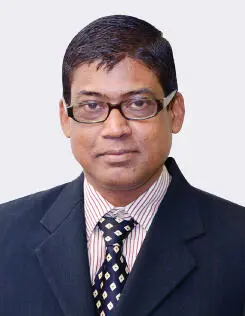
Dr. Hafiz Md. Hasan Babuis currently working as the pro‐vice‐chancellor of National University, Bangladesh. He is now on deputation from the Department of Computer Science and Engineering, University of Dhaka, Bangladesh. He is also the former chairman of the same department. For his excellent academic and administrative capability, he also served as the professor and founder chairman of the Department of Robotics and Mechatronics Engineering, University of Dhaka, Bangladesh. He served as a World Bank senior consultant and general manager of the Information Technology & Management Information System Departments of Janata Bank Limited, Bangladesh. Dr. Hasan Babu was the World Bank resident information technology expert of the Supreme Court Project Implementation Committee, Supreme Court of Bangladesh. He was also the information technology consultant of Health Economics Unit and Ministry of Health and Family Welfare in the project “SSK (Shasthyo Shurokhsha Karmasuchi) and Social Health Protection Scheme” under the direct supervision and funding of German Financial Cooperation through KfW.
Professor Dr. Hafiz Md. Hasan Babu received his M.Sc. degree in Computer Science and Engineering from the Brno University of Technology, Czech Republic, in 1992 under the Czech Government Scholarship. He obtained the Japanese Government Scholarship to pursue his PhD from the Kyushu Institute of Technology, Japan, in 2000. He also got DAAD (Deutscher Akademischer Austauschdienst) Fellowship from the Federal Republic of Germany.
Professor Dr. Hasan is a very eminent researcher. He was awarded the best paper awards in three reputed international conferences. In recognition of his valuable contributions in the field of Computer Science and Engineering, he received the Bangladesh Academy of Sciences Dr. M O. Ghani Memorial Gold Medal Award for the year 2015, which is one of the most prestigious research awards in Bangladesh. He was also awarded the UGC (University Grants Commission of Bangladesh) Gold Medal Award‐2017 for his outstanding research contributions in computer science and engineering. He has written more than 100 research articles published in reputed international journals ( IET Computers & Digital Techniques , IET Circuits and Systems , IEEE Transactions on Instrumentation and Measurement , IEEE Transactions on VLSI Systems , IEEE Transactions on Computers , Elsevier Journal of Microelectronics , Elsevier Journal of Systems Architecture , Springer Journal of Quantum Information Processing etc.) and joined international conferences. According to Google Scholar, Prof. Hasan has already received around 1257 citations with h‐index 16 and i10‐index 30. He is a regular reviewer of reputed international journals and international conferences. He presented invited talks and chaired scientific sessions or worked as a member of the organizing committee or international advisory board in many international conferences held in different countries. For his excellent research record, he has also been appointed as the associate editor of IET Computers and Digital Techniques , published by the Institution of Engineering and Technology of the United Kingdom.
Professor Dr. Hasan was appointed as a member of the prime minister's ICT Task Force Committee, Government of the People's Republic of Bangladesh on recognition of his national and international level contributions in Engineering Sciences. He is currently the president of Bangladesh Computer Society and also the president of Internet Society, Bangladesh chapter. He has been recently appointed as a part-time member of Bangladesh Accreditation Council to ensure the quality of higher education in Bangladesh.
Preface
Reversible computing is called a backward deterministic system such that every state of the system has at most one predecessor. Hence, there is no pair of distinct states that goes to the same state. Reversible computing intends computation using reversible operations i.e., procedures which can be easily and exactly reversed. In technical terms, a reversible computation performs a bijective transformation of its local configuration space. When reversible computing is maintained at the highest levels of computation, the computer architectures, programming languages, and algorithms provide opportunities for interesting applications such as bidirectional debuggers, rollback mechanisms for speculative executions in parallel and distributed systems, and error and intrusion detection techniques. DNA computation emerged about 25 years ago as an exciting new research field at the intersection of computer science, biology, engineering, and mathematics. Although anticipated by Feynman as long ago as the 1950s, the notion of performing computations at a molecular level was only realized in 1994, by Adleman's seminal work on computing with DNA. Since then the field has blossomed rapidly, with significant theoretical and experimental results being reported regularly.
Читать дальшеИнтервал:
Закладка:
Похожие книги на «Reversible and DNA Computing»
Представляем Вашему вниманию похожие книги на «Reversible and DNA Computing» списком для выбора. Мы отобрали схожую по названию и смыслу литературу в надежде предоставить читателям больше вариантов отыскать новые, интересные, ещё непрочитанные произведения.






Обсуждение, отзывы о книге «Reversible and DNA Computing» и просто собственные мнения читателей. Оставьте ваши комментарии, напишите, что Вы думаете о произведении, его смысле или главных героях. Укажите что конкретно понравилось, а что нет, и почему Вы так считаете.