Boris Kolonitskii - Comrade Kerensky
Здесь есть возможность читать онлайн «Boris Kolonitskii - Comrade Kerensky» — ознакомительный отрывок электронной книги совершенно бесплатно, а после прочтения отрывка купить полную версию. В некоторых случаях можно слушать аудио, скачать через торрент в формате fb2 и присутствует краткое содержание. Жанр: unrecognised, на английском языке. Описание произведения, (предисловие) а так же отзывы посетителей доступны на портале библиотеки ЛибКат.
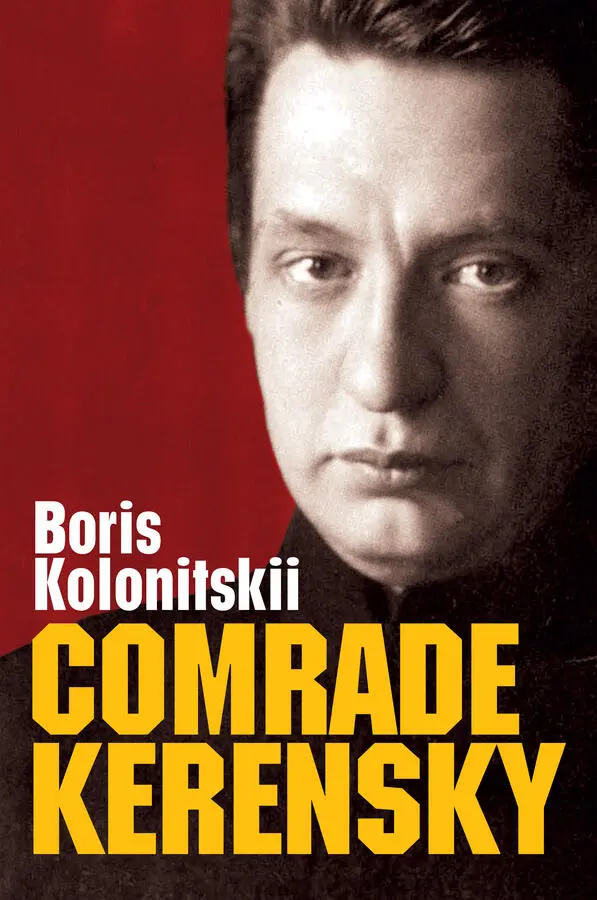
- Название:Comrade Kerensky
- Автор:
- Жанр:
- Год:неизвестен
- ISBN:нет данных
- Рейтинг книги:3 / 5. Голосов: 1
-
Избранное:Добавить в избранное
- Отзывы:
-
Ваша оценка:
Comrade Kerensky: краткое содержание, описание и аннотация
Предлагаем к чтению аннотацию, описание, краткое содержание или предисловие (зависит от того, что написал сам автор книги «Comrade Kerensky»). Если вы не нашли необходимую информацию о книге — напишите в комментариях, мы постараемся отыскать её.
Comrade Kerensky — читать онлайн ознакомительный отрывок
Ниже представлен текст книги, разбитый по страницам. Система сохранения места последней прочитанной страницы, позволяет с удобством читать онлайн бесплатно книгу «Comrade Kerensky», без необходимости каждый раз заново искать на чём Вы остановились. Поставьте закладку, и сможете в любой момент перейти на страницу, на которой закончили чтение.
Интервал:
Закладка:
5 ‘Champion of freedom’ and the cult of champions of freedom
In 1917 many people were calling Kerensky a champion of freedom. For example, on 26 July 1917, representatives of the Kuzhenkino garrison passed a resolution that
… all elements of the country who love their motherland must rally round the Provisional Government, giving it their full support and confidence, in the hope that the coalition government, under the leadership of such a proven champion of freedom for working people as everybody’s favourite politician, our comrade KERENSKY, will devote all its energy to defending the motherland and revolution from the insolent attempts to encroach of both the foreign enemy and enemies of the revolution both on the right and the left. 191
Those drafting the resolution adopted a tactic of legitimation which can be found in other texts of the time: a political Leader deserves support because he has been tested by years of fighting for the freedom of the people; his irreproachable revolutionary reputation is a guarantee that he will faithfully implement the political programme of the government he heads.
Kerensky’s actions in earlier years, and especially during the coup, contributed to establishing just such a reputation, and it comes as no surprise that in many of these greetings he is described as a ‘champion of freedom’. The conference of the Petrograd Socialist Revolutionaries in early March had described him as a ‘steadfast, tireless champion of a government of the people’. 192‘We send heartfelt greetings to a champion of freedom. May heaven bless your future great achievements,’ political exiles encouraged him. 193It mattered that veterans of the revolutionary struggle were using such language about him, particularly impressing the masses who were now in the process of becoming politicized.
National organizations called Kerensky ‘a magnificent champion of freedom for Russia and its nationalities’. Those composing other resolutions hailed him as ‘a champion of social liberation’. Kerensky was called ‘a champion of the freedom of the working people’, ‘a proven champion of the happiness and freedom of working people’, ‘a tireless champion and defender of the dispossessed people and its freedom’, and ‘a champion of freedom for the insulted and humiliated’. 194In many other resolutions the revolutionary minister was called a ‘champion of freedom’, ‘a champion of freedom for the people’, ‘a champion for the liberation of the motherland’, and ‘our dear and tireless champion of freedom and rights’. 195Particular significance was seen in the length of his political service and faithfulness to his chosen political path. Kerensky was regularly described as a ‘proven’, ‘indefatigable’, ‘tireless’, ‘steadfast’ champion.
As we have seen, Kerensky’s 1917 biographers created and affirmed his revolutionary reputation, thereby asserting his right to political leadership at a time of revolution. Actually, in this he was not alone. The status of adversary of the old regime became an important source of political legitimation, so not a few leaders of the time were celebrated by their supporters as ‘champions of freedom’.
In March many people in Russia thought it appropriate to congratulate Rodzyanko, the chairman of the State Duma and of its Provisional Committee, on the success of the revolution. 196Those congratulating him were not always entirely clear about his status. He was referred to as ‘the Head of the Free Russian State’, ‘the Head of Free Russia’, ‘the President-Minister’, ‘the Chairman of the Provisional Government’. Rodzyanko was also called ‘a champion of freedom’, ‘the liberator of Russia’ 197and sometimes even ‘the Leader of freedom’. 198Some of these titles awarded to him were later used to characterize other leaders, including Kerensky: Rodzyanko, chairman of the State Duma, was called, for example, ‘the genius of Free Russia’. 199More commonly, however, he was called the ‘first citizen’, ‘the first free citizen of this free country’, ‘the best citizen’ and ‘the first citizen of free Russia’. The barrister Iosif Balinsky greeted Rodzyanko as follows: ‘Long live the State Duma … Long life to its splendid chairman, the first and most worthy citizen among equal citizens of free Russia.’ 200
Some projects of memory politics were associated with Rodzyanko’s name. The Yekaterinoslav City Council hastened to perpetuate the memory of their august major local landowner: resolving to instal a marble statue of him in the hall of their duma, naming the town square after him and, in addition, planning to erect a monument to Liberation in the city centre with a statue of Rodzyanko in the middle of the composition. 201
The political parties glorified their leaders, recalling their revolutionary past. This method of enhancing authority was deployed with particular energy when the party leaders were under fire from opponents. The Socialist Revolutionaries, for example, fought back against attacks in the conservative and liberal press on Chernov, whom they dubbed a ‘highly prominent champion of the freedom and happiness of working people’. 202
When Lenin and the ‘Leninists’ found themselves furiously attacked, the Bolsheviks felt the time had come to publish several biographical sketches of their own, making known their Leader’s contribution to the revolutionary struggle. 203They declared: ‘It is not right to refer to false, sordid accusations against Comrade Lenin because Lenin is an old party Leader, not just one since March.’ 204This form of words could be seen as concealed criticism of politicians who had come to prominence only during the February Days – a reproach that veteran revolutionaries might have been inclined to level at Kerensky.
After the overthrow of the monarchy, constructing revolutionary biographies was a common method of consolidating authority, and people of quite different views described their leaders as ‘true’ and ‘proven’ champions of freedom, even as they cast doubt and sought to refute similar claims on the part of their political opponents.
For Kerensky, his claim to the image of a champion of freedom was particularly important, and we have seen that both he and his supporters went to great lengths to build it up. No other political leader was on the receiving end of quite so many biographical essays in 1917.
Kerensky’s supporters sometimes went further and sought to place him in a higher league than other champions of freedom. Some time before 23 March the chairman of the students of Kharkov University who were from Borisoglebsk greeted him as ‘foremost among the great champions of freedom’. 205In the months that followed, other citizens pointed out how special was his place in the pantheon. On 10 July a telegram was sent to the minister declaring that the Socialist Revolutionaries of the Molitovka factory in Nizhny Novgorod ‘greet you, the foremost champion of free, revolutionary Russia, and express to you, and through you to the Provisional Government, our complete confidence.’ A representative of the Mogilyov Soviet of Peasant Deputies called him nothing less than ‘the apostle of revolution and liberator of the peasantry’. 206
In some writing of the time, this still youthful politician was seen as a unique, and even single-handed, liberator of Russia. The attitude is found in letters and resolutions addressed to Kerensky even in the autumn of 1917. ‘You are the person to whom all Russia is indebted for liberation from the oppression of tsarism.’ 207In another instance, he is described as Russia’s principal liberator and Leader of the champions of freedom. A non-commissioned officer called Romanov, who wanted permission to change his name, which had become an unwelcome reminder of the old regime, wrote, ‘I beg you, great champion!!! For all the Russian people who endured this yoke and bridle, you, Mr Kerensky, leading all the others, were the great liberator from this oppression and lifted this yoke.’ 208
Читать дальшеИнтервал:
Закладка:
Похожие книги на «Comrade Kerensky»
Представляем Вашему вниманию похожие книги на «Comrade Kerensky» списком для выбора. Мы отобрали схожую по названию и смыслу литературу в надежде предоставить читателям больше вариантов отыскать новые, интересные, ещё непрочитанные произведения.


Обсуждение, отзывы о книге «Comrade Kerensky» и просто собственные мнения читателей. Оставьте ваши комментарии, напишите, что Вы думаете о произведении, его смысле или главных героях. Укажите что конкретно понравилось, а что нет, и почему Вы так считаете.