Boris Kolonitskii - Comrade Kerensky
Здесь есть возможность читать онлайн «Boris Kolonitskii - Comrade Kerensky» — ознакомительный отрывок электронной книги совершенно бесплатно, а после прочтения отрывка купить полную версию. В некоторых случаях можно слушать аудио, скачать через торрент в формате fb2 и присутствует краткое содержание. Жанр: unrecognised, на английском языке. Описание произведения, (предисловие) а так же отзывы посетителей доступны на портале библиотеки ЛибКат.
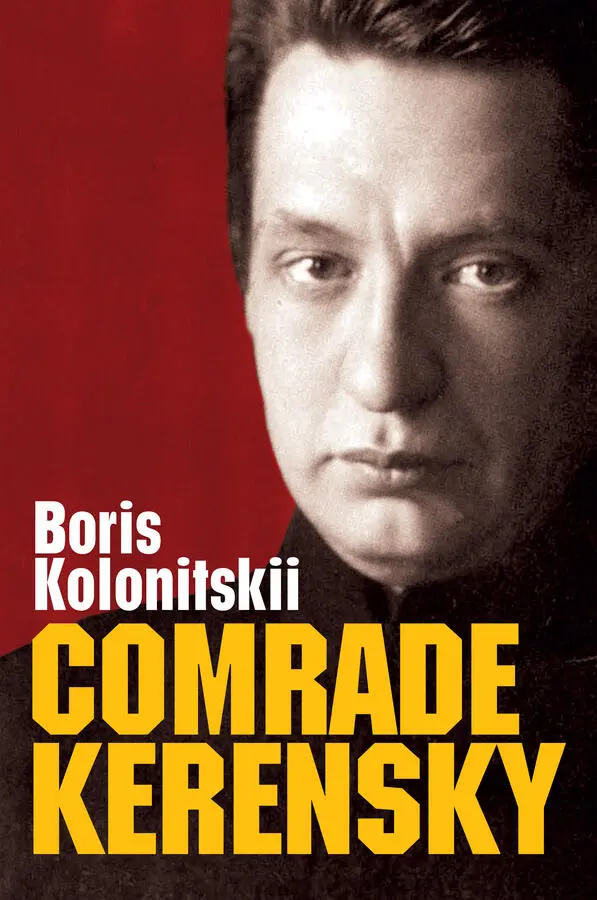
- Название:Comrade Kerensky
- Автор:
- Жанр:
- Год:неизвестен
- ISBN:нет данных
- Рейтинг книги:3 / 5. Голосов: 1
-
Избранное:Добавить в избранное
- Отзывы:
-
Ваша оценка:
Comrade Kerensky: краткое содержание, описание и аннотация
Предлагаем к чтению аннотацию, описание, краткое содержание или предисловие (зависит от того, что написал сам автор книги «Comrade Kerensky»). Если вы не нашли необходимую информацию о книге — напишите в комментариях, мы постараемся отыскать её.
Comrade Kerensky — читать онлайн ознакомительный отрывок
Ниже представлен текст книги, разбитый по страницам. Система сохранения места последней прочитанной страницы, позволяет с удобством читать онлайн бесплатно книгу «Comrade Kerensky», без необходимости каждый раз заново искать на чём Вы остановились. Поставьте закладку, и сможете в любой момент перейти на страницу, на которой закончили чтение.
Интервал:
Закладка:
Kerensky continued to involve himself in illegal and semi-legal undertakings. He had a fat dossier in the Police Department, where a close eye was kept on him, with informers being infiltrated among those close to him. In 1913 Kerensky worked with the Petersburg Collective of the Socialist Revolutionaries. Okhrana agents based in Paris even reported that he had become a member of the party’s Central Committee. The information was false but indicative of the Interior Ministry’s suspicions about him. In reality, Kerensky declined an invitation from the Socialist Revolutionaries to become their representative in the Duma, aiming instead to unify all the Narodnik groups politically. These police reports were nevertheless published by supporters of Kerensky in 1917, which may have given readers an exaggerated impression of the scale of his illegal activities. This was all to the good as far as his status was concerned. 100
On 23 July 1914, on the eve of the First World War, Kerensky was detained in Yekaterinburg at a gathering of teachers which had not been officially sanctioned. He was saved from actual arrest by his immunity as a Duma deputy. 101
In 1911 or 1912, the young politician had been invited to join the Great Orient of the Peoples of Russia, a secret society established in 1910 on a basis of Masonic lodges. 102Kerensky played a major role in the organization and became both a member of the Supreme Council of Lodges and, in 1916, its secretary (a position he may still have been holding in early 1917). A historian of Freemasonry even writes of this as Kerensky’s organization, seeing the Great Orient of the Peoples of Russia as distinct from Russian Freemasonry in the preceding period. 103
To what extent did the Freemasons contribute to Kerensky’s advancement? The lawyer Alexander Galpern, who replaced him as secretary of the Supreme Council and became the Provisional Government’s principal civil servant, recalled: ‘It was, after all, we ourselves who put him forward and indeed created him, so it is we who bear responsibility for him.’ 104If the Masons advanced Kerensky’s career, the popular politician for his part was exceptionally important for the brothers, who were seeking to enrol influential people in their ranks. He was an important figure in the public eye before joining the lodge.
Kerensky’s biographers had nothing to say in 1917 about his being a Mason. There was almost no discussion of Freemasonry at the time, although a febrile public was susceptible to suggestions of conspiracy. All manner of conspiracy theories were, in fact, used by both the left and right wings for political mobilization. The sympathy of foreign Masonic organizations for the anti-monarchist revolution in Russia was well known, and it was even possible to read about ties between the Masons and Kerensky in the newspapers. On 24 May a newspaper of the Ministry of War, which Kerensky by this time headed, published greetings from Italian members of the International Mixed Scottish Masonic Rite to ‘renewed Russia’. The addressee was the Russian minister of war. The Italian Freemasons congratulated the Russian people ‘on their deliverance from traitors to their homeland who had sought to compel Russia to conclude a shameful peace.’ They expressed the hope that the Russian army ‘will make every effort to bring the war to a victorious conclusion’ and invited ‘all our Russian colleagues to join with the Italian Masons for the joint dissemination of our shared ideals.’ 105
One can only speculate as to why this address from the Italian Freemasons to their ‘Russian colleagues’ was not exploited by Kerensky’s opponents (among whom were ‘brothers’ who were to become the minister’s foes after February and right-wingers who had been furiously decrying ‘Yid Freemason plots’ before the revolution). At all events, the revolutionary minister’s Freemasonry had no obvious impact on his public image in 1917.
Of no small importance to Kerensky’s reputation were some trials in which he was not personally engaged. In 1911–13 Russia was greatly exercised by the case of Menahem Beilis, a Kievan Jew accused of ritual murder. Senior officials in the Interior Ministry and the Ministry of Justice exerted pressure on the investigation, and right-wingers unleashed anti-Semitic propaganda in the Black Hundred press and the State Duma. In such a situation the code of conduct of a radical intellectual called for resolute action.
Leftists, liberals and even some conservatives launched a campaign in defence of Beilis, and Kerensky made a speech in the Duma about the trial on 23 October 1913. That same day a meeting was held of barristers of the St Petersburg Circuit of the Courts of Justice. Radical lawyers turned a routine meeting into a political rally. Having mobilized their supporters, who came to the meeting in large numbers, Kerensky and Nikolai Sokolov insisted on a discussion of the Beilis case. A resolution was adopted condemning ‘violations of the foundations of justice’ by the government.
Those who had organized the protest were accused both of contempt of court and the Russian government and of attempting to influence the outcome of an ongoing trial. The government attempted to deprive Kerensky of his immunity from prosecution as a Duma deputy, and the minister of justice, Ivan Shcheglovitov, informed the chairman of the Duma that Kerensky was required in court to face criminal charges. The Duma Commission on Personnel Matters decided by a majority vote that Kerensky could not be expelled from the Duma. 106In June 1914 the court reached its verdict in the case of the Petersburg lawyers, and Kerensky was sentenced to eight months’ imprisonment. He continued, however, to be protected by his immunity as a deputy. Banquets were organized in his honour, telegrams of greetings were sent to him, and like-minded deputies gave the leader of the Trudoviks a standing ovation in the Duma. 107Kerensky’s biographers write about this episode but do not always mention his parliamentary privilege, which might have given readers the impression that he had actually been in prison for that length of time.
Kerensky’s attitude to the First World War was of great importance for his career, but some biographers simply omit to mention it. In 1917 Russian society was completely split over this issue, so, for any statesman seeking to create a broad political coalition, being pinned down on the matter could only have adverse consequences. In his memoirs, Kerensky describes his position as simultaneously defencist and revolutionary. These apparently contradictory positions he reconciled on the basis that it was essential to overthrow the tsarist government because it was not competent to win the war. 108
It was impossible for him to adopt that position publicly. Nevertheless, as leader of the Trudovik group, he had no option but to state his position on the war at an emergency meeting of the State Duma on 26 July 1914. In his speech Kerensky declared:
Citizens of Russia, remember that you have no enemies among the working classes of the belligerent countries. Defending to the utmost everything you hold dear from attempts to seize it, remember that this terrible war would not have come about if liberty, equality and fraternity were guiding the actions of the governments of all countries. All you who desire the happiness and prosperity of Russia, heighten your resolve, summon up all your strength and, having successfully defended your country, liberate it. To you, our brothers, shedding your blood for your own motherland, we bow low and send fraternal greetings!
It was a skilfully constructed speech, acceptable to the radical intelligentsia because its call to defend the country could be read as a signal to liberate it politically. The patriotic pathos of the speech earned Kerensky applause from all sides of the Duma. Indeed, his speech was interrupted by applause, in which even right-wing deputies joined. 109
Читать дальшеИнтервал:
Закладка:
Похожие книги на «Comrade Kerensky»
Представляем Вашему вниманию похожие книги на «Comrade Kerensky» списком для выбора. Мы отобрали схожую по названию и смыслу литературу в надежде предоставить читателям больше вариантов отыскать новые, интересные, ещё непрочитанные произведения.




Обсуждение, отзывы о книге «Comrade Kerensky» и просто собственные мнения читателей. Оставьте ваши комментарии, напишите, что Вы думаете о произведении, его смысле или главных героях. Укажите что конкретно понравилось, а что нет, и почему Вы так считаете.