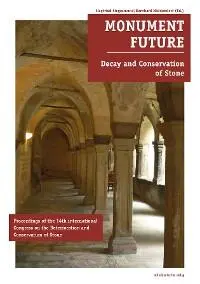
Siegfried Siegesmund - Monument Future
Здесь есть возможность читать онлайн «Siegfried Siegesmund - Monument Future» — ознакомительный отрывок электронной книги совершенно бесплатно, а после прочтения отрывка купить полную версию. В некоторых случаях можно слушать аудио, скачать через торрент в формате fb2 и присутствует краткое содержание. Жанр: unrecognised, на немецком языке. Описание произведения, (предисловие) а так же отзывы посетителей доступны на портале библиотеки ЛибКат.
- Название:Monument Future
- Автор:
- Жанр:
- Год:неизвестен
- ISBN:нет данных
- Рейтинг книги:4 / 5. Голосов: 1
-
Избранное:Добавить в избранное
- Отзывы:
-
Ваша оценка:
Monument Future: краткое содержание, описание и аннотация
Предлагаем к чтению аннотацию, описание, краткое содержание или предисловие (зависит от того, что написал сам автор книги «Monument Future»). Если вы не нашли необходимую информацию о книге — напишите в комментариях, мы постараемся отыскать её.
Alle vier Jahre treffen sich auf einer internationalen Tagung Experten, die sich mit den entsprechenden Sachfragen beschäftigen. Der „14th International Congress on the Deterioration and Conservation of Stone“ findet im September 2020 in Göttingen statt. Er ist die wichtigste Veranstaltung zur Verbreitung des Wissens von Praktikern und Forschern, die im Bereich der Steinkonservierung zur Erhaltung des baulichen Kulturerbes arbeiten: Geowissenschaftler, Architekten, Bauspezialisten, Ingenieure, Restauratoren, Denkmalpfleger und Bauherren.
Der Tagungsband mit über 150 wissenschaftlichen Beiträgen repräsentiert und erfasst den neuesten Stand der Technik auf diesem Gebiet.
Themen sind:
– Charakterisierung von Schadensphänomenen von Steinen und verwandten Baumaterialien (Stuck, Putz, Mörtel usw.)
– Methoden zur Untersuchung des Steinverfalls in situ und zerstörungsfreie Prüfung
– Langzeitüberwachung von Steindenkmälern und Gebäuden
– Simulation und Modellierung des Zerfalls
– Technologien und Entwicklung verbesserter Bearbeitung und Verwendung von Stein in Neubauten
– Bewertung der Langzeitwirkung von Bearbeitungstechniken
– Auswirkungen des Klimawandels auf die Steinverwitterung des Kulturerbes
– Berichte zur Steinkonservierung: Fallstudien und Projekte
– Digitalisierung und Dokumentation von Steinkonservierung
–
The 14th International Congress on the Deterioration and Conservation of Stone, entitled MONUMENT FUTURE: DECAY AND CONSERVATION OF STONE is a quadrennial event that brings together a world-wide community of geoscientists, architects, building specialists, engineers, conservators, restorators, monument curators and building owners who are concerned about the conservation of cultural stone structures and objects. Since antiquity, the weathering and deterioration of historical buildings, masonry, monuments, sculptures etc. using natural stones has been a very well-known problem.
This conference is the main gathering for the dissemination of knowledge in the field of stone deterioration issues. It represents and captures the state-of-the-art in the field of stone conservation and cultural heritage conservation with regards to the following topics:
– Characterisation of damage phenomena of stone and related building materials (plaster, rendering, mortar etc.)
– Methods for the investigation of stone decay; in-situ and non-destructive testing
– Long-term monitoring of stone monuments and buildings
– Simulation and modelling of decay
– Technology and development of improved treatments and use of stone in new buildings
– Assessment of long-term effects of treatments
– Impact of climate change on stone decay of Cultural Heritage
– Reports about stone conservation: case studies and projects
– Digitalization and documentation in stone conservation
Monument Future — читать онлайн ознакомительный отрывок
Ниже представлен текст книги, разбитый по страницам. Система сохранения места последней прочитанной страницы, позволяет с удобством читать онлайн бесплатно книгу «Monument Future», без необходимости каждый раз заново искать на чём Вы остановились. Поставьте закладку, и сможете в любой момент перейти на страницу, на которой закончили чтение.
Интервал:
Закладка:
The second set of results corresponds to the experiments designed to survey the desaturation of the materials via electric and infrared imaging methods as well as by gravimetric measurements.
After data treatment the results are presented in the form of curves representing the evolution of electrical resistivity (deduced from the non-invasive electrodes) and temperature variation according to saturation, figure 5.

Figure 5: Thermal and electrical results of the desaturation experience showing the different zones related with each step of the desaturation process.
The results show that the saturation interval for which the IR and electric imaging method provides usable information is between 20 and 50 % and between 35 and 90 % respectively.
The interpretation of the results helps to define the phenomenological model of desaturation.
The results allow to identify six main steps corresponding to the desaturation dynamics model presented in the figure 5. The steps of the model correspond to the different zones reported in the figure.
ZONE 1: During this stage, there is a drastic temperature drop of the sample. This is due to the evaporation of the water covering the surface of the sample.
ZONE 2: During this stage, no significant temperature variation on the sample surface is detected. But in the same way, the water losses are detected by the electrical resistivity measurement. The water content decreasing (calculated from the mass measurement) is logically observed by the electrical resistivity increase. During this stage, the two used methods show the water redistribution in the volume probably through a stable hydrous transfer at the surface of the sample induced by the thermal equilibrium at the surface.
ZONE 3: During this stage, temperature and electrical resistivity increase quickly. This is due to the removal of the waterfront inwards of the sample and the gradual loss of the water volume.
ZONE 4: During this stage, only the temperature measurements seems to be able to characterize the sample saturation. A limit electrical resistivity is reached during the stage. This behavior is probably induced by the loss of electrical continuity in the volume (distribution of water in the form of clusters).
ZONE 5: Due to the gradual evaporation of the water from the unconnected clusters, a constant temperature is reached during this stage too.
ZONE 6: The sample is dry and as consequence non relevant signal is detected for both methods.
The results for the thermal response of the dynamic desaturation experiment allow us to analyze the validity of the calibration of IR responses based on the saturation calculated in a static frame.
In addition these results show that the combination of electric resistivity and IR imaging technics presents some advantages compared to others NDT as NMR or EFD (also known as Susi-R) that could be found in the literature (EN 16682, 2017, V. Di 256Tullio et al., 2010). The advantages and drawbacks of each method are presented in the table 2.
Table 2: Advantages and drawbacks of common NDT (EN 16682, 2017).
| Technics | Advantages | Drawbacks |
| IR | Contact free, portability, easy to use and diagnosis at metric scale | Mandatory calibration and sensitivity to thermal environment |
| Electric resistivity | Volumetric analysis from millimetric to metric scale | Mandatory calibration and contact analysis |
| Susi-R | Portability, easy to use, quick diagnosis and centimetric depth analysis | Mandatory calibration, contact analysis and roughness sensitivity |
| NMR | Contact free measurement and centimetric depth analysis | Heavy data treatment and measurements affected by metals |
Indeed, due to the characteristics of the IR imaging method concerning its portability and ease of use as well as the quick diagnosis at metric scale, combined to the volumetric measures capabilities of the electric imaging method, the combination of those two imaging technics makes a highly appropriate and powerful proceeding for water content characterization on stone building materials.
Conclusions
The complementarity of the infrared thermography and electrical imaging methods is highlighted by showing the different relevant saturation ranges of both methods. This allows to establish the basis to the creation of a protocol which can be used to monitor the effects of changes of water content in the porous media. Illustration is given in the paper with limestones building material.
Calibration procedures are developed, and tests are carried out to highlight the degree of saturation by mean of electrical and IR thermography imaging. The identification of the material properties (like petrophysical properties) can be used to describe phenomenological patterns affecting the in-situ structure. Nevertheless, such point of view must be completed to highlight accurately the water content and its evolution to better understand the damages and evolution of the historical monuments.
The two combined methods seem to be well adapted to characterize the water transfer in the structures and for a better accuracy of the proposed diagnosis, the conclusions coming from another calibration scenario will be added.
Such a combination of NDT is very promising regarding other generally used methods.
References
D. Benavente, G. G.-H. Cultrone, The combined influence of mineralogical, hygric and thermal properties on the durability of porous building stones, Eur. J. Mineral. 20 (2008) 673–685.
ICOMOS ISCS, Illustrated glossary on stone deterioration patterns. Monuments and Sites XV, 2008.
EUROPEAN STANDARD EN 16682: Conservation of cultural heritage – Methods of measurement of moisture content in materials constituting immovable cultural heritage, European Committee for Standardization, Brussels, 2017.
V. Di Tullio, N. Proietti, M. Gobbino, D. Capitani, R. Olmi, S. Priori, C. Riminesi, E. Giani. Non-destructive mapping of dampness and salts in degraded wall paintings in hypogeous buildings: the case of St. Clement at mass fresco in St. Clement Basilica, Rome, Analytical and Bioanalytical Chemistry, vol. 396, no 5, p. 1885–1896, 2010.
E. Grinzato, N. Ludwig, G. Cadelano, M. Bertucci, M. Gargano, P. Bison, Infrared thermography for moisture detection: A laboratory study and in-situ test, Mater. Eval. 69 (2011) 97–104.
M. A. Hassine, K. Beck, X. Brunetaud, M. Al-Mukhtar, Use of electrical resistance measurement to assess the water saturation profile in porous limestones during capillary imbibition, Constr. Build. Mater. 165 (2018) 206–217.
D. Vermeersch, Le complexe religieux des Vaux-de-la-Celle à Genainville (95): nouvelle proposition de phasage du sanctuaire d’après les dernières fouilles, in: Etudier Les Lieux Culte Gaule Romaine, 2009.
BRGM, Carte géologique 1/50 000, feuille de: MANTES-LA-JOLIE, (1974).
257
EXPERIMENTAL CONSERVATION AND FIRST INVESTIGATIONS ON THE WEATHERING OF GEGHARD MONASTERY (ARMENIA)
Wanja Wedekind 1, Emma Harutyunyan 2, Nevenka Novakovic 3, Siegfried Siegesmund 1
IN: SIEGESMUND, S. & MIDDENDORF, B. (EDS.): MONUMENT FUTURE: DECAY AND CONSERVATION OF STONE.
– PROCEEDINGS OF THE 14TH INTERNATIONAL CONGRESS ON THE DETERIORATION AND CONSERVATION OF STONE –
VOLUME I AND VOLUME II. MITTELDEUTSCHER VERLAG 2020.
Читать дальшеИнтервал:
Закладка:
Похожие книги на «Monument Future»
Представляем Вашему вниманию похожие книги на «Monument Future» списком для выбора. Мы отобрали схожую по названию и смыслу литературу в надежде предоставить читателям больше вариантов отыскать новые, интересные, ещё непрочитанные произведения.






Обсуждение, отзывы о книге «Monument Future» и просто собственные мнения читателей. Оставьте ваши комментарии, напишите, что Вы думаете о произведении, его смысле или главных героях. Укажите что конкретно понравилось, а что нет, и почему Вы так считаете.