M. V. Brian - Ants
Здесь есть возможность читать онлайн «M. V. Brian - Ants» — ознакомительный отрывок электронной книги совершенно бесплатно, а после прочтения отрывка купить полную версию. В некоторых случаях можно слушать аудио, скачать через торрент в формате fb2 и присутствует краткое содержание. Жанр: unrecognised, на английском языке. Описание произведения, (предисловие) а так же отзывы посетителей доступны на портале библиотеки ЛибКат.
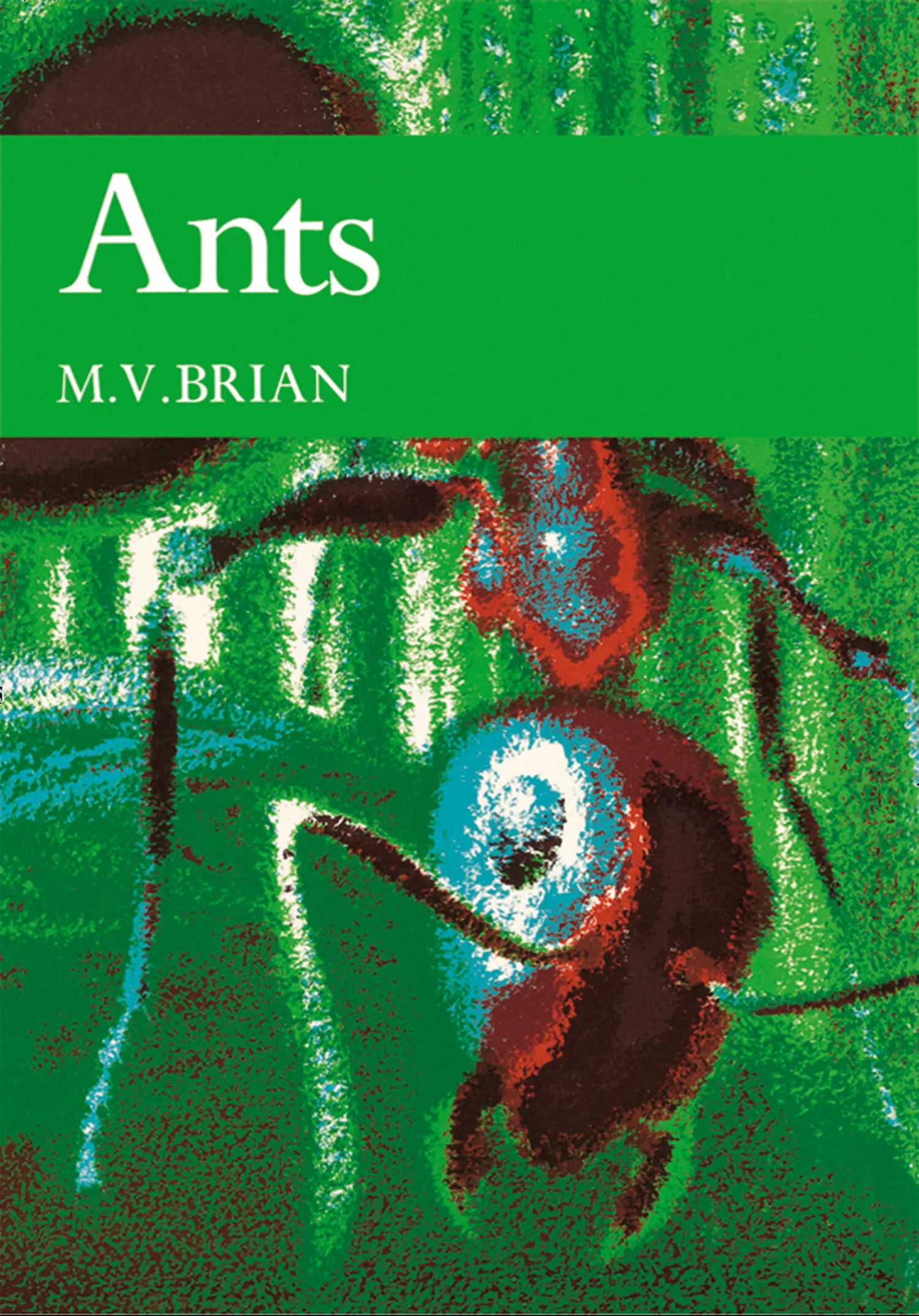
- Название:Ants
- Автор:
- Жанр:
- Год:неизвестен
- ISBN:нет данных
- Рейтинг книги:3 / 5. Голосов: 1
-
Избранное:Добавить в избранное
- Отзывы:
-
Ваша оценка:
Ants: краткое содержание, описание и аннотация
Предлагаем к чтению аннотацию, описание, краткое содержание или предисловие (зависит от того, что написал сам автор книги «Ants»). Если вы не нашли необходимую информацию о книге — напишите в комментариях, мы постараемся отыскать её.
Ants — читать онлайн ознакомительный отрывок
Ниже представлен текст книги, разбитый по страницам. Система сохранения места последней прочитанной страницы, позволяет с удобством читать онлайн бесплатно книгу «Ants», без необходимости каждый раз заново искать на чём Вы остановились. Поставьте закладку, и сможете в любой момент перейти на страницу, на которой закончили чтение.
Интервал:
Закладка:
The next most common genus is Leptothorax , although only one of its four species ( Leptothorax acervorum ) is widely, though patchily, distributed throughout the British Isles. It is a small, brown ant living in small colonies rich in queens, nesting in quite hard wood or in twigs or under the surface crust of soil. The other three species are restricted to southern England.
Tetramorium caespitum is the only species of this genus (which is predominantly African) in the British Isles. It is a small, black ant spread widely over central Europe but restricted here to the south and farther north to coastal zones. Such habitats have a high incidence of sunshine in spring so that the soil surface where the ants nest is warmed early in the season. Furthermore, temperatures do not fall very much in winter, especially on the western coasts. Tetramorium caespitum makes large, highly-organized colonies in lowland heath in the south. In autumn it collects and stores the seeds of heather and grass for spring feeding.
Two myrmicine genera are parasitic on Tetramorium caespitum in this country. One, Strongylognathus (one species Strongylognathus testaceus ), has workers of about the same size and shape as its host but they are pale brown and have curved, toothless mandibles. The sexuals are not much bigger and contrast strikingly with the large black queen of Tetramorium. It is rare, even where it is known to exist in Dorset and Hampshire. The other parasite of Tetramorium is Anergates atratulus. It has no workers and the males are wingless and curiously shaped. Again, this species has only been found in the middle south of England. Very few of the nests of Tetramorium are parasitized; this is so, even in France where both host and parasite are quite widespread.
Stenamma westwoodii is a rare ant limited to the south and rarely seen, even on the Continent. Myrmecina graminicola is a dark, thickset species which nests deep in the soil in sunny places in southern England; sometimes it makes galleries in Myrmica nests where it probably preys on the brood. Formicoxenus nitidulus is a small ant with a highly polished cuticle and lives in nests with wood ants. Solenopsis fugax is a small, yellow ant living underground near Lasius or Formica nests, eating their brood; it is restricted to the south in this country. Finally comes a completely parasitic, workerless species, Sifolinia karavajevi , only recently found here in a colony of Myrmica sabuleti . Emery first caught a female flying near Siena in 1907. The species has been found in Europe and Algeria on a few occasions but the number of colonies parasitized by species of Sifolinia in the whole hemisphere must be remarkably small.
Next are the two myrmecoid sub-families, Formicinae and Dolichoderinae. Both have only one joint in the waist which often carries a well-developed scale, particularly in the former sub-family. The gaster is unconstricted and contains no sting. Instead there is a poison apparatus opening in the Formicinae in a circular orifice, usually surrounded by hairs just below the anus. A jet of fluid consisting largely of formic acid can be shot for several centimetres from this after it has been bent round under the mesosoma and directed forwards. The Dolichoderinae do not produce a liquid jet but in most cases a sticky toxic chemical is extruded from their slit-shaped anus. The difference between queens and workers in the Formicinae is considerable, though the workers do lay eggs in some genera and may produce females as well as males from unfertilized eggs. Other primitive features are the retention of a cocoon to enclose the pupa, the presence of visible ocelli in workers (in some genera) and the incompletely-fused mesosomal sutures. Often, too, they are highly individual and forage singly. Most seem to have a well-developed valve between the crop where imbibed food is stored before regurgitation to larvae and the midgut where food is digested. This is kept closed by the presence of fluid in the crop and does not need a persistent muscular effort, as it is thought to do in the Myrmicinae. Often these ants have quite good vision through the usual insect compound eyes but some species rely entirely on chemical and tactile senses. All make use of nectar and honeydew as well as hunting prey but they do not appear to eat seeds very much (unless these have an oily caruncle).
There are only two genera of formicine ants represented in the British Isles, Lasius and Formica . Lasius are smaller than Formica and have less well-developed eyes. They form a large, diverse genus that is widely distributed throughout the temperate parts of the Northern Hemisphere. The eight British species have a slightly southerly bias: there are only five in Scotland and none at all in the Northern Isles (Hebrides, Orkney and Shetland.) Some are yellow and live entirely in the soil, others are jet black and forage in files up trees for honeydew. Their colonies are often enormous, extending to tens of thousands, and they may have only one queen. In general Lasius are very skilled at making nests out of soil or wood pulp. Undoubtedly the most striking is the jet black, large-headed Lasius fuliginosus which forages up tall trees from a carton nest in a rotting stump. It occurs sporadically in southern England. The queens are not much bigger than the workers and are unable to found colonies alone; they parasitize Lasius umbratus and other species as a first stage in colony formation. Lasius umbratus also has small queens and seems to be an obligate social parasite of Lasius niger . It is not often seen above ground, as its name implies, but is said to accompany Lasius fuliginosus up trees from mixed nests. Lasius brunneus, too, nests in old trees, usually oak, in open country; it has a curious distribution in the south Midlands, in part of which it has taken to entering the timber of buildings. Lasius alienus , a small, brown species, lives in subsurface galleries in the warm soils of heathland, limestone or chalk; it ejects the excavated soil to form characteristic craters in spring. Very common in Europe it extends like Tetramorium caespitum into Ireland and Scotland along the coasts. The behaviour of this ant seems to vary geographically: thus in England it rarely ascends into bushes, as it does in the Mediterranean area, but in America it lives in woodland. Lasius flavus is even more confined to the soil and in many parts of western Europe it builds large mounds of soil which are permanently covered with vegetation and which become a conspicuous feature of the landscape in areas of uncultivated grassland. It ranges throughout the British Isles except for parts of northern Scotland and Ireland. In many places, however, it is unable to form mounds: on steep slopes, in areas of high rainfall, in dry sandy soil or in cultivated grassland.
One of the most commonly encountered ants is Lasius niger. It is widely distributed throughout the British Isles but appears to be absent from some places in Ireland and Scotland. Bushy scrubland and gardens or wet places are its favourite habitats and it inhabits grassland only when stones or the mounds of Lasius flavus , which is a much more skilful builder, are available for it to nest in.
Formica is a genus of big, long-legged ants that spend their foraging lives in shrubs and trees and may build large mound nests of plant debris, although some only excavate galleries and chambers in the soil. It is widely distributed throughout the cooler parts of the Northern Hemisphere. There are eleven species in this country, nine in southern England, five in northern England, six in Scotland, five in Wales and three in Ireland. It thus shows a considerable southern bias.
Читать дальшеИнтервал:
Закладка:
Похожие книги на «Ants»
Представляем Вашему вниманию похожие книги на «Ants» списком для выбора. Мы отобрали схожую по названию и смыслу литературу в надежде предоставить читателям больше вариантов отыскать новые, интересные, ещё непрочитанные произведения.







Обсуждение, отзывы о книге «Ants» и просто собственные мнения читателей. Оставьте ваши комментарии, напишите, что Вы думаете о произведении, его смысле или главных героях. Укажите что конкретно понравилось, а что нет, и почему Вы так считаете.