Museum Transformations
Здесь есть возможность читать онлайн «Museum Transformations» — ознакомительный отрывок электронной книги совершенно бесплатно, а после прочтения отрывка купить полную версию. В некоторых случаях можно слушать аудио, скачать через торрент в формате fb2 и присутствует краткое содержание. Жанр: unrecognised, на английском языке. Описание произведения, (предисловие) а так же отзывы посетителей доступны на портале библиотеки ЛибКат.
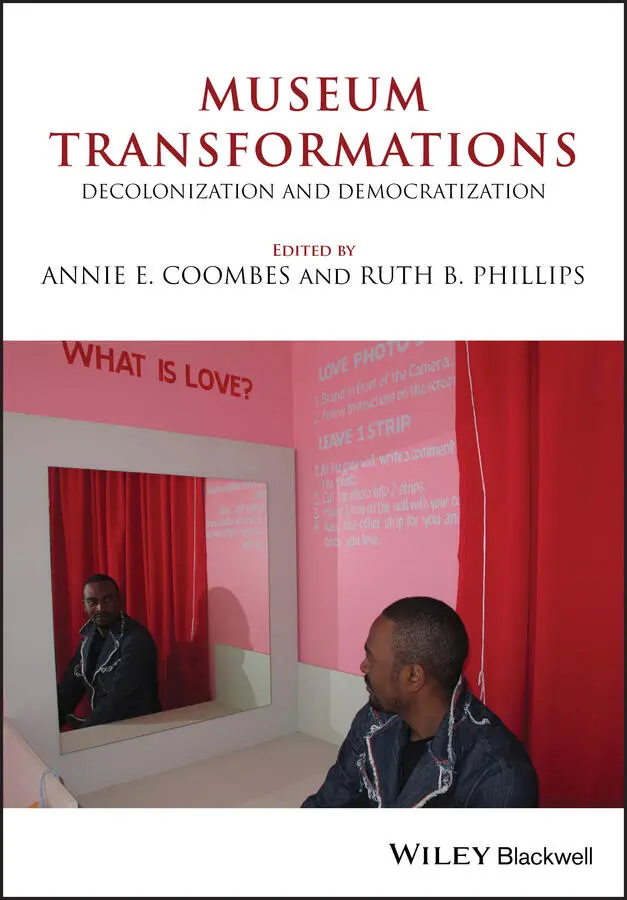
- Название:Museum Transformations
- Автор:
- Жанр:
- Год:неизвестен
- ISBN:нет данных
- Рейтинг книги:4 / 5. Голосов: 1
-
Избранное:Добавить в избранное
- Отзывы:
-
Ваша оценка:
Museum Transformations: краткое содержание, описание и аннотация
Предлагаем к чтению аннотацию, описание, краткое содержание или предисловие (зависит от того, что написал сам автор книги «Museum Transformations»). Если вы не нашли необходимую информацию о книге — напишите в комментариях, мы постараемся отыскать её.
Museum Transformations — читать онлайн ознакомительный отрывок
Ниже представлен текст книги, разбитый по страницам. Система сохранения места последней прочитанной страницы, позволяет с удобством читать онлайн бесплатно книгу «Museum Transformations», без необходимости каждый раз заново искать на чём Вы остановились. Поставьте закладку, и сможете в любой момент перейти на страницу, на которой закончили чтение.
Интервал:
Закладка:
Evans, Richard J. 1989. In Hitler’s Shadow: West German Historians and the Attempt to Escape from the Nazi Past . New York: Pantheon.
Foundation Memorial to the Murdered Jews of Europe, ed. 2010. Memorial to the Murdered Jews of Europe: Guide to the Information Centre . Berlin: Deutscher Kunstverlag.
Frei, Norbert. 2002. Adenauer’s Germany and the Nazi Past: The Politics of Amnesty and Integration . Translated by Joel Golb. New York: Columbia University Press.
Geissler, Corneilia. 2011. “Zur aktuellen Repräsentation des Nationalsozialismus an Orten des Gedenkens: Überlegungen zu Möglichkeiten und Grenzen subjektorientierter Zugänge in der Ausstellungsdidaktik” [On the actual representation of National Socialism at historical sites of remembrance: Possibilities and limits of subject-oriented exhibition didactics]. In Die Erinnerung an die nationalsozialistischen Konzentrationslager: Akteure, Inhalte, Strategien [Remembering the National Socialist concentration camps: Actors, themes, strategies], edited by Andreas Ehresmann, Phillip Neumann, Alexander Prenninger, and Regis Schlagdenhauffen, 204–220. Berlin: Metropol.
Hayes, Peter. 2001. Industry and Ideology: IG Farben in the Nazi Era . Cambridge: Cambridge University Press.
Hayes, Peter. 2004. From Cooperation to Complicity: Degussa in the Third Reich . Cambridge: Cambridge University Press.
Heimrod, Ute, Günter Schlusche, and Horst Seferens, eds. 1999. Der Denkmalstreit das Denkmal? Die Debatte um das Denkmal für die ermordeten Juden Europas, Eine Dokumentation [The debate as memorial? The struggle over the Memorial of the Murdered Jews of Europe]. Berlin: Philo.
Herf, Jeffrey. 1997. Divided Memory: The Nazi Past in the Two Germanys . Cambridge, MA: Harvard University Press.
Huyssen, Andreas. 2003. Present Pasts: Urban Palimpsests and the Politics of Memory . Stanford: Stanford University Press.
Jeismann, Michael, ed. 1999. Mahnmal Mitte: Eine Kontroverse [The memorial in the center of Berlin: A controversy]. Cologne: DuMont.
Jordan, Jennifer A. 2006. Structure of Memory: Understanding Urban Change in Berlin and Beyond . Stanford: Stanford University Press.
Kirsch, Jan-Holger. 2003. Nationaler Mythos oder historische Trauer? Der Streit um ein zentrales “Holocaust-Mahnmal” für die Berliner Republik [National myth or historic mourning? The struggle over a central Holocaust memorial for the Berlin republic]. Cologne: Böhlau.
Klein, Marion. 2012. Schülerinnen und Schüler am Denkmal für die ermordeten Juden Europas: Eine empirisch-rekonstruktive Studie [Students at the Memorial to the Murdered Jews of Europe: An empirical reconstructive study]. Wiesbaden: Sozialwissenschaften/ Springer Fachmedien.
Köhr, Katja. 2008. “Die vielen Gesichter des Holocaust: Individualisierung als Konzept Musealer Geschichtsvermittlung” [The many faces of the Holocaust: Individualization as a model for teaching history in a museum]. In Orte historischen Lernens [Sites of historical learning], edited by Saskia Handro and Bernd Schönemann, 165–177. Münster: Lit.
Köhr, Katja, and Simone Lässig. 2007. “Zwischen universellen Fragen und nationalen Deutungen: Der Holocaust im Museum” [Between universal questions and national interpretations]. In Europa in historisch-didaktischen Perspektiven [Europe in historicaldidactic perspectives], edited by Bernd Schönemann and Hartmut Voit, 235–260. Idstein, Germany: Schulz-Kirchner.
Krah, M. 2004. “Moving On.” Jerusalem Report , January 26.
Lässig, Simone, and Karl Heinrich Pohl. 2007. “‘Auschwitz in the Museum?’ Holocaust Memory between History and Moralism.” In How the Holocaust Looks Now: International Perspectives , edited by Martin L. Davies and Claus-Christen W. Szejnmann, 149–162. Basingstoke, UK: Palgrave Macmillan.
Leggewie, Claus, and Erik Meyer. 2005. “Ein Ort, an den man gerne geht”: Das Holocaust-Mahnmal und die deutsche Geschichtspolitik nach 1989 [“A place where one likes to go”: The Holocaust Memorial and the politics of German history after 1989]. Munich: Hanser.
Maier, Charles S. [1988] 1997. The Unmasterable Past: History, Holocaust and German National Identity . Cambridge, MA: Harvard University Press.
Niven, William John. 2002. Facing the Nazi Past: United Germany and the Legacy of the Third Reich . London: Routledge.
Quack, Sibylle, ed. 2002. Auf dem Weg zur Realisierung: Das Denkmal für die ermordeten Juden Europas und der Ort der Information: Architektur und historisches Konzept [On the way to realization: The Memorial to the Murdered Jews of Europe and the Center of Information: Architecture and historical concept]. Stuttgart: Deutsche Verlags-Anstalt.
Quack, Sibylle. 2007. “In the Presence of the Past: The Making of the Memorial to the Murdered Jews of Europe and the Degussa Debate of 2003.” In Press, Politics, and the Field of History: Max Weber Lectures Deutsche Haus at NYU , edited by Sibylle Quack, 48–73. New York: Deutsches Haus at NYU. Accessed April 7, 2014. http://deutscheshaus.as.nyu.edu/docs/CP/1547/Max_Weber_Publication.pdf.
Quack, Sibylle, and Dagmar von Wilcken. 2005. “Creating an Exhibition about the Murder of European Jewry: Conflicts of Subject, Concept and Design in the ‘Information Centre.’” In Materials on the Memorial to the Murdered Jews of Europe , edited by The Foundation Memorial to the Murdered Jews of Europe, 40–49. Berlin: Nicolaische.
Reichel, Peter. 1999. Politik mit der Erinnerung: Gedaechtnisorte im Streit um die nationalsozialistische Vergangenheit [Politics of memory: Memory sites and the struggle of presenting Nationalist Socialist history]. Frankfurt: Fischer.
Saehrendt, Christian. 2007. “Bewegendes Erlebnis oder lästiger Pflichttermin? Wie erleben Schülerinnen und Schüler den Besuch des Denkmals für die ermordeten Juden Europas in Berlin?” [Moving experience or burdensome obligation? How do students experience their visit to the Memorial to the Murdered Jews of Europe?]. Geschichte in Wissenschaft und Unterricht 58: 744–757.
Schlusche, Günter. 2005. “A Memorial Is Built: History, Planning and Architectural Context.” In Materials on the Memorial to the Murdered Jews of Europe , edited by The Foundation Memorial to the Murdered Jews of Europe, 14–29. Berlin: Nicolaische.
Shalev, Avner, and A. Avraham. 2005 “Unto Every Person There is a Name.” In Materials on the Memorial to the Murdered Jews of Europe , edited by The Foundation Memorial to the Murdered Jews of Europe, 128–137. Berlin: Nicolaische.
Sion, Brigitte. 2008. “Absent Bodies, Uncertain Memorials: Performing Memory in Berlin and Buenos Aires.” Doctoral dissertation, New York University.
Stavingski, Hans-Georg. 2002. Das Holocaust-Denkmal: Der Streit um das “Denkmal für die ermordeten Juden Europas” in Berlin (1988–1999) [The Holocaust memorial: The struggle over the Memorial to the Murdered Jews of Europe in Berlin (1988–1999)]. Paderborn: Schöningh.
Stiftung Denkmal für die ermordeten Juden Europas. 2002. Tätigkeitsbericht 2000–2002 [Activity Report 2000–2002]. Berlin: Stiftung Denkmal für die ermordeten Juden Europas.
Thünemann, Holger. 2003. Das Denkmal für die ermordeten Juden Europas: Dechiffrierung einer Kontroverse [The Memorial to the Murdered Jews of Europe: Deciphering of a Controversy]. Münster: Lit.
Topography of Terror. 2012. Topography of Terror Documentation Center . Accessed April 7, 2014. http://www.topographie.de/en/.
Читать дальшеИнтервал:
Закладка:
Похожие книги на «Museum Transformations»
Представляем Вашему вниманию похожие книги на «Museum Transformations» списком для выбора. Мы отобрали схожую по названию и смыслу литературу в надежде предоставить читателям больше вариантов отыскать новые, интересные, ещё непрочитанные произведения.





Обсуждение, отзывы о книге «Museum Transformations» и просто собственные мнения читателей. Оставьте ваши комментарии, напишите, что Вы думаете о произведении, его смысле или главных героях. Укажите что конкретно понравилось, а что нет, и почему Вы так считаете.