David Hume - The Dark Ages
Здесь есть возможность читать онлайн «David Hume - The Dark Ages» — ознакомительный отрывок электронной книги совершенно бесплатно, а после прочтения отрывка купить полную версию. В некоторых случаях можно слушать аудио, скачать через торрент в формате fb2 и присутствует краткое содержание. Жанр: unrecognised, на английском языке. Описание произведения, (предисловие) а так же отзывы посетителей доступны на портале библиотеки ЛибКат.
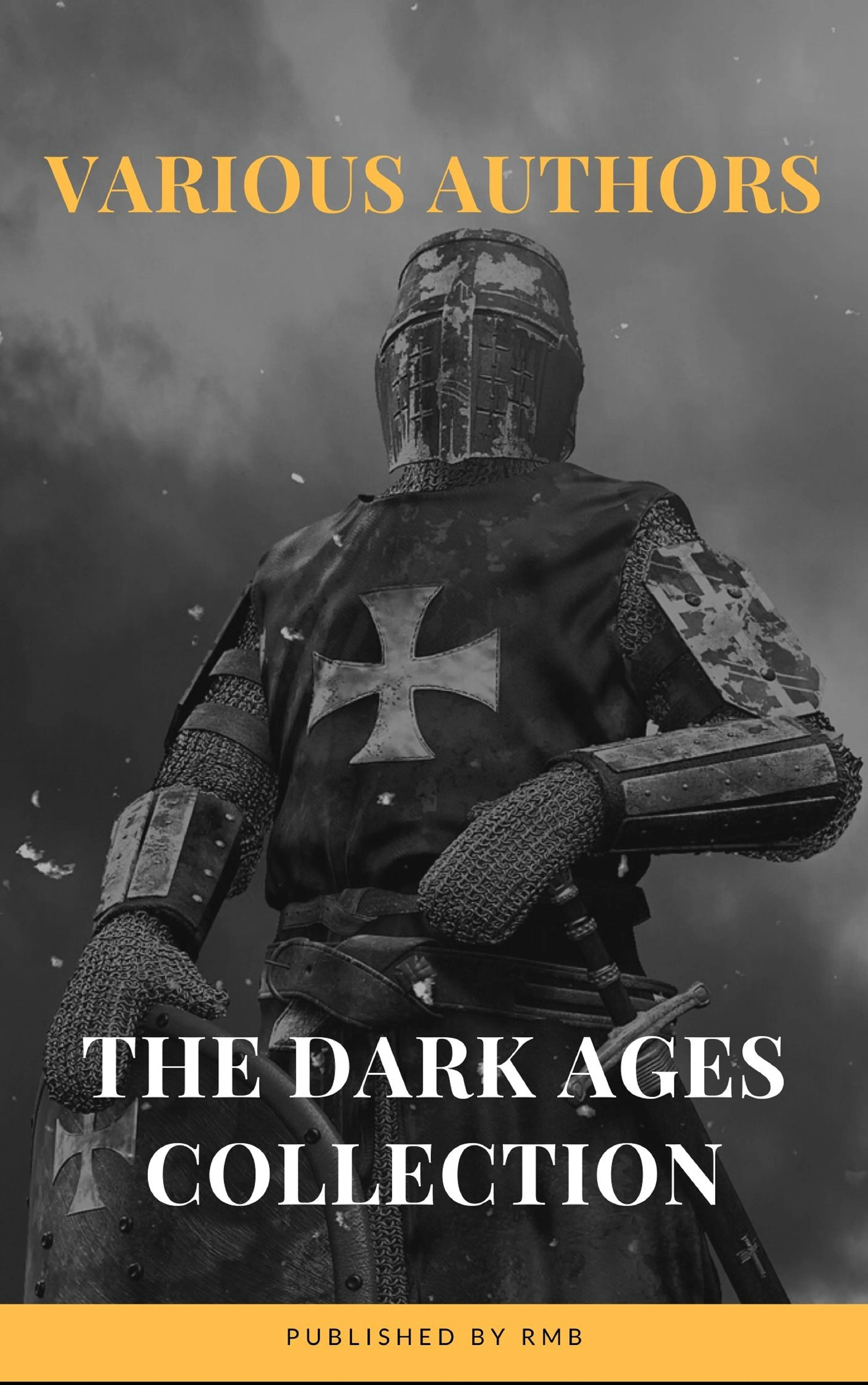
- Название:The Dark Ages
- Автор:
- Жанр:
- Год:неизвестен
- ISBN:нет данных
- Рейтинг книги:5 / 5. Голосов: 1
-
Избранное:Добавить в избранное
- Отзывы:
-
Ваша оценка:
The Dark Ages: краткое содержание, описание и аннотация
Предлагаем к чтению аннотацию, описание, краткое содержание или предисловие (зависит от того, что написал сам автор книги «The Dark Ages»). Если вы не нашли необходимую информацию о книге — напишите в комментариях, мы постараемся отыскать её.
The term employs traditional light-versus-darkness imagery to contrast the era's «darkness» (lack of records) with earlier and later periods of «light» (abundance of records).The concept of a «Dark Age» originated in the 1330s with the Italian scholar Petrarch, who regarded the post-Roman centuries as «dark» compared to the light of classical antiquity.
The Dark Ages Collection features:
HISTORY OF THE LATER ROMAN EMPIRE, by J.B. Bury
THE STORY OF THE GOTHS, by Henry Bradley
THE DARK AGES, by Charles Oman
VISIGOTHS PILLAGE ROME, by Edward Gibbon
HUNS INVADE THE EASTERN ROMAN EMPIRE; ATTILA DICTATES A TREATY OF PEACE, by Edward Gibbon
THE ENGLISH CONQUEST OF BRITAIN, by John Green & Charles Knight
ATTILA INVADES WESTERN EUROPE; BATTLE OF CHÂLONS, by Edward Creasy & Edward Gibbon
FOUNDATION OF VENICE, by Thomas Hodgkin & John Ruskin
CLOVIS FOUNDS THE KINGDOM OF THE FRANKS: IT BECOMES CHRISTIAN, by Francois Guizot
PUBLICATION OF THE JUSTINIAN CODE, by Edward Gibbon
AUGUSTINE'S MISSIONARY WORK IN ENGLAND, by Venerable Bede & John Green
THE HEGIRA; CAREER OF MAHOMET: THE KORAN: AND MAHOMETAN CREED, by Washington Irving & Simon Ockley
THE SARACEN CONQUEST OF SYRIA, by Simon Ockley
SARACENS CONQUER EGYPT; DESTRUCTION OF THE LIBRARY AT ALEXANDRIA, by Washington Irving
EVOLUTION OF THE DOGESHIP IN VENICE, by William Hazlitt
SARACENS IN SPAIN: BATTLE OF THE GUADALETE, by Ahmed ibn Mahomet Al-Makkari
BATTLE OF TOURS, by Edward Creasy
FOUNDING OF THE CARLOVINGIAN DYNASTY; PÉPIN THE SHORT USURPS THE FRANKISH CROWN, by Francois Guizot
CAREER OF CHARLEMAGNE, by Francois Guizot
EGBERT BECOMES KING OF THE ANGLO-SAXON HEPTARCHY, by David Hume
The Dark Ages — читать онлайн ознакомительный отрывок
Ниже представлен текст книги, разбитый по страницам. Система сохранения места последней прочитанной страницы, позволяет с удобством читать онлайн бесплатно книгу «The Dark Ages», без необходимости каждый раз заново искать на чём Вы остановились. Поставьте закладку, и сможете в любой момент перейти на страницу, на которой закончили чтение.
Интервал:
Закладка:
“And we stood at the portal of the church, with our petition, and when he came forth from the baptism we called aloud, saying, ‘We petition your Piety,’ and held out the paper. And he who carried the child seeing this, and knowing our business, for the Empress had instructed him, bade the paper be showed to him, and when he received it halted. And he commanded silence, and having unrolled a part he read it, and folding it up, placed his hand under the head of the child and cried out, ‘His majesty has ordered the requests contained in the petition to be ratified.’ And all having seen marvelled and did obeisance to the Emperor, congratulating him that he had the privilege of seeing his son an emperor in his lifetime; and he rejoiced thereat. And that which had happened for the sake of her son was announced to the Empress, and she rejoiced and thanked God on her knees. And when the child entered the Palace, she met it and received it and kissed it, and holding in her arms greeted the Emperor, saying, ‘You are blessed, my lord, for the things which your eyes have beheld in your lifetime.’ And the king rejoiced thereat. And the Empress, seeing him in good humour, said, ‘Please let us learn what the petition contains that its contents may be fulfilled.’ And the Emperor ordered the paper to be read, and when it was read, said, ‘The request is hard, but to refuse is harder, since it is the first mandate of our son.’ ”
The petition was granted, and Eudoxia arranged a meeting between the quaestor, the minister on whom it devolved to draft the Imperial rescripts, and the bishops, that all the wishes of the latter might be incorporated in the edict. The execution of it, which was invidious and required a strong hand and will, was entrusted to Cynegius, and the bishops returned to Palestine, having received considerable sums of money from the Empress and Emperor, as well as the funds which the Empress had promised for the erection of a church at Gaza.
This narrative gives us an idea of the kind of little dramas that probably lay behind many of the formal decrees and rescripts preserved in the Imperial Codes. The wonder of the provincial bishops at the splendid apparel of the great of the earth, their edifying spiritual conversations with the Empress, with the eunuch, and with the archbishop, the ruse of Eudoxia to compass the success of the petition, all such details help us to realise the life of the time; while the hesitation of the pious Arcadius to root out the heathen “abominations” because the heathen were respectable taxpayers shows that even he, when the ghostly and worldly policies of the Empire clashed, was more inclined to be Emperor than churchman.
To return to Chrysostom. When he performed the ceremony of baptizing the Emperor’s son and heir, there must have been a reconciliation with the court, but Eudoxia could not forget the incident, and henceforward she would be at least disposed to lend a patient ear to his enemies. And his enemies were many, both in clerical and in secular circles. Among the fashionable ladies who were particularly offended by his castigations of female manners were three who were intimate friends of the Empress — Marsa, wife of Promotus, in whose house Eudoxia had been brought up; Castricia, the wife of Saturninus, whom Chrysostom had helped to rescue from the vengeance of Gaïnas; and Eugraphia, whose house was a centre for all those who detested him. 105It is easy to imagine how easily they could continue to poison Eudoxia’s mind against a priest who was exceptionally tactless by twisting his invectives against the foibles of women into personal attacks upon herself.
But the agitation of irresponsible enemies might not have shaken his position, if he had not committed indiscretions in the domain of ecclesiastical policy. Antoninus, the bishop of Ephesus, had been accused of simony and other offences, and Chrysostom was appealed to. He determined to investigate the matter on the spot, and set out in the winter of A.D. 401. 106The inquiry disclosed abuses in many of the churches of western Asia Minor, and Chrysostom acted with more zeal than wariness. He deposed and replaced at least thirteen bishops, exceeding the rights of his jurisdiction, and, it was said, not giving a fair hearing to the cases. Naturally he stirred up many new enemies.
He was absent five months from Constantinople. He had deputed an eloquent Syrian, Severian, bishop of Gabala, to act for him during his absence. Severian seems to have joined the league of his enemies, and there was an open rupture between him and Serapion the deacon. When the Patriarch returned he found his own See disorganised, and a local council was held to hear the charges which Serapion brought against Severian. When Severian, who felt sure of support in high quarters, resisted the efforts of the bishops to induce him to be reconciled with the deacon, Chrysostom told him that it would be well for him to return to the see of Gabala which he had so long neglected. Severian, who seems to have entertained the ambition of replacing Chrysostom on the Patriarchal throne, now saw that he had gone too far, and he left the city. At Chalcedon he was recalled. The Empress had herself implored the Patriarch to reconcile himself with Severian. Throughout the quarrel popular opinion had been on Chrysostom’s side, but it may be questioned whether his conduct was altogether creditable. 107He yielded to Eudoxia’s prayers, but it was necessary to tranquillise popular feeling, for which purpose he preached a pacific sermon which ended with the words, “Receive our brother Severian the bishop.” 108Severian responded by a sermon of which the note was likewise peace. But the peace was hollow.
A new storm from another quarter was soon to burst over Chrysostom. Theophilus, the archbishop of Alexandria, bore no goodwill to the eloquent preacher who occupied the great see which had now precedence over his own. Theophilus, whose principal claim to be remembered is the destruction of the Serapeum, the famous stronghold of paganism at Alexandria, seems, so far as we can judge from his acts, to have been a domineering and unscrupulous prelate. He had probably been spoiled by the enjoyment of power. He is described as “naturally impulsive, bold and precipitous in action, extraordinarily quarrelsome, impatient and determined in grasping at any object he had set his mind on.” 109He had hoped to secure for a candidate of his own the archiepiscopal chair of Constantinople after the death of Nectarius, and had not forgiven Chrysostom his disappointment; which was rendered particularly humiliating by the fact that Eutropius had forced him to take part in Chrysostom’s consecration. Theophilus had held the heretical opinion of Origen, who rejected the anthropomorphic conception of the Deity which is suggested by many passages in the Hebrew Scripture. The same opinion was held in a monastic settlement in the desert of Nitria in Upper Egypt, over which four monks presided who were known, from their remarkable stature, as the Tall Brothers. 110Theophilus, however, changed his view on the theological point and (A.D. 401) issued a Paschal letter condemning Origen and his disciples. He then convoked a synod, which anathematised Origen and condemned the Nitrian monks. He had other reasons for desiring the destruction of the Tall Brothers, and he obtained troops from the augustal Prefect of Egypt to arrest them. The habitations of the monks were sacked and pillaged, and the Tall Brothers with their followers, clad in sheepskins, made their way to Palestine, where the bishops, admonished by letters from Theophilus, refused them shelter. Unable to find rest for the soles of their feet, they took ship for Constantinople to place themselves under the protection of Chrysostom. He received them kindly, but would not communicate with them until their cause had been examined, and he lodged them in the church of St. Anastasia, 111where their wants were ministered to by his deaconesses.
Читать дальшеИнтервал:
Закладка:
Похожие книги на «The Dark Ages»
Представляем Вашему вниманию похожие книги на «The Dark Ages» списком для выбора. Мы отобрали схожую по названию и смыслу литературу в надежде предоставить читателям больше вариантов отыскать новые, интересные, ещё непрочитанные произведения.








Обсуждение, отзывы о книге «The Dark Ages» и просто собственные мнения читателей. Оставьте ваши комментарии, напишите, что Вы думаете о произведении, его смысле или главных героях. Укажите что конкретно понравилось, а что нет, и почему Вы так считаете.