James Cooper - LEATHERSTOCKING TALES – Complete Collection
Здесь есть возможность читать онлайн «James Cooper - LEATHERSTOCKING TALES – Complete Collection» — ознакомительный отрывок электронной книги совершенно бесплатно, а после прочтения отрывка купить полную версию. В некоторых случаях можно слушать аудио, скачать через торрент в формате fb2 и присутствует краткое содержание. Жанр: unrecognised, на английском языке. Описание произведения, (предисловие) а так же отзывы посетителей доступны на портале библиотеки ЛибКат.
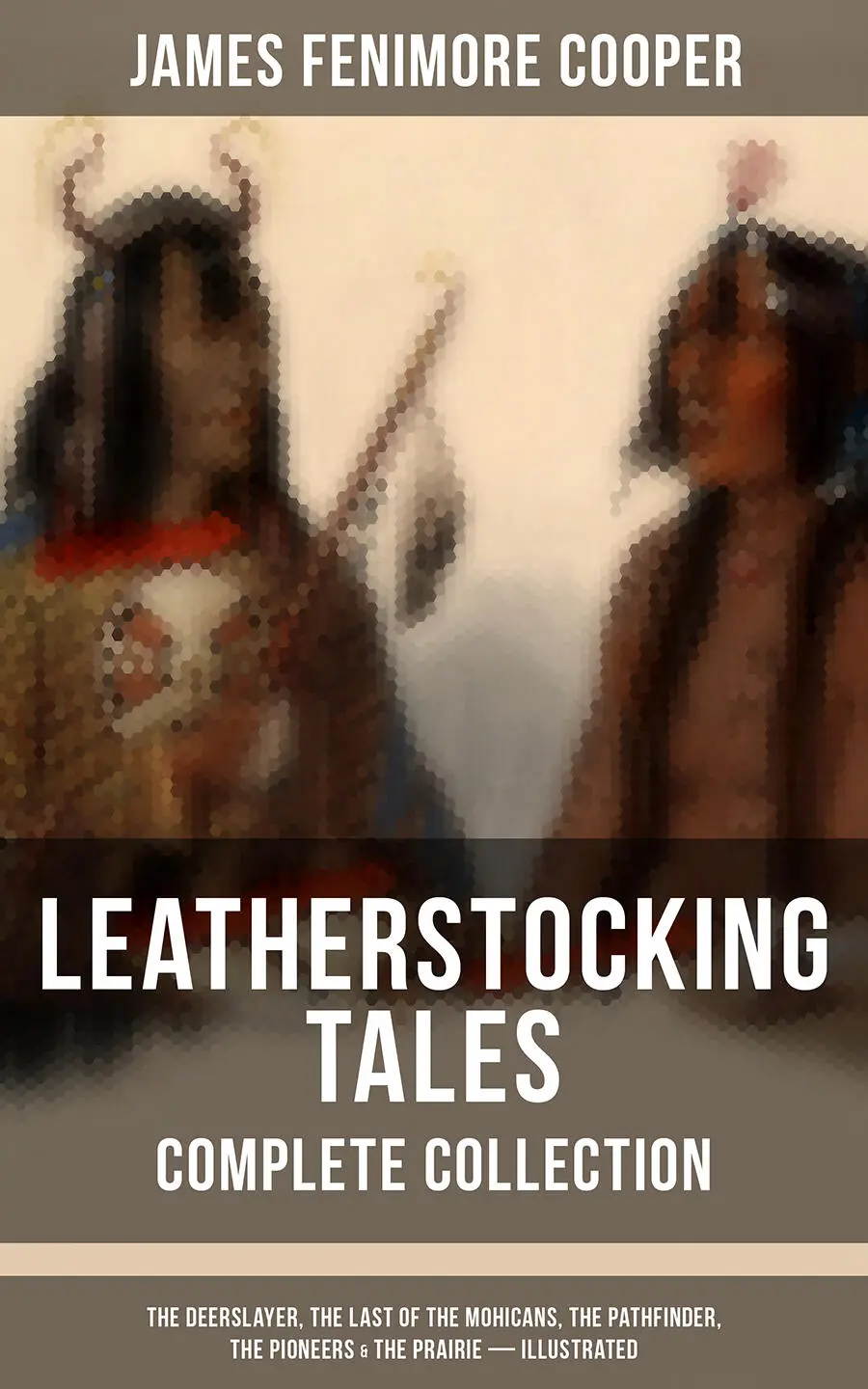
- Название:LEATHERSTOCKING TALES – Complete Collection
- Автор:
- Жанр:
- Год:неизвестен
- ISBN:нет данных
- Рейтинг книги:3 / 5. Голосов: 1
-
Избранное:Добавить в избранное
- Отзывы:
-
Ваша оценка:
LEATHERSTOCKING TALES – Complete Collection: краткое содержание, описание и аннотация
Предлагаем к чтению аннотацию, описание, краткое содержание или предисловие (зависит от того, что написал сам автор книги «LEATHERSTOCKING TALES – Complete Collection»). Если вы не нашли необходимую информацию о книге — напишите в комментариях, мы постараемся отыскать её.
LEATHERSTOCKING TALES – Complete Collection — читать онлайн ознакомительный отрывок
Ниже представлен текст книги, разбитый по страницам. Система сохранения места последней прочитанной страницы, позволяет с удобством читать онлайн бесплатно книгу «LEATHERSTOCKING TALES – Complete Collection», без необходимости каждый раз заново искать на чём Вы остановились. Поставьте закладку, и сможете в любой момент перейти на страницу, на которой закончили чтение.
Интервал:
Закладка:
As Deerslayer spoke, he threw on the table on which the other was reclining with one elbow a sort of miniature fagot, composed of a dozen sticks bound tightly together with a deer-skin thong. March seized it eagerly, and holding it close to a blazing knot of pine that lay on the hearth, and which gave out all the light there was in the room, ascertained that the ends of the several sticks had been dipped in blood.
“If this isn’t plain English,” said the reckless frontier man, “it’s plain Indian! Here’s what they call a dicliration of war, down at York, Judith. How did you come by this defiance, Deerslayer?”
“Fairly enough. It lay not a minut’ since, in what you call Floatin’ Tom’s door-yard.”
“How came it there?”
“It never fell from the clouds, Judith, as little toads sometimes do, and then it don’t rain.”
“You must prove where it come from, Deerslayer, or we shall suspect some design to skear them that would have lost their wits long ago, if fear could drive ’em away.”
Deerslayer had approached a window, and cast a glance out of it on the dark aspect of the lake. As if satisfied with what he beheld, he drew near Hurry, and took the bundle of sticks into his own hand, examining it attentively.
“Yes, this is an Indian declaration of war, sure enough,” he said, “and it’s a proof how little you’re suited to be on the path it has travelled, Harry March, that it has got here, and you never the wiser as to the means. The savages may have left the scalp on your head, but they must have taken off the ears; else you’d have heard the stirring of the water made by the lad as he come off ag’in on his two logs. His ar’n’d was to throw these sticks at our door, as much as to say, we’ve struck the war-post since the trade, and the next thing will be to strike you.”
“The prowling wolves! But hand me that rifle, Judith, and I’ll send an answer back to the vagabonds through their messenger.”
“Not while I stand by, Master March,” coolly put in Deerslayer, motioning for the other to forbear. “Faith is faith, whether given to a red-skin, or to a Christian. The lad lighted a knot, and came off fairly under its blaze to give us this warning; and no man here should harm him, while empl’yed on such an ar’n’d. There’s no use in words, for the boy is too cunning to leave the knot burning, now his business is done, and the night is already too dark for a rifle to have any sartainty.”
“That may be true enough, as to a gun, but there’s virtue still in a canoe,” answered Hurry, passing towards the door with enormous strides, carrying a rifle in his hands. “The being doesn’t live that shall stop me from following and bringing back that riptyle’s scalp. The more on ’em that you crush in the egg, the fewer there’ll be to dart at you in the woods!”
Judith trembled like the aspen, she scarce knew why herself, though there was the prospect of a scene of violence; for if Hurry was fierce and overbearing in the consciousness of his vast strength, Deerslayer had about him the calm determination that promises greater perseverance, and a resolution more likely to effect its object. It was the stern, resolute eye of the latter, rather than the noisy vehemence of the first, that excited her apprehensions. Hurry soon reached the spot where the canoe was fastened, but not before Deerslayer had spoken in a quick, earnest voice to the Serpent, in Delaware. The latter had been the first, in truth, to hear the sounds of the oars, and he had gone upon the platform in jealous watchfulness. The light satisfied him that a message was coming, and when the boy cast his bundle of sticks at his feet, it neither moved his anger nor induced surprise. He merely stood at watch, rifle in hand, to make certain that no treachery lay behind the defiance. As Deerslayer now called to him, he stepped into the canoe, and quick as thought removed the paddles. Hurry was furious when he found that he was deprived of the means of proceeding. He first approached the Indian with loud menaces, and even Deerslayer stood aghast at the probable consequences. March shook his sledge-hammer fists and flourished his arms as he drew near the Indian, and all expected he would attempt to fell the Delaware to the earth; one of them, at least, was well aware that such an experiment would be followed by immediate bloodshed. But even Hurry was awed by the stern composure of the chief, and he, too, knew that such a man was not to be outraged with impunity; he therefore turned to vent his rage on Deerslayer, where he foresaw no consequences so terrible. What might have been the result of this second demonstration if completed, is unknown, since it was never made.
“Hurry,” said a gentle, soothing voice at his elbow, “it’s wicked to be so angry, and God will not overlook it. The Iroquois treated you well, and they didn’t take your scalp, though you and father wanted to take theirs.”
The influence of mildness on passion is well known. Hetty, too, had earned a sort of consideration, that had never before been enjoyed by her, through the self-devotion and decision of her recent conduct. Perhaps her established mental imbecility, by removing all distrust of a wish to control, aided her influence. Let the cause be as questionable as it might, the effect we sufficiently certain. Instead of throttling his old fellow-traveler, Hurry turned to the girl and poured out a portion of his discontent, if none of his anger, in her attentive ears.
“Tis too bad, Hetty!” he exclaimed; “as bad as a county gaol or a lack of beaver, to get a creatur’ into your very trap, then to see it get off. As much as six first quality skins, in valie, has paddled off on them clumsy logs, when twenty strokes of a well-turned paddle would overtake ’em. I say in valie, for as to the boy in the way of natur’, he is only a boy, and is worth neither more nor less than one. Deerslayer, you’ve been ontrue to your fri’nds in letting such a chance slip through my fingers well as your own.”
The answer was given quietly, but with a voice as steady as a fearless nature and the consciousness of rectitude could make it. “I should have been untrue to the right, had I done otherwise,” returned the Deerslayer, steadily; “and neither you, nor any other man has authority to demand that much of me. The lad came on a lawful business, and the meanest red-skin that roams the woods would be ashamed of not respecting his ar’n’d. But he’s now far beyond your reach, Master March, and there’s little use in talking, like a couple of women, of what can no longer be helped.”
So saying, Deerslayer turned away, like one resolved to waste no more words on the subject, while Hutter pulled Harry by the sleeve, and led him into the ark. There they sat long in private conference. In the mean time, the Indian and his friend had their secret consultation; for, though it wanted some three or four hours to the rising of the star, the former could not abstain from canvassing his scheme, and from opening his heart to the other. Judith, too, yielded to her softer feelings, and listened to the whole of Hetty’s artless narrative of what occurred after she landed. The woods had few terrors for either of these girls, educated as they had been, and accustomed as they were to look out daily at their rich expanse or to wander beneath their dark shades; but the elder sister felt that she would have hesitated about thus venturing alone into an Iroquois camp. Concerning Hist, Hetty was not very communicative. She spoke of her kindness and gentleness and of the meeting in the forest; but the secret of Chingachgook was guarded with a shrewdness and fidelity that many a sharper-witted girl might have failed to display.
At length the several conferences were broken up by the reappearance of Hutter on the platform. Here he assembled the whole party, and communicated as much of his intentions as he deemed expedient. Of the arrangement made by Deerslayer, to abandon the castle during the night and to take refuge in the ark, he entirely approved. It struck him as it had the others, as the only effectual means of escaping destruction. Now that the savages had turned their attention to the construction of rafts, no doubt could exist of their at least making an attempt to carry the building, and the message of the bloody sticks sufficiently showed their confidence in their own success. In short, the old man viewed the night as critical, and he called on all to get ready as soon as possible, in order to abandon the dwellings temporarily at least, if not forever.
Читать дальшеИнтервал:
Закладка:
Похожие книги на «LEATHERSTOCKING TALES – Complete Collection»
Представляем Вашему вниманию похожие книги на «LEATHERSTOCKING TALES – Complete Collection» списком для выбора. Мы отобрали схожую по названию и смыслу литературу в надежде предоставить читателям больше вариантов отыскать новые, интересные, ещё непрочитанные произведения.








Обсуждение, отзывы о книге «LEATHERSTOCKING TALES – Complete Collection» и просто собственные мнения читателей. Оставьте ваши комментарии, напишите, что Вы думаете о произведении, его смысле или главных героях. Укажите что конкретно понравилось, а что нет, и почему Вы так считаете.