James Cooper - LEATHERSTOCKING TALES – Complete Collection
Здесь есть возможность читать онлайн «James Cooper - LEATHERSTOCKING TALES – Complete Collection» — ознакомительный отрывок электронной книги совершенно бесплатно, а после прочтения отрывка купить полную версию. В некоторых случаях можно слушать аудио, скачать через торрент в формате fb2 и присутствует краткое содержание. Жанр: unrecognised, на английском языке. Описание произведения, (предисловие) а так же отзывы посетителей доступны на портале библиотеки ЛибКат.
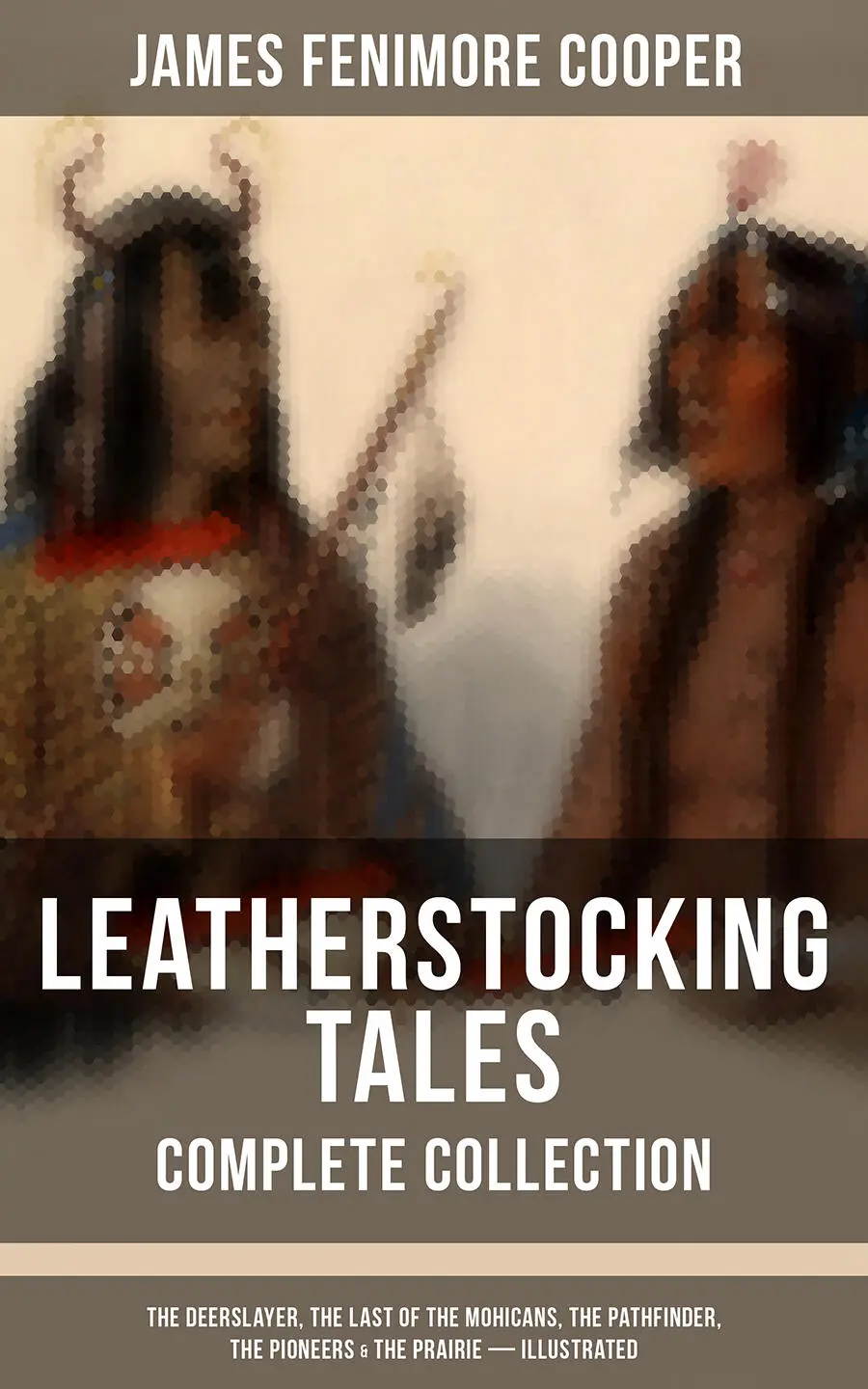
- Название:LEATHERSTOCKING TALES – Complete Collection
- Автор:
- Жанр:
- Год:неизвестен
- ISBN:нет данных
- Рейтинг книги:3 / 5. Голосов: 1
-
Избранное:Добавить в избранное
- Отзывы:
-
Ваша оценка:
LEATHERSTOCKING TALES – Complete Collection: краткое содержание, описание и аннотация
Предлагаем к чтению аннотацию, описание, краткое содержание или предисловие (зависит от того, что написал сам автор книги «LEATHERSTOCKING TALES – Complete Collection»). Если вы не нашли необходимую информацию о книге — напишите в комментариях, мы постараемся отыскать её.
LEATHERSTOCKING TALES – Complete Collection — читать онлайн ознакомительный отрывок
Ниже представлен текст книги, разбитый по страницам. Система сохранения места последней прочитанной страницы, позволяет с удобством читать онлайн бесплатно книгу «LEATHERSTOCKING TALES – Complete Collection», без необходимости каждый раз заново искать на чём Вы остановились. Поставьте закладку, и сможете в любой момент перейти на страницу, на которой закончили чтение.
Интервал:
Закладка:
“If you dislike the name of that man, there’s the name of your mother, Judith. Her’n may sarve you just as good a turn.”
“I do not know it. I’ve look’d through those papers, Deerslayer, in the hope of finding some hint by which I might discover who my mother was, but there is no more trace of the past, in that respect, than the bird leaves in the air.”
“That’s both oncommon, and onreasonable. Parents are bound to give their offspring a name, even though they give ’em nothing else. Now I come of a humble stock, though we have white gifts and a white natur’, but we are not so poorly off as to have no name. Bumppo we are called, and I’ve heard it said —” a touch of human vanity glowing on his cheek, “that the time has been when the Bumppos had more standing and note among mankind than they have just now.”
“They never deserved them more, Deerslayer, and the name is a good one; either Hetty, or myself, would a thousand times rather be called Hetty Bumppo, or Judith Bumppo, than to be called Hetty or Judith Hutter.”
“That’s a moral impossible,” returned the hunter, good humouredly, “onless one of you should so far demean herself as to marry me.”
Judith could not refrain from smiling, when she found how simply and naturally the conversation had come round to the very point at which she had aimed to bring it. Although far from unfeminine or forward, either in her feelings or her habits, the girl was goaded by a sense of wrongs not altogether merited, incited by the hopelessness of a future that seemed to contain no resting place, and still more influenced by feelings that were as novel to her as they proved to be active and engrossing. The opening was too good, therefore, to be neglected, though she came to the subject with much of the indirectness and perhaps justifiable address of a woman.
“I do not think Hetty will ever marry, Deerslayer,” she said, “and if your name is to be borne by either of us, it must be borne by me.”
“There’s been handsome women too, they tell me, among the Bumppos, Judith, afore now, and should you take up with the name, oncommon as you be in this particular, them that knows the family won’t be altogether surprised.”
“This is not talking as becomes either of us, Deerslayer, for whatever is said on such a subject, between man and woman, should be said seriously and in sincerity of heart. Forgetting the shame that ought to keep girls silent until spoken to, in most cases, I will deal with you as frankly as I know one of your generous nature will most like to be dealt by. Can you — do you think, Deerslayer, that you could be happy with such a wife as a woman like myself would make?”
“A woman like you, Judith! But where’s the sense in trifling about such a thing? A woman like you, that is handsome enough to be a captain’s lady, and fine enough, and so far as I know edicated enough, would be little apt to think of becoming my wife. I suppose young gals that feel themselves to be smart, and know themselves to be handsome, find a sartain satisfaction in passing their jokes ag’in them that’s neither, like a poor Delaware hunter.”
This was said good naturedly, but not without a betrayal of feeling which showed that something like mortified sensibility was blended with the reply. Nothing could have occurred more likely to awaken all Judith’s generous regrets, or to aid her in her purpose, by adding the stimulant of a disinterested desire to atone to her other impulses, and cloaking all under a guise so winning and natural, as greatly to lessen the unpleasant feature of a forwardness unbecoming the sex.
“You do me injustice if you suppose I have any such thought, or wish,” she answered, earnestly. “Never was I more serious in my life, or more willing to abide by any agreement that we may make to-night. I have had many suitors, Deerslayer — nay, scarce an unmarried trapper or hunter has been in at the Lake these four years, who has not offered to take me away with him, and I fear some that were married, too —”
“Ay, I’ll warrant that!” interrupted the other —“I’ll warrant all that! Take ’em as a body, Judith, ‘arth don’t hold a set of men more given to theirselves, and less given to God and the law.”
“Not one of them would I— could I listen to; happily for myself perhaps, has it been that such was the case. There have been well looking youths among them too, as you may have seen in your acquaintance, Henry March.”
“Yes, Harry is sightly to the eye, though, to my idees, less so to the judgment. I thought, at first, you meant to have him, Judith, I did; but afore he went, it was easy enough to verify that the same lodge wouldn’t be big enough for you both.”
“You have done me justice in that at least, Deerslayer. Hurry is a man I could never marry, though he were ten times more comely to the eye, and a hundred times more stout of heart than he really is.”
“Why not, Judith, why not? I own I’m cur’ous to know why a youth like Hurry shouldn’t find favor with a maiden like you?”
“Then you shall know, Deerslayer,” returned the girl, gladly availing herself of the opportunity of indirectly extolling the qualities which had so strongly interested her in her listener; hoping by these means covertly to approach the subject nearest her heart. “In the first place, looks in a man are of no importance with a woman, provided he is manly, and not disfigured, or deformed.”
“There I can’t altogether agree with you,” returned the other thoughtfully, for he had a very humble opinion of his own personal appearance; “I have noticed that the comeliest warriors commonly get the best-looking maidens of the tribe for wives, and the Sarpent, yonder, who is sometimes wonderful in his paint, is a gineral favorite with all the Delaware young women, though he takes to Hist, himself, as if she was the only beauty on ‘arth!”
“It may be so with Indians; but it is different with white girls. So long as a young man has a straight and manly frame, that promises to make him able to protect a woman, and to keep want from the door, it is all they ask of the figure. Giants like Hurry may do for grenadiers, but are of little account as lovers. Then as to the face, an honest look, one that answers for the heart within, is of more value than any shape or colour, or eyes, or teeth, or trifles like them. The last may do for girls, but who thinks of them at all, in a hunter, or a warrior, or a husband? If there are women so silly, Judith is not among them.”
“Well, this is wonderful! I always thought that handsome liked handsome, as riches love riches!”
“It may be so with you men, Deerslayer, but it is not always so with us women. We like stout-hearted men, but we wish to see them modest; sure on a hunt, or the war-path, ready to die for the right, and unwilling to yield to the wrong. Above all we wish for honesty — tongues that are not used to say what the mind does not mean, and hearts that feel a little for others, as well as for themselves. A true-hearted girl could die for such a husband! while the boaster, and the double-tongued suitor gets to be as hateful to the sight, as he is to the mind.”
Judith spoke bitterly, and with her usual force, but her listener was too much struck with the novelty of the sensations he experienced to advert to her manner. There was something so soothing to the humility of a man of his temperament, to hear qualities that he could not but know he possessed himself, thus highly extolled by the loveliest female he had ever beheld, that, for the moment, his faculties seemed suspended in a natural and excusable pride. Then it was that the idea of the possibility of such a creature as Judith becoming his companion for life first crossed his mind. The image was so pleasant, and so novel, that he continued completely absorbed by it for more than a minute, totally regardless of the beautiful reality that was seated before him, watching the expression of his upright and truth-telling countenance with a keenness that gave her a very fair, if not an absolutely accurate clue to his thoughts. Never before had so pleasing a vision floated before the mind’s eye of the young hunter, but, accustomed most to practical things, and little addicted to submitting to the power of his imagination, even while possessed of so much true poetical feeling in connection with natural objects in particular, he soon recovered his reason, and smiled at his own weakness, as the fancied picture faded from his mental sight, and left him the simple, untaught, but highly moral being he was, seated in the Ark of Thomas Hutter, at midnight, with the lovely countenance of its late owner’s reputed daughter, beaming on him with anxious scrutiny, by the light of the solitary lamp.
Читать дальшеИнтервал:
Закладка:
Похожие книги на «LEATHERSTOCKING TALES – Complete Collection»
Представляем Вашему вниманию похожие книги на «LEATHERSTOCKING TALES – Complete Collection» списком для выбора. Мы отобрали схожую по названию и смыслу литературу в надежде предоставить читателям больше вариантов отыскать новые, интересные, ещё непрочитанные произведения.







Обсуждение, отзывы о книге «LEATHERSTOCKING TALES – Complete Collection» и просто собственные мнения читателей. Оставьте ваши комментарии, напишите, что Вы думаете о произведении, его смысле или главных героях. Укажите что конкретно понравилось, а что нет, и почему Вы так считаете.