James Cooper - LEATHERSTOCKING TALES – Complete Collection
Здесь есть возможность читать онлайн «James Cooper - LEATHERSTOCKING TALES – Complete Collection» — ознакомительный отрывок электронной книги совершенно бесплатно, а после прочтения отрывка купить полную версию. В некоторых случаях можно слушать аудио, скачать через торрент в формате fb2 и присутствует краткое содержание. Жанр: unrecognised, на английском языке. Описание произведения, (предисловие) а так же отзывы посетителей доступны на портале библиотеки ЛибКат.
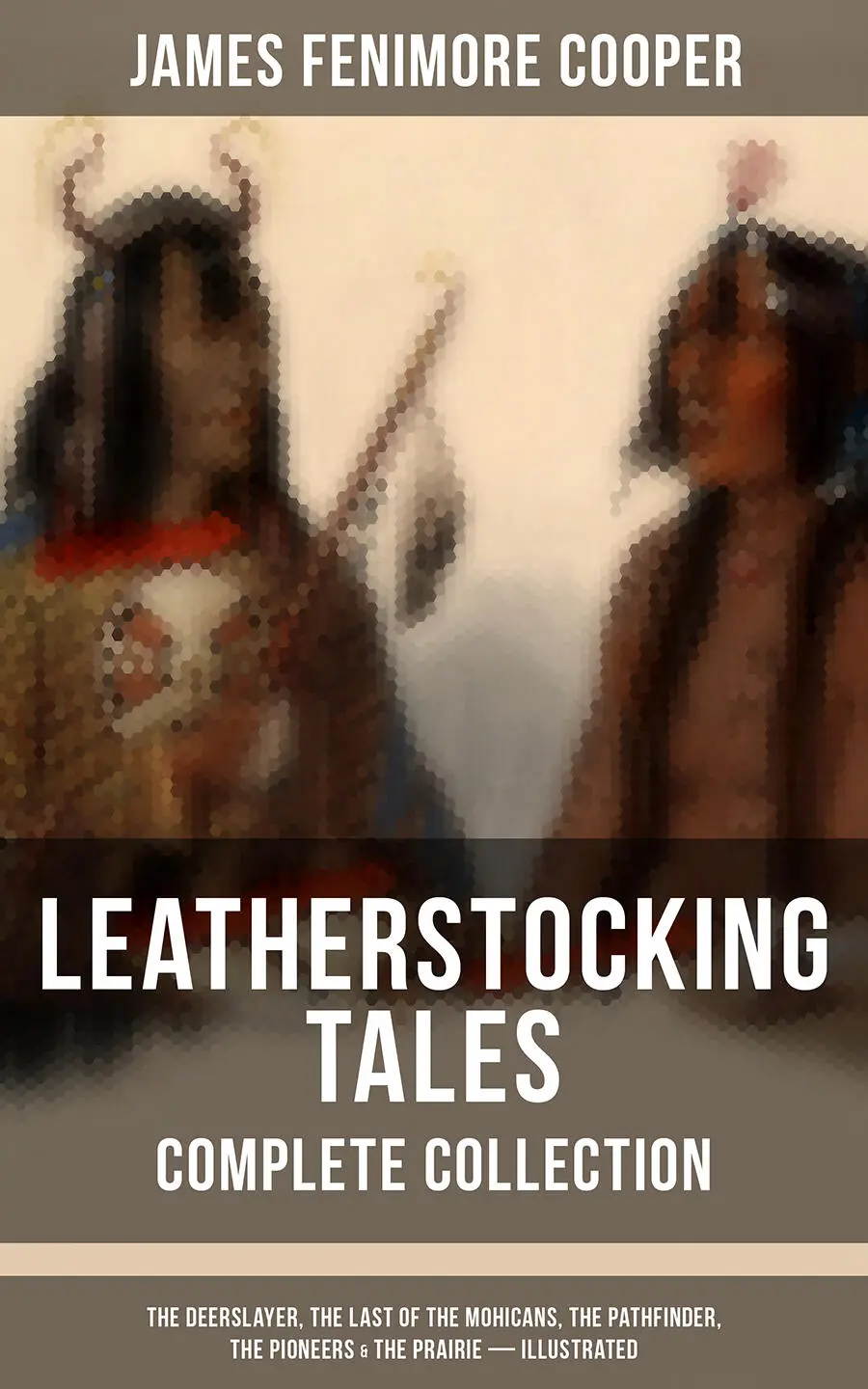
- Название:LEATHERSTOCKING TALES – Complete Collection
- Автор:
- Жанр:
- Год:неизвестен
- ISBN:нет данных
- Рейтинг книги:3 / 5. Голосов: 1
-
Избранное:Добавить в избранное
- Отзывы:
-
Ваша оценка:
LEATHERSTOCKING TALES – Complete Collection: краткое содержание, описание и аннотация
Предлагаем к чтению аннотацию, описание, краткое содержание или предисловие (зависит от того, что написал сам автор книги «LEATHERSTOCKING TALES – Complete Collection»). Если вы не нашли необходимую информацию о книге — напишите в комментариях, мы постараемся отыскать её.
LEATHERSTOCKING TALES – Complete Collection — читать онлайн ознакомительный отрывок
Ниже представлен текст книги, разбитый по страницам. Система сохранения места последней прочитанной страницы, позволяет с удобством читать онлайн бесплатно книгу «LEATHERSTOCKING TALES – Complete Collection», без необходимости каждый раз заново искать на чём Вы остановились. Поставьте закладку, и сможете в любой момент перейти на страницу, на которой закончили чтение.
Интервал:
Закладка:
“I see, in part, what all this means,” observed Deerslayer —“yes, I see through it, in part. But why is not Hetty present? Now Thomas Hutter is gone, she is one of the owners of these cur’osities, and ought to see them opened and handled.”
“Hetty sleeps —” answered Judith, huskily. “Happily for her, fine clothes and riches have no charms. Besides she has this night given her share of all that the chest may hold to me, that I may do with it as I please.”
“Is poor Hetty compass enough for that, Judith?” demanded the just-minded young man. “It’s a good rule and a righteous one, never to take when them that give don’t know the valie of their gifts; and such as God has visited heavily in their wits ought to be dealt with as carefully as children that haven’t yet come to their understandings.”
Judith was hurt at this rebuke, coming from the person it did, but she would have felt it far more keenly had not her conscience fully acquitted her of any unjust intentions towards her feeble-minded but confiding sister. It was not a moment, however, to betray any of her usual mountings of the spirit, and she smothered the passing sensation in the desire to come to the great object she had in view.
“Hetty will not be wronged,” she mildly answered; “she even knows not only what I am about to do, Deerslayer, but why I do it. So take your seat, raise the lid of the chest, and this time we will go to the bottom. I shall be disappointed if something is not found to tell us more of the history of Thomas Hutter and my mother.”
“Why Thomas Hutter, Judith, and not your father? The dead ought to meet with as much reverence as the living!”
“I have long suspected that Thomas Hutter was not my father, though I did think he might have been Hetty’s, but now we know he was the father of neither. He acknowledged that much in his dying moments. I am old enough to remember better things than we have seen on this lake, though they are so faintly impressed on my memory that the earlier part of my life seems like a dream.”
“Dreams are but miserable guides when one has to detarmine about realities, Judith,” returned the other admonishingly. “Fancy nothing and hope nothing on their account, though I’ve known chiefs that thought ’em useful.”
“I expect nothing for the future from them, my good friend, but cannot help remembering what has been. This is idle, however, when half an hour of examination may tell us all, or even more than I want to know.”
Deerslayer, who comprehended the girl’s impatience, now took his seat and proceeded once more to bring to light the different articles that the chest contained. As a matter of course, all that had been previously examined were found where they had been last deposited, and they excited much less interest or comment than when formerly exposed to view. Even Judith laid aside the rich brocade with an air of indifference, for she had a far higher aim before her than the indulgence of vanity, and was impatient to come at the still hidden, or rather unknown, treasures.
“All these we have seen before,” she said, “and will not stop to open. The bundle under your hand, Deerslayer, is a fresh one; that we will look into. God send it may contain something to tell poor Hetty and myself who we really are!”
“Ay, if some bundles could speak, they might tell wonderful secrets,” returned the young man deliberately undoing the folds of another piece of course canvass, in order to come at the contents of the roll that lay on his knees: “though this doesn’t seem to be one of that family, seeing ’tis neither more nor less than a sort of flag, though of what nation, it passes my l’arnin’ to say.”
“That flag must have some meaning to it —” Judith hurriedly interposed. “Open it wider, Deerslayer, that we may see the colours.”
“Well, I pity the ensign that has to shoulder this cloth, and to parade it about on the field. Why ’tis large enough, Judith, to make a dozen of them colours the King’s officers set so much store by. These can be no ensign’s colours, but a gin’ral’s!”
“A ship might carry it, Deerslayer, and ships I know do use such things. Have you never heard any fearful stories about Thomas Hutter’s having once been concerned with the people they call buccaneers?”
“Buck-ah-near! Not I— not I— I never heard him mentioned as good at a buck far off, or near by. Hurry Harry did till me something about its being supposed that he had formerly, in some way or other, dealings with sartain sea robbers, but, Lord, Judith, it can’t surely give you any satisfaction to make out that ag’in your mother’s own husband, though he isn’t your father.”
“Anything will give me satisfaction that tells me who I am, and helps to explain the dreams of childhood. My mother’s husband! Yes, he must have been that, though why a woman like her, should have chosen a man like him, is more than mortal reason can explain. You never saw mother, Deerslayer, and can’t feel the vast, vast difference there was between them!”
“Such things do happen, howsever;— yes, they do happen; though why providence lets them come to pass is more than I understand. I’ve knew the f’ercest warriors with the gentlest wives of any in the tribe, and awful scolds fall to the lot of Injins fit to be missionaries.”
“That was not it, Deerslayer; that was not it. Oh! if it should prove that — no; I cannot wish she should not have been his wife at all. That no daughter can wish for her own mother! Go on, now, and let us see what the square looking bundle holds.”
Deerslayer complied, and he found that it contained a small trunk of pretty workmanship, but fastened. The next point was to find a key; but, search proving ineffectual, it was determined to force the lock. This Deerslayer soon effected by the aid of an iron instrument, and it was found that the interior was nearly filled with papers. Many were letters; some fragments of manuscripts, memorandums, accounts, and other similar documents. The hawk does not pounce upon the chicken with a more sudden swoop than Judith sprang forward to seize this mine of hitherto concealed knowledge. Her education, as the reader will have perceived, was far superior to her situation in life, and her eye glanced over page after page of the letters with a readiness that her schooling supplied, and with an avidity that found its origin in her feelings. At first it was evident that the girl was gratified; and we may add with reason, for the letters written by females, in innocence and affection, were of a character to cause her to feel proud of those with whom she had every reason to think she was closely connected by the ties of blood. It does not come within the scope of our plan to give more of these epistles, however, than a general idea of their contents, and this will best be done by describing the effect they produced on the manner, appearance, and feeling of her who was so eagerly perusing them.
It has been said, already, that Judith was much gratified with the letters that first met her eye. They contained the correspondence of an affectionate and inteffigent mother to an absent daughter, with such allusions to the answers as served in a great measure to fill up the vacuum left by the replies. They were not without admonitions and warnings, however, and Judith felt the blood mounting to her temples, and a cold shudder succeeding, as she read one in which the propriety of the daughter’s indulging in as much intimacy as had evidently been described in one of the daughter’s own letters, with an officer “who came from Europe, and who could hardly be supposed to wish to form an honorable connection in America,” was rather coldly commented on by the mother. What rendered it singular was the fact that the signatures had been carefully cut from every one of these letters, and wherever a name occurred in the body of the epistles it had been erased with so much diligence as to render it impossible to read it. They had all been enclosed in envelopes, according to the fashion of the age, and not an address either was to be found. Still the letters themselves had been religiously preserved, and Judith thought she could discover traces of tears remaining on several. She now remembered to have seen the little trunk in her mother’s keeping, previously to her death, and she supposed it had first been deposited in the chest, along with the other forgotten or concealed objects, when the letters could no longer contribute to that parent’s grief or happiness.
Читать дальшеИнтервал:
Закладка:
Похожие книги на «LEATHERSTOCKING TALES – Complete Collection»
Представляем Вашему вниманию похожие книги на «LEATHERSTOCKING TALES – Complete Collection» списком для выбора. Мы отобрали схожую по названию и смыслу литературу в надежде предоставить читателям больше вариантов отыскать новые, интересные, ещё непрочитанные произведения.







Обсуждение, отзывы о книге «LEATHERSTOCKING TALES – Complete Collection» и просто собственные мнения читателей. Оставьте ваши комментарии, напишите, что Вы думаете о произведении, его смысле или главных героях. Укажите что конкретно понравилось, а что нет, и почему Вы так считаете.