James Cooper - LEATHERSTOCKING TALES – Complete Collection
Здесь есть возможность читать онлайн «James Cooper - LEATHERSTOCKING TALES – Complete Collection» — ознакомительный отрывок электронной книги совершенно бесплатно, а после прочтения отрывка купить полную версию. В некоторых случаях можно слушать аудио, скачать через торрент в формате fb2 и присутствует краткое содержание. Жанр: unrecognised, на английском языке. Описание произведения, (предисловие) а так же отзывы посетителей доступны на портале библиотеки ЛибКат.
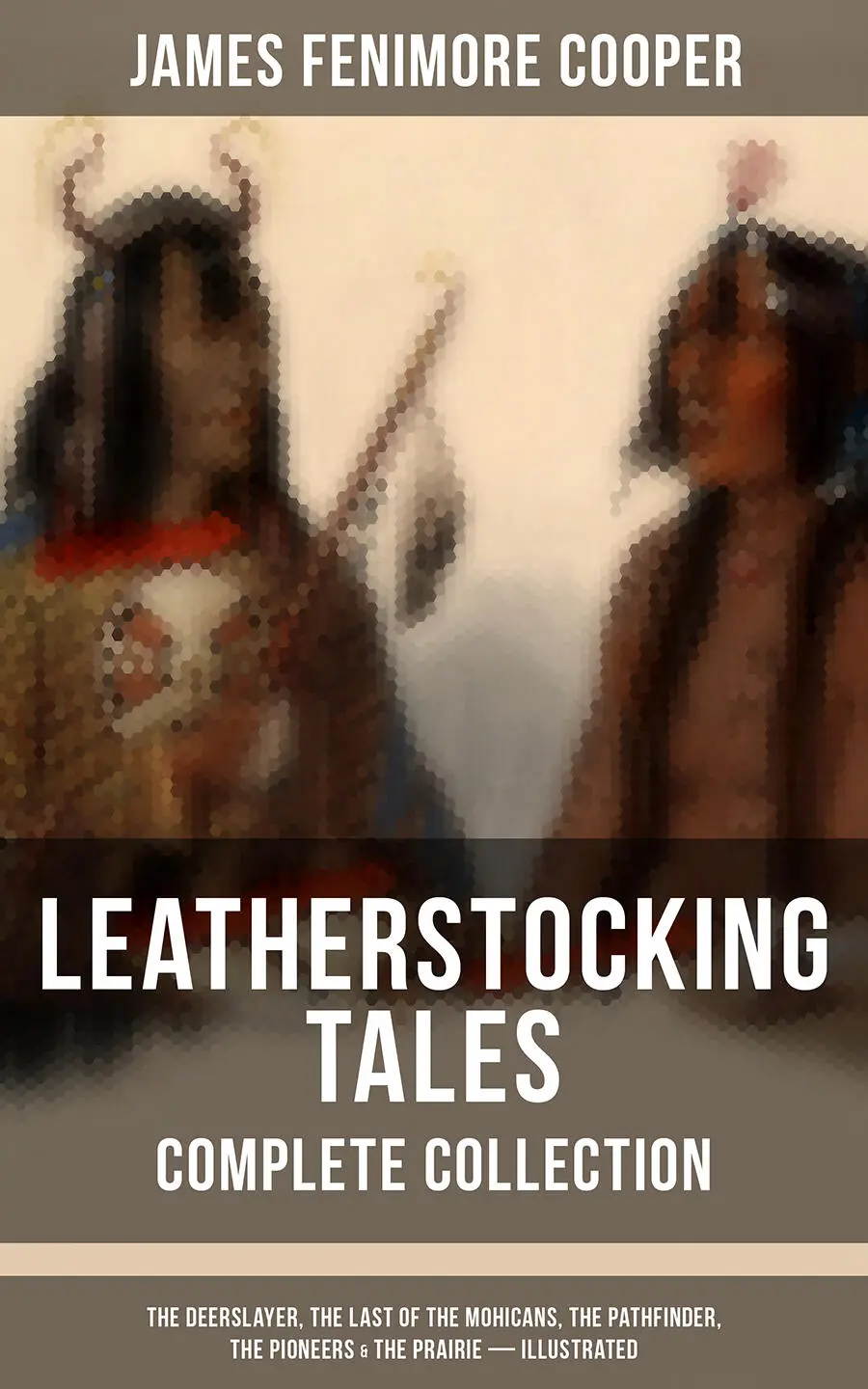
- Название:LEATHERSTOCKING TALES – Complete Collection
- Автор:
- Жанр:
- Год:неизвестен
- ISBN:нет данных
- Рейтинг книги:3 / 5. Голосов: 1
-
Избранное:Добавить в избранное
- Отзывы:
-
Ваша оценка:
LEATHERSTOCKING TALES – Complete Collection: краткое содержание, описание и аннотация
Предлагаем к чтению аннотацию, описание, краткое содержание или предисловие (зависит от того, что написал сам автор книги «LEATHERSTOCKING TALES – Complete Collection»). Если вы не нашли необходимую информацию о книге — напишите в комментариях, мы постараемся отыскать её.
LEATHERSTOCKING TALES – Complete Collection — читать онлайн ознакомительный отрывок
Ниже представлен текст книги, разбитый по страницам. Система сохранения места последней прочитанной страницы, позволяет с удобством читать онлайн бесплатно книгу «LEATHERSTOCKING TALES – Complete Collection», без необходимости каждый раз заново искать на чём Вы остановились. Поставьте закладку, и сможете в любой момент перейти на страницу, на которой закончили чтение.
Интервал:
Закладка:
What further was said need not be related here. That the conversation was of Deerslayer, and his hopes, has been seen already, but the decision that was come to will better appear in the course of the narrative. The youthful pair were yet conversing when the sun appeared above the tops of the pines, and the light of a brilliant American day streamed down into the valley, bathing “in deep joy” the lake, the forests and the mountain sides. Just at this instant Deerslayer came out of the cabin of the Ark and stepped upon the platform. His first look was at the cloudless heavens, then his rapid glance took in the entire panorama of land and water, when he had leisure for a friendly nod at his friends, and a cheerful smile for Hist.
“Well,” he said, in his usual, composed manner, and pleasant voice, “he that sees the sun set in the west, and wakes ‘arly enough in the morning will be sartain to find him coming back ag’in in the east, like a buck that is hunted round his ha’nt. I dare say, now, Hist, you’ve beheld this, time and ag’in, and yet it never entered into your galish mind to ask the reason?”
Both Chingachgook and his betrothed looked up at the luminary, with an air that betokened sudden wonder, and then they gazed at each other, as if to seek the solution of the difficulty. Familiarity deadens the sensibilities even as connected with the gravest natural phenomena, and never before had these simple beings thought of enquiring into a movement that was of daily occurrence, however puzzling it might appear on investigation. When the subject was thus suddenly started, it struck both alike, and at the same instant, with some such force, as any new and brilliant proposition in the natural sciences would strike the scholar. Chingachgook alone saw fit to answer.
“The pale-faces know everything,” he said; “can they tell us why the sun hides his face, when he goes back, at night.”
“Ay, that is downright red-skin l’arnin’” returned the other, laughing, through he was not altogether insensible to the pleasure of proving the superiority of his race by solving the difficulty, which he set about doing in his own peculiar manner. “Harkee, Sarpent,” he continued more gravely, though too simply for affectation; “this is easierly explained than an Indian brain may fancy. The sun, while he seems to keep traveling in the heavens, never budges, but it is the ‘arth that turns round, and any one can understand, if he is placed on the side of a mill-wheel, for instance, when it’s in motion, that he must some times see the heavens, while he is at other times under water. There’s no great secret in that; but plain natur’; the difficulty being in setting the ‘arth in motion.”
“How does my brother know that the earth turns round?” demanded the Indian. “Can he see it?”
“Well, that’s been a puzzler, I will own, Delaware, for I’ve often tried, but never could fairly make it out. Sometimes I’ve consaited that I could; and then ag’in, I’ve been obliged to own it an onpossibility. Howsever, turn it does, as all my people say, and you ought to believe ’em, since they can foretell eclipses, and other prodigies, that used to fill the tribes with terror, according to your own traditions of such things.”
“Good. This is true; no red man will deny it. When a wheel turns, my eyes can see it — they do not see the earth turn.”
“Ay, that’s what I call sense obstinacy! Seeing is believing, they say, and what they can’t see, some men won’t in the least give credit to. Neverthless, chief, that isn’t quite as good reason as it mayat first seem. You believe in the Great Spirit, I know, and yet, I conclude, it would puzzle you to show where you see him!”
“Chingachgook can see Him everywhere — everywhere in good things — the Evil Spirit in bad. Here, in the lake; there, in the forest; yonder, in the clouds; in Hist, in the Son of Uncas, in Tannemund, in Deerslayer. The Evil Spirit is in the Mingos. That I see; I do not see the earth turn round.”
“I don’t wonder they call you the Sarpent, Delaware; no, I don’t! There’s always a meaning in your words, and there’s often a meaning in your countenance, too! Notwithstanding, your answers doesn’t quite meet my idee. That God is observable in all nat’ral objects is allowable, but then he is not perceptible in the way I mean. You know there is a Great Spirit by his works, and the pale-faces know that the ‘arth turns round by its works. This is the reason of the matter, though how it is to be explained is more than I can exactly tell you. This I know; all my people consait that fact, and what all the pale-faces consait, is very likely to be true.”
“When the sun is in the top of that pine to-morrow, where will my brother Deerslayer be?”
The hunter started, and he looked intently, though totally without alarm, at his friend. Then he signed for him to follow, and led the way into the Ark, where he might pursue the subject unheard by those whose feelings he feared might get the mastery over their reason. Here he stopped, and pursued the conversation in a more confidential tone.
“’Twas a little onreasonable in you Sarpent,” he said, “to bring up such a subject afore Hist, and when the young women of my own colour might overhear what was said. Yes, ’twas a little more onreasonable than most things that you do. No matter; Hist didn’t comprehend, and the other didn’t hear. Howsever, the question is easier put than answered. No mortal can say where he will be when the sun rises tomorrow. I will ask you the same question, Sarpent, and should like to hear what answer you can give.”
“Chingachgook will be with his friend Deerslayer — if he be in the land of spirits, the Great Serpent will crawl at his side; if beneath yonder sun, its warmth and light shall fall on both.”
“I understand you, Delaware,” returned the other, touched with the simple self-devotion of his friend, “Such language is as plain in one tongue as in another. It comes from the heart, and goes to the heart, too. ’Tis well to think so, and it may be well to say so, for that matter, but it would not be well to do so, Sarpent. You are no longer alone in life, for though you have the lodges to change, and other ceremonies to go through, afore Hist becomes your lawful wife, yet are you as good as married in all that bears on the feelin’s, and joy, and misery. No — no — Hist must not be desarted, because a cloud is passing atween you and me, a little onexpectedly and a little darker than we may have looked for.”
“Hist is a daughter of the Mohicans. She knows how to obey her husband. Where he goes, she will follow. Both will be with the Great Hunter of the Delawares, when the sun shall be in the pine to-morrow.”
“The Lord bless and protect you! Chief, this is downright madness. Can either, or both of you, alter a Mingo natur’? Will your grand looks, or Hist’s tears and beauty, change a wolf into a squirrel, or make a catamount as innocent as a fa’an? No — Sarpent, you will think better of this matter, and leave me in the hands of God. A’ter all, it’s by no means sartain that the scamps design the torments, for they may yet be pitiful, and bethink them of the wickedness of such a course — though it is but a hopeless expectation to look forward to a Mingo’s turning aside from evil, and letting marcy get uppermost in his heart. Nevertheless, no one knows to a sartainty what will happen, and young creatur’s, like Hist, a’n’t to be risked on onsartainties. This marrying is altogether a different undertaking from what some young men fancy. Now, if you was single, or as good as single, Delaware, I should expect you to be actyve and stirring about the camp of the vagabonds, from sunrise to sunset, sarcumventing and contriving, as restless as a hound off the scent, and doing all manner of things to help me, and to distract the inimy, but two are oftener feebler than one, and we must take things as they are, and not as we want ’em to be.”
Читать дальшеИнтервал:
Закладка:
Похожие книги на «LEATHERSTOCKING TALES – Complete Collection»
Представляем Вашему вниманию похожие книги на «LEATHERSTOCKING TALES – Complete Collection» списком для выбора. Мы отобрали схожую по названию и смыслу литературу в надежде предоставить читателям больше вариантов отыскать новые, интересные, ещё непрочитанные произведения.









Обсуждение, отзывы о книге «LEATHERSTOCKING TALES – Complete Collection» и просто собственные мнения читателей. Оставьте ваши комментарии, напишите, что Вы думаете о произведении, его смысле или главных героях. Укажите что конкретно понравилось, а что нет, и почему Вы так считаете.