Jeffrey McCullough - Transfusion Medicine
Здесь есть возможность читать онлайн «Jeffrey McCullough - Transfusion Medicine» — ознакомительный отрывок электронной книги совершенно бесплатно, а после прочтения отрывка купить полную версию. В некоторых случаях можно слушать аудио, скачать через торрент в формате fb2 и присутствует краткое содержание. Жанр: unrecognised, на английском языке. Описание произведения, (предисловие) а так же отзывы посетителей доступны на портале библиотеки ЛибКат.
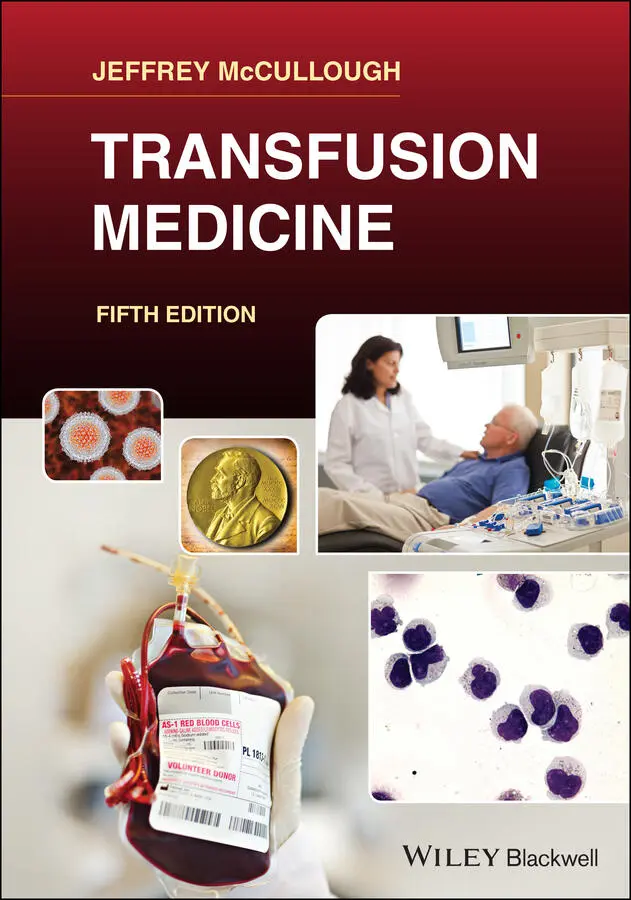
- Название:Transfusion Medicine
- Автор:
- Жанр:
- Год:неизвестен
- ISBN:нет данных
- Рейтинг книги:3 / 5. Голосов: 1
-
Избранное:Добавить в избранное
- Отзывы:
-
Ваша оценка:
Transfusion Medicine: краткое содержание, описание и аннотация
Предлагаем к чтению аннотацию, описание, краткое содержание или предисловие (зависит от того, что написал сам автор книги «Transfusion Medicine»). Если вы не нашли необходимую информацию о книге — напишите в комментариях, мы постараемся отыскать её.
The Fifth Edition of
delivers a succinct, thorough, clinically focused, practical and authoritative treatment of a full range of topics in transfusion therapy. This ranges from issues with the blood supply, recruitment of both whole blood and apheresis donors, blood collection and storage, blood testing, blood safety, and transmissible diseases. This edition has been fully updated and revised to include exciting cellular therapies for cancer, transplantation of both hematopoietic cells and solid organs, infectious diseases and regenerative medicine.
The Fifth Edition includes new authors with highly relevant content that provides a solid grounding for readers in the field. The book:
Is an approachable comprehensive guide to the field of blood banking and transfusion medicine Provides complete and timely perspective on crucial topics, including the HLA system in transfusion medicine and transplantation and quality programs in blood banking and transfusion medicine Is extensively referenced, making it simple for readers to conduct further research on the topics of interest to them Includes new chapters on pediatric transfusion medicine and pathogen reduction Has an expended chapter on patient blood management Provides extensive discussions of the clinical use of blood transfusion in a wide variety of clinical situations including recent development In the management of acute traumatic blood loss Provides updated information about blood groups and molecular testing making inroads into clinical practice along with discussions of laboratory detection of blood groups and provision of red cells Perfect for all those working in the field of blood banking, transfusion medicine and hematology or oncology and fellows in pathology, hematology, surgery and anesthesiology.
is a good introduction for technologists specializing in blood banking and non-medical personnel working in areas related to hematology and transfusion medicine. Transfusion Medicine will also earn a place in the libraries of practicing pathologists with responsibility for blood banks.
Transfusion Medicine — читать онлайн ознакомительный отрывок
Ниже представлен текст книги, разбитый по страницам. Система сохранения места последней прочитанной страницы, позволяет с удобством читать онлайн бесплатно книгу «Transfusion Medicine», без необходимости каждый раз заново искать на чём Вы остановились. Поставьте закладку, и сможете в любой момент перейти на страницу, на которой закончили чтение.
Интервал:
Закладка:
ABO antigens are probably not present on granulocytes (see Chapter 8), but granulocyte concentrates must be ABO‐compatible with the recipient because of the substantial volume of red cells in the concentrates. The clinical impact of ABO incompatibility on granulocyte transfusion was evaluated in one study [92]. A small number of 111In‐labeled granulocytes free of RBCs were injected into ABO‐incompatible recipients. The intravascular recovery, survival, and tissue localization of the cells were not different from those seen when similar injections were given to ABO‐compatible subjects [92]. This study was not intended to encourage the use of ABO‐incompatible granulocyte transfusions, but this could be considered if granulocyte concentrates that are depleted of RBCs could be prepared.
Incompatibility by leukoagglutination or lymphocytotoxicity is associated with the failure of transfused CML cells to circulate or localize at sites of inflammation [93, 94]. Studies using 111In‐labeled granulocytes in humans established that granulocyte‐agglutinating antibodies were associated with decreased intravascular recovery and survival, failure of the cells to localize at known sites of inflammation [95], and excess sequestration of transfused granulocytes in the pulmonary vasculature [95, 96]. However, applying these research data to the practical operation of a blood bank and granulocyte transfusion service is difficult because granulocytes can be stored for only a few hours, and cells are not usually available for crossmatching to allow advance selection of compatible donors. The only practical approach has been to monitor the recipient plasma for the presence of granulocyte‐agglutinating antibodies, traditionally done by screening the patients’ serum against a panel of cells periodically. More recently, in vitro techniques such as flow cytometry have been developed for detecting anti–human leukocyte antigen antibodies.
If a patient becomes alloimmunized, trials of human leukocyte antigen–matched unrelated donors or family members can be selected for leukapheresis, if available. However, the problem of donor–recipient matching and compatibility testing for granulocyte transfusion has not been solved.
6.5 Leukapheresis for the collection of mononuclear cells
Lymphocytes or monocytes are being used increasingly as starting material for the production of cells for adoptive immunotherapy, genetically engineered immunotherapy like chimeric antigen receptor (CAR) T‐cell therapy, or as a concentrate enriched in PBSCs (see Chapter 19). With the exception of donor lymphocyte infusion in the setting of transplant, lymphocytapheresis is almost always performed on patients. Thus, there are no established criteria for normal donor selection and management; however, yields of 1–3 × 10 10MNCs are typical.
6.6 Leukapheresis for the collection of peripheral blood stem cells
For malignancies in which there was suspected marrow involvement, bone marrow aspiration is unsuitable for autologous transplant because of the presence of tumor cells.
However, hematopoietic stem cells are present not only in the marrow but also in the peripheral circulation and can be collected by cytapheresis. Normally the number of circulating PBSCs is much less than in the marrow, but after chemotherapy‐induced marrow suppression, there is a rebound and the number of PBSCs increases substantially. The PBSCs—expected to contain few, if any, malignant cells—can be used for marrow rescue after high‐dose chemotherapy. These autologous transplants of PBSCs made new chemotherapy regimens possible and established that PBSCs could be used successfully for autologous marrow transplantation [97–102].
For several years, the use of PBSCs was limited to autologous transplants. It was feared that the large number of T‐lymphocytes contained in the PBSC concentrates would cause severe graft versus host disease, and that T‐depletion would result in an unacceptably large loss of PBSCs. However, this did not occur [102–107]. PBSCs result in more rapid engraftment [108], give results equivalent to marrow [107, 109], and may provide faster lymphocyte return, resulting in fewer infections [110]. Thus, there has been considerable interest in the methods to obtain PBSCs from both patients and normal donors.
PBSCs can be obtained from the peripheral blood by apheresis, but because of the small number of circulating PBSCs, multiple procedures would be necessary to obtain enough cells for transplantation from unstimulated donors. To further increase the level of circulating PBSCs, donors are given the growth factor G‐CSF. In studies of normal subjects, the administration of G‐CSF causes an increase in the percentage of CD34+ cells from 0.05% before treatment to about 1.5% after 5 days [111–113]. This results in a yield of about 4.5 × 10 8CD34+ cells from a single apheresis [112]. The usual dose of CD34+ cells considered suitable for transplantation is about 2.5–5 × 10 6/kg or about2 × 10 8for a 70‐kg person. Thus, one such apheresis concentrate is usually adequate for a transplant.
Another approach to reducing the number of apheresis procedures necessary is large‐volume leukapheresis, in which 15 or more liters of donor blood is processed to increase the number of PBSCs obtained [114] or the use of the agent plerixafor for stem cell mobilization.
As a result of these factors, collection of PBSCs from normal donors now exceeds marrow in many hematopoietic transplant centers [73, 112, 115, 116], thus eliminating marrow collection in the operating suite, along with the attendant risks of anesthesia and the marrow collection process.
Collection procedures
PBSCs can be collected using the Terumo Spectra Optia, the Fresenius Kabi COM.TEC, or the Amicus Separator ( Table 6.1). The procedures are the same or similar to those used for MNC collection. PBSCs can be collected from small children [117], but adjustments are necessary in priming the system and managing the patients. Studies comparing the CD34+ cell yield of different apheresis instruments found general equivalency between the collection devices [114, 118, 119].
For normal donors, the usual skin preparation, venous access, needles or catheters, solutions, and software are used. Blood flow rates of 40–80 mL/min are used depending on the donor’s venous access and blood flow tolerance. The MNC collection procedures involve processing 10–15 L of blood over 3 to 4 hours, although usually a larger volume of blood is processed to increase the PBSC yield [114]. There may be recruitment of CD34+ cells during extended apheresis up to 40 L over 5 hours. However, it is not clear that the CD34+ cell levels remain stable or increase (recruitment) during apheresis of normal donors, and so most centers process 15–18 L of blood, and this usually provides a suitable dose in one or two procedures.
Effects of peripheral blood stem cell collection on normal donors
The major clinical symptoms of PBSC collection on donors are caused by the G‐CSF the donors receive to mobilize the PBSCs. Almost all donors experience some side effect [73]. The most common of these is bone pain, but headache, fatigue, and flu‐like symptoms also occur. In response to G‐CSF, the donor’s leukocyte count increases to 30,000–40,000 per microliter, and the platelet count decreases by about 40% [120, 121]. The leukocyte and platelet counts return to normal by about day 16, or about 10 days after the apheresis donation and discontinuation of G‐CSF. There is an increase in alkaline phosphatase, alanine aminotransferase, lactate dehydrogenase, and sodium, and a decrease in glucose, potassium, bilirubin, and blood urea nitrogen. In donors who receive G‐CSF, the spleen size increases [122] and splenic rupture has been reported [123]. Although most donors experience some side effects, these are mild and should interfere with PBSC donation only rarely.
Читать дальшеИнтервал:
Закладка:
Похожие книги на «Transfusion Medicine»
Представляем Вашему вниманию похожие книги на «Transfusion Medicine» списком для выбора. Мы отобрали схожую по названию и смыслу литературу в надежде предоставить читателям больше вариантов отыскать новые, интересные, ещё непрочитанные произведения.










Обсуждение, отзывы о книге «Transfusion Medicine» и просто собственные мнения читателей. Оставьте ваши комментарии, напишите, что Вы думаете о произведении, его смысле или главных героях. Укажите что конкретно понравилось, а что нет, и почему Вы так считаете.