Jeffrey McCullough - Transfusion Medicine
Здесь есть возможность читать онлайн «Jeffrey McCullough - Transfusion Medicine» — ознакомительный отрывок электронной книги совершенно бесплатно, а после прочтения отрывка купить полную версию. В некоторых случаях можно слушать аудио, скачать через торрент в формате fb2 и присутствует краткое содержание. Жанр: unrecognised, на английском языке. Описание произведения, (предисловие) а так же отзывы посетителей доступны на портале библиотеки ЛибКат.
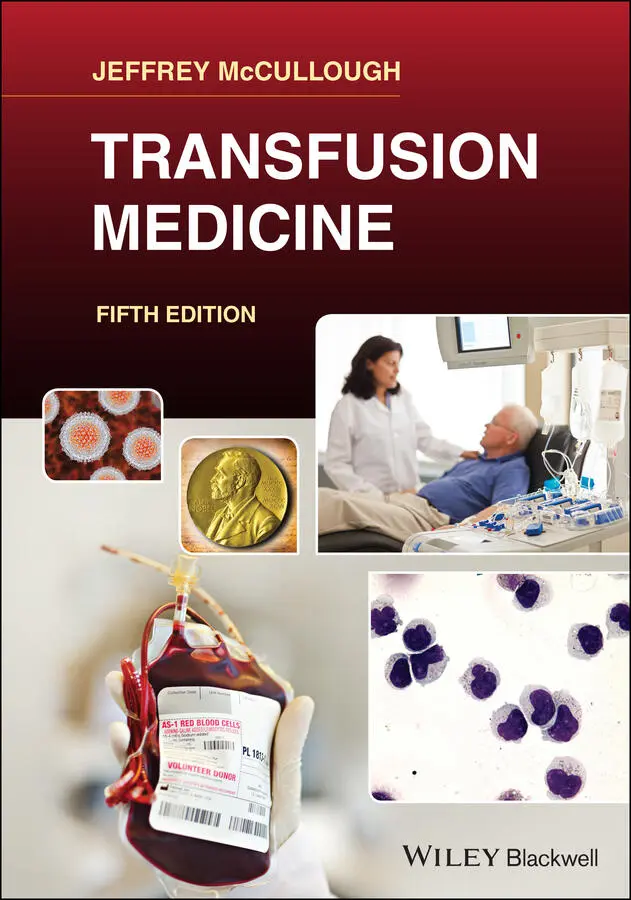
- Название:Transfusion Medicine
- Автор:
- Жанр:
- Год:неизвестен
- ISBN:нет данных
- Рейтинг книги:3 / 5. Голосов: 1
-
Избранное:Добавить в избранное
- Отзывы:
-
Ваша оценка:
Transfusion Medicine: краткое содержание, описание и аннотация
Предлагаем к чтению аннотацию, описание, краткое содержание или предисловие (зависит от того, что написал сам автор книги «Transfusion Medicine»). Если вы не нашли необходимую информацию о книге — напишите в комментариях, мы постараемся отыскать её.
The Fifth Edition of
delivers a succinct, thorough, clinically focused, practical and authoritative treatment of a full range of topics in transfusion therapy. This ranges from issues with the blood supply, recruitment of both whole blood and apheresis donors, blood collection and storage, blood testing, blood safety, and transmissible diseases. This edition has been fully updated and revised to include exciting cellular therapies for cancer, transplantation of both hematopoietic cells and solid organs, infectious diseases and regenerative medicine.
The Fifth Edition includes new authors with highly relevant content that provides a solid grounding for readers in the field. The book:
Is an approachable comprehensive guide to the field of blood banking and transfusion medicine Provides complete and timely perspective on crucial topics, including the HLA system in transfusion medicine and transplantation and quality programs in blood banking and transfusion medicine Is extensively referenced, making it simple for readers to conduct further research on the topics of interest to them Includes new chapters on pediatric transfusion medicine and pathogen reduction Has an expended chapter on patient blood management Provides extensive discussions of the clinical use of blood transfusion in a wide variety of clinical situations including recent development In the management of acute traumatic blood loss Provides updated information about blood groups and molecular testing making inroads into clinical practice along with discussions of laboratory detection of blood groups and provision of red cells Perfect for all those working in the field of blood banking, transfusion medicine and hematology or oncology and fellows in pathology, hematology, surgery and anesthesiology.
is a good introduction for technologists specializing in blood banking and non-medical personnel working in areas related to hematology and transfusion medicine. Transfusion Medicine will also earn a place in the libraries of practicing pathologists with responsibility for blood banks.
Transfusion Medicine — читать онлайн ознакомительный отрывок
Ниже представлен текст книги, разбитый по страницам. Система сохранения места последней прочитанной страницы, позволяет с удобством читать онлайн бесплатно книгу «Transfusion Medicine», без необходимости каждый раз заново искать на чём Вы остановились. Поставьте закладку, и сможете в любой момент перейти на страницу, на которой закончили чтение.
Интервал:
Закладка:
Several platelet concentrates are usually pooled to provide an adequate dose for most patients (see Chapter 10). For some patients, the volume of plasma in the final pooled component is too large, and plasma must be removed prior to transfusion. This involves another centrifugation step after the platelets have been pooled that causes a loss of 15% to as much as 55% of the platelets [90, 91].
Leukodepletion of platelets
The leukocyte content of the platelet concentrates is an important issue (see Chapters 10, 11, and 16). The conditions used to centrifuge WB influence the leukocyte content of the platelet concentrate, but most platelet concentrates contain 10 8or more leukocytes. Filters are available that remove most of the leukocytes in the platelet concentrate. The filters can be used at the bedside, or preferably before the platelets are stored. All platelets should be leukodepleted.
Filters are available for leukodepletion of platelets, as well as red cells. This is necessary if it is hoped to prevent alloimmunization or cytomegalovirus transmission in patients receiving platelet transfusion [53]. The platelet filters result in a loss of about 20–25% of the platelets and have a rate of failure in achieving fewer than 5 × 10 6leukocytes of about 5–7% [53].
5.5 Granulocytes
Granulocytes for transfusion are prepared by cytapheresis (see Chapter 6). Some investigators have prepared granulocytes from fresh WB by sedimentation with hydroxyethyl starch to obtain doses of 0.25 × 10 9. This is below the 1–3 × 10 9desired for transfusion even to a neonate [92]. The possibility of obtaining granulocytes from units of WB is usually raised in a crisis; the blood bank often does not have procedures to prepare the cells, and it is not possible logistically to test the blood for transmissible disease. Thus, preparation of granulocytes from units of fresh WB is not recommended.
5.6 Irradiation of blood components
The techniques and clinical indications for irradiating blood components are described in Chapter 10.
5.7 Hematopoietic stem and progenitor cells
Hematopoietic stem cells are being obtained from bone marrow, peripheral blood, and cord blood. Collection of marrow and umbilical cord blood is described in Chapter 19and peripheral blood stem cells in Chapter 6. Stem cells from these different sources are undergoing an increasing variety of cellular engineering methods that produce new blood components with exciting therapeutic potential.
5.8 Plasma derivatives
General
Procedures for the fractionation of plasma were developed during the 1940s in response to World War II (see Chapter 1). A large pool of plasma, often up to 10,000 L or 50,000 donor units, is processed using cold ethanol fractionation. In cold ethanol, different plasma proteins have different solubilities, which allow their separation. This large‐scale separation and manufacturing process results in the isolation of several proteins from plasma that are prepared for therapeutic use. These are called “plasma derivatives” ( Table 5.10). The major derivatives have been albumin, immune serum, immune globulin, and coagulation factor VIII concentrate. Until the late 1980s, techniques were not available to sterilize some blood derivatives after manufacture. Thus, because of the large number of units of donor plasma in each pool, the chance of contamination of the pool with viruses (i.e., hepatitis and HIV) was high and the risk for disease transmission from these nonsterilized blood derivatives was high (see Chapter 17). This risk was accentuated because much of the plasma that serves as the raw material for the manufacture of blood derivatives was obtained from paid donors, a group known to provide blood with an increased likelihood of transmitting disease [93, 94]. Initially, only albumin and immune globulin carried no risk for disease transmission—albumin because it was sterilized by heating, and immune globulin because none of the known infectious agents was contained in that fraction prepared from the plasma. Because of the recognition of the high risk for disease transmission by coagulation factor concentrates, methods were developed to sterilize them [95, 96].
Concerns arose about the possible transfusion transmission of the agent responsible for variant Creutzfeldt–Jakob disease because this infectivity is not inactivated by most conventional methods. Fortunately, it appears that the prions associated with variant Creutzfeldt–Jakob disease do not partition with the therapeutic proteins during plasma fractionation [97, 98].
Coagulation factor concentrates
Although coagulation factor concentrates were known to transmit hepatitis when they first became available, the risk has been reduced over the years by improvements to the donor history, the addition of laboratory tests for transmissible agents, and the introduction in the mid‐1980s of methods to treat the concentrates to separate and inactivate viruses [95, 96, 99]. The major methods of viral inactivation for plasma‐derived concentrates are: (a) dry heating, in which the sealed final vial is heated between 80°C and 100°C; (b) pasteurization, in which the concentrate is heated to 60°C while still in solution before lyophilization; (c) vapor heating, in which the lyophilized powder is exposed to steam before bottling; and (d) solvent–detergent (SD) treatment, in which the organic solvent tri‐ n ‐butyl‐phosphate and the detergent Tween 80 or Triton X‐100 are added at intermediate processing steps. Currently, the SD method is most commonly used. The pasteurization and vapor heating methods result in substantial loss of factor VIII activity [99, 100].
Table 5.10 Plasma‐derivative products.
Source : From information provided by the Plasma Protein Therapeutics Association; and modified from Burnouf T. Transfus Med Rev 2007; 21(2):101–117.
| Plasma product | Indication |
|---|---|
| Albumin | |
| Serum human albumin Plasma protein fraction | Restoration of plasma volume subsequent to shock, trauma, surgery, burns, and therapeutic plasma exchange |
| Immunoglobulins | |
| Immunoglobulin (intravenous and intramuscular) | Treatment of agammaglobulinemia and hypogammaglobulinemia; passive immunization for hepatitis A and measles |
| IgM‐enriched immune globulin | Treatment and prevention of septicemia and septic shock due to toxin liberation in the course of antibiotic treatment |
| Cytomegalovirus immune | Passive immunization subsequent to exposure to globulin cytomegalovirus |
| Hepatitis B immune globulin | Passive immunization subsequent to exposure to hepatitis B |
| Rabies immune globulin | Passive immunization subsequent to exposure to rabies |
| Rubella immune globulin | Passive immunization subsequent to exposure to German measles |
| Tetanus immune globulin | Passive immunization subsequent to exposure to tetanus |
| Vaccinia immune globulin | Passive immunization subsequent to exposure to smallpox |
| Varicella‐zoster immune | Passive immunization subsequent to exposure to globulin chicken pox |
| RhO(D) immune globulin | Treatment and prevention of hemolytic disease of fetus and newborn resulting from Rh incompatibility and incompatible blood transfusions |
| Protease inhibitors | |
| Alpha1 proteinase inhibitor | Used in the treatment of emphysema caused by a genetic deficiency |
| C1‐esterase inhibitor | Hereditary angioneurotic edema |
| Coagulation proteins | |
| Antithrombin III | Treatment of bleeding episodes associated with liver disease, antithrombin III deficiency, and thromboembolism |
| Antihemophilic factor | Treatment or prevention of bleeding in patients with hemophilia A |
| Anti‐inhibitor coagulant | Treatment of bleeding episodes in the presence of complex factor VIII inhibitor |
| von Willebrand factor/factor VIII concentrate | Treatment or prevention of bleeding in patients with von Willebrand factor |
| Unactivated prothrombin complex concentrate (PCC): | |
| 4‐Factor PCC includes vitamin K–dependent factors (factors II, VII, IX, X) 3‐Factor PCC includes factors II, IX,and X | Urgent reversal of acquired coagulation factor deficiency induced by vitamin K antagonists therapy in patients with acute major bleeding or need for an urgent surgery/invasive procedure |
| Activated PCC: 4‐Factor PCC includes factors II, VII,IX, and X; only factor VII is mostly the activated form | Prevention or treatment of bleeding in patients with hemophilia A and B complicated by an inhibitor, acquired hemophilia A, or bleeding associated with certain anticoagulants |
| Factor IX | Prophylaxis and treatment of patients with factor IX deficiency |
| Factor X | Prophylaxis and treatment of patients with factor X deficiency |
| Factor XI | Prevention and treatment of bleeding associated with factor XI deficiency |
| Factor XIII | Treatment of bleeding and disorders of wound healing due to factor XIII deficiency |
| Fibrinogen | Treatment of hemorrhagic diathesis in hypofibrinogenemia, dysfibrinogenemia, and afibrinogenemia |
| Fibrinolysin | Dissolution of intravascular clots |
| Other proteins | |
| Haptoglobin | Supportive therapy in viral hepatitis and pernicious anemia |
| Serum cholinesterase | Treatment of prolonged apnea after administration of succinyl choline chloride |
Each of these methods uses a different strategy of viral inactivation. There are differing amounts of data about the effectiveness of these viral inactivation methods, because not all of their products have been subjected to randomized controlled trials. In general, it appears that the methods are effective in inactivating virus with a lipid envelope, but infections with nonlipid envelope viruses, such as parvovirus B19 [101] and hepatitis A [102], have been reported.
Читать дальшеИнтервал:
Закладка:
Похожие книги на «Transfusion Medicine»
Представляем Вашему вниманию похожие книги на «Transfusion Medicine» списком для выбора. Мы отобрали схожую по названию и смыслу литературу в надежде предоставить читателям больше вариантов отыскать новые, интересные, ещё непрочитанные произведения.







Обсуждение, отзывы о книге «Transfusion Medicine» и просто собственные мнения читателей. Оставьте ваши комментарии, напишите, что Вы думаете о произведении, его смысле или главных героях. Укажите что конкретно понравилось, а что нет, и почему Вы так считаете.