Jeffrey McCullough - Transfusion Medicine
Здесь есть возможность читать онлайн «Jeffrey McCullough - Transfusion Medicine» — ознакомительный отрывок электронной книги совершенно бесплатно, а после прочтения отрывка купить полную версию. В некоторых случаях можно слушать аудио, скачать через торрент в формате fb2 и присутствует краткое содержание. Жанр: unrecognised, на английском языке. Описание произведения, (предисловие) а так же отзывы посетителей доступны на портале библиотеки ЛибКат.
- Название:Transfusion Medicine
- Автор:
- Жанр:
- Год:неизвестен
- ISBN:нет данных
- Рейтинг книги:3 / 5. Голосов: 1
-
Избранное:Добавить в избранное
- Отзывы:
-
Ваша оценка:
Transfusion Medicine: краткое содержание, описание и аннотация
Предлагаем к чтению аннотацию, описание, краткое содержание или предисловие (зависит от того, что написал сам автор книги «Transfusion Medicine»). Если вы не нашли необходимую информацию о книге — напишите в комментариях, мы постараемся отыскать её.
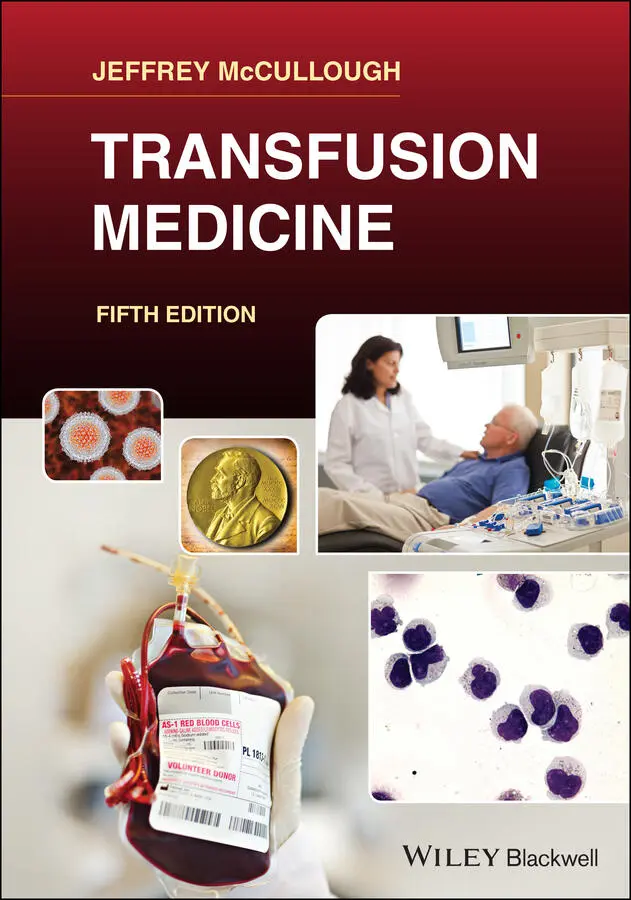
The Fifth Edition of
delivers a succinct, thorough, clinically focused, practical and authoritative treatment of a full range of topics in transfusion therapy. This ranges from issues with the blood supply, recruitment of both whole blood and apheresis donors, blood collection and storage, blood testing, blood safety, and transmissible diseases. This edition has been fully updated and revised to include exciting cellular therapies for cancer, transplantation of both hematopoietic cells and solid organs, infectious diseases and regenerative medicine.
The Fifth Edition includes new authors with highly relevant content that provides a solid grounding for readers in the field. The book:
Is an approachable comprehensive guide to the field of blood banking and transfusion medicine Provides complete and timely perspective on crucial topics, including the HLA system in transfusion medicine and transplantation and quality programs in blood banking and transfusion medicine Is extensively referenced, making it simple for readers to conduct further research on the topics of interest to them Includes new chapters on pediatric transfusion medicine and pathogen reduction Has an expended chapter on patient blood management Provides extensive discussions of the clinical use of blood transfusion in a wide variety of clinical situations including recent development In the management of acute traumatic blood loss Provides updated information about blood groups and molecular testing making inroads into clinical practice along with discussions of laboratory detection of blood groups and provision of red cells Perfect for all those working in the field of blood banking, transfusion medicine and hematology or oncology and fellows in pathology, hematology, surgery and anesthesiology.
is a good introduction for technologists specializing in blood banking and non-medical personnel working in areas related to hematology and transfusion medicine. Transfusion Medicine will also earn a place in the libraries of practicing pathologists with responsibility for blood banks.
Transfusion Medicine — читать онлайн ознакомительный отрывок
Ниже представлен текст книги, разбитый по страницам. Система сохранения места последней прочитанной страницы, позволяет с удобством читать онлайн бесплатно книгу «Transfusion Medicine», без необходимости каждый раз заново искать на чём Вы остановились. Поставьте закладку, и сможете в любой момент перейти на страницу, на которой закончили чтение.
Интервал:
Закладка:
Blood volume shifts
Because no more than 15% of the donor’s blood is extracorporeal at any time, there is no greater risk for blood volume shift than with whole blood donation. In addition, during apheresis, citrate and saline solutions are infused, replacing some of the lost blood volume. Thus, shifts in blood volume leading to hypotension are not a problem. Because of the administration of hydroxyethyl starch (HES) during leukapheresis as sedimenting agent, there was concern that a net increase in blood volume might occur because HES is also used as a blood volume expander. This could lead to hypertension or acute heart failure. The volume of HES administered ranges typically from 200 to 400 mL and, combined with the removal of approximately 50–200 mL of granulocyte concentrate, does not result in complications caused by excess blood volume.
Potential complications of serial donations
Because cytapheresis donors can donate more often than whole blood donors, there are some complications that could result from multiple frequent donations. These involve depletion of cells or plasma proteins.
Platelet depletion
Platelet depletion is a concern if donors undergo frequent plateletpheresis during a short period, although this was not observed in 352 donors who donated an average of six times [77].
Leukapheresis donors
Because the HES used in granulocyte collection is a blood volume expander, some blood banks use lower blood pressure levels than those used for whole blood donors when selecting granulocyte donors. This is not a requirement, however. Granulocyte donors usually receive corticosteroids, and many also receive granulocyte colony‐stimulating factor (G‐CSF) to increase their granulocyte count and the granulocyte yield (see Chapter 6). Thus, donors should be questioned about conditions that might be exacerbated by corticosteroids. These include hypertension, peptic ulcers, cataracts, and diabetes. Because corticosteroids are given to granulocyte donors, donation frequency is limited to prevent complications. If frequent donation is required, it needs to be under the close supervision of a physician with written plans for monitoring the donor for side effects of accumulation of HES or cumulative effects of corticosteroids and/or G‐CSF.
Plasmapheresis donors
If plasma is donated no more than every 4 weeks (infrequent donor), the donor assessment procedures are the same as for whole blood. The FDA limitations for plasma removal are no more than 800 mL of plasma at one donation depending on the donor’s weight. These volumes may be slightly different when semiautomated instruments are used. Donors may give again in 48 hours as for platelets, but not more than twice within a 7‐day period. For donors undergoing plasmapheresis more often than once every 4 weeks (frequent donor), the serum protein must be monitored and found to be within normal limits.
Allogeneic donors for hematopoietic cell transplantation
Hematopoietic cell transplantation now uses a variety of donors, such as unrelated marrow, peripheral blood stem cells (PBSCs), or cord blood. Transfusion medicine physicians are involved in this donor selection process. The criteria for whole blood and apheresis donation serve as the basis for donor selection, but these criteria may be modified because the advantage of a particular donor may outweigh a very small or theoretical increased risk of the cellular product. Criteria intended to protect the donor are less likely to be modified, but as new donation situations, such an unrelated marrow or cord blood, have arisen, donor selection criteria for each situation were developed.
Physical examination of apheresis donors
The physical examination of cytapheresis donors is the same as for whole blood donation.
4.7 Adverse reactions in apheresis donors
General
Adverse reactions in apheresis donors ( Table 4.5) are similar in character to those encountered in whole blood donation. Although double red cell collections by cytapheresis are now common, most cytapheresis procedures carried out in normal donors are plateletpheresis. Because the required interval between double red cell donation is proportionally increased, the long‐term potential for anemia/ferritin deficiency is probably similar to whole blood donation, although acute changes with each donation are greater. Normal donors undergoing plateletpheresis may report an adverse reaction following up to 50% of procedures when asked; however, such reactions cause the procedure to be discontinued only 0.1–1.0% of the time [81]. These reactions are almost entirely due to citrate toxicity and can be alleviated by slowing the rate of blood return and thus the rate of citrate infusion.
Some potential complications of apheresis apply to all types of procedures because they have to do with the instrument or activities that are common to all types of procedures, while others are unique to certain apheresis procedures [81–83].
Vasovagal reactions
Vasovagal reactions are similar to those associated with whole blood donation, but may be reduced depending on the amount of volume replacement with the method. The symptoms include weakness, pallor, diaphoresis, bradycardia, cold clammy skin, lightheadedness or fainting, and, if severe, convulsions. The treatment is as described for whole blood donors. Because the donors are usually experienced whole blood donors, they rarely experience vasovagal reactions.
Table 4.5 Potential complications and adverse reactions to cytapheresis donation.
| Reactions similar to whole blood donation |
| Citrate toxicity |
| Hematoma caused by reinfusion of red blood cells via pump |
| Mechanical hemolysis |
| Air embolus |
| Platelet depletion |
| Lymphocyte depletion |
| Plasma protein depletion |
Anticoagulation
The anticoagulant used for plateletpheresis is citrate. Cardiac toxicity caused by calcium binding can occur quickly at a very low concentration while having little impact on in vivo anticoagulation. Bleeding due to citrate anticoagulation is not a problem for donors.
Citrate toxicity
Elevations of blood citrate can cause paresthesias, muscle cramping, tetany, cardiac arrhythmia, and other symptoms. The plateletpheresis procedure involves the administration of citrate solutions to donors, resulting from the massive autologous retransfusion of 4–6 L of their blood may be withdrawn, passed through the instrument, citrated, and returned to them during the procedure. In a careful study relating the dose of citrate, symptoms, electrocardiographic changes, and ionized calcium [84] showed that when citrate infusion rates were maintained at less than 65 mg/kg/hour, donors did not experience symptoms or demonstrate electrocardiographic abnormalities. This has been confirmed in later studies [85, 86]. Donors with similar levels of hypocalcemia may demonstrate wide variability in symptoms. Using anticoagulant citrate dextrose formula A at a ratio of 1:8 with whole blood, many abnormalities were observed, including bradycardia (sometimes severe); supraventricular and ventricular premature contractions; right bundle‐branch block; ST segment elevation or depression; and tall, flattened, or inverted T waves. Some of the donors experienced nausea, vomiting, hypotension, fainting, or convulsions [87]. Even when less citrate is infused, the QT interval is almost always prolonged [88, 89]. Citrate reactions are managed by slowing the flow rate of the instrument and thus slowing the rate of citrate infusion. This is quite effective in eliminating these reactions, and most apheresis personnel are very aware of this process. Oral or intravenous calcium can also be used to reverse or prevent this condition. Citrate toxicity can also occur inadvertently if tubing is not properly placed in the pumps and the citrate solution is allowed to flow freely into the donor [90].
Читать дальшеИнтервал:
Закладка:
Похожие книги на «Transfusion Medicine»
Представляем Вашему вниманию похожие книги на «Transfusion Medicine» списком для выбора. Мы отобрали схожую по названию и смыслу литературу в надежде предоставить читателям больше вариантов отыскать новые, интересные, ещё непрочитанные произведения.










Обсуждение, отзывы о книге «Transfusion Medicine» и просто собственные мнения читателей. Оставьте ваши комментарии, напишите, что Вы думаете о произведении, его смысле или главных героях. Укажите что конкретно понравилось, а что нет, и почему Вы так считаете.