Jeffrey McCullough - Transfusion Medicine
Здесь есть возможность читать онлайн «Jeffrey McCullough - Transfusion Medicine» — ознакомительный отрывок электронной книги совершенно бесплатно, а после прочтения отрывка купить полную версию. В некоторых случаях можно слушать аудио, скачать через торрент в формате fb2 и присутствует краткое содержание. Жанр: unrecognised, на английском языке. Описание произведения, (предисловие) а так же отзывы посетителей доступны на портале библиотеки ЛибКат.
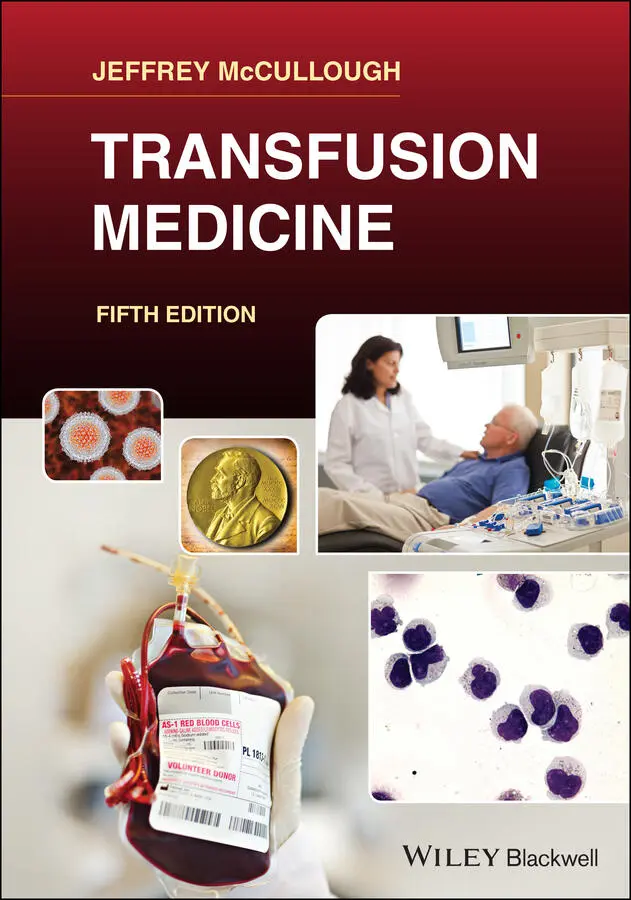
- Название:Transfusion Medicine
- Автор:
- Жанр:
- Год:неизвестен
- ISBN:нет данных
- Рейтинг книги:3 / 5. Голосов: 1
-
Избранное:Добавить в избранное
- Отзывы:
-
Ваша оценка:
Transfusion Medicine: краткое содержание, описание и аннотация
Предлагаем к чтению аннотацию, описание, краткое содержание или предисловие (зависит от того, что написал сам автор книги «Transfusion Medicine»). Если вы не нашли необходимую информацию о книге — напишите в комментариях, мы постараемся отыскать её.
The Fifth Edition of
delivers a succinct, thorough, clinically focused, practical and authoritative treatment of a full range of topics in transfusion therapy. This ranges from issues with the blood supply, recruitment of both whole blood and apheresis donors, blood collection and storage, blood testing, blood safety, and transmissible diseases. This edition has been fully updated and revised to include exciting cellular therapies for cancer, transplantation of both hematopoietic cells and solid organs, infectious diseases and regenerative medicine.
The Fifth Edition includes new authors with highly relevant content that provides a solid grounding for readers in the field. The book:
Is an approachable comprehensive guide to the field of blood banking and transfusion medicine Provides complete and timely perspective on crucial topics, including the HLA system in transfusion medicine and transplantation and quality programs in blood banking and transfusion medicine Is extensively referenced, making it simple for readers to conduct further research on the topics of interest to them Includes new chapters on pediatric transfusion medicine and pathogen reduction Has an expended chapter on patient blood management Provides extensive discussions of the clinical use of blood transfusion in a wide variety of clinical situations including recent development In the management of acute traumatic blood loss Provides updated information about blood groups and molecular testing making inroads into clinical practice along with discussions of laboratory detection of blood groups and provision of red cells Perfect for all those working in the field of blood banking, transfusion medicine and hematology or oncology and fellows in pathology, hematology, surgery and anesthesiology.
is a good introduction for technologists specializing in blood banking and non-medical personnel working in areas related to hematology and transfusion medicine. Transfusion Medicine will also earn a place in the libraries of practicing pathologists with responsibility for blood banks.
Transfusion Medicine — читать онлайн ознакомительный отрывок
Ниже представлен текст книги, разбитый по страницам. Система сохранения места последней прочитанной страницы, позволяет с удобством читать онлайн бесплатно книгу «Transfusion Medicine», без необходимости каждый раз заново искать на чём Вы остановились. Поставьте закладку, и сможете в любой момент перейти на страницу, на которой закончили чтение.
Интервал:
Закладка:
28 28. Nilsson Sojka B, Sojka P. The blood‐donation experience: perceived physical, psychological and social impact of blood donation on the donor. Vox Sang 2003; 84:120–128.
29 29. Ferguson E, Taylor M, Keatley D, et al. Blood donors’ helping behavior is driven by warm glow: more evidence for the blood donor benevolence hypothesis Transfusion 2012; 52(10):2189–2200.
30 30. Wu Y, Glynn SA, Schreiber GB, et al. First‐time blood donors: demographic trends. Transfusion 2001; 41:360–364.
31 31. Ownby HE, Kong F, Watanabe K, et al. Analysis of donor return behavior. Transfusion 1999; 39:1128–1135.
32 32. Eastlund T. Monetary blood donation incentives and risk of transfusion‐transmitted infection. Transfusion 1998; 38:874–882.
33 33. To L, Dunnington T, Thomas C, et al. The United States’ potential blood donor pool: updating the prevalence of donor‐exclusion factors on the pool of potential donors. Transfusion 2020; 60:206–215.
34 34. Zalpuri S, Schotten N, Baart AM, et al. Iron deficiency–related symptoms in whole blood donors: a systematic review. Transfusion 2019; 59:3275–3287.
35 35. Ayaz Abbasi R, Maqbool O, Mushtaq M, et al. Saving lives using social media: analysis of the role of twitter for personal blood donation requests and dissemination. Telematics Informatics 2018; 35(4):892–912.
36 36. Sanchez AM, Ameti DI, Schreiber B, et al. The potential impact of incentives on future blood donation behavior. Transfusion 2001; 41:172–178.
37 37. Blood Donor Classification Statement, Paid or Volunteer Donor, Sec 230.150, Compliance Policy Guide for FDA Staff and Industry, US Food and Drug Administration, May 7, 2002.
38 38. Huestis DW, Taswell HF. Donors and dollars. Transfusion 1994; 34:96–97.
39 39. Strauss RG. Blood donations, safety, and incentives. Transfusion 2001; 41:165–171.
40 40. Glynn SA, Smith JW, Schreiber GB. Repeat whole‐blood and plateletapheresis donors: unreported deferrable risks, reactive screening tests, and response to incentive programs. Transfusion 2001; 41:736–743.
41 41. Glynn SA, Williams AE, Nass CC, et al. Attitudes toward blood donation incentives in the United States: implications for donor recruitment. Transfusion 2003; 43:7–16.
42 42. Dhingra N. The blood supply worldwide. In: Lozano M, Contreras M, Blajchman M, eds. Global Perspectives in Transfusion Medicine. Bethesda, MD: American Association of Blood Banks Press, 2006, pp. 5–23.
43 43. Farrugia A, Penron J, Bult JM. Payment, compensation and replacement—the ethics and motivation of blood and plasma donation. Vox Sang 2010; 99:202–211.
44 44. Jason LA, Rose T, Ferrari JR, Barone R. Personal versus impersonal methods for recruiting blood donations. J Soc Psychol 1984; 123:139–140.
45 45. Hayes TJ, Dwyer FR, Greenwalt TJ, Coe NA. A comparison of two behavioral influence techniques for improving blood donor recruitment. Transfusion 1984; 24:399–403.
46 46. Newman BH, Burak FQ, McKay‐Peters E, Pothiawala MA. Patient‐related blood drives. Transfusion 1988; 28:142–144.
47 47. O’Brien SF. Donor research: the foundation for a healthy blood supply. Transfusion 2006; 46(7):1069–1071.
48 48. Thompson WW. Blood donation behavior of Hispanics in the lower Rio Grande Valley. Transfusion 1993; 33:333–335.
49 49. Wieckowicz M. Single donor platelet transfusions: scientific, legal, and ethical considerations. Transfusion 1976; 16:193–199.
50 50. Meyer DM, Hillman RS, Slichter SJ. Plateletapheresis program. I. Donor recruitment and commitment. Transfusion 1984; 24:287–291.
51 51. Hansen JA, Clift RA, Thomas ED, et al. Transplantation of marrow from an unrelated donor to a patient with acute leukemia. N Engl J Med 1980; 303:565–567.
52 52. McCullough J, Perkins HA, Hansen J. The National Marrow Donor Program with emphasis on the early years. Transfusion 2006; 46:1248–1255.
53 53. McCullough J, Bach FH, Coccia P, et al. Bone marrow transplantation from unrelated volunteer donors: summary of a conference on scientific, ethical, legal, financial, and other practical issues. Transfusion 1982; 22:78–81.
54 54. McCullough J, Rogers G, Dahl R, et al. Development and operation of a program to obtain volunteer bone marrow donors unrelated to the patient. Transfusion 1986; 26:315–323.
55 55. McElligott MC, Menitove JE, Aster RH. Recruitment of unrelated persons as bone marrow donors—a preliminary experience. Transfusion 1986; 26:309–314.
56 56. Simmons RG. Related donors: costs and gains. Transplant Proc 1977; 9:143–145.
57 57. Kamstra‐Hennen L, Beebe J, Stumm S, Simmons RG. Ethical evaluation of related donation: the donor after five years. Transplant Proc 1981; 13:60–61.
4 Blood Donor Medical Assessment, Collection, and Complications
Gary Bachowski MD, PhD
The blood supply system in the United States has developed along two main tracks (see Chapter 2). One involves nonprofit community, regional, and national blood centers that obtain cellular elements and plasma from whole blood or apheresis donations provided almost exclusively by unpaid volunteers. Most of these products are used directly for transfusion.
The other blood collection system involves large‐scale collection of plasma by plasmapheresis. This system consists of for‐profit organizations and almost all of this plasma comes from paid donors. This plasma is manufactured into plasma derivatives, such as albumin, coagulation factor concentrates, or intravenous immunoglobulin, and these are sold on the national and international market.
4.1 Blood collection
Whole blood is collected by venipuncture from healthy adults into plastic bags containing a liquid anticoagulant preservative solution. The whole blood is separated into red blood cells, plasma, and occasionally platelet concentrate (see Chapter 5). The plasma can be: (a) frozen and used for transfusion, (b) further processed into cryoprecipitate (to be used for transfusion) and cryoprecipitate‐poor plasma (which can serve as a raw material for further manufacture of plasma derivatives), or (c) provided as a direct source of raw material for subsequent manufacture of plasma derivatives. Modifications can be made to these components to obtain blood products that will be effective for specific purposes. A complete list of components that can be produced from whole blood and are licensed by the US Food and Drug Administration (FDA) is provided in Chapter 5. Although blood banks may distribute some plasma derivatives, most are distributed through manufacturers by hospital pharmacies. Blood centers also produce platelets, red cells, plasma, and granulocytes by apheresis (see Chapter 6) in which the component(s) of interest is (are) removed in a blood cell separator and the remaining blood is returned to the donor.
Because blood is considered to be a drug and is regulated under FDA law, most aspects of potential donor selection and the collection of blood are carried out under requirements established by the FDA. This chapter attempts to provide concepts and rationale for blood donor assessment and blood collection but does not refer to every specific FDA requirement. However, it should be understood that all of these activities must conform to FDA requirements, which can be found in the Code of Federal Regulations and various FDA guidelines. For blood banks that desire accreditation by the AABB (American Association of Blood Banks), the standards of that organization must also be followed. The Technical Manual of the AABB [1] is an excellent reference that provides details for much of the content of this chapter.
4.2 Medical assessment of whole blood donors
The selection process for blood donors is designed to ensure the safety of the donor and to obtain a high‐quality blood component that is as safe as possible for the recipient ( Table 4.1). In general, 10–15% of presenting donors are either deferred or provide an unsatisfactory unit of blood due to short‐term deferrals (e.g., hemoglobin), long‐term deferral (e.g., malaria), permanent deferral (e.g., hepatitis B/C), disease marker reactive donations, or an unsatisfactory collection process [2–4]. The loss of these potential donors and donations has a huge impact on the blood supply [5].
Читать дальшеИнтервал:
Закладка:
Похожие книги на «Transfusion Medicine»
Представляем Вашему вниманию похожие книги на «Transfusion Medicine» списком для выбора. Мы отобрали схожую по названию и смыслу литературу в надежде предоставить читателям больше вариантов отыскать новые, интересные, ещё непрочитанные произведения.









Обсуждение, отзывы о книге «Transfusion Medicine» и просто собственные мнения читателей. Оставьте ваши комментарии, напишите, что Вы думаете о произведении, его смысле или главных героях. Укажите что конкретно понравилось, а что нет, и почему Вы так считаете.