Jeffrey McCullough - Transfusion Medicine
Здесь есть возможность читать онлайн «Jeffrey McCullough - Transfusion Medicine» — ознакомительный отрывок электронной книги совершенно бесплатно, а после прочтения отрывка купить полную версию. В некоторых случаях можно слушать аудио, скачать через торрент в формате fb2 и присутствует краткое содержание. Жанр: unrecognised, на английском языке. Описание произведения, (предисловие) а так же отзывы посетителей доступны на портале библиотеки ЛибКат.
- Название:Transfusion Medicine
- Автор:
- Жанр:
- Год:неизвестен
- ISBN:нет данных
- Рейтинг книги:3 / 5. Голосов: 1
-
Избранное:Добавить в избранное
- Отзывы:
-
Ваша оценка:
Transfusion Medicine: краткое содержание, описание и аннотация
Предлагаем к чтению аннотацию, описание, краткое содержание или предисловие (зависит от того, что написал сам автор книги «Transfusion Medicine»). Если вы не нашли необходимую информацию о книге — напишите в комментариях, мы постараемся отыскать её.
The Fifth Edition of
delivers a succinct, thorough, clinically focused, practical and authoritative treatment of a full range of topics in transfusion therapy. This ranges from issues with the blood supply, recruitment of both whole blood and apheresis donors, blood collection and storage, blood testing, blood safety, and transmissible diseases. This edition has been fully updated and revised to include exciting cellular therapies for cancer, transplantation of both hematopoietic cells and solid organs, infectious diseases and regenerative medicine.
The Fifth Edition includes new authors with highly relevant content that provides a solid grounding for readers in the field. The book:
Is an approachable comprehensive guide to the field of blood banking and transfusion medicine Provides complete and timely perspective on crucial topics, including the HLA system in transfusion medicine and transplantation and quality programs in blood banking and transfusion medicine Is extensively referenced, making it simple for readers to conduct further research on the topics of interest to them Includes new chapters on pediatric transfusion medicine and pathogen reduction Has an expended chapter on patient blood management Provides extensive discussions of the clinical use of blood transfusion in a wide variety of clinical situations including recent development In the management of acute traumatic blood loss Provides updated information about blood groups and molecular testing making inroads into clinical practice along with discussions of laboratory detection of blood groups and provision of red cells Perfect for all those working in the field of blood banking, transfusion medicine and hematology or oncology and fellows in pathology, hematology, surgery and anesthesiology.
is a good introduction for technologists specializing in blood banking and non-medical personnel working in areas related to hematology and transfusion medicine. Transfusion Medicine will also earn a place in the libraries of practicing pathologists with responsibility for blood banks.
Transfusion Medicine — читать онлайн ознакомительный отрывок
Ниже представлен текст книги, разбитый по страницам. Система сохранения места последней прочитанной страницы, позволяет с удобством читать онлайн бесплатно книгу «Transfusion Medicine», без необходимости каждый раз заново искать на чём Вы остановились. Поставьте закладку, и сможете в любой момент перейти на страницу, на которой закончили чтение.
Интервал:
Закладка:
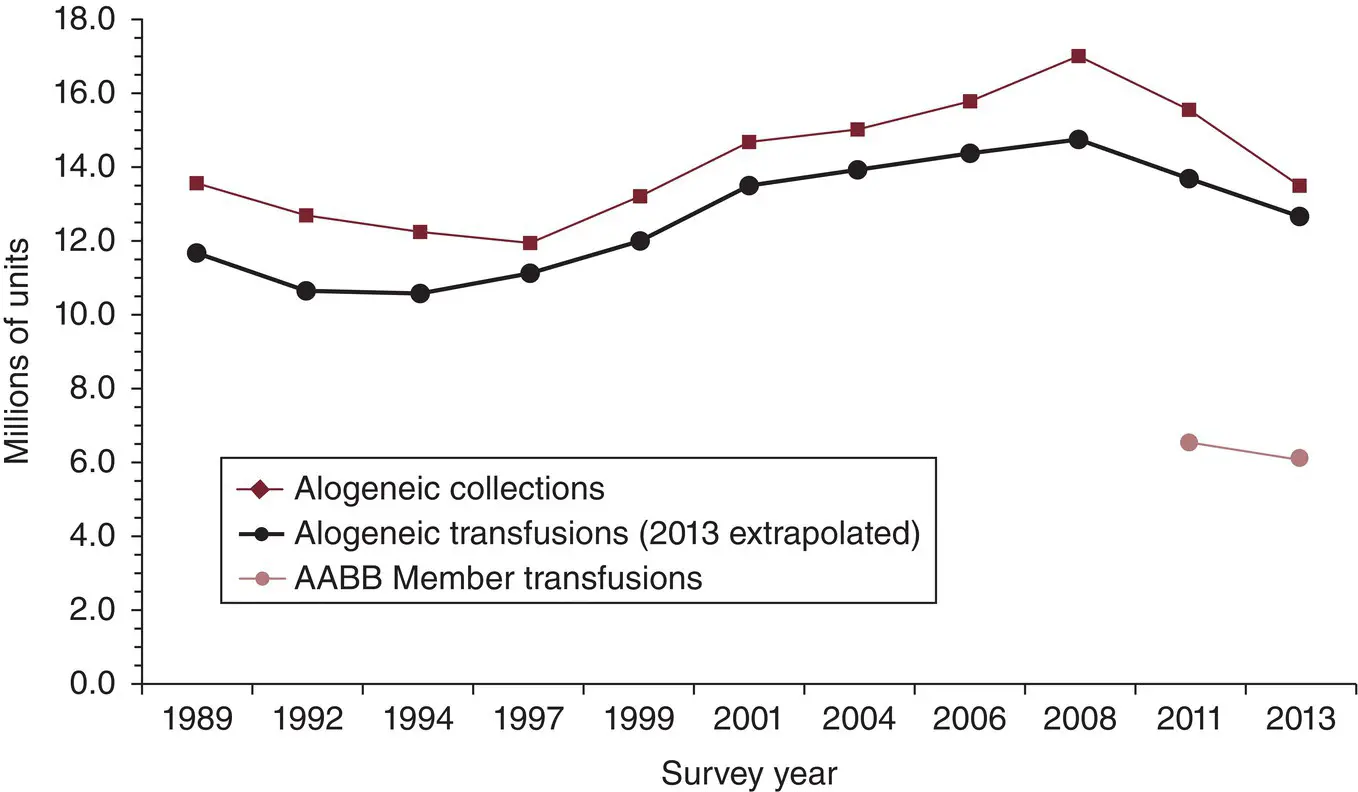
Figure 2.1 US allogeneic white blood/red blood cell collections and transfusions, 1989–2013.
( Source : Whitaker BI, Rajbhandary S, Harris A. The 2013 AABB blood collection, utilization, and patient blood management survey report. Bethesda, MD: American Association of Blood Banks, October 21, 2015. Reproduced with permission of AABB.)
General medicine, surgery, and hematology‐oncology transplant patients are the largest users of red blood cells ( Figure 2.2). In times of inventory shortage, conserving or postponing elective transfusions to medical patients conserves a larger proportion of the red cell supply than canceling major elective surgery [30].
Platelet production
In the United States, most platelets are produced by plateletpheresis, although a few are prepared from whole blood. In 2017, 2.259,000 units of platelets were provided. The number of plateletpheresis procedures was smaller because a median of 1.9 products were obtained from most procedures [26]. This is a 4.6% increase from 2015. Most (93.4%) platelets are prepared and stored in plasma and the remainder in platelet additive solutions [26]. Although most platelets are prepared by plateletpheresis, 221,000 units, or 9% of the supply were prepared, from whole blood (see Chapter 5). Apheresis platelets are used primarily, but as many as 19% were not used in 2017 [26].
Plasma production for transfusion
Most plasma for transfusion is a by‐product of whole blood. Depending on how it is prepared, this may become fresh frozen plasma, plasma frozen within 24 hours, or cryoprecipitate‐reduced plasma (see Chapter 5). In 2017, 3,210,000 units of all plasma products were produced, and 2,318,000 (72%) were used [26]. This represents a 13.6% decrease in products and a 15% decrease in use. Cryoprecipitate production increased 16% to 2,156,000 units, but use decreased 8.5% to 1,068,000 from 2015.
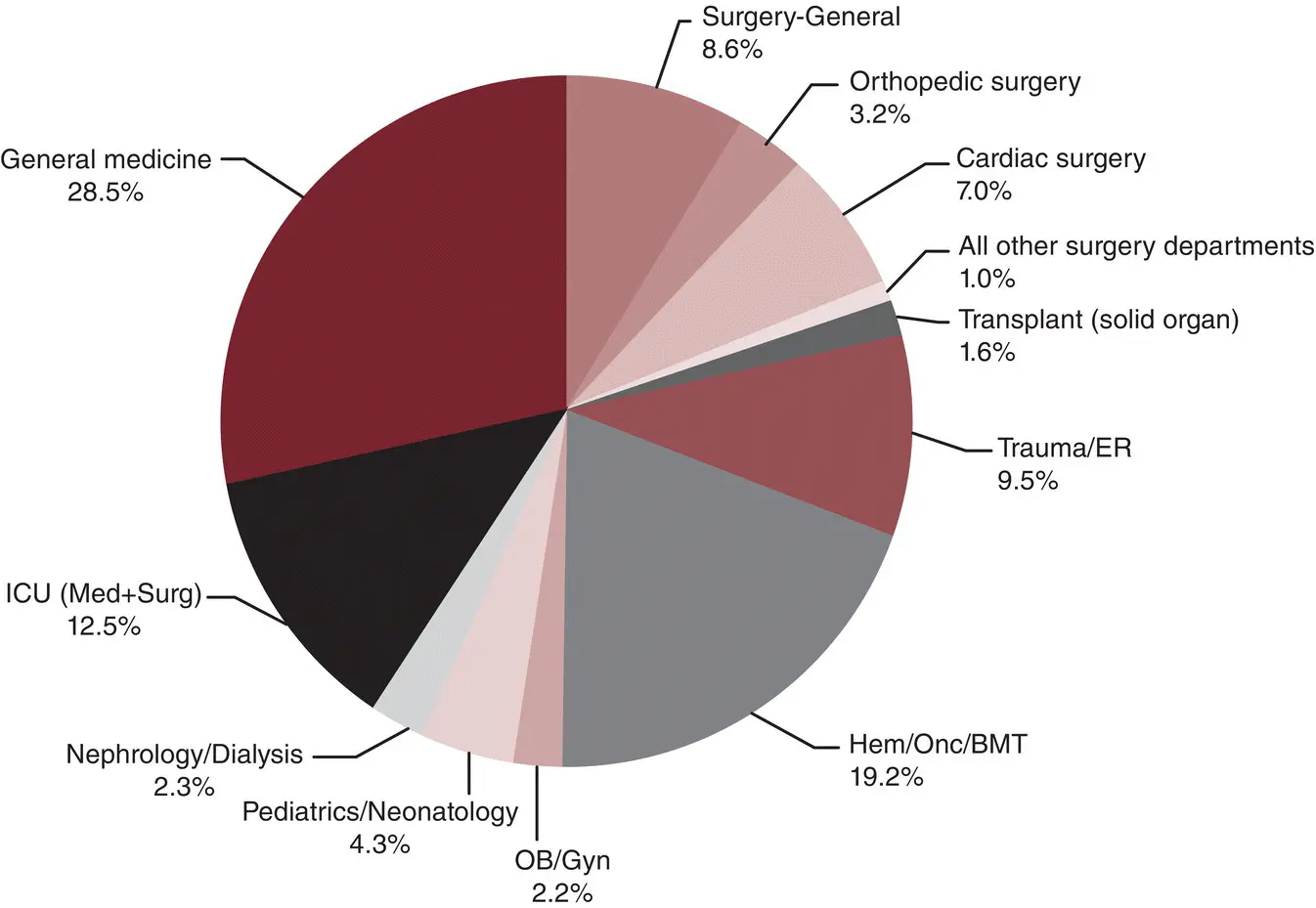
Figure 2.2 Red blood cell use by hospital service in 2013. BMT, bone marrow transplantation; ER, emergency department; Hem, hematology; ICU, intensive care unit; OB/Gyn, obstetrics and gynecology; Onc, oncology.
( Source : Whitaker BI, Rajbhandary S, Harris A. The 2013 AABB blood collection, utilization, and patient blood management survey report. Bethesda, MD: American Association of Blood Banks, October 21, 2015. Reproduced with permission of AABB.)
Plasma increases might be because of production of AB plasma, which now represents a substantial portion of plasma for transfusion, probably because of changes in the management of trauma and acute blood loss (see Chapter 11).
2.3 Management of the blood supply
Certain areas of the United States are chronically unable to collect enough blood to meet their local transfusion needs. This occurs mostly in metropolitan areas that serve large trauma, tertiary, and transplantation centers. This can cause several difficulties, including possible unavailability of blood or components when needed, complex inventory management, technical disparities, emergency appeal‐type donor recruitment, higher costs, decreased independence, and higher‐risk management costs. As the nature of blood supply organizations has changed (see earlier US Blood Supply section), local and regional relationships have weakened, and each organization manages to collect and distribute their products in the most cost‐efficient and revenue‐generating way possible.
This process of moving blood considerable distances is increasing as hospitals contract with blood suppliers based on cost and availability, breaking long‐time regional or local relationships. This has converted most blood supply organizations into a national perspective.
Despite the fact that there is not a unified blood banking system or a single national inventory or blood resource–sharing system in the United States, blood suppliers have made major efforts to use blood from areas where it is available in excess. Since 1953, the American Association of Blood Banks (AABB) has operated the National Blood Exchange that coordinates the distribution of many units of blood and components annually. These blood‐sharing systems have become less important as the supply organizations have consolidated and become part of larger organizations that manage their own inventory on a national basis.
One of the major issues in blood inventory management is the attitude of blood donors. In the only study focused on donors’ attitudes about being asked to donate more blood than is needed by their local community [31], donors to several American Red Cross blood centers indicated a willingness to donate for patients in other areas of the United States as long as their local blood needs were being met.
2.4 Other activities of community blood centers
In the past, blood centers carried out a variety of activities that provided services in addition to the blood components. These included continuing education for physicians, technologists, and/or nurses; human leukocyte antigen typing; therapeutic apheresis; red cell reference laboratory testing; outpatient transfusions; and medical consultation for transfusion medicine. These services were often provided to hospitals and the medical technical nursing community at little or no extra charge because the activities were subsidized by the income generated from the charges for the blood components. However, as blood centers have attempted to stabilize or reduce their prices to hospitals, it has become necessary for these additional services to become self‐supporting financially. In most situations, hospitals have been unwilling to pay for the services; as a result, blood centers have reduced or eliminated these activities. Blood centers are now more narrowly focused on collecting and distributing blood.
2.5 The plasma collection system
A method was developed at the beginning of World War II to process large volumes of plasma so that some of the proteins could be isolated, concentrated, and used for medical purposes [32]. This plasma “fractionation” process is the basis for a large industry that provides many medically valuable products generally referred to as plasma “derivatives” [33–35]. The plasma for production of these derivatives is obtained by plasmapheresis. Members of the Plasma Protein Therapeutics Association (PPTA) carry out approximately 44 million plasmapheresis procedures annually and collected about 44 million liters of plasma [35]. There are many US Food and Drug Administration (FDA)–licensable plasma derivatives (see Chapter 5). The production of these plasma derivatives is a complex manufacturing process that takes 7–9 months and usually involves batches up to 10,000 L of plasma or plasma from as many as 50,000 donors (see Plasma Protein Therapeutics Association section later in this chapter).
Plasma definitions
The FDA uses two terms for plasma that may serve as the starting material for the manufacture of derivatives: plasma and source plasma. Plasma is “the fluid portion of one unit of human blood intended for intravenous use” [36]. This plasma, which is a by‐product of whole blood collected by blood supply organizations or hospitals, is sold to commercial companies in the plasma fractionation industry, who in turn manufacture the plasma derivatives and sell them in the pharmaceutical market. The blood banks’ sale of their plasma to the commercial fractionator (manufacturer) may, but usually does not, involve an agreement to provide some of the manufactured derivatives back to the blood bank.
Читать дальшеИнтервал:
Закладка:
Похожие книги на «Transfusion Medicine»
Представляем Вашему вниманию похожие книги на «Transfusion Medicine» списком для выбора. Мы отобрали схожую по названию и смыслу литературу в надежде предоставить читателям больше вариантов отыскать новые, интересные, ещё непрочитанные произведения.











Обсуждение, отзывы о книге «Transfusion Medicine» и просто собственные мнения читателей. Оставьте ваши комментарии, напишите, что Вы думаете о произведении, его смысле или главных героях. Укажите что конкретно понравилось, а что нет, и почему Вы так считаете.