Lee G. Bolman - Reframing Organizations
Здесь есть возможность читать онлайн «Lee G. Bolman - Reframing Organizations» — ознакомительный отрывок электронной книги совершенно бесплатно, а после прочтения отрывка купить полную версию. В некоторых случаях можно слушать аудио, скачать через торрент в формате fb2 и присутствует краткое содержание. Жанр: unrecognised, на английском языке. Описание произведения, (предисловие) а так же отзывы посетителей доступны на портале библиотеки ЛибКат.
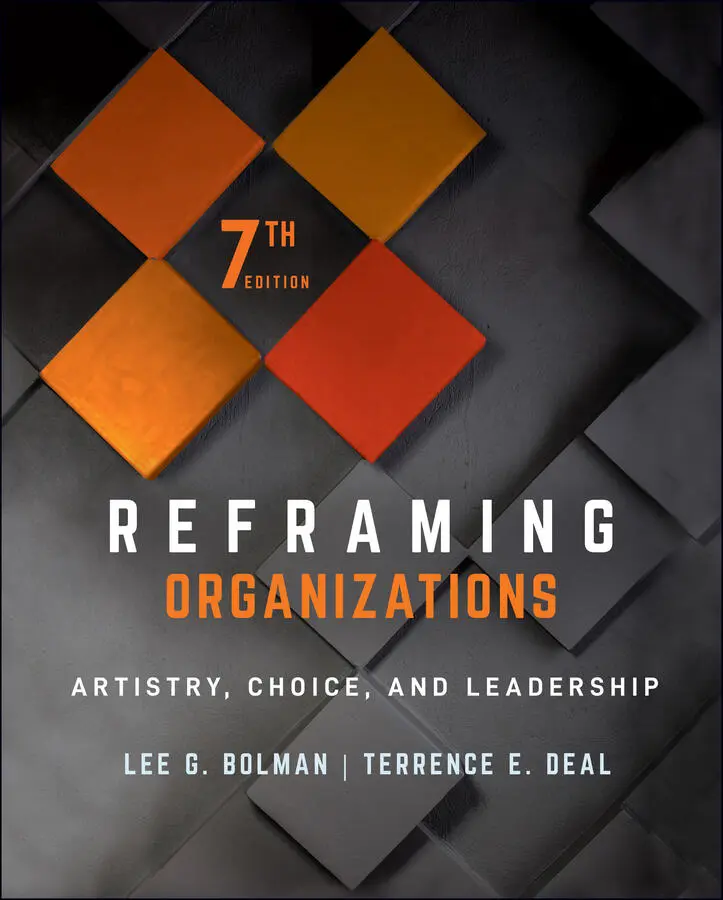
- Название:Reframing Organizations
- Автор:
- Жанр:
- Год:неизвестен
- ISBN:нет данных
- Рейтинг книги:4 / 5. Голосов: 1
-
Избранное:Добавить в избранное
- Отзывы:
-
Ваша оценка:
Reframing Organizations: краткое содержание, описание и аннотация
Предлагаем к чтению аннотацию, описание, краткое содержание или предисловие (зависит от того, что написал сам автор книги «Reframing Organizations»). Если вы не нашли необходимую информацию о книге — напишите в комментариях, мы постараемся отыскать её.
The Structural Frame The Human Resource Frame The Political Frame The Symbolic Frame The
has been updated with new information on cross-sector collaboration, generational differences, virtual environments, globalization, cross-cultural communication, and more, with an expanded Instructor’s Guide that includes summaries, mini-assessments, videos, and extra resources.
Reframing Organizations — читать онлайн ознакомительный отрывок
Ниже представлен текст книги, разбитый по страницам. Система сохранения места последней прочитанной страницы, позволяет с удобством читать онлайн бесплатно книгу «Reframing Organizations», без необходимости каждый раз заново искать на чём Вы остановились. Поставьте закладку, и сможете в любой момент перейти на страницу, на которой закончили чтение.
Интервал:
Закладка:
Jungles
Power: Why Some People Have It and Others Don't is a contemporary application of the political frame, rooted in the work of political scientists. This view sees organizations as arenas, contests, or jungles. Parochial interests compete for power and scarce resources. Conflict is rampant because of enduring differences in needs, perspectives, and lifestyles among contending individuals and groups. Bargaining, negotiation, coercion, and compromise are a normal part of everyday life. Coalitions form around specific interests and change as issues come and go. Problems arise when power is concentrated in the wrong places or is so widely dispersed that nothing gets done. Solutions arise from political skill and acumen—as Machiavelli suggested five hundred years ago in The Prince (1961).
Temples and Carnivals
Finally, our executive encountered Tribal Leadership: Leveraging Natural Groups to Build a Thriving Organization , with its emphasis on culture, symbols, and spirit as keys to organizational success. The symbolic lens, drawing on social and cultural anthropology, treats organizations as temples, tribes, theaters, or carnivals. It stresses meaning, tempers the assumptions of rationality prominent in other frames and depicts organizations as cultures, propelled by rituals, ceremonies, stories, heroes, history, and myths rather than by rules, policies, and managerial authority. Organization is also theater: actors play their roles in an ongoing drama while audiences form impressions from what they see on stage. Problems arise when actors blow their parts, symbols lose their meaning, or ceremonies and rituals lose their potency. We rekindle the expressive or spiritual side of organizations through the use of symbol, myth, and magic.
The FBI and the CIA: A Four‐Frame Story
A saga of two squabbling agencies illustrates how the four frames provide different views of the same situation. Riebling (2002) documents the long history of head‐butting between America's two major intelligence agencies, the Federal Bureau of Investigation (FBI) and the Central Intelligence Agency (CIA). Both are charged with combating espionage and terrorism, but the FBI operates primarily within the United States, while the CIA's mandate covers everywhere else. Structurally, the two agencies have always been disconnected. The FBI is housed in the Department of Justice and reports to the attorney general. The CIA reported through the Director of Central Intelligence to the president until 2004, when reorganization put it under a new director of national intelligence.
At a number of major junctures in American history (including the assassination of President John F. Kennedy, the Iran‐Contra scandal, and the 9/11 terrorist attacks), each agency held pieces of a larger puzzle, but coordination snafus made it hard for anyone to see all the pieces, much less put them together. After 9/11, both agencies came under heavy criticism, and each blamed the other for lapses. The FBI complained that the CIA had failed to tell them that two of the terrorists had entered the United States and had been living for two years in California (Seper, 2005). But an internal Justice Department investigation concluded that the FBI didn't do very well with the information it did have. Key signals were never “documented by the bureau or placed in any system from which they could be retrieved by agents investigating terrorist threats” (Seper, 2005, p. 1).
Structural barriers between the FBI and the CIA were exacerbated by the enmity between the two agencies' patron saints, J. Edgar Hoover and “Wild Bill” Donovan. When Hoover first became FBI director in the 1920s, he reported to Donovan, who didn't trust him and tried unsuccessfully to get him fired. When World War II broke out, Hoover lobbied to get the FBI identified as the nation's worldwide intelligence agency. He fumed when President Franklin D. Roosevelt instead created a new agency and made Donovan its director. As often happens, cooperation between two units was chronically hampered by a rocky personal relationship between two top dogs who never liked one another.
Politically, the relationship between the FBI and CIA was born in turf conflict because of Roosevelt's decision to give responsibility for foreign intelligence to Donovan instead of to Hoover. The friction persisted over the decades as both agencies vied for turf and funding from Congress and the White House.
Symbolically, different histories and missions led to very distinct cultures. The FBI, which built its image with the dramatic capture or killing of notorious gang leaders, bank robbers, and foreign agents, liked to generate headlines by pouncing on suspects quickly and publicly. The CIA preferred to work in the shadows, believing that patience and secrecy were vital to its task of collecting intelligence and rooting out foreign spies.
Senior U.S. officials have known for years that tension between the FBI and CIA damages U.S. security. But most initiatives to improve the relationship have been partial and ephemeral, falling well short of addressing the full range of issues. Ten years after 9/11, Graff (2012) concluded that, “Problems persist and will probably never be fully overcome.”
Multi‐Frame Thinking
The overview of the four‐frame model in Exhibit 1.2shows that each of the frames has its own image of reality. You may be drawn to some and put off by others. One perspective may seem straightforward, while another seems puzzling or alien. But learning to apply all four deepens your appreciation and understanding of organizations. When Galileo devised the first telescope, he found that each lens he added contributed to a more accurate image of the heavens. Successful managers take advantage of the same truth. Like physicians, they reframe, consciously or intuitively, until they understand the situation at hand. They use more than one lens to develop a diagnosis of what they are up against and how to move forward.
Exhibit 1.2. Overview of the Four‐Frame Model.
| Frame | ||||
|---|---|---|---|---|
| Structural | Human Resource | Political | Symbolic | |
| Metaphor for organization | Factory or machine | Family | Jungle | Carnival, temple, theater |
| Supporting disciplines | Sociology, management science, economics | Psychology | Political science | Anthropology, dramaturgy, institutional theory |
| Central concepts | Roles, goals, strategies, policies, technology, environment | Needs, skills, relationships | Power, conflict, competition, politics | Culture, myth, meaning, metaphor, ritual, ceremony, stories, heroes |
| Image of leadership | Social architecture | Empowerment | Advocacy and political savvy | Inspiration |
| Basic leadership challenge | Attune structure to task, technology, environment | Align organizational and human needs | Develop agenda and power base | Create faith, belief, beauty, meaning |
This claim about the advantages of multiple perspectives has stimulated a growing body of research. Dunford and Palmer (1995) discovered that management courses teaching multiple frames had significant positive effects over both the short and long term—in fact, 98 percent of their respondents rated reframing as helpful or very helpful, and about 90 percent felt it gave them a competitive advantage. Other studies have shown that the ability to use multiple frames is associated with greater effectiveness for managers and leaders (Bensimon, 1989, 1990; Birnbaum, 1992; Bolman and Deal, 1991, 1992a, 1992b; Heimovics, Herman, and Jurkiewicz Coughlin, 1993, 1995; Wimpelberg, 1987). Similarly, Pitt and Tepper (2012) found that double‐majoring helped college students develop both creative and integrative thinking. As one student put it, “I'm never stuck in one frame of mind because I'm always switching back and forth between the two” (p. 40). Multi‐frame thinking requires moving beyond narrow, mechanical approaches for understanding organizations. We cannot count the number of times managers have told us that they handled some problem the “only way” it could be done. That was United Airline's initial defense in April, 2017, when video of a bloodied doctor being dragged off a plane went viral. United's CEO wrote that “our agents were left with no choice” because the 69‐year‐old physician had refused to give up his seat. After a few days in public relations hell, United announced that the only choice was a bad one, and they would never do it again. It may be comforting to think that failure was unavoidable and we did all we could. But it can be liberating to realize there is always more than one way to respond to any problem or dilemma. Those who master reframing report a liberating sense of choice and power.
Читать дальшеИнтервал:
Закладка:
Похожие книги на «Reframing Organizations»
Представляем Вашему вниманию похожие книги на «Reframing Organizations» списком для выбора. Мы отобрали схожую по названию и смыслу литературу в надежде предоставить читателям больше вариантов отыскать новые, интересные, ещё непрочитанные произведения.
![Lee Jungmin - Хвала Орку 1-128 [некоммерческий перевод с корейского]](/books/33159/lee-jungmin-hvala-orku-1-thumb.webp)










Обсуждение, отзывы о книге «Reframing Organizations» и просто собственные мнения читателей. Оставьте ваши комментарии, напишите, что Вы думаете о произведении, его смысле или главных героях. Укажите что конкретно понравилось, а что нет, и почему Вы так считаете.