Reservoir Characterization
Здесь есть возможность читать онлайн «Reservoir Characterization» — ознакомительный отрывок электронной книги совершенно бесплатно, а после прочтения отрывка купить полную версию. В некоторых случаях можно слушать аудио, скачать через торрент в формате fb2 и присутствует краткое содержание. Жанр: unrecognised, на английском языке. Описание произведения, (предисловие) а так же отзывы посетителей доступны на портале библиотеки ЛибКат.
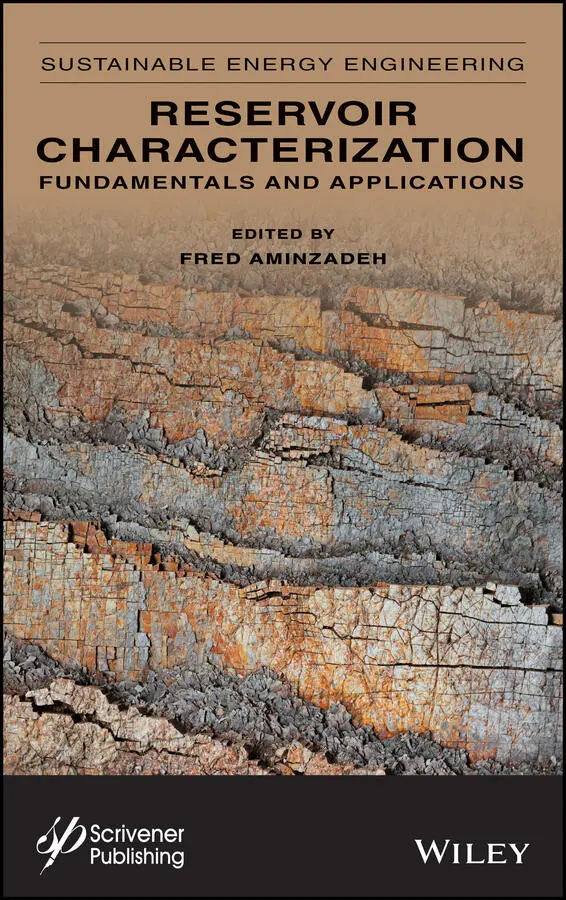
- Название:Reservoir Characterization
- Автор:
- Жанр:
- Год:неизвестен
- ISBN:нет данных
- Рейтинг книги:3 / 5. Голосов: 1
-
Избранное:Добавить в избранное
- Отзывы:
-
Ваша оценка:
Reservoir Characterization: краткое содержание, описание и аннотация
Предлагаем к чтению аннотацию, описание, краткое содержание или предисловие (зависит от того, что написал сам автор книги «Reservoir Characterization»). Если вы не нашли необходимую информацию о книге — напишите в комментариях, мы постараемся отыскать её.
This collection of papers covers the strategic and economic implications of methods used to characterize petroleum reservoirs. Born out of the journal by the same name, formerly published by Scrivener Publishing, most of the articles in this volume have been updated, and there are some new additions, as well, to keep the engineer abreast of any updates and new methods in the industry.
Truly a snapshot of the state-of-the-art, this groundbreaking volume is a must-have for any petroleum engineer working in the field, environmental engineers, petroleum engineering students, and any other engineer or scientist working with reservoirs.
Reservoir Characterization — читать онлайн ознакомительный отрывок
Ниже представлен текст книги, разбитый по страницам. Система сохранения места последней прочитанной страницы, позволяет с удобством читать онлайн бесплатно книгу «Reservoir Characterization», без необходимости каждый раз заново искать на чём Вы остановились. Поставьте закладку, и сможете в любой момент перейти на страницу, на которой закончили чтение.
Интервал:
Закладка:
1 ⋆Corresponding author: simonkatz2000@yahoo.com
4
Characterization of Carbonate Source-Derived Hydrocarbons Using Advanced Geochemical Technologies
Hossein Alimi
University of Southern California USC, Global Conventional and Unconventional Geochemistry (GCUG)
Abstract
Various crude oil classifications have been proposed by geochemists and petroleum refiners. Geologists and geochemists are more interested in identifying and characterizing the crude oils, to relate them to source rocks and to measure their grade of evolution using advanced geochemical technologies. Carbonate source rocks studied are organically very rich, containing oil-prone kerogen capable of generating significant quantities of hydrocarbons.
Tertiary and Cretaceous oils studied are of carbonate origin and classified as aromatic-intermediate class. Most of the Tertiary oils studied are severely biodegraded while those from Cretaceous reservoirs are non-degraded.
Almost all the oils investigated show the following biomarker parameters, characteristic of oils derived from carbonate source rocks deposited in a marine environment under reducing conditions:
Predominance of phytane over pristane, (pristane/phytane ratio below 1),
Predominance of C29-norhopane over C30-hopane, (C29/C30 hopanes above 1),
High C35-homohopane index,
Low sterane/αβ-hopanes ratio, and
High dibenzothiophene/phenanthrene ratio (mostly above 1).
Keywords : Pristane, phytane, biodegradation, C29-norhopane, C30-hopane, carbonate-sourced oil, C35-homohopane index, biomarkers, dibenzothiophene/ phanathrene
4.1 Introduction
For obtaining a fundamental knowledge of the genetic history of crude oils two types of geochemical methods should be used.
1 1. Those for determination of the genetic origin of the oil and to unravel its mixtures, those methods that can see through the effects of biodegradation are the most useful.
2 2. Those used to determine the biodegradation history and the charging of a biodegraded reservoir. Methods that directly analyze the effects of biodegradation are most useful.
All geochemical studies using molecular geochemical approaches should include the classical methods of biomarker and paraffin analysis. Application of these analyses, SARA, GC-FID, GCMS saturates, and GCMS aromatics, form the foundation of advanced geochemical technologies (AGTs) necessary to solve the critical questions about the provenance of the oil and history of the reservoirs.
Any geochemical oil or source rock correlation study should begin with a liberal application of those classical molecular geochemical analyses that have become routine. The basic SARA, GC-FID, GCMS saturates and GCMS aromatics provide an initial assessment of extent of biodegradation, possible source relationships and thermal maturities. However, the bio-degradative alteration of heavy oil introduces complexities that are hidden from the view of these classical methods.
Carbonate rocks (limestone and dolomite) contain major oil and gas deposits throughout the world:
33 % of the North American Fields
50% of N. American Giant Fields
~ 40% of giant fields world wide
Carbonate rocks have been discounted as important source rock because of their lower organic-carbon content and catalytic activity in comparison to shales [1]. However, carbonate source rocks contain mostly sapropelic (oil-prone, Type II)) organic matter [2], which yields a higher percentage of oil earlier than more humic organic matter of shales. The unique Carbonate-Evaporitedepositional and diagenetic environments, without infux of major terrigenous and humic substances, produce algal-sapropelic organic facies that yield sulfur-rich petroleum at lower temperatures than humic-type shales. The worldwide presence of small to very large, apparently immature, to marginally mature, non-biodegraded, heavy oil/bitumen/asphalts deposits, rich in resins and asphaltenes, are oil sourced from carbonate source rocks.
This study will provide an overview of the geochemical characteristics of carbonate-derived oils and source rocks collected from different wells and fields.
As with shales, the source potential of carbonate rocks depends primarily upon the organic facies rather than the mineral matrix. Where the depositional and early diagenetic environment is highly oxygenated, the total-organic-carbon (TOC) content is low. The remaining kerogen is highly oxygenated, with a negligible generative capacity for hydrocarbons.
The early anoxic diagenetic depositional environment can result in the deposition of organic-rich, fine-grained carbonate sediments that are excellent potential source rocks [3]. Although they constitute a small percentage of all carbonate rocks, organic-rich, fine-grained carbonate rocks are widespread in both time and space and are the probable source of 30-40% or more of the petroleum reserves of the world.
Gas-prone organic facies are rare in carbonate rocks, because they are usually dominated by humic organic matter deposited in a dominantly clay matrix. However, gas-prone organic facies may occur in carbonate rocks as results of turbidite deposition [4] or by a mixture of kerogen types II and III.
Oils derived from carbonate rocks are often richer in cyclic hydrocarbons and sulfur containing compounds than oils derived from shales, owing to the lack of terrestrial-plant waxes in their source organic matter.
4.2 Samples and Analyses Performed
A total of 5 Neogene, Paleogene of Cenozoic (No. 1–5) and 9 Cretaceous (No. 1–9) oils, as well as 6 Cretaceous calcareous core samples from wells A and B have been selected for this study. The oils investigated were selected from different formations and fields. Most of the Tertiary oils investigated are very heavy and severely biodegraded. The bitumens studied are also of Cretaceous age.
Total organic carbon content (TOC) and hydrocarbon generating potential of the carbonate samples were analyzed by Leco carbon analyzer and Rock-Eval pyrolysis, respectively. Solvent extraction was used to remove bitumen from the source rocks, while liquid chromatography (LC), FID- gas chromatography (FID-GC), and gas chromatograph-mass spectrometry (GC-MS) analyses were performed on both the oils and selected bitumen. Selected results from these analyses are discussed in the following chapter.
4.3 Results and Discussions
All 6 source rocks investigated are organically very rich ( Table 4.1), showing TOC content in the 3.35% to 11.31% range. Results of Rock-Eval pyrolysis, such as hydrogen index (HI) and Tmax values indicates that all carbonaceous source rocks analyzed are highly enriched in sapropelic (Type II) kerogen ( Figure 4.1) which based on Tmax-values appear to be thermally within the oil window ( Figure 4.2). The pyrolysis results also indicate that the kerogen present in these source rocks show relatively high pyrolysis S2-peak values ranging from 7.74 to 15.13 mg HC/g rock, indicating that the kerogen present has a large remaining potential capable to generate hydrocarbons at higher maturity stages [5, 6].
The LC-results presented in Figure 4.3indicate that the majority of the oils investigated are rich in aromatic hydrocarbons, with their polar compounds (resins and asphaltenes) present in relatively high proportions, characteristic of the aromatic-intermediate class. This class of oils includes most crude oils from Jurassic and Cretaceous sources of the Middle East [1].
Typical gas chromatograms (GC-fingerprints) of carbonate and shale-derived oils are presented in Figures 4.4and 4.5, respectively. Carbonate-derived oil shows a pristane/phytane ratio below (i.e. a predominance of phytane over pristane), indicative of a reducing environment, while that of oil from shale facies shows a pristane/phytane above 1 [7–9].
Читать дальшеИнтервал:
Закладка:
Похожие книги на «Reservoir Characterization»
Представляем Вашему вниманию похожие книги на «Reservoir Characterization» списком для выбора. Мы отобрали схожую по названию и смыслу литературу в надежде предоставить читателям больше вариантов отыскать новые, интересные, ещё непрочитанные произведения.







Обсуждение, отзывы о книге «Reservoir Characterization» и просто собственные мнения читателей. Оставьте ваши комментарии, напишите, что Вы думаете о произведении, его смысле или главных героях. Укажите что конкретно понравилось, а что нет, и почему Вы так считаете.