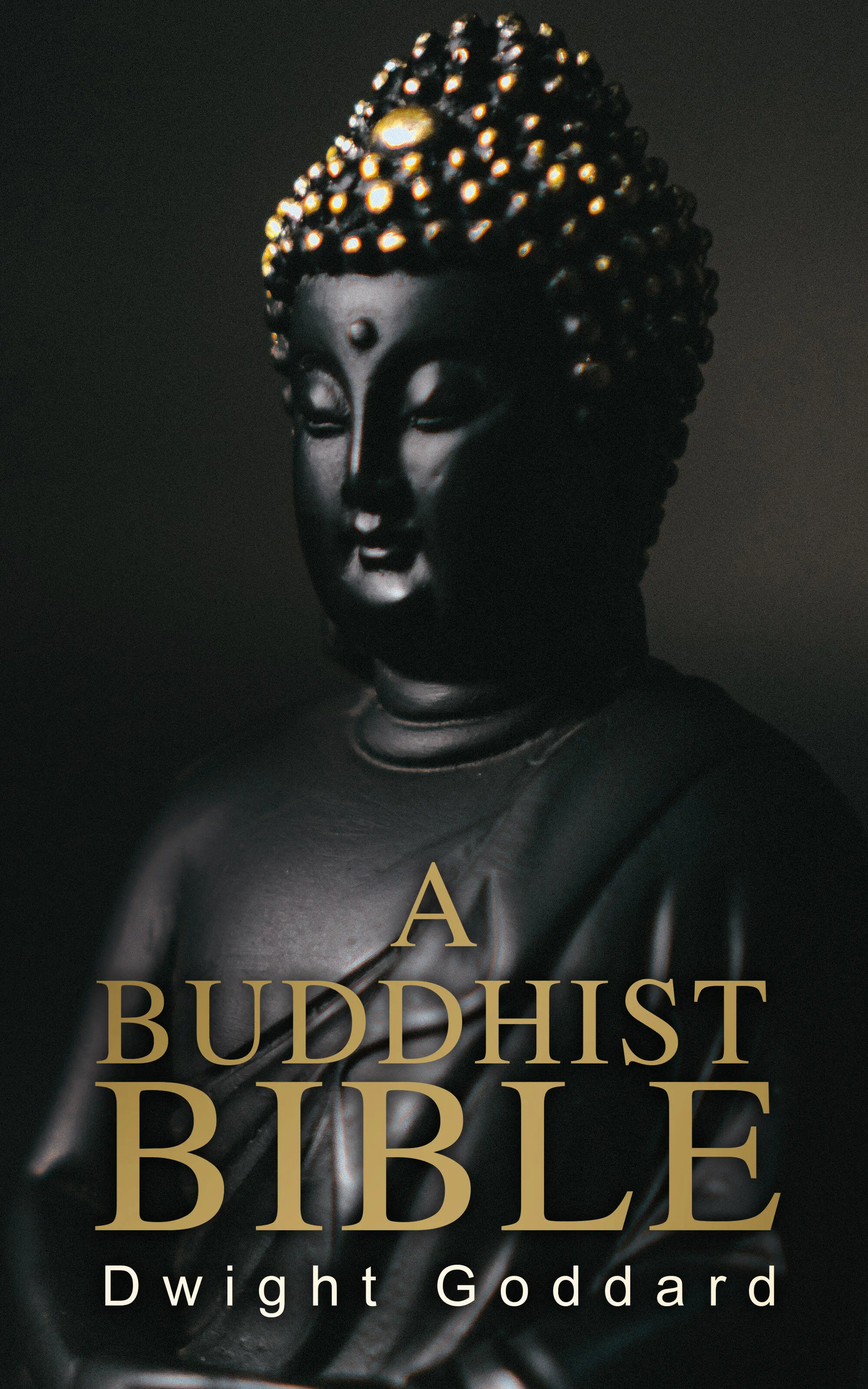
Dwight Goddard - A Buddhist Bible
Здесь есть возможность читать онлайн «Dwight Goddard - A Buddhist Bible» — ознакомительный отрывок электронной книги совершенно бесплатно, а после прочтения отрывка купить полную версию. В некоторых случаях можно слушать аудио, скачать через торрент в формате fb2 и присутствует краткое содержание. Жанр: unrecognised, на английском языке. Описание произведения, (предисловие) а так же отзывы посетителей доступны на портале библиотеки ЛибКат.
- Название:A Buddhist Bible
- Автор:
- Жанр:
- Год:неизвестен
- ISBN:нет данных
- Рейтинг книги:4 / 5. Голосов: 1
-
Избранное:Добавить в избранное
- Отзывы:
-
Ваша оценка:
A Buddhist Bible: краткое содержание, описание и аннотация
Предлагаем к чтению аннотацию, описание, краткое содержание или предисловие (зависит от того, что написал сам автор книги «A Buddhist Bible»). Если вы не нашли необходимую информацию о книге — напишите в комментариях, мы постараемся отыскать её.
A Buddhist Bible — читать онлайн ознакомительный отрывок
Ниже представлен текст книги, разбитый по страницам. Система сохранения места последней прочитанной страницы, позволяет с удобством читать онлайн бесплатно книгу «A Buddhist Bible», без необходимости каждый раз заново искать на чём Вы остановились. Поставьте закладку, и сможете в любой момент перейти на страницу, на которой закончили чтение.
Интервал:
Закладка:
If things are not born of being and non-being, but are simply manifestations of mind itself, they have no reality, no self-nature:--they are like the horns of a hare, a horse, a donkey, a camel. But the ignorant and the simple-minded, who are given over to their false and erroneous imaginings, discriminate things where they are not. To the ignorant the characteristic marks of the self-nature of body-property-and-abode seem to be fundamental and rooted in the very nature of the mind itself, so they discriminate their multitudinousness and become attached to them.
There are two kinds of attachment: attachment to objects as having self-nature, and attachment to words as having self-nature. The first takes place by not knowing that the external world is only a manifestation of the mind itself; and the second arises from one's clinging to words and names by reason of habit-energy. in the teaching of no-birth, causation is out of place because, seeing that all things are like maya and a dream, one does not discriminate individual signs. That all things are un-born and have no self-nature be-cause they are like maya is asserted to meet the thesis of the philosophers that birth is by causation. They foster the notion that the birth of all things is derived from the concept of being and non-being, and fail to regard it as it truly is,--as caused by attachment to the multitudinousness which arises from discriminations of the mind itself.
Those who believe in the birth of something that has never been in existence and, coming into existence, vanishes away, are obliged to assert that things come to exist and vanish away by causation--such people find no foothold in my teachings. When it is realised that there is nothing born, and nothing passes away, then there is no way to admit being and non-being, and the mind becomes quiescent.
*
Then Mahamati said to the Blessed One: The philosophers declare that the world rises from causal agencies according to a law of causation; they state that their cause is unborn and is not to be annihilated. They mention nine primary elements: Ishvara the Creator, the Creation, atoms, etc., which being elementary are unborn and not to be annihilated. The Blessed One, while teaching that all things are un-born and that there is no annihilation, also declares that the world takes its rise from ignorance, discrimination, attachment, deed, etc., working according to a law of causation. Though the two sets of elements may differ in form and name, there does not appear to be any essential difference between the two positions. If there is anything that is distinctive and superior in the Blessed One's teaching, pray tell us, Blessed One, what it is?
The Blessed One replied: My teaching of no-birth and no-annihilation is not like that of the philosophers, nor is it like their doctrine of birth and impermanency. That to which the philosophers ascribe the characteristic of no-birth and no-annihilation is the self-nature of all things, which causes them to fall into the dualism of being and non-being. My teaching transcends the whole conception of being and non-being; it has nothing to do with birth, abiding and destruction; nor with existence and non-existence. I teach that the multitudinousness of objects have no reality in themselves but are only seen of the mind and, therefore, are of the nature of maya and a dream. I teach the non-existence of things because they carry no signs of any inherent self-nature. It is true that in one sense they are seen and discriminated by the senses as individualised objects; but in another sense, because of the absence of any characteristic marks of self-nature, they are not seen but are only imagined. In one sense they are graspable, but in another sense, they are not graspable. When it is clearly understood that there is nothing in the world but what is seen of the mind itself, discrimination no more rises, and the wise are established in their true abode which is the realm of quietude. The ignorant discriminate and work trying to adjust themselves to external conditions, and are constantly perturbed in mind; unrealities are imagined and discriminated, while realities are unseen and ignored. It is not so with the wise. To illustrate: What the ignorant see is like the magically-created city of the Gandharvas, where children are shown streets and houses, and phantom merchants, and people going in and coming out. This imaginary city with its streets and houses and people going in and coming out, are not thought of as being born or being annihilated, because in their case there is no question as to their existence or non-existence. In like manner, I teach, that there is nothing made nor un-made; that there is nothing that has connection with birth and destruction except as the ignorant cherish falsely imagined notions as to the reality of the external world. When objects are not seen and judged as they truly are in themselves, there is discrimination and clinging to the notions of being and non-being, and individualised self-nature, and. as long as these notions of individuality and self-nature persist, the philosophers are bound to explain the external world by a law of causation. This position raises the question of a first cause which the philosophers meet by asserting that their first cause, Ishvara and the primal elements, are un-born and un-annihilate; which position is without evidence and is irrational.
Ignorant people and worldly philosophers cherish a kind of no-birth, but it is not the no-birth which I teach. I teach the un-bornness of the un-born essence of all things which teaching is established in the minds of the wise by their self-realisation of Noble Wisdom. A ladle, clay, a vessel, a wheel, or seeds, or elements--these are external conditions; ignorance discrimination, attachment, habit, karma,--these are inner conditions. When this entire universe is regarded as concatenation and as nothing else but concatenation, then the mind, by its patient acceptance of the truth that all things are un-born, gains tranquillity.
Конец ознакомительного фрагмента.
Текст предоставлен ООО «ЛитРес».
Прочитайте эту книгу целиком, купив полную легальную версию на ЛитРес.
Безопасно оплатить книгу можно банковской картой Visa, MasterCard, Maestro, со счета мобильного телефона, с платежного терминала, в салоне МТС или Связной, через PayPal, WebMoney, Яндекс.Деньги, QIWI Кошелек, бонусными картами или другим удобным Вам способом.
Интервал:
Закладка:
Похожие книги на «A Buddhist Bible»
Представляем Вашему вниманию похожие книги на «A Buddhist Bible» списком для выбора. Мы отобрали схожую по названию и смыслу литературу в надежде предоставить читателям больше вариантов отыскать новые, интересные, ещё непрочитанные произведения.







Обсуждение, отзывы о книге «A Buddhist Bible» и просто собственные мнения читателей. Оставьте ваши комментарии, напишите, что Вы думаете о произведении, его смысле или главных героях. Укажите что конкретно понравилось, а что нет, и почему Вы так считаете.