Dwight Goddard - A Buddhist Bible
Здесь есть возможность читать онлайн «Dwight Goddard - A Buddhist Bible» — ознакомительный отрывок электронной книги совершенно бесплатно, а после прочтения отрывка купить полную версию. В некоторых случаях можно слушать аудио, скачать через торрент в формате fb2 и присутствует краткое содержание. Жанр: unrecognised, на английском языке. Описание произведения, (предисловие) а так же отзывы посетителей доступны на портале библиотеки ЛибКат.
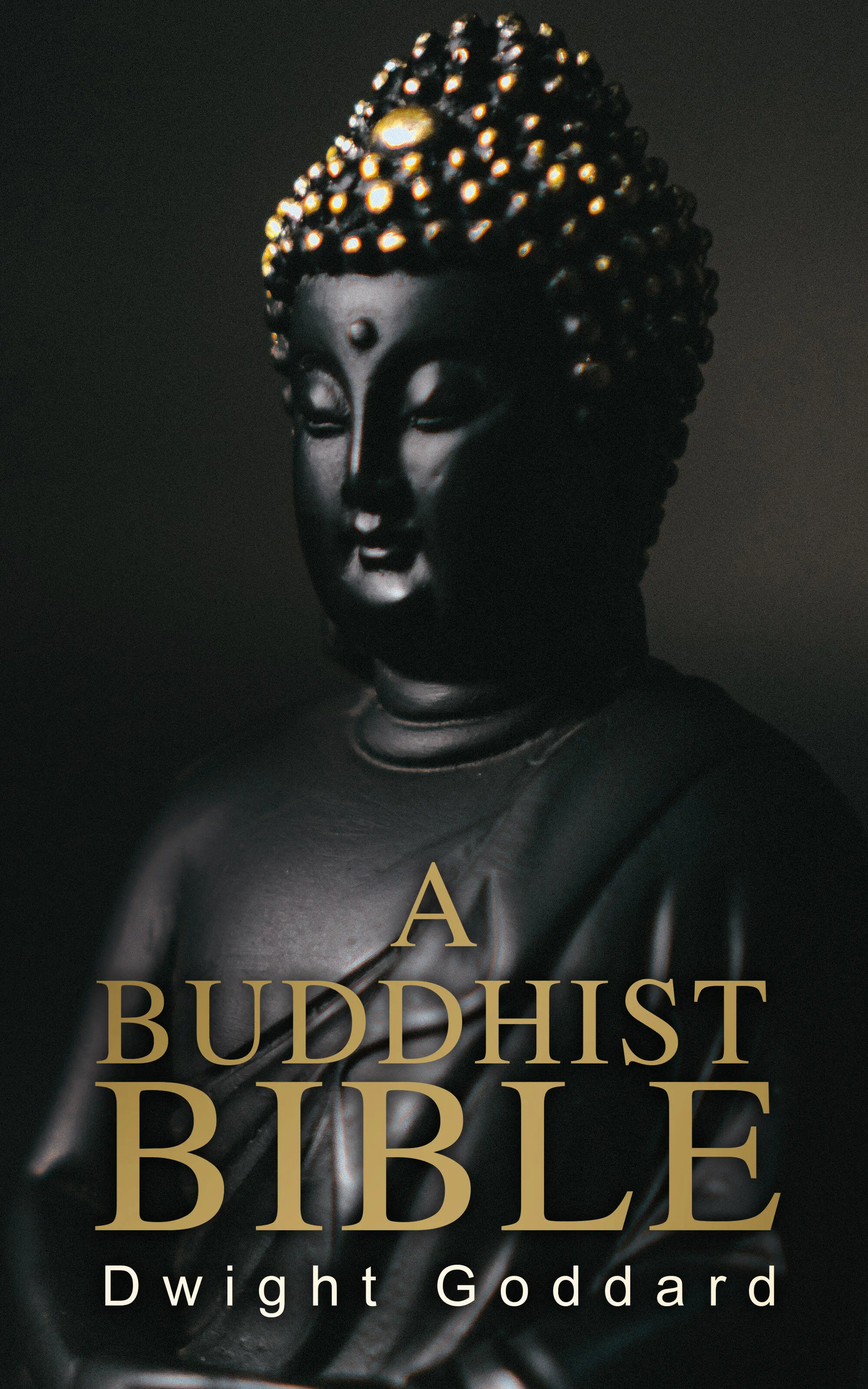
- Название:A Buddhist Bible
- Автор:
- Жанр:
- Год:неизвестен
- ISBN:нет данных
- Рейтинг книги:4 / 5. Голосов: 1
-
Избранное:Добавить в избранное
- Отзывы:
-
Ваша оценка:
A Buddhist Bible: краткое содержание, описание и аннотация
Предлагаем к чтению аннотацию, описание, краткое содержание или предисловие (зависит от того, что написал сам автор книги «A Buddhist Bible»). Если вы не нашли необходимую информацию о книге — напишите в комментариях, мы постараемся отыскать её.
A Buddhist Bible — читать онлайн ознакомительный отрывок
Ниже представлен текст книги, разбитый по страницам. Система сохранения места последней прочитанной страницы, позволяет с удобством читать онлайн бесплатно книгу «A Buddhist Bible», без необходимости каждый раз заново искать на чём Вы остановились. Поставьте закладку, и сможете в любой момент перейти на страницу, на которой закончили чтение.
Интервал:
Закладка:
But, Mahamati, discrimination does not evolve nor is it put away because, when all that is seen is truly recognised to be nothing but the manifestation of mind, how can discrimination as regards being and non-being evolve? It is for the sake of the ignorant who are addicted to the discrimination of the multiplicity of things which are of their own mind, that it is said by me that discrimination takes its rise owing to attachment to the aspect of multiplicity which is characteristic of objects. How otherwise can the ignorant and simple-minded recognize that there is nothing but what is seen of the mind itself, and how otherwise can they gain an insight into the true nature of mind and be able to free themselves from wrong conceptions of cause and effect? How otherwise can they gain a clear conception of the Bodhisattva stages, and attain a "turning-about" in the deepest seat of their consciousness, and finally attain an inner self-realisation of Noble Wisdom which transcends the five Dharmas, the three Self-natures, and the whole idea of a discriminated Reality? For this reason is it said by me that discrimination takes its rise from the mind becoming attached to the multiplicities of things which in themselves are not real, and that emancipation comes from thoroughly understanding the meaning of Reality as it truly is.
False-imaginations rise from the consideration of appearances: things are discriminated as to form, signs and shape; as to having color, warmth, humidity, motility or rigidity. False-imagination consists in becoming attached to these appearances and their names. By attachment to objects is meant, the getting attached to inner and outer things as if they were real. By attachment to names is meant, the recognition in these inner and outer things of the characteristic marks of individuation and generality, and to regard them as definitely belonging to the names of the objects.
False-imagination teaches that because all things are bound up with causes and conditions of habit-energy that has been accumulating since beginningless time by not recognising that the external world is of mind itself, all things are comprehensible under the aspects of individuality and generality. By reason of clinging to these false-imaginations there is multitudinousness of appearances which are imagined to be real but which are only imaginary. To illustrate: when a magician depending on grass, wood, shrubs and creepers, exercises his art, many shapes and beings take form that are only magically created; sometimes they even make figures that have bodies and that move and act like human beings; they are variously and fancifully discriminated but there is no reality in them; everyone but children and the simple-minded know that they are not real. Likewise based upon the notion of relativity false-imagination perceives a variety of appearances which the discriminating mind proceeds to objectify and name and become attached to, and memory and habit-energy perpetuate. Here is all that is necessary to constitute the self-nature of false-imagination.
The various features of false-imagination can be distinguished as follows: as regards words, meaning, individual marks, property, self-nature, cause, philosophical views, reasoning, birth, no-birth, dependence, bondage and emancipation. Discrimination of words is the becoming attached to various sounds carrying familiar meanings. Discrimination of meaning comes when one imagines that words rise depending upon whatever subjects they express, and which subjects are regarded as self-existent. Discrimination of individual marks is to imagine that whatever is denoted in words concerning the multiplicities of individual marks (which in themselves are like a mirage) is true, and clinging tenaciously to them, to discriminate all things according to such categories as, warmth, fluidity, motility, and solidity. Discrimination of property is to desire a state of wealth, such as gold, silver, and various precious stories.
Discrimination of self-nature is to make discriminations according to the views of the philosophers in reference to the self-nature of all things which they imagine and stoutly maintain to be true, saying: "This is just what it is and it cannot be otherwise." Discrimination of cause is to distinguish the notion of causation in reference to being and non-being and to imagine that there are such things as "cause-signs." Discrimination of philosophical views means considering different views relating to the notions of being and nonbeing, oneness and otherness, bothness and not-bothness, existence and non-existence, all of which are erroneous, and becoming attached to particular views. Discrimination of reasoning means the teaching whose reasoning is based on the grasping of the notion of an ego-substance and what belongs to it. Discrimination of birth means getting attached to the notion that things come into existence and pass out of existence according to causation. Discrimination of no-birth is to see that causeless substances which were not, come into existence by reason of causation. Discrimination of dependence means the mutual dependence of gold and the filament made of it. Discrimination of bondage and imagination is like imagining that there is something bound because of something binding, as in the case of a man who ties a knot and loosens one.
These are the various features of false-imagination to which all the ignorant and simple-minded cling. Those attached to the notion of relativity are attached to the notion of the multitudinousness of things which arises from false-imagination. It is like seeing varieties of objects depending upon maya, but these varieties thus revealing themselves are discriminated by the ignorant as something other than maya itself, according to their way of thinking. Now the truth is, maya and varieties of objects are neither different nor not different; if they were different, varieties of objects would not have maya for their characteristic; if they are not different there would be no distinction between them. But as there is a distinction these two--maya and varieties of objects-are neither different nor not-different, for the very good reason: they are one thing.
*
Mahamati said to the Blessed One: Is error an entity or not? The Blessed One replied: Error has no character in it making for attachment; if error had such a character no liberation would be possible from its attachment to existence, and the chain of origination would only be understood in the sense of creation as upheld by the philosophers. Error is like maya, also, and as maya is incapable from producing other maya, so error in itself cannot produce error; it is discrimination and attachment that produce evil thoughts and faults. Moreover, maya has no power of discrimination in itself; it only rises when invoked by the charm of the magician. Error has in itself no habit-energy; habit-energy only rises from discrimination and attachment. Error in itself has no faults; faults are due to the confused discriminations fondly cherished by the ignorant concerning the ego-soul and its mind. The wise have nothing to do either with maya or error.
Maya, however, is not an unreality because it only has the appearance of reality; all things have the nature of maya. It is not because all things are imagined and clung to because of the multitudinous of individual signs, that they are like maya; it is because they are alike unreal and as quickly appearing and disappearing. Being attached to erroneous thoughts they confuse and contradict themselves and others. As they do not clearly grasp the fact that the world is no more than mind itself, they imagine and cling to causation, work, birth and individual signs, and their thoughts are characterised by error and false-imaginations. The teaching that all things are characterised by the self-nature of maya and a dream is meant to make the ignorant and simple-minded cast aside the idea of self-nature in anything.
Читать дальшеИнтервал:
Закладка:
Похожие книги на «A Buddhist Bible»
Представляем Вашему вниманию похожие книги на «A Buddhist Bible» списком для выбора. Мы отобрали схожую по названию и смыслу литературу в надежде предоставить читателям больше вариантов отыскать новые, интересные, ещё непрочитанные произведения.











Обсуждение, отзывы о книге «A Buddhist Bible» и просто собственные мнения читателей. Оставьте ваши комментарии, напишите, что Вы думаете о произведении, его смысле или главных героях. Укажите что конкретно понравилось, а что нет, и почему Вы так считаете.