Dwight Goddard - A Buddhist Bible
Здесь есть возможность читать онлайн «Dwight Goddard - A Buddhist Bible» — ознакомительный отрывок электронной книги совершенно бесплатно, а после прочтения отрывка купить полную версию. В некоторых случаях можно слушать аудио, скачать через торрент в формате fb2 и присутствует краткое содержание. Жанр: unrecognised, на английском языке. Описание произведения, (предисловие) а так же отзывы посетителей доступны на портале библиотеки ЛибКат.
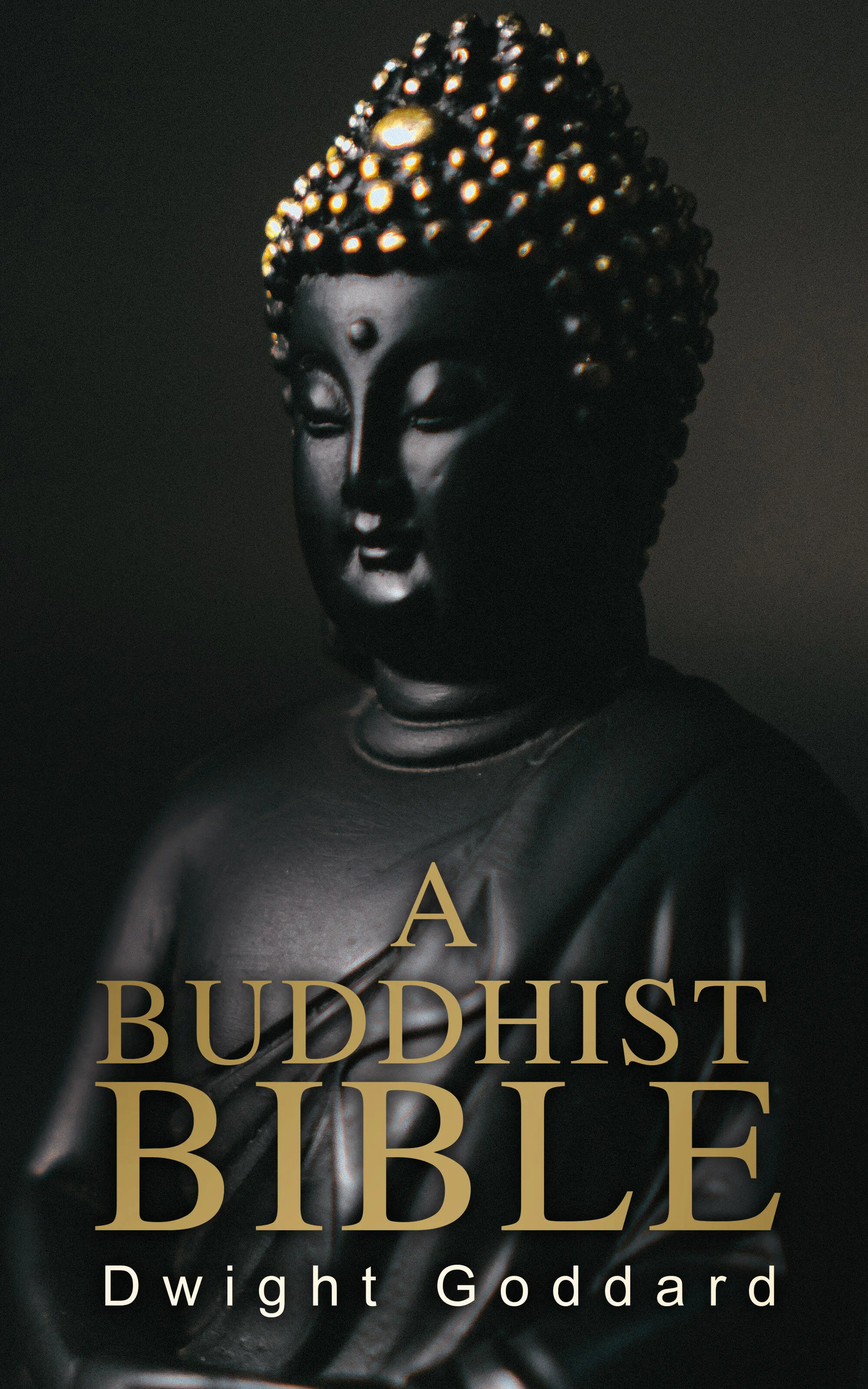
- Название:A Buddhist Bible
- Автор:
- Жанр:
- Год:неизвестен
- ISBN:нет данных
- Рейтинг книги:4 / 5. Голосов: 1
-
Избранное:Добавить в избранное
- Отзывы:
-
Ваша оценка:
A Buddhist Bible: краткое содержание, описание и аннотация
Предлагаем к чтению аннотацию, описание, краткое содержание или предисловие (зависит от того, что написал сам автор книги «A Buddhist Bible»). Если вы не нашли необходимую информацию о книге — напишите в комментариях, мы постараемся отыскать её.
A Buddhist Bible — читать онлайн ознакомительный отрывок
Ниже представлен текст книги, разбитый по страницам. Система сохранения места последней прочитанной страницы, позволяет с удобством читать онлайн бесплатно книгу «A Buddhist Bible», без необходимости каждый раз заново искать на чём Вы остановились. Поставьте закладку, и сможете в любой момент перейти на страницу, на которой закончили чтение.
Интервал:
Закладка:
False-imagination teaches that such things as light and shade, long and short, black and white are different and are to be discriminated; but they are not independent of each other; they are only different aspects of the same thing, they are terms of relation not of reality. Conditions of existence are not of a mutually exclusive character; in essence things are not two but one. Even Nirvana and Samsara's world of life and death are aspects of the same thing, for there is no Nirvana except where is Samasara, and no Samsara except where is Nirvana. All duality is falsely imagined.
Mahamati, you and all the Bodhisattvas should discipline yourselves in the realisation and patient acceptance of the truths of the emptiness, un-bornness, no self-natureness, and the non-duality of all things. This teaching is found in all the sutras of all the Buddhas and is presented to meet the varied dispositions of all beings, but it is not the Truth itself. These teachings are only a finger pointing toward Noble Wisdom. They are like a mirage with its springs of water which the deer take to be real and chase after. So with the teachings in all the sutras: They are intended for the consideration and guidance of the discriminating minds of all people, but they are not the Truth itself, which can only be self-realised within one's deepest consciousness.
Mahamati, you and all the Bodhisattvas must seek for this inner self-realisation of Noble Wisdom, and be not captivated by word-teaching.
Chapter III
Right Knowledge or Knowledge of Relations
Table of Contents
Then Mahamati said: Pray tell us, Blessed One, about the being and the non-being of all things?
The Blessed One replied: People of this world are dependent in their thinking on one of two things: on the notion of being whereby they take pleasure in realism, or in the notion of non-being whereby they take pleasure in nihilism; in either case they imagine emancipation where there is no emancipation. Those who are dependent upon the notion of being, regard the world as rising from a causation that is really existent, and that this actually existing and becoming world does not take its rise from a causation that is non-existent. This is the realistic view as held by some people. Then there are other people who are dependent on the notion of the non-being of all things. These people admit the existence of greed, anger and folly, and at the same time they deny the existence of the things that produce greed, anger and folly. This is not rational, for greed, anger and folly are no more to be taken hold of as real than are things; they neither have substance nor individual marks. Where there is a state of bondage, there is binding and means for binding; but where there is emancipation, as in the case of Buddhas, Bodhisattvas, masters and disciples, who have ceased to believe in both being and non-being, there is neither bondage, binding nor means for binding.
It is better to cherish the notion of an ego-substance than to entertain the notion of emptiness derived from the view of being and non-being, for those who so believe fail to understand the, fundamental fact that the external world is nothing but a manifestation of mind. Because they see things as, transient, as rising from cause and passing away from cause, now dividing, now combining into the elements which make up the aggregates of personality and its external world and now passing away, they are doomed to suffer every moment from the changes that follow one after another, and finally are doomed to ruin.
*
Then Mahamati asked the Blessed One, saying: Tell us, Blessed One, how all things can be empty, un-born, and have no self-nature, so that we may be awakened and quickly realise highest enlightenment?
The Blessed One replied: What is emptiness, indeed! It is a term whose very self-nature is false-imagination, but because of one's attachment to false-imagination we are obliged to talk of emptiness, no-birth, and no-self-nature. There are seven kinds of emptiness: emptiness of mutuality which is non-existence; emptiness of individual marks; emptiness of self-nature; emptiness of no-work; emptiness of work; emptiness of all things in the sense that they are unpredicable; and emptiness in its highest sense of Ultimate Reality.
By the emptiness of mutuality which is non-existence is meant that when a thing is missing here, one speaks of its being empty here. For instance: in the lecture hall of Mrigarama there are no elephants present, nor bulls, nor sheep; but as to monks there are many present. We can rightly speak of the hall as being empty as far as animals are concerned. It is not asserted that the lecture hall is empty of its own characteristics, or that the monks are empty of that which makes up their monkhood, nor that in some other place there are no elephants, bulls, nor sheep to be found. In this case we are speaking of things in their aspect of individuality and generality, but from the point of view of mutuality some things do not exist somewhere. This is the lowest form of emptiness and is to be sedulously put away.
By emptiness of individual marks is meant that all things have no distinguishing marks of individuality and generality. Because of mutual relations and interactions things are superficially discriminated but when they are further and more carefully investigated and analysed they are seen to be non-existent and nothing as to individuality and generality can be predicated of them. Thus when individual marks can no longer be seen, ideas of self, otherness and bothness, no longer hold good. So it must be said that all things are empty of self-marks.
By emptiness of self-nature is meant that all things in their self-nature are un-born; therefore, is it said that things are empty as to self-nature. By emptiness of no-work is meant that the aggregate of elements that makes up personality and its external world is Nirvana itself and from the beginning there is no activity in them; therefore, one speaks of the emptiness of no-work. By emptiness of work is meant that the aggregates being devoid of an ego and its belongings, go on functioning automatically as there is mutual conjunction of. causes and conditions; thus one speaks of the emptiness of work. By emptiness of all things in the sense that they are unpredicable is meant that, as the very nature of false-imagination is inexpressible, so all things are unpredicable, and, therefore, are empty in that sense. By emptiness in its highest sense of the emptiness of Ultimate Reality is meant that in the attainment of inner self-realisation of Noble Wisdom there is no trace of habit-energy generated by erroneous conceptions; thus one speaks of the highest emptiness of Ultimate Reality.
When things are examined by right knowledge there are no signs obtainable which would characterise them with marks of individuality and generality, therefore, they are said to have no self-nature. Because these signs of individuality and generality are seen both as existing and yet are known to be non-existent, are seen as going out and yet are known not to be going out, they are never annihilated. Why is this true? For this reason; because the individual signs that should make up the self-nature of all things are non-existent. Again in their self-nature things are both eternal and non-eternal. Things are not eternal because the marks of individuality appear and disappear, that is, the marks of self-nature are characterised by non-eternality. On the other hand, because things are un-born and are only mind-made, they are in a deep sense eternal. That is, things are eternal because of their very non-eternality.
Further, besides understanding the emptiness of all things both in regard to substance and self-nature, it is necessary for Bodhisattvas to clearly understand that all things are un-born. It is not asserted that things are not born in a superficial sense, but that in a deep sense they are not born of themselves. All that can be said, is this, that relatively speaking, there is a constant stream of becoming, a momentary and uninterrupted change from one state of appearance to another. When it is recognised that the world as it presents itself is no more than a manifestation of mind, then birth is seen as no-birth and all existing objects, concerning which discrimination asserts that they are and are not, are non-existent and, therefore, un-born; being devoid of agent and action things are un-born.
Читать дальшеИнтервал:
Закладка:
Похожие книги на «A Buddhist Bible»
Представляем Вашему вниманию похожие книги на «A Buddhist Bible» списком для выбора. Мы отобрали схожую по названию и смыслу литературу в надежде предоставить читателям больше вариантов отыскать новые, интересные, ещё непрочитанные произведения.









Обсуждение, отзывы о книге «A Buddhist Bible» и просто собственные мнения читателей. Оставьте ваши комментарии, напишите, что Вы думаете о произведении, его смысле или главных героях. Укажите что конкретно понравилось, а что нет, и почему Вы так считаете.