William Clark Russell - John Holdsworth
Здесь есть возможность читать онлайн «William Clark Russell - John Holdsworth» — ознакомительный отрывок электронной книги совершенно бесплатно, а после прочтения отрывка купить полную версию. В некоторых случаях можно слушать аудио, скачать через торрент в формате fb2 и присутствует краткое содержание. Жанр: unrecognised, на английском языке. Описание произведения, (предисловие) а так же отзывы посетителей доступны на портале библиотеки ЛибКат.
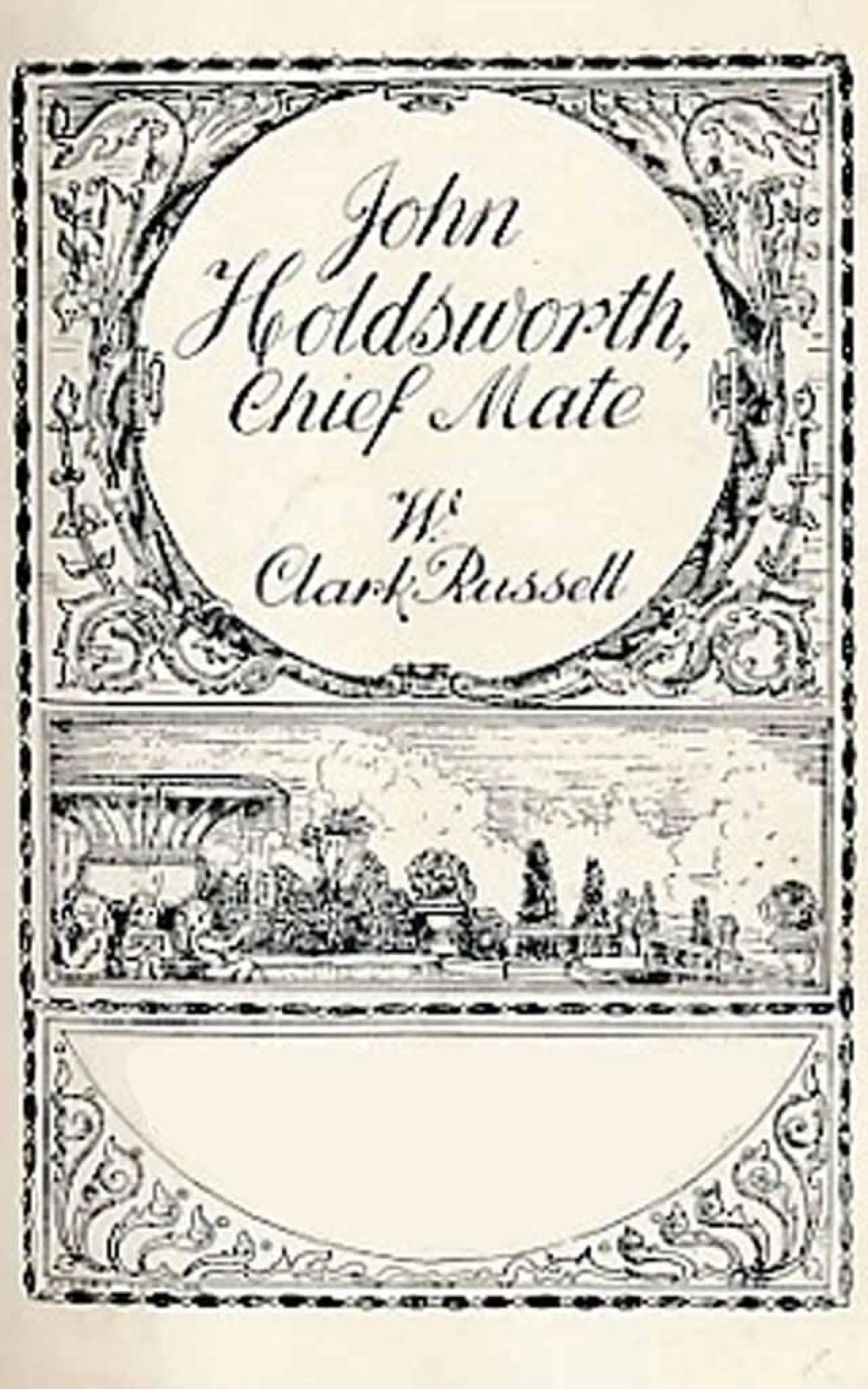
- Название:John Holdsworth
- Автор:
- Жанр:
- Год:неизвестен
- ISBN:нет данных
- Рейтинг книги:3 / 5. Голосов: 1
-
Избранное:Добавить в избранное
- Отзывы:
-
Ваша оценка:
John Holdsworth: краткое содержание, описание и аннотация
Предлагаем к чтению аннотацию, описание, краткое содержание или предисловие (зависит от того, что написал сам автор книги «John Holdsworth»). Если вы не нашли необходимую информацию о книге — напишите в комментариях, мы постараемся отыскать её.
John Holdsworth — читать онлайн ознакомительный отрывок
Ниже представлен текст книги, разбитый по страницам. Система сохранения места последней прочитанной страницы, позволяет с удобством читать онлайн бесплатно книгу «John Holdsworth», без необходимости каждый раз заново искать на чём Вы остановились. Поставьте закладку, и сможете в любой момент перейти на страницу, на которой закончили чтение.
Интервал:
Закладка:
But the worst part of the business was—the action of the sea set the spars in the water and the hull of the ship rolling against each other, and the thump, thump, thump of the bristly wreck against the vessel’s side sent a hollow undertone through the hooting of the tempest that was awful to hear.
Though the mizzen-mast still stood, the weight of the other masts in falling had severely wrenched it, and it literally rocked in its bed to the swaying of the great spanker-boom. Add to all this the midnight darkness in the air, which the flashes of lightning only served to deepen by the momentary and ghastly illumination they cast.
Yet, if the ship was not to be dragged to destruction, it was imperative that she should be freed, and freed at once, from the ponderous incumbrance of the wreck that ground against her side. The captain had shouted himself hoarse, and was no longer to be heard. But now Holdsworth made himself audible in tones that rose above the gale like trumpet-blasts.
“We must clear the wreck or founder! All hands out with their knives and cut away everything!”
A comprehensive order that must be literally obeyed.
“Carpenter!” he roared.
“Here, sir,” came a voice from the main-deck.
Holdsworth sprang in the direction of the voice: shouted again, and the man was at his side.
“Quick! Where’s your tool chest? Bear a hand, now!”
The two men fought their way through the water that came drenching and flying over the forecastle, to the boatswain’s berth, which the carpenter shared; and in a few moments returned staggering aft with their arms full of tools, which they thrust into the hands of the men. Holdsworth seized an adze; the carpenter another; and to it fell all hands, feeling for the ropes and then letting drive at them.
The mere occupation heartened the men, who worked with a will, bursting into encouraging cheers from time to time and calling to each other incessantly. The lightning was so far useful that it enabled them to obtain glimpses of the progress they made. The starboard shrouds lay across the deck, from bulwark to bulwark, like bridges; these were the first that were dealt with. They kept the wreck close alongside, and the strain upon them was enormous. Whilst Holdsworth and the carpenter hacked, they repeatedly called to a few of the men whose zeal kept them working on the lee side, though their figures could not be seen, to stand clear, wisely guessing that after a few of the shrouds had been severed, the whole would part like a rope-yarn: and this happened. One final blow divided a shroud and left the weight upon a few others, which were unequal to support it; and as they flew a loud shriek rose; a man had been caught by the flying shrouds round the body and whirled overboard like dust. But in the darkness none could tell who the messmate was that had lost his life.
The parting of these shrouds released the wreck from the ship’s side, and it drifted some fathoms away. The horrible grinding sounds ceased; but still the masts and yards, which the lightning disclosed seething in the water, black, ugly, and as dangerous as a lee-shore, were attached to the hull by a network of rope, all which must be severed. The knives of the men cut and hacked in all directions; and first here and then there, and sometimes as if crashing in half-a-dozen places at once, the adze wielded by Holdsworth was to be heard.
The last shroud was at length severed, the last rope parted; the hull, drifting faster than the dead weight of wreck, fell astern of the horrible incumbrance, and the next flash of lightning showed the water boiling round the black spars ahead.
“Hurrah!” shouted Holdsworth; but the men, wearied and faint after their long and great struggle, and sickened by the shriek of their perishing comrade, whose cry still sounded in their ears, answered the encouraging shout faint-heartedly.
The ocean was still a black and howling wilderness, and the vessel plunged and rolled, and trembled in the jumping seas, with her head right in the wind’s eye, and the water pouring over her in sheets of undulating fire. The water had stove in the cuddy front, and was washing in tons down into the steerage. What they had now to do was to furl the cross-jack; aft came the men and clewed the sail up; on which the vessel fell broadside to the wind and rolled her bulwarks under water.
To furl the cross-jack was a job full of peril; but, if the thing was to be done at all, it was to be done by a coup de main. Holdsworth, crying to the hands to follow him, sprang up the port mizzen rigging. Half-a-dozen went up after him, the rest skulked in the darkness, and stood holding their breath, expecting every moment the crash that should fling the men aloft into the sea. No glimpse of the brave fellows was to be obtained; nothing but the flapping outline of the white sail could be seen; the mast creaked harshly; but from time to time the men’s voices could be heard even above the roar of the tempest, the groaning of the ship, and the rolling of spare casks, a sheep-pen which had become unlashed, and other things about the waist and quarter-deck; and slowly the faint spaces of thundering canvas vanished in the darkness, and were securely stowed.
Meanwhile, the hands about the poop had been sent to man the pumps. The carpenter had sounded the well and reported three feet of water in the hold.
“She must be tight, sir! I am sure she is tight, sir! She has shipped the water that’s in her through the mast-coat of the main-mast!” the skipper shouted to Holdsworth, who stood, panting from his exertions aloft, close against the mizzen-mast, that he might judge what chance there was of its standing.
Meanwhile, the wheel was hard a-starboard, and the gale was now upon the ship’s quarter, the huge waves breaking under her counter and sending her wildly yawing forward. Had there been daylight, they could have rigged up a jury foresail on the stump of the fore-mast, which would have served to keep her before the wind; but nothing could be done in the overwhelming darkness except to keep the pumps at work.
But she was riding more easily now, and shipping fewer seas; the port bulwark just abaft the gangway had been crushed to a level with the deck by the fall of the main-mast, and offered a wide aperture for the escape of the water, so that the main-deck, where the hands worked the pumps, was practicable.
Furiously as it still blew, it was evident that the storm was abating; there were rifts in the clouds, through which, here and there, a pale star glimmered for an instant, and was then swallowed up.
It was now five bells (half-past ten); the skipper ordered rum to be served out to the men, who were wet through to the skin, and fagged to death by their extraordinary exertions. The carpenter sounded the well again, and reported an increase of three inches in the depth of water. This was a terrible announcement, and proved beyond a doubt that the ship was leaking, though the crew were kept in ignorance of the report, that they might not be disheartened.
At six bells the clouds had broken into huge black groups, with spaces of clear sky between, and the wind was lulling as rapidly as it had risen.
The ship was still buoyant enough to rise easily over the seas; but anything more forlorn than her appearance, as it was disclosed by the dim light that fell from the rifts among the clouds, cannot be imagined.
The fore-mast stood like a black and lightning-shattered tree; the jib-boom hung in two pieces from the bowsprit; where the main-mast had stood were some huge jagged splinters; and aft towered the mizzen-mast, with the cross-jack swinging to the roll of the ship, the spanker with its peak halliards gone, and the whole picture of it completing the unutterable air of desolation presented by the storm-shattered vessel.
Читать дальшеИнтервал:
Закладка:
Похожие книги на «John Holdsworth»
Представляем Вашему вниманию похожие книги на «John Holdsworth» списком для выбора. Мы отобрали схожую по названию и смыслу литературу в надежде предоставить читателям больше вариантов отыскать новые, интересные, ещё непрочитанные произведения.





![William Frith - John Leech, His Life and Work, Vol. 2 [of 2]](/books/748201/william-frith-john-leech-his-life-and-work-vol-thumb.webp)

Обсуждение, отзывы о книге «John Holdsworth» и просто собственные мнения читателей. Оставьте ваши комментарии, напишите, что Вы думаете о произведении, его смысле или главных героях. Укажите что конкретно понравилось, а что нет, и почему Вы так считаете.