William Clark Russell - John Holdsworth
Здесь есть возможность читать онлайн «William Clark Russell - John Holdsworth» — ознакомительный отрывок электронной книги совершенно бесплатно, а после прочтения отрывка купить полную версию. В некоторых случаях можно слушать аудио, скачать через торрент в формате fb2 и присутствует краткое содержание. Жанр: unrecognised, на английском языке. Описание произведения, (предисловие) а так же отзывы посетителей доступны на портале библиотеки ЛибКат.
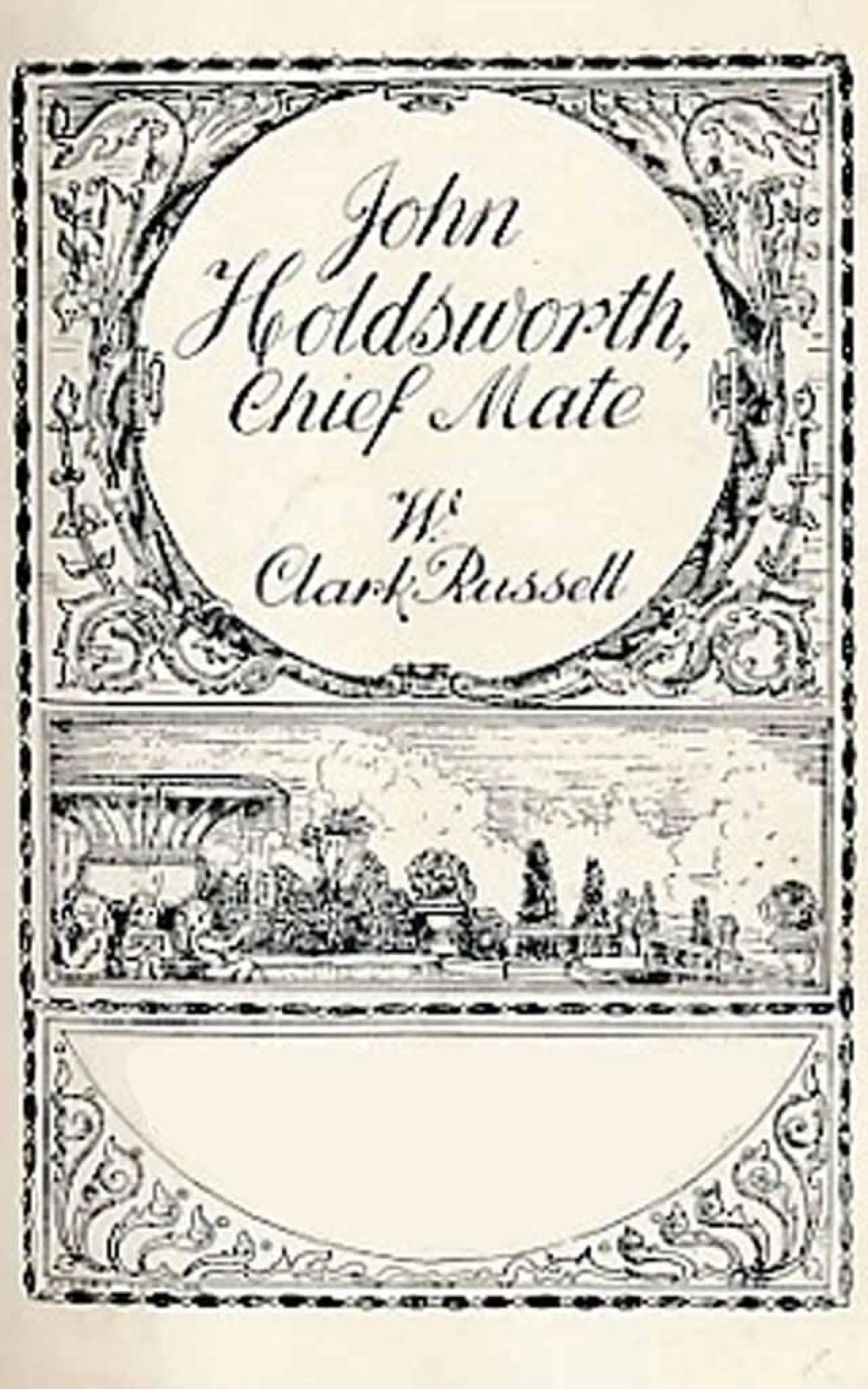
- Название:John Holdsworth
- Автор:
- Жанр:
- Год:неизвестен
- ISBN:нет данных
- Рейтинг книги:3 / 5. Голосов: 1
-
Избранное:Добавить в избранное
- Отзывы:
-
Ваша оценка:
John Holdsworth: краткое содержание, описание и аннотация
Предлагаем к чтению аннотацию, описание, краткое содержание или предисловие (зависит от того, что написал сам автор книги «John Holdsworth»). Если вы не нашли необходимую информацию о книге — напишите в комментариях, мы постараемся отыскать её.
John Holdsworth — читать онлайн ознакомительный отрывок
Ниже представлен текст книги, разбитый по страницам. Система сохранения места последней прочитанной страницы, позволяет с удобством читать онлайн бесплатно книгу «John Holdsworth», без необходимости каждый раз заново искать на чём Вы остановились. Поставьте закладку, и сможете в любой момент перейти на страницу, на которой закончили чтение.
Интервал:
Закладка:
Figure a smooth spar, fifty-five feet long, sloping at a height of as many feet to the water’s surface, the said surface not being a mill pond, but a sheet of foam; figure a pitch dark night, a line stretched along the yard, down which you must slide to the extremity, a sail weighing half a dozen tons banging at your head and your feet, and doing its utmost to throw you; then, having reached the extremity of the yard, figure your legs thrown across it as you might bestride a horse, beneath you the foaming sea, almost at right angles the inclined deck of the ship, a long stone’s throw distant—a deep darkness everywhere, save where a wave, breaking massively, flings out a phosphorescent light and deepens the blackness of its own chasm—whilst the gale yells about your ears, and blinds you with spray that stings like hail!
Figure this, and you will then very faintly realise what “taking the lee-earing” in a gale at sea means.
The cries of the men aloft, and the beating of the canvas, sounded like an unearthly contest in mid-air; but they ceased presently, and then the hands came hurrying down the rigging and fell to the halliards. Holdsworth sprang on to the poop, his cap gone, his hair blown about his eyes, and roared out orders, while the captain, more easy in his mind about his spars, went aft and hung about the binnacle, watching the compass often.
The ship was now under double-reefed topsails, and reeling through the darkness almost bare of sail. The wind was increasing in violence every five minutes, and an ugly Atlantic sea was running right athwart the ship’s course, hurling great waves against her starboard beam, which ran in waterspouts of foam as high as the main-top, and was blown in big hissing flakes through the rigging to leeward. It was soon deemed expedient to close-reef the topsails; but even under these mere streaks of canvas the “Meteor” lay over to the gale down to her water-ways, and the water bubbling in her lee scuppers. But luckily the gale was right abeam, and the vessel could hold her course; but her speed was comparatively small, and she laboured heavily.
So passed the darkest hours of the night. At four o’clock the gale was at its worst. They had rigged up a hurricane-house in the mizzen rigging—a square of tarpaulin, which the wind flattened hard against the shrouds—and under this shelter sat Holdsworth and the captain, scarce able to hear their own voices, pitched in the loudest key, amid the howling of the tempest. Once Holdsworth went below to look at the glass, and came back saying it was steady. The skipper roared that he never before remembered so sudden a gale, and Holdsworth owned that only once was he so caught—in the Pacific, when they lost their fore-topmast.
There was nothing more to be done, unless they hove the ship to; but this was not needful. The dawn broke at five, and the pale cheerless light illuminated a wild and dreary scene of tumbling desolate waters billowing in mountains to the horizon. The “Meteor,” almost under bare poles, her yards pointed to the gale, her ropes and lines blown in semicircles to leeward, laboured heavily, caught now by a sea that threw her on her beam-ends, and now swooping into a chasm walled with boiling green water, making the gale screech like a million steam-whistles through her rigging, as she drove up against it, while coiling tongues of water ran in cataracts up her glistening sides and fell in dead weights upon her decks. The sky, from horizon to horizon, was a dark lead colour, along which under-clouds, in appearance resembling volumes of smoke, were swept along, torn and rent, and discharging at intervals quick, biting showers of rain.
Some of the passengers came on deck—the General, Mr. Holland, and Mr. St. Aubyn. The General turned about when he had advanced a few feet, and disappeared; Mr. Holland in a very short time followed his example; but the actor, with manifest looks of terror in his pallid face, pushed onwards with outstretched hands for the hurricane-house. The captain advised him to go below; but at that moment the ship, rolling suddenly to windward, shipped a shower of spray, which soaked the poor actor through and through; a moment after, the vessel heeled heavily over to leeward; away rolled the actor, impelled both by the wind and the unerring law of gravitation, and was flung against the lee mizzen rigging, to which he was pinned by the violence of the gale as effectually as if he had been lashed to the shrouds. He screamed for help, on which Holdsworth went over to him, took him by the arm, and dragged him against the wind to the companion-hatchway. As Mr. St. Aubyn staggered below, clinging like a kitten to whatever he could lay hands on, he was heard to implore Holdsworth to tell him if there was any danger; but, before the words were out of his mouth, Holdsworth was clinging to the weather-rigging and calling the captain’s attention to a brig, which had risen out of the sea like an apparition, and was tearing before the gale with full topsails and topgallant-sails set.
“A Yankee, by her build!” said the captain. “It’s only a Yankee who would carry that sail in such a wind.”
It was a sight to see her flying along, sinking her hull sometimes out of sight, then poised on the giddy summit of a huge wave, whose crest broke under her bows, her copper bottom glistening like red gold against the slate-coloured water. She passed within a quarter of a mile of the “Meteor’s” weather-beam, and up flew the stripes and stars and stood like a painted board at her peak. The second mate answered the salutation by bending on the small ensign and running it up. Any further signalling was out of the question in that gale. The men on board the brig could just be made out. She was a smart vessel, black-hulled, with bows like a knife, and skysail poles, which gave her masts an aspect of perfect symmetry; and she was splendidly handled. She went like a swan over the seething billows, streaming a foaming wake, and in a very few moments was lost in the haze and gloom of the near horizon.
As the morning advanced the gale decreased, but a terrible sea was up, which made the ship labour so furiously that to steady her in some degree they set the trysail and foresail. There was, however, the comfort of daylight abroad, and the men could see what they were about. Both Holdsworth and the captain went below to get a little sleep, and the vessel was left in command of the second mate, a young man named Thompson. There were two hands at the wheel, and two on the look-out on the forecastle, glittering in oil-skins, and ducking now and again to the seas which swept over the ship’s bows.
The fore and main hatches were battened down, and the main-deck was a foot deep in water, which washed to and fro as the ship rolled, and which, as fast as it ran through the scupper-holes, was replaced by fresh and heavy inroads of the sea.
But all this was trifling; the vessel was snug, the gale was moderating, and the extra sail that had been made was driving the ship through the water in fine style.
Meanwhile, the passengers below, having been reassured by the captain, were making what breakfast they could off the rolls, tea, and rashers of ham which clattered about the table, and tumbled into their laps. The trays swung wildly from the deck, and it demanded great vigilance and close attention to their convulsive movements to repossess oneself of the cup or plate one placed upon them for safety. The negro steward shambled round the table, halting every moment to make a grasp at anything that came in his road, to steady himself. Now and again you heard the smash of crockery. Some conversation was attempted; and the General invited Mr. Holland to go up on deck and witness a scene which would probably exceed in majesty Niagara Falls; but Mr. Holland said he would wait until the vessel was steadier. Mr. St. Aubyn had changed his clothes and sat holding on to the table, looking the part of fear infinitely better than he could hope to impersonate it before the footlights. The ladies remained in their cabins. Mrs. Ashton, overcome with sickness and the fear of drowning, was driving her maid distracted with orders, which it was out of the poor wretch’s power to execute. In truth, the maid’s legs were perfectly useless to her, which Mrs. Ashton, lying on her back, refused to understand. Cries were repeatedly coming from the direction of her cabin for “Harry! Harry!” which received no attention, owing to Harry’s—in other words, to Mr. Ashton’s—utter incapacity to move a step without being flung upon the deck.
Читать дальшеИнтервал:
Закладка:
Похожие книги на «John Holdsworth»
Представляем Вашему вниманию похожие книги на «John Holdsworth» списком для выбора. Мы отобрали схожую по названию и смыслу литературу в надежде предоставить читателям больше вариантов отыскать новые, интересные, ещё непрочитанные произведения.





![William Frith - John Leech, His Life and Work, Vol. 2 [of 2]](/books/748201/william-frith-john-leech-his-life-and-work-vol-thumb.webp)

Обсуждение, отзывы о книге «John Holdsworth» и просто собственные мнения читателей. Оставьте ваши комментарии, напишите, что Вы думаете о произведении, его смысле или главных героях. Укажите что конкретно понравилось, а что нет, и почему Вы так считаете.