William Clark Russell - John Holdsworth
Здесь есть возможность читать онлайн «William Clark Russell - John Holdsworth» — ознакомительный отрывок электронной книги совершенно бесплатно, а после прочтения отрывка купить полную версию. В некоторых случаях можно слушать аудио, скачать через торрент в формате fb2 и присутствует краткое содержание. Жанр: unrecognised, на английском языке. Описание произведения, (предисловие) а так же отзывы посетителей доступны на портале библиотеки ЛибКат.
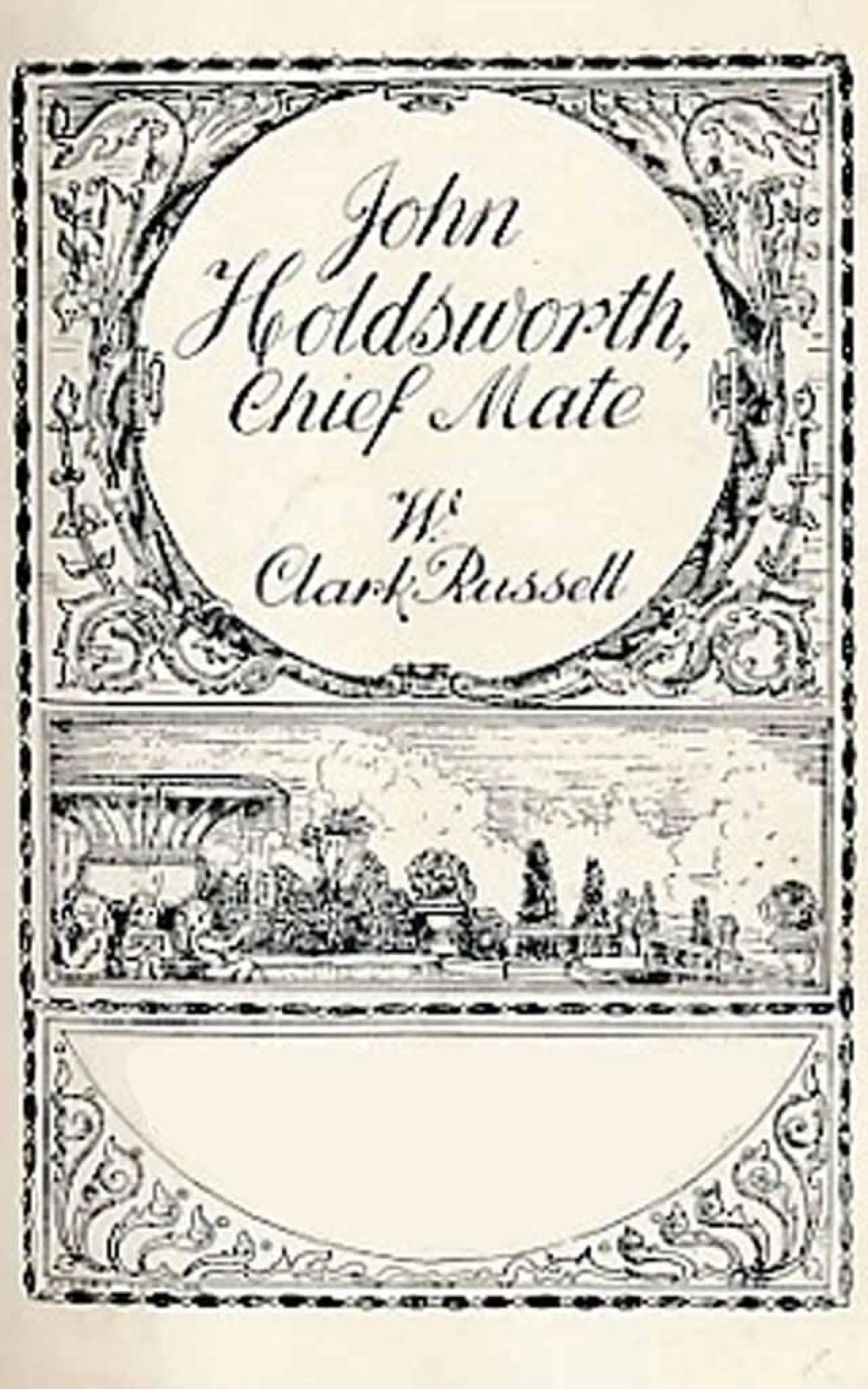
- Название:John Holdsworth
- Автор:
- Жанр:
- Год:неизвестен
- ISBN:нет данных
- Рейтинг книги:3 / 5. Голосов: 1
-
Избранное:Добавить в избранное
- Отзывы:
-
Ваша оценка:
John Holdsworth: краткое содержание, описание и аннотация
Предлагаем к чтению аннотацию, описание, краткое содержание или предисловие (зависит от того, что написал сам автор книги «John Holdsworth»). Если вы не нашли необходимую информацию о книге — напишите в комментариях, мы постараемся отыскать её.
John Holdsworth — читать онлайн ознакомительный отрывок
Ниже представлен текст книги, разбитый по страницам. Система сохранения места последней прочитанной страницы, позволяет с удобством читать онлайн бесплатно книгу «John Holdsworth», без необходимости каждый раз заново искать на чём Вы остановились. Поставьте закладку, и сможете в любой момент перейти на страницу, на которой закончили чтение.
Интервал:
Закладка:
A somewhat different scene was presented by the interior of the forecastle, where both watches were having breakfast. Men holding tin pannikins stepped easily round to the galley, where the cook was dispensing a milkless, sugarless black fluid called tea, and retreated into the twilight of the forecastle, carrying the steaming beverage. There sat the sailors, some swinging in hammocks with their legs dangling down, some on sea-chests, some on canvas bags, drinking from pannikins, swallowing lumps of biscuit hard as iron, or hacking with the knives they wore in their belts at bits of cold pork or beef, floating in vinegar, in tin dishes held between their knees; some smoking, some making ready to “turn in,” and all jabbering away as gaily as if they were comfortably seated in a Liverpool or Poplar singing-house—the mariner’s earthly paradise—and each with his Sue or his Betsey at his side. Here, more than in any other part of the ship, you felt her motion—the mighty lifting of her bows, and the long sweeping fall as she pitched nose under, while the heavy seas boomed against her outside as though at any moment the timbers must dispart and the green waves rush in.
At twelve o’clock the gale had decreased to such a degree that they were able to shake two reefs out of the main top-sail and set the topgallant sail. The action of the sea, moreover, was much less violent. The weather had cleared, the pale blue sky could be seen shining through the white mist that fled along it, and the sun stood round and clean and coppery in the heavens, throwing a dark red lustre upon the quick, passionate play of the sea beneath.
Some of the passengers crawled upon deck and gazed with wonderment around them. Certainly the panorama was a somewhat different one from what had been unrolled to their eyes the day before. The ship had a fagged and jaded look with her drenched decks, her ropes blown slack with the violence of the wind, and the canvas made unequal to the eye by the reefs in the topsails. It was again Holdsworth’s watch on deck. The captain walked up and down chuckling over the improved aspect of the weather and on the wind, which was drawing more easterly, and therefore more favourable.
“You can shake out the reefs, Mr. Holdsworth. She’ll bear it now,” he called out.
Out reefs it was: the ship felt the increased pressure, and rushed forward like a liberated racehorse.
“This is capital!” exclaimed the old General, tottering about with outstretched hands, ever on the alert for a special roll. “A week of this, captain, will carry us a good way on our road.”
“Ay, sir, and we must make up for lost time.”
And then presently he gave orders to set the mainsail and the other two topgallant sails.
“The glass still keeps low, sir,” said Holdsworth.
“But let’s take advantage of the daylight, Mr. Holdsworth. We mustn’t lose an opportunity.”
The sky had now cleared, the sun shone cheerily; the wind, having drawn aft, was now no more than what sailors would call a main-royal breeze. The foretopmast stun’sail was set. The passengers regained their spirits, and though the ship still rolled pretty freely, Mr. St. Aubyn and Mr. Holland, to show that they were now masters of their legs, walked up and down the deck, diversifying their conversation with sundry stumbles, and now and then by falling against each other. But the bright sunshine made such contretemps a source of merriment. Moreover, the ladies were on deck now, Mrs. Ashton having been pushed up the companion-ladder by her husband, who, in his turn, had met with great assistance behind from the kindly hands of the negro steward, who was anxious to get them both out of the cuddy, that he might show his teeth to the maid-servant. Captain Steel seeing Mrs. Ashton attended by the other gentlemen, who were industrious in their inquiries after her nerves, gallantly gave his arm to the widow, whilst her little boy ran to Holdsworth, who took his hand, kissed and began to talk to him, finding endless pleasure in looking into his eyes and humouring the suggestions of home-life, of flowers, of women’s love, of his own wife, which were somehow conveyed to him by the boy’s prattle and wise child-smiles and perfect innocence.
CHAPTER VI. – TAKEN ABACK!
At five o’clock the wind was south-east; a fresh breeze, with a lively sea and a cloudy sky. The wind being aft, the ship sailed on an even keel, to the great comfort of the passengers, who found the inclined decks intolerable.
From the aspect of the sea, it was evident that the ship had got into water which had not been touched by the gale of the morning—of such narrow proportions sometimes are the tempests which sweep the ocean. Away northwards, whither the clouds were rolling, there loomed a long, low, smoke-coloured bank of cloud or fog, so exactly resembling a coast seen from a distance that the passengers were deceived, and some of them called out that yonder was land!
“Tell us now, captain,” cried Mrs. Ashton; “it is land, isn’t it?”
“Why, madam,” rejoined the captain, “for anything I can tell, it may be Laputa.”
“Or Utopia,” suggested the General, “the land of idealisms and paradisaical institutions.”
Mrs. Ashton laughed, seeing the joke, but Mr. St. Aubyn, conceiving that they were talking of real countries, proposed that the captain should head the vessel for the shore.
“No, no! too far out of my course,” answered the skipper, with a wise shake of the head. “It would make a Flying Dutchman of the ship were we once to set to work to reach that land.”
“If I really thought it Utopia,” said the General, stroking his moustache, “I would beg you to land me at once, so eager am I to witness the condition of a people living under a form of government the like of which, for wisdom, humanity, and availability, is not to be met with in any other part of the world. But it may be Laputa, as you suggested.”
“Or Lilliput,” said Mr. Holland; whereupon the actor, perceiving that a joke was playing at his expense, scowled dramatically at the bank of cloud, and muttered, that, for his part, when he asked a civil question he usually looked for a truthful answer.
Just then a voice forward shouted out, “A sail on the lee bow!”
There is always something exciting in this cry at sea. Storms and calms grow wearisome after a bit, but the interest that clusters about a vessel met on the broad deep never loses its freshness. The captain went for his telescope, and, after a brief inspection, announced the vessel to be a large barque going the same road as themselves. Mrs. Ashton asked leave to look through the telescope, and a good deal of coquettish bye-play took place; for, first she shut both eyes, and then she couldn’t see at all; and then she shut the eye that looked through the telescope, and, keeping the other open, declared that she could see better without the glass. Then the telescope wouldn’t keep steady; so Mr. St. Aubyn went upon his knees and begged her to use his shoulder for a rest. At last, after an infinity of trouble, and when the cramp was just beginning to seize the actor’s legs, she obtained a glimpse of the barque as it swept through the field of the glass, and owned herself delighted and satisfied.
The “Meteor” came up with the stranger hand over fist, keeping to windward of her; and soon she was no farther than a mile off, a big hull high in the water, bare and black, with round bows and a square stern. They hoisted the ensign on board the “Meteor,” but the barque showed no colours.
“Some sour North Countryman, I reckon,” said Captain Steel. “She has a Sunderland cut.”
She was under full sail, but just when the “Meteor” got abreast of her, she clewed her royals up, down came the flying and outer jibs, and the topgallant yards.
Читать дальшеИнтервал:
Закладка:
Похожие книги на «John Holdsworth»
Представляем Вашему вниманию похожие книги на «John Holdsworth» списком для выбора. Мы отобрали схожую по названию и смыслу литературу в надежде предоставить читателям больше вариантов отыскать новые, интересные, ещё непрочитанные произведения.



![William Frith - John Leech, His Life and Work, Vol. 2 [of 2]](/books/748201/william-frith-john-leech-his-life-and-work-vol-thumb.webp)

Обсуждение, отзывы о книге «John Holdsworth» и просто собственные мнения читателей. Оставьте ваши комментарии, напишите, что Вы думаете о произведении, его смысле или главных героях. Укажите что конкретно понравилось, а что нет, и почему Вы так считаете.