William Clark Russell - John Holdsworth
Здесь есть возможность читать онлайн «William Clark Russell - John Holdsworth» — ознакомительный отрывок электронной книги совершенно бесплатно, а после прочтения отрывка купить полную версию. В некоторых случаях можно слушать аудио, скачать через торрент в формате fb2 и присутствует краткое содержание. Жанр: unrecognised, на английском языке. Описание произведения, (предисловие) а так же отзывы посетителей доступны на портале библиотеки ЛибКат.
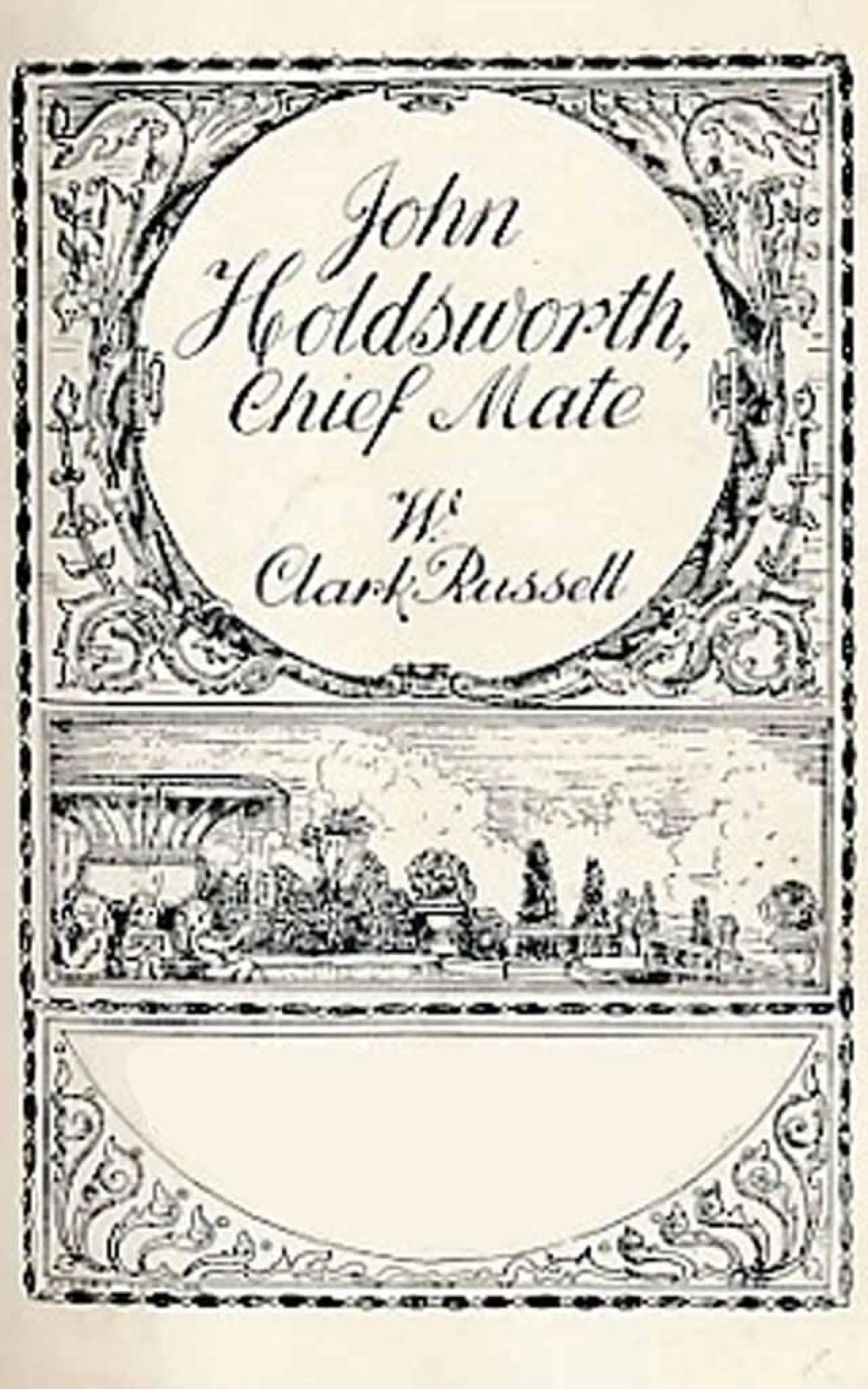
- Название:John Holdsworth
- Автор:
- Жанр:
- Год:неизвестен
- ISBN:нет данных
- Рейтинг книги:3 / 5. Голосов: 1
-
Избранное:Добавить в избранное
- Отзывы:
-
Ваша оценка:
John Holdsworth: краткое содержание, описание и аннотация
Предлагаем к чтению аннотацию, описание, краткое содержание или предисловие (зависит от того, что написал сам автор книги «John Holdsworth»). Если вы не нашли необходимую информацию о книге — напишите в комментариях, мы постараемся отыскать её.
John Holdsworth — читать онлайн ознакомительный отрывок
Ниже представлен текст книги, разбитый по страницам. Система сохранения места последней прочитанной страницы, позволяет с удобством читать онлайн бесплатно книгу «John Holdsworth», без необходимости каждый раз заново искать на чём Вы остановились. Поставьте закладку, и сможете в любой момент перейти на страницу, на которой закончили чтение.
Интервал:
Закладка:
“What is she afraid of?” exclaimed Captain Steel, gazing at her curiously.
You could see the pigmy figures of the men clambering up the rigging, and presently down fell the topsail yards and up went more figures, and the spars were dotted with heads. Anything more picturesque than this vessel—her black hull rolling majestically, her white sails vanishing even as you watched them, her rigging marked against the cloudy sky, the sense of the noisy activity on board of her, of which no faintest echo stole across the water, and all between, the tumbling cloud-coloured waters—cannot be imagined. The crew of the “Meteor” watched her with curiosity; but she now fell rapidly astern, and in a short time could be seen clearly only by the telescope, which Captain Steel held to his eye, speculating upon her movements.
The dinner-bell rang. It was now the first dog-watch. Thompson, the second mate, came on deck, and the passengers went to dinner. The sunlight had a watery gleam in it as the lengthening rays fell upon the skylight, and Holdsworth’s eyes constantly wandered to the sails, which were visible through the glass. The skipper was in high humour, and during dinner laughed at the barque they had passed for shortening sail under a blue sky.
“I’ll wager a hat,” he exclaimed, “that she’s commanded by a Scotchman, even if she don’t hail from a North British port. I don’t mean to say that your Scotchman’s a timid man, but he’s unco’ thoughtful. My first skipper was a Sawney, and every night, as regularly as the second dog-watch came round, it was ‘In royals and flying-jib, and a single reef in the mizzen-top-sail.’”
“But there must be some reason for the barque furling her sails,” said the General.
“From his point of view, no doubt, sir. You have seen what the weather has been all the afternoon?”
“The wind is dropping, sir,” said Holdsworth, looking through the skylight.
He had an uneasy expression in his eyes, and he frequently glanced at the skipper; but etiquette of a very severe kind prohibited him from imparting his misgivings of a change, in the face of the skipper’s manifest sense of security.
“It may freshen after sunset,” rejoined the skipper. “Mr. Holland, the pleasure of a glass of wine.”
The conversation drifted into other channels. Mrs. Ashton gave an account of a country ball she had attended a week or two before she left England, and described the dress she wore on that occasion, appealing often to her husband to aid her memory, and riveting the attention of Mr. St. Aubyn. Then the General talked of the garrison-towns he had visited, and paid some handsome compliments to the British army, and to English society in general. Mrs. Tennent, seated on the captain’s right hand, with her boy at her side, listened to without joining in the conversation.
Holdsworth’s eyes roamed incessantly through the skylight.
It happened presently that the General, in speaking of the beauty of English inland scenery, mentioned the county in which Southbourne was situated, and instanced in particular the country around Hanwitch, a town lying not half a dozen miles from Southbourne. Holdsworth pricked his ears, and joined in the conversation. He had reason to remember Hanwitch. One of the happiest days he had spent, during the three months he had been ashore, was that in which he had driven Dolly over to that town, and dined in the queer little hotel that fronted a piece of river-scenery as beautiful as any that is to be found up the Thames.
Whilst he and the General talked, the skipper argued with Mr. St. Aubyn on the merits of the English as a paying people. St. Aubyn declared that the English public, taken in the aggregate, was a mean public, rarely liberal, and then liberal in wrong directions, supporting quack institutions, responding to quack appeals, and ignoring true excellence, especially histrionic excellence. Both grew warm; then Mr. Holland joined in. He sent the discussion wandering from the point, and in stepped Mr. Ashton.
Meanwhile the decanters went round, the cuddy grew dark, and the negro was looking at the steward for orders to light the swinging lamps.
Hark!
A loud cry from the deck, followed by a sudden rush of feet, and the ship heeled over—over—yet over!
The women shrieked; the skylight turned black; plates, decanters, cutlery, glass, rolled from the table and fell with quick crashes. The decks fore and aft echoed with loud calls. You could hear the water gurgling in the lee port-holes. A keen blue gleam flashed upon the skylight; but if thunder followed the lightning it was inaudible amid the wild and continuous shrieking of the wind.
The skipper and Holdsworth scrambled to the companion-ladder and gained the deck. In a trice they saw what had happened. The ship, with all sails set, had been taken aback.
Away to windward, in the direction directly contrary to where the wind had been blowing before dinner, the sky was livid, flinging an early night upon the sea, and sending forth a tempest of wind that tore the water into shreds of foam. The whole force of the hurricane was upon the ship’s canvas, which lay backed against the masts, and the vessel lay on her beam-ends, her masts making an angle of forty degrees with the horizon.
The confusion was indescribable. Every halliard had been let go; but the yards were jammed by the sails, and would not descend. The clew-lines were manned, but the sheets would not stir an inch through the blocks. Nor was the worst of the squall, tempest, hurricane, whatever it might be, upon them yet; that livid pall of cloud which the lightning was seaming with zigzag fire was still to come, and with it the full fury its scowling aspect portended.
“My God!” thundered the skipper to the second mate, who stood white, cowed, and apparently helpless, “what have you brought us into?”
The wheel was jammed hard a-starboard, but the ship lay like a log, broadside on to the wind, her masts bowed almost on a level with the water.
“Haul! for your lives, men! haul!” shrieked the skipper frantically to the men, who appeared paralysed by the sudden catastrophe, and stood idly with the clew-lines and reef tackles passed along them.
Holdsworth, half-way up the weather-poop ladder, his head above the bulwarks, saw sooner than the captain what was about to happen.
“Crowd to windward, all hands!” he roared. There was no time to say more; the great broad, livid cloud was upon them even whilst Holdsworth sang out the command; the men held their breath—unless the masts went the vessel was doomed.
Crash! A noise of wood shivered into splinters, of flogging ropes and sails thundering their tatters upon the wind; the fore and main masts went as you would break a clay-pipe stem across your knee—the first, just below the top, the other clean off at the deck; and the huge mass of spars, ropes, and sails lay quivering and rolling alongside—a portion on deck, but the greater bulk of them in the water—grinding into the vessel’s side as if she had grounded upon a shoal of rocks.
The ship righted, and then another crash; away went the mizzen-topmast, leaving the spanker and cross-jack set. The wind caught these sails and swept the ship’s head round right in the eye of the storm, and off she drove to leeward, disabled, helpless—dragging her shattered spars with her, like something living its torn and mangled limbs.
There was no situation in the whole range of the misfortunes which may befall a ship at sea more critical than the one the “Meteor” was now in. The sea was rising quickly and leaping high over the ship’s bows, pouring tons of water in upon the decks (the weight of the wreck alongside preventing the vessel from rising to the waves), and carrying whatever had become unlashed—casks, spare spars, and the like—aft to the cuddy front, against which they were launched with a violence that broke the windows, and soon promised to demolish the woodwork.
Читать дальшеИнтервал:
Закладка:
Похожие книги на «John Holdsworth»
Представляем Вашему вниманию похожие книги на «John Holdsworth» списком для выбора. Мы отобрали схожую по названию и смыслу литературу в надежде предоставить читателям больше вариантов отыскать новые, интересные, ещё непрочитанные произведения.




![William Frith - John Leech, His Life and Work, Vol. 2 [of 2]](/books/748201/william-frith-john-leech-his-life-and-work-vol-thumb.webp)

Обсуждение, отзывы о книге «John Holdsworth» и просто собственные мнения читателей. Оставьте ваши комментарии, напишите, что Вы думаете о произведении, его смысле или главных героях. Укажите что конкретно понравилось, а что нет, и почему Вы так считаете.