Gerald Durrell - The Corfu Trilogy
Здесь есть возможность читать онлайн «Gerald Durrell - The Corfu Trilogy» весь текст электронной книги совершенно бесплатно (целиком полную версию без сокращений). В некоторых случаях можно слушать аудио, скачать через торрент в формате fb2 и присутствует краткое содержание. Год выпуска: 2006, ISBN: 2006, Издательство: Penguin Books, Жанр: Природа и животные, Биографии и Мемуары, на английском языке. Описание произведения, (предисловие) а так же отзывы посетителей доступны на портале библиотеки ЛибКат.
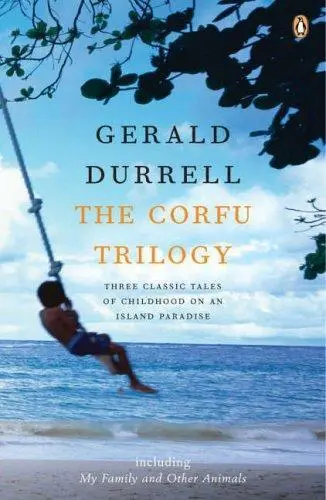
- Название:The Corfu Trilogy
- Автор:
- Издательство:Penguin Books
- Жанр:
- Год:2006
- ISBN:978–0–141–91113–7
- Рейтинг книги:4 / 5. Голосов: 3
-
Избранное:Добавить в избранное
- Отзывы:
-
Ваша оценка:
The Corfu Trilogy: краткое содержание, описание и аннотация
Предлагаем к чтению аннотацию, описание, краткое содержание или предисловие (зависит от того, что написал сам автор книги «The Corfu Trilogy»). Если вы не нашли необходимую информацию о книге — напишите в комментариях, мы постараемся отыскать её.
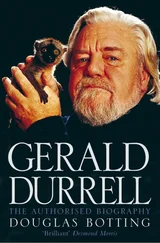
Durrell dedicated his life to the conservation of wildlife and it is through his efforts that creatures such as the Mauritius pink pigeon and the Mallorcan midwife toad have avoided extinction. Over his lifetime he wrote thirty-seven books, went on dozens of animal-collecting trips and presented numerous tv shows. He founded the Durrell Wildlife Conservation Trust in 1959 as a centre for the conservation of endangered species – of which his wife Lee is still Honorary Director. He was awarded the OBE in 1982.
The Corfu Trilogy
My Family and Other Animals
Birds, Beasts, and Relatives
The Garden of the Gods
The Corfu Trilogy — читать онлайн бесплатно полную книгу (весь текст) целиком
Ниже представлен текст книги, разбитый по страницам. Система сохранения места последней прочитанной страницы, позволяет с удобством читать онлайн бесплатно книгу «The Corfu Trilogy», без необходимости каждый раз заново искать на чём Вы остановились. Поставьте закладку, и сможете в любой момент перейти на страницу, на которой закончили чтение.
Интервал:
Закладка:
After the unfortunate affair of the scorpion, the family had given me a large room on the first floor in which to house my beasts, in the vague hope that this would confine them to one particular portion of the house. This room – which I called my study, and which the rest of the family called the Bug House – smelled pleasantly of ether and methylated spirits. It was here that I kept my natural-history books, my diary, microscope, dissecting instruments, nets, collecting bags, and other important items. Large cardboard boxes housed my birds’-egg, beetle, butterfly, and dragon-fly collections, while on the shelves above were a fine range of bottles full of methylated spirits in which were preserved such interesting items as a four-legged chicken (a present from Lugaretzia’s husband), various lizards and snakes, frog-spawn in different stages of growth, a baby octopus, three half-grown brown rats (a contribution from Roger), and a minute tortoise, newly hatched, that had been unable to survive the winter. The walls were sparsely, but tastefully, decorated with a slab slate containing the fossilized remains of a fish, a photograph of myself shaking hands with a chimpanzee, and a stuffed bat. I had prepared the bat myself, without assistance, and I was extremely proud of the result. Considering how limited my knowledge of taxidermy was, it looked, I thought, extremely like a bat, especially if you stood at the other side of the room. With wings outstretched it glowered down from the wall from its slab of cork. When summer came, however, the bat appeared to feel the heat; it sagged a little, its coat no longer glossy, and a new and mysterious smell started to make itself felt above the ether and methylated spirits. Poor Roger was wrongly accused at first, and it was only later, when the smell had penetrated even to Larry’s bedroom, that a thorough investigation traced the odour to my bat. I was surprised and not a little annoyed. Under pressure I was forced to get rid of it. Peter explained that I had not cured it properly, and said that if I could obtain another specimen he would show me the correct procedure. I thanked him profusely, but tactfully suggested that we keep the whole thing a secret; I explained that I felt the family now looked with a suspicious eye on the art of taxidermy, and it would require a lot of tedious persuasion to get them into an agreeable frame of mind.
My efforts to secure another bat were unsuccessful. Armed with a long bamboo I waited for hours in the moon-splashed corridors between the olive trees, but the bats flickered past like quicksilver and vanished before I could use my weapon. But, while waiting in vain for a chance to hit a bat, I saw a number of other night creatures which I would not otherwise have seen. I watched a young fox hopefully digging for beetles in the hillside, scrabbling with slim paws at the earth, and scrunching the insects up hungrily as he unearthed them. Once, five jackals appeared out of the myrtle bushes, paused in surprise at seeing me, and then melted away among the trees, like shadows. The nightjars on silent, silky wings would slide as smoothly as great black swallows along the rows of olives, sweeping across the grass in pursuit of the drunken, whirling crane-flies. One night a pair of squirrel dormice appeared in the tree above me, and chased each other in wild exuberance up and down the grove, leaping from branch to branch like acrobats, skittering up and down the tree-trunks, their bushy tails like puffs of grey smoke in the moonlight. I was so fascinated by these creatures that I was determined to try to catch one. The best time to search for them was, of course, during the day, when they would be asleep. So, I hunted laboriously through the olive groves for their hideout, but it was a hopeless quest, for every gnarled and twisted trunk was hollow, and each contained half a dozen holes. However, my patience did not go entirely unrewarded, for one day I thrust my arm into a hole and my fingers closed round something small and soft, something that wiggled as I pulled it out. At first glance my capture appeared to be an outsize bundle of dandelion seeds, furnished with a pair of enormous golden eyes; closer inspection proved it to be a young Scops owl, still clad in his baby down. We regarded each other for a moment, and then the bird, apparently indignant at my ill-mannered laughter at his appearance, dug his tiny claws deeply into my thumb, and I lost my grip on the branch, so that we fell out of the tree together.
I carried the indignant owlet back home in my pocket, and introduced him to the family with a certain trepidation. To my surprise, he was greeted with unqualified approval, and no objection was raised to my keeping him. He took up residence in a basket kept in my study and, after much argument, he was christened Ulysses. From the first he showed that he was a bird of great strength of character, and not to be trifled with. Although he would have fitted comfortably into a tea-cup, he showed no fear and would unhesitatingly attack anything and everyone, regardless of size. As we all had to share the room, I felt it would be a good idea if he and Roger got on intimate terms, so, as soon as the owl had settled down, I performed the introductions by placing Ulysses on the floor, and telling Roger to approach and make friends. Roger had become very philosophical about having to make friends with the various creatures that I adopted, and he took the appearance of an owl in his stride. Wagging his tail briskly, in an ingratiating manner, he approached Ulysses, who squatted on the floor with anything but a friendly expression on his face. He watched Roger’s approach in an unwinking stare of ferocity. Roger’s advance became less confident. Ulysses continued to glare as though trying to hypnotize the dog. Roger stopped, his ears drooped, his tail wagging only feebly, and he glanced at me for inspiration. I ordered him sternly to continue his overtures of friendship. Roger looked nervously at the owl, and then with great nonchalance walked round him, in an effort, to approach him from the back. Ulysses, however, let his head revolve too, and kept his eyes still fixed on the dog. Roger, never having met a creature that could look behind itself without turning round, seemed a trifle nonplussed. After a moment’s thought he decided to try the skittish, let’s-all-have-a-jolly-game approach. He lay down on his stomach, put his head between his paws and crept slowly towards the bird, whining gently and wagging his tail with abandon. Ulysses continued to look as though he were stuffed. Roger, still progressing on his stomach, managed to get quite close, but then he made a fatal mistake. He pushed his woolly face forward and sniffed loudly and interestedly at the bird. Now, Ulysses would stand a lot, but he was not going to be sniffed at by a mountainous dog covered with black curls. He decided that he would have to show this ungainly and wingless beast exactly where he got off. He lowered his eyelids, clicked his beak, hopped up into the air and landed squarely on the dog’s muzzle, burying his razor-sharp claws in the black nose. Roger, with a stricken yelp, shook the bird off and retired beneath the table; no amount of coaxing would get him to come out until Ulysses was safely back in his basket.
When Ulysses grew older he lost his baby down and developed the fine ash-grey, rust-red, and black plumage of his kind, with the pale breast handsomely marked with Maltese crosses in black. He also developed long ear-tufts, which he would raise in indignation when you attempted to take liberties with him. As he was now far too old to be kept in a basket, and strongly opposed to the idea of a cage, I was forced to give him the run of the study. He performed his flying lessons between the table and the door-handle, and, as soon as he had mastered the art, chose the pelmet above the window as his home, and would spend the day sleeping up there, eyes closed, looking exactly like an olive stump. If you spoke to him he would open his eyes a fraction, raise his ear-tufts and elongate his whole body, so that he looked like some weird, emaciated Chinese idol. If he was feeling particularly affectionate he would click his beak at you, or, as a great concession, fly down and give you a hurried peck on the ear.
Читать дальшеИнтервал:
Закладка:
Похожие книги на «The Corfu Trilogy»
Представляем Вашему вниманию похожие книги на «The Corfu Trilogy» списком для выбора. Мы отобрали схожую по названию и смыслу литературу в надежде предоставить читателям больше вариантов отыскать новые, интересные, ещё непрочитанные произведения.


Обсуждение, отзывы о книге «The Corfu Trilogy» и просто собственные мнения читателей. Оставьте ваши комментарии, напишите, что Вы думаете о произведении, его смысле или главных героях. Укажите что конкретно понравилось, а что нет, и почему Вы так считаете.