David Nickle - The 'Geisters
Здесь есть возможность читать онлайн «David Nickle - The 'Geisters» весь текст электронной книги совершенно бесплатно (целиком полную версию без сокращений). В некоторых случаях можно слушать аудио, скачать через торрент в формате fb2 и присутствует краткое содержание. Город: Toronto, Год выпуска: 2013, ISBN: 2013, Издательство: ChiZine Publications, Жанр: Ужасы и Мистика, на английском языке. Описание произведения, (предисловие) а так же отзывы посетителей доступны на портале библиотеки ЛибКат.
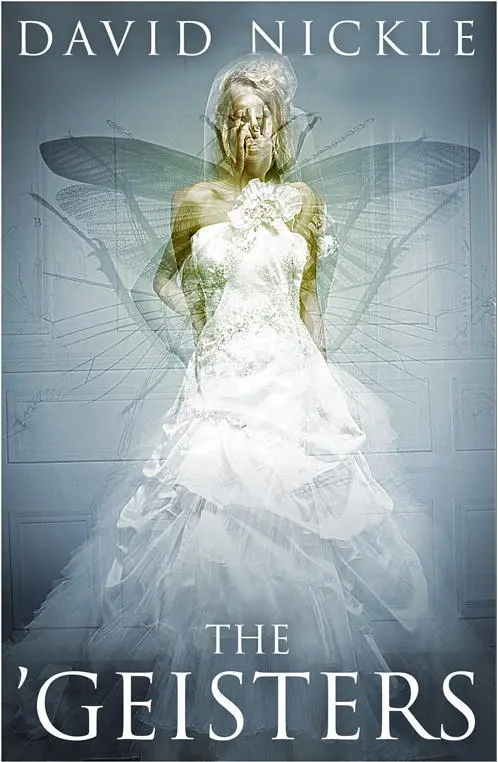
- Название:The 'Geisters
- Автор:
- Издательство:ChiZine Publications
- Жанр:
- Год:2013
- Город:Toronto
- ISBN:9781771481434
- Рейтинг книги:3 / 5. Голосов: 1
-
Избранное:Добавить в избранное
- Отзывы:
-
Ваша оценка:
The 'Geisters: краткое содержание, описание и аннотация
Предлагаем к чтению аннотацию, описание, краткое содержание или предисловие (зависит от того, что написал сам автор книги «The 'Geisters»). Если вы не нашли необходимую информацию о книге — напишите в комментариях, мы постараемся отыскать её.
Review
“The story is a white-knuckler from page one, and Nickle is a master of luring you into thinking that the supernatural can be rationalized and systemized, only to reveal, time and again, that the orderly patterns we try to make of the irrational are figments of our imagination. I was off-balance and more than a little scared throughout.”
— Cory Doctorow, Boingboing.net “Just finished David Nickle’s
…: brilliant, vicious, gothic-modern take on female monsters, aka poltergeists and the hubristic men who fetishize them. It is SO original and crazy, and SO well-written. GET IT.”
— Gemma Files, author of the Hexslinger trilogy “
is filled with an interminable sense of threat, as though the words could turn on the reader at any moment, and they often do…. This is a book that buzzes in your ears, climbs your crawling skin with multiple barbed feet, feeling with exquisitely sensitive antennae for the next new and terrible revelation.”
— Natalie Zena Waschots,
The 'Geisters — читать онлайн бесплатно полную книгу (весь текст) целиком
Ниже представлен текст книги, разбитый по страницам. Система сохранения места последней прочитанной страницы, позволяет с удобством читать онлайн бесплатно книгу «The 'Geisters», без необходимости каждый раз заново искать на чём Вы остановились. Поставьте закладку, и сможете в любой момент перейти на страницу, на которой закончили чтение.
Интервал:
Закладка:
“He’s not a real doctor. He said so himself.”
Ann nodded. “So?”
Philip looked right at her. “When he talks to you,” he said, “promise me something.”
“Okay.”
“Don’t let him make you take your clothes off.”
“Are you blushing?”
Philip was blushing. He looked away. “Just promise me. He might say it’s part of the tests he’s got to do. He might say something else. But he’s got no business taking your clothes off. So don’t do it.”
“Okay,” she said. “I promise.”
“Thanks.”
“Is that what you’re scared of?”
“Maybe.” He bit his thumbnail. “I don’t know, exactly.”
“Well I’m scared too,” said Ann, and took her brother’s hand. The thumb tip was still damp with spit. “But not of that.”
“I just don’t like him. That’s all.”
They sat waiting for a half an hour by Philip’s watch, before the door cracked open and Dr. Sunderland peeked in. Ann got up, but he shook his head. “You stay here,” he said. “Philip, it’s your turn.”
“How long will it be?” she asked.
“Not long. Why don’t you watch television?”
“It doesn’t work,” said Philip. “No cable.”
Dr. Sunderland frowned. “What? Sure we do. Hold on a second.” He went over to the TV, reached around behind, jiggled something, and turned it on. A music video came up. “Hm. Sir Mix-a-Lot.” He looked at Ann. “Your kind of thing?”
She wrinkled her nose and shook her head.
“Well,” he said, pointing to the remote, “there are plenty of channels to choose from. Take your pick.”
And with that, he and Philip left Ann alone in the room. She started to flip channels.
“Mr. Spock had to have his brain put back in,” she said. “Dr. McCoy didn’t know what he was doing, but Mr. Spock talked him through it.”
Dr. Sunderland grinned and nodded. They had talked about the music videos and the cooking show and now they were on to the Star Trek show.
“That was quite an episode,” he said.
“It was pretty stupid.”
“It wasn’t one of their finest,” he said. “I haven’t seen the old series in years. When I think about it, I prefer Mr. Data to Mr. Spock.”
“They’re both the same. Basically.”
“Basically. That’s true. Each is very alone, even in a crowd. Do you watch a lot of Star Trek ?”
“My brother does. So sometimes I do too. Where’s my brother?”
The two of them were alone in the little waiting room. Dr. Sunderland had returned with a clipboard. He was wearing a deep blue fleece jacket, and he’d brought a blanket for Ann, along with her coat.
“He’s with your parents,” he said. His breath made frosty clouds over his chin. “We’ll go see them in a minute.”
Ann pulled her coat tight around her. “Soon,” she said.
“I promise.” Dr. Sunderland made a note on his clip board. “Did you enjoy the news any better?”
“It was all about the war,” said Ann. “What does SCUD stand for?”
“I don’t really know. We can check later. But you didn’t answer my question. You were watching the news for a long time. Did you enjoy it?”
“No.”
“Well I guess nobody really enjoys the news. Was there something about it that interested you?”
“How do you know I was watching the news so much?” Ann looked around. “Is there a camera in here?”
“Yes.”
Ann shivered and drew her knees up to her chest. “And you’ve been watching us the whole time?”
He didn’t answer.
“Is Philip in trouble?”
He shook his head. “Philip is a good boy,” he said. “A good brother. He gave you excellent advice. Do you worry about him?”
“I worry about everybody.”
“Because of the poltergeist?”
“Is that what it is?”
“It’s what your brother called it. In his notes he used the word, and when we spoke just now, he said that’s what he thought was going on. Is it okay for me to call it a poltergeist?”
“If it’s a poltergeist,” said Ann, “that makes it my fault. Philip says poltergeists are made by little girls.”
“No one’s saying anything is your fault. Should I call it something else?”
“Poltergeist is fine, I guess.”
“Okay. Tell me, Ann. What does the poltergeist look like?”
“It doesn’t look like anything.”
“That’s what you wrote in your journal. but everything looks like something.” He put the clipboard down on the coffee table. There was a yellow tablet of paper on it, Ann saw, filled with messy writing. “If you could imagine what it looked like, how would you describe it?”
“A bug.”
“You said that very quickly. Are you sure?”
She closed her eyes and made a show of thinking about it.
“A big bug.”
“So like a spider?”
“Spiders aren’t bugs. They’re—” she shut her eyes tighter and it came to her “—arachnids. Like scorpions.”
“You’re right.” He patted her shoulder. “So it’s an insect?”
“Sure.”
“Would you rather we called it that?”
“The Insect,” she said, and nodded. “Can I go see my family now?”
“Soon,” said Dr. Sunderland. “But first—” he reached over and picked up the water jug “—can you remember what the Insect was doing when this happened?”
The jug had been full, but nothing came out when he tilted it. The water inside was frozen solid.
The video cameras told it better than Ann could—and later, in her new bedroom at the lodge, she’d wonder if things might have turned out differently if she’d been more forthcoming.
There were two cameras. One up near the ceiling behind the TV; the other, over the door with a view of the TV. They watched the tapes back in Dr. Sunderland’s office, on a big TV. First one, then the other.
They showed enough, by themselves, to make the decision easy.
“Three definite manifestations,” said Dr. Sunderland. “At the fifty-seven minute mark, the subject—that’s you Ann—huddled down in the corner. The temperature dropped six degrees according to the thermostat. At fifty-seven fourteen, the channel changed on the TV. Ann, you didn’t move.”
Ann shrugged. What could she say? She was sitting still.
“Did you even notice the temperature change?” asked her father. “It getting colder, I mean?”
“Sure,” said Ann, but she knew that was a lie. “That’s why I scrunched up.”
He nodded, and she could tell by the sad expression on his face he knew it was a lie too.
“And finally at sixty-two oh three,” said Dr. Sunderland.
They’d watched that part twice on each tape to make sure. The event wasn’t very much, Ann thought. But it was enough.
There was Ann, curled up on the couch, watching the NewsWorld channel. They were talking about the war, and showing pictures of what missiles looked like when they shot up into the night sky in that part of the world. Ann rubbed her nose with the palm of her hand then jammed the hand back into her armpit for warmth.
The room darkened for an instant, as though the light had shorted out. Or something had moved in front of it. When the light came back, the coffee table was half a metre closer to the couch than it had been.
“It’s not so dark you can’t see,” said Ann’s father. “But I can’t make out what happened there. Can we see it move?”
Using a wheel on the remote control, Dr. Sunderland tracked back and forth on the ceiling camera, and the table jumped back and forth as he did so.
“It did move,” said Ann’s mother. She looked at her bandages almost wonderingly—as though seeing them there for the first time.
“Yeah,” said her father. “It did. I didn’t think these things would be so easy to call up. Right there.”
Читать дальшеИнтервал:
Закладка:
Похожие книги на «The 'Geisters»
Представляем Вашему вниманию похожие книги на «The 'Geisters» списком для выбора. Мы отобрали схожую по названию и смыслу литературу в надежде предоставить читателям больше вариантов отыскать новые, интересные, ещё непрочитанные произведения.







Обсуждение, отзывы о книге «The 'Geisters» и просто собственные мнения читателей. Оставьте ваши комментарии, напишите, что Вы думаете о произведении, его смысле или главных героях. Укажите что конкретно понравилось, а что нет, и почему Вы так считаете.