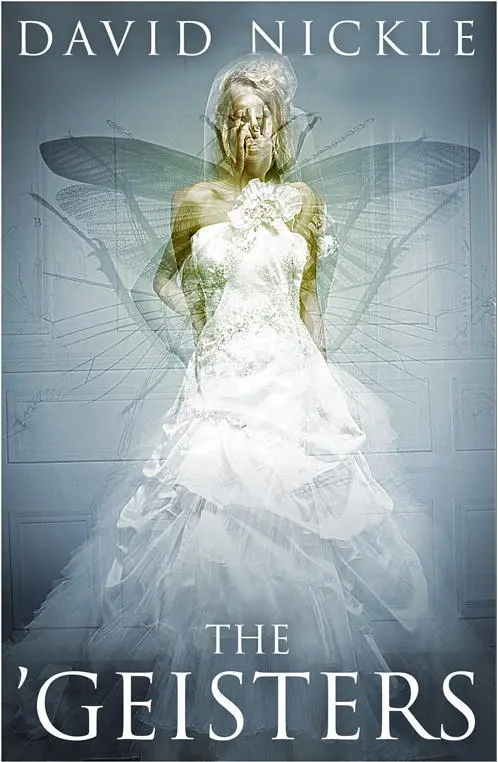
David Nickle - The 'Geisters
Здесь есть возможность читать онлайн «David Nickle - The 'Geisters» весь текст электронной книги совершенно бесплатно (целиком полную версию без сокращений). В некоторых случаях можно слушать аудио, скачать через торрент в формате fb2 и присутствует краткое содержание. Город: Toronto, Год выпуска: 2013, ISBN: 2013, Издательство: ChiZine Publications, Жанр: Ужасы и Мистика, на английском языке. Описание произведения, (предисловие) а так же отзывы посетителей доступны на портале библиотеки ЛибКат.
- Название:The 'Geisters
- Автор:
- Издательство:ChiZine Publications
- Жанр:
- Год:2013
- Город:Toronto
- ISBN:9781771481434
- Рейтинг книги:3 / 5. Голосов: 1
-
Избранное:Добавить в избранное
- Отзывы:
-
Ваша оценка:
The 'Geisters: краткое содержание, описание и аннотация
Предлагаем к чтению аннотацию, описание, краткое содержание или предисловие (зависит от того, что написал сам автор книги «The 'Geisters»). Если вы не нашли необходимую информацию о книге — напишите в комментариях, мы постараемся отыскать её.
Review
“The story is a white-knuckler from page one, and Nickle is a master of luring you into thinking that the supernatural can be rationalized and systemized, only to reveal, time and again, that the orderly patterns we try to make of the irrational are figments of our imagination. I was off-balance and more than a little scared throughout.”
— Cory Doctorow, Boingboing.net “Just finished David Nickle’s
…: brilliant, vicious, gothic-modern take on female monsters, aka poltergeists and the hubristic men who fetishize them. It is SO original and crazy, and SO well-written. GET IT.”
— Gemma Files, author of the Hexslinger trilogy “
is filled with an interminable sense of threat, as though the words could turn on the reader at any moment, and they often do…. This is a book that buzzes in your ears, climbs your crawling skin with multiple barbed feet, feeling with exquisitely sensitive antennae for the next new and terrible revelation.”
— Natalie Zena Waschots,
The 'Geisters — читать онлайн бесплатно полную книгу (весь текст) целиком
Ниже представлен текст книги, разбитый по страницам. Система сохранения места последней прочитанной страницы, позволяет с удобством читать онлайн бесплатно книгу «The 'Geisters», без необходимости каждый раз заново искать на чём Вы остановились. Поставьте закладку, и сможете в любой момент перейти на страницу, на которой закончили чтение.
Интервал:
Закладка:
“What’s your prognosis, then?” asked their father.
He shook his head. “Prognosis. That’s a doctor’s word. We’re not dealing with a medical situation, Mr. LeSage. Aside, I mean, from the injuries you sustained from the electro-kinetic event last week, Mrs. LeSage. We’re dealing with something more… complex.”
“So you can’t fix this?” said Ann’s mother.
Dr. Sunderland bent his head and regarded her, as though over the top of invisible glasses.
“We can learn,” he said, “about the phenomenon.” He gestured to the bandaged hands. “Make you safer.”
Ann’s mother was about to say something, but stopped at the touch on her hand. “That’s what we want,” said her father. If it weren’t for him, Ann thought they all would have walked out right then and there.
If it had been up to their mother, they wouldn’t have come in the first place.
Their mother had been the last of them to shed her skepticism, but that only became clear after the incident with the lights. Until then, it seemed as though both parents were on the same page when it came to understanding the presence that their children described. When Ann’s mother took the flashlight into the laundry room, Ann’s father would hang back, nodding in tacit agreement that yes, the only thing to fear is fear . He was the one who ordered the parental control box for the cable TV service, after they agreed that Ann was just scaring herself. Their father gave no sign that he understood the things that were happening in the Lake House to be anything other than a child’s overactive imagination.
It was, as it turned out, cover. After he had emptied the kitchen fire extinguisher into the closet—after he had gotten their mom home, stitched up and swaddled in bandages—he’d sat them down in a family meeting to explain some things. It was a fiercely cold night, and on other nights like this they might have lit a fire; sitting around the fireplace in the high-ceilinged living room was almost to the point of a religious ceremony with the LeSages. But their dad said no.
“We’ll turn up the furnace if you’re cold. I don’t want to start anything. Now sit down,” he said. “I have a confession to make.”
Their father, as it turned out, had not been nearly as skeptical as he’d made himself out to be. Which, he admitted, was another way of saying that he had lied to them—kept things from them. He hoped that they would forgive him.
“I’ve seen this thing too,” he said. “Bottom line. Three months ago.”
What had he seen? Ann wanted to know, and demanded details. Their dad seemed flustered at the request, and tried to avoid answering. But their mom said: “No, I want to hear this too. What did you see?”
He clamped his hands together and sat very still. He laughed a bit, and said he felt like he was telling a ghost story but that he didn’t want to frighten anybody more than they already were.
“Don’t worry about that, dad,” said Philip. “That ship’s sailed.”
And their dad laughed, and unfurled his hands, and started into it.
“It was down by the water’s edge,” he said. “Near the boathouse. Very early in the morning.. We’d had a movie night the night before.”
“So, Sunday,” said Ann.
“I got up before everybody and took my coffee out to the lake.” In fact, he had taken his coffee and a pack of cigarettes outside. But that was one of the things that he left out of the story, then.
“I remember that it was very still out. The mist was on the water. The first thing I heard was some splashing.”
“Under the dock?” Ann had been caught by that one more than once—what seemed like a fish caught under the floating part of the dock, splashing and twisting and pushing the whole structure out of the water and dropping it again. But her father shook his head.
“No, it was pretty clear that the splash came from the lake. First a big one, like a fish jumping out. Then they became rhythmic. I could see where it was coming from—the lake mist was swirling and spreading about a hundred feet off the dock, maybe further. It looked like someone swimming, but not well—it was like they were maybe in trouble. I called out and asked, and I heard something—it was like a cry for help—it sounded like a woman.
“I kind of panicked. If it were earlier in the year, the boat would have been in the water and I’d have been able to make it out there to pull her out. But we’d put the boat away. And it was pretty far out. So I put down my coffee cup—” and he stubbed out his cigarette under his boot “—and I pulled off my shirt and boots and jeans.”
“So you were going to swim out to her? In October?” asked their mother.
“Did you at least take the life ring off the dock?” asked Philip.
“I did that, yes. And yes, I was going to try and swim out there and help her. What else was I going to do?”
“The lake’s freezing this time of year. You’d give yourself a heart attack.”
“Yeah.” He went quiet for a moment. “I didn’t end up going in the water. Before I got my pants off my ankles, the swimmer had come closer. I thought maybe I could just throw that ring. But by the time she got close enough… well.”
The newest log burning in the fire place cracked and popped twice before he continued.
“There was no she. No swimmer. It was just the water. Splashing and swirling by itself.”
“Why didn’t you tell us?” asked Philip.
Their father shut up again. There was no good answer for the question.
Finally he said: “I’ve got in touch with somebody. I’m told he can help.”
They wound up staying at Dr. Sunderland’s offices until late that night. Most of the time Ann spent waiting around.
Dr. Sunderland explained it: “We’re going to do individual interviews and tests. So we’ve got a room for you kids to hang out in while you’re waiting.”
The room was off a long hallway in back of the main office. There were no windows, but it was nice enough. There was a couch and a chair and a TV, a little table with a pitcher of ice water and cups to one side—a coffee table in the middle. There was nothing to read, Philip noted.
“You won’t be here that long,” said Dr. Sunderland as he shut the door.
“This is bullshit,” said Philip.
“Bullshit,” agreed Ann, and giggled.
Philip got up and opened the door, looked up and down the hall.
“Is the coast clear?”
“The coast is clear.”
“Are we going to escape?”
“We’ll make a break for it at shift change. Hotwire the minivan. Hit the border by sundown.”
Ann giggled, and Philip let the door close, fell back on the couch beside her. They looked at the blank TV screen, and Ann found the remote control on the arm of the couch. When she turned on the set, the screen went snowy.
“No cable,” she said, and Philip nodded.
“Ghost-busting doesn’t pay like it used to.”
Ann punched him in the arm and clicked up three channels before shutting the set off. Philip looked at his watch. Outside the room, they heard footsteps, but they didn’t stop and no one opened the door. The light from the fluorescent fixture overhead flickered, made everything seem a little dead.
“I’m scared,” said Philip.
It was the first time he had admitted that, and looking at him, eyes straight ahead, Ann thought he was joking. But he wasn’t, and told her not to laugh.
“I don’t like this place,” he said. “I don’t think Sunderland’s a good person.”
“What do you mean?”
Philip sat up. He frowned, opened his mouth like he was going to say, then stopped. “I think he’s going to try to talk to us by ourselves.”
“That’s what he said he was going to do.”
Читать дальшеИнтервал:
Закладка:
Похожие книги на «The 'Geisters»
Представляем Вашему вниманию похожие книги на «The 'Geisters» списком для выбора. Мы отобрали схожую по названию и смыслу литературу в надежде предоставить читателям больше вариантов отыскать новые, интересные, ещё непрочитанные произведения.











Обсуждение, отзывы о книге «The 'Geisters» и просто собственные мнения читателей. Оставьте ваши комментарии, напишите, что Вы думаете о произведении, его смысле или главных героях. Укажите что конкретно понравилось, а что нет, и почему Вы так считаете.