Lev Rosen - Depth
Здесь есть возможность читать онлайн «Lev Rosen - Depth» весь текст электронной книги совершенно бесплатно (целиком полную версию без сокращений). В некоторых случаях можно слушать аудио, скачать через торрент в формате fb2 и присутствует краткое содержание. Город: New York, Год выпуска: 2015, ISBN: 2015, Издательство: Regan Arts., Жанр: sf_postapocalyptic, Детективная фантастика, на английском языке. Описание произведения, (предисловие) а так же отзывы посетителей доступны на портале библиотеки ЛибКат.
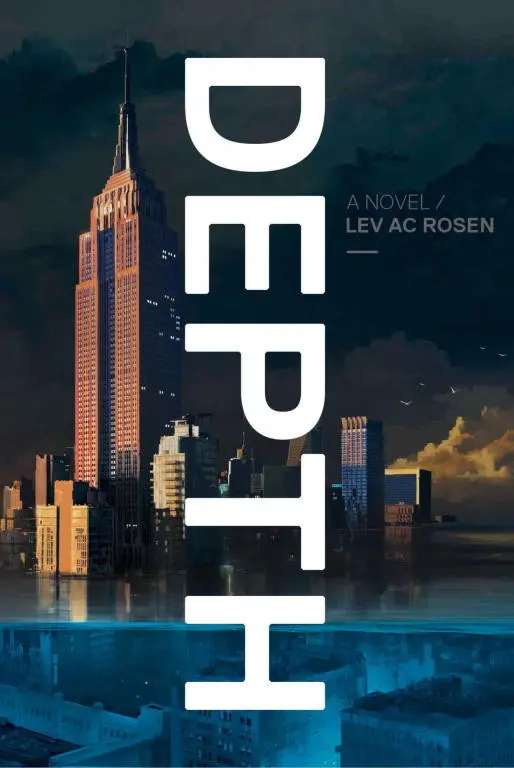
- Название:Depth
- Автор:
- Издательство:Regan Arts.
- Жанр:
- Год:2015
- Город:New York
- ISBN:978-1-941393-07-9
- Рейтинг книги:3 / 5. Голосов: 1
-
Избранное:Добавить в избранное
- Отзывы:
-
Ваша оценка:
Depth: краткое содержание, описание и аннотация
Предлагаем к чтению аннотацию, описание, краткое содержание или предисловие (зависит от того, что написал сам автор книги «Depth»). Если вы не нашли необходимую информацию о книге — напишите в комментариях, мы постараемся отыскать её.
(Tor, 2011), which was an
, on over a dozen best of the year lists, and has been nominated for multiple awards.
described it as “mixing genres with fearless panache.” His work has been featured in Esopus Magazine and on various blogs including Tor.com. He lives in Manhattan. Review
About the Author “Heinlein meets Hammett in this whip-smart whodunnit set amid the billowing fog and rising waters of a future New York.”
(Chuck Greaves, award-winning author of
) “I have long admired Lev Rosen's strange, genre-bending work—his riff on the detective story is elegant, surprising, and, yes, deep.”
(Dan Chaon, National Book Award finalist, author of
)
Depth — читать онлайн бесплатно полную книгу (весь текст) целиком
Ниже представлен текст книги, разбитый по страницам. Система сохранения места последней прочитанной страницы, позволяет с удобством читать онлайн бесплатно книгу «Depth», без необходимости каждый раз заново искать на чём Вы остановились. Поставьте закладку, и сможете в любой момент перейти на страницу, на которой закончили чтение.
Интервал:
Закладка:
Marina shrugged and walked back to the window. Sorenson sat down.
“I pray for Henry,” Sorenson said after a moment, “and his murder was an awful thing. But I’m not askin’ you to find out who killed him. I just want you to find Linnea. I’ll pay you well if you can get me my paintin’.”
“You want me to make sure you get the painting and Linnea doesn’t run off with it, you mean.”
“That’s exactly what I mean,” Sorenson said in a near growl.
“Fine. I’m already looking for her anyway.”
“Good. My receptionist has those release forms for deCostas. You can bring him by again whenever you want. She also has the code for the stairs now. I don’t expect to see you again until you have the paintin’. I’ve wasted enough time and money on this.”
“Fine by me, preacher man,” Simone said, turning to go.
“Nice meeting you, Simone,” Marina called out musically. Simone didn’t turn around, but she could feel Marina waggling her fingers at her in a wave goodbye. She took the elevator down, ignoring the people still gathered outside the Mission. Her mind was elsewhere. There was someone else she wanted to see.
SHE FOUND TRIXIE OUTSIDE Paradise on the bridge in front of the gangplank. She was standing in front of a large metal barrel with a fire in it. She had on an oversized knitted sweater, and her arms were crossed tightly around her chest, like she was cold. Around her, the fog was thick, and she looked alone in the world. Simone walked up to her slowly, respectfully. Trixie looked up at her, then back at the flames.
“They wouldn’t let me burn it on the ship,” she said, half explaining the fire, half complaining. Simone looked closely at the barrel. It was filled with trash, but on top was a heap of bright red yarn, burning down into black, ashy strands. “I thought I should burn it. That seems like the right thing to do, right?” She looked anxiously at Simone. Simone nodded. Trixie looked back at the flames. “Right. We buried him yesterday. Well, we poured what was left of him into the ocean. That’s what burial is here, I guess.”
“You’re not from here?”
“No, I was born on the mainland. I married young. My first husband, he used to hit me. A lot.” Trixie rubbed her hands up and down her shoulders as if trying to warm up. “And then I met Frank. We fell in love, but divorce is illegal, so we just ran off. We stopped here and acted like we were married; no one questioned it. We did pretty good for a while.” Trixie smiled, her eyes on the fire. “Had Henry, had a family. Frank got sick—one of those weird diseases that popped up when the Mercury ice melted. And now Henry is gone, too.” She stopped rubbing her arms to tuck a stray hair behind her ear. Then she crossed her arms again, staring at the fire.
“I’m sorry.”
“Don’t be sorry for me,” Trixie said, taking a thin glass bottle of liquor from her sweater pocket. She took a long drink from it. “I don’t need pity. I don’t need anything, I guess. Just a fire and a drink.” She pointed her chin at the fire, looked into it, and smiled faintly. “What do you need?”
“I know why Henry was killed. It was for a painting. Well, the myth of the painting, really.”
“I don’t care,” Trixie said flatly. Simone nodded. They watched the fire in silence. It popped and made sounds like crinkled cellophane, and it smelled heavy with chemicals and dust. “I wasn’t totally honest, last time we talked. I didn’t tell you something.”
“Oh?”
“Linnea was never really rich. She had fancy things, sure. But she didn’t come from money. She was a grifter. A con artist. Henry knew. He liked that about her. Said it made her exciting. And she was looking to retire, so they settled down together.”
“Why are you telling me now?”
“Because I thought you should know about her past. I just didn’t want you to think Henry was stupid… trusting someone like that. He was a good son.”
“I know he was,” Simone said. The yarn and trash crackled, and the fog came in thicker, like a down blanket tossed over them.
“Thank you,” Trixie said. She peeked into the fire. “It’s all gone. Do you know how to put out a fire?”
“Sure. Stand back, though.” Trixie took several steps back, and Simone used her feet to scoot the flaming barrel towards the edge of the bridge, near an empty taxi stand. It was hot but didn’t burn through the soles of her boots. Finally she got it to the edge and kicked it over.
“Oh!” Trixie said as it fell into the water, taking a few steps forward. Then she stopped. The barrel turned sideways in the water, bobbing half above the surface for a moment, then began to sink. Trixie began to laugh. Simone turned to look at her, and she looked genuinely happy, her eyes fixed on the barrel as it went under. A small stream of bubbles popped on the surface, quickly at first, then slowly, then not at all. Trixie kept laughing, and Simone smiled. But the laughter went on and on, longer than it should have, and still Trixie watched the spot where the last bubble had come up. Quietly, Simone turned and walked away.
When she got home, the fog was thick, and the air sliced past her ears like the sound of a sharpening blade. There would definitely be a storm tomorrow, probably a bad one. Simone frowned as she walked up the stairs to her office. She knew almost everything now, and she still didn’t really know anything.
Simone ducked the moment she opened the door to her office. The smell of blood was clear and sharp in the darkness. She took her gun out and stayed crouched by the door, listening for an intruder. She stayed that way for what seemed an eternity but could have only been a few minutes, but there was no sound—just the smell, rusty and floral. She cautiously raised a hand up and flipped on the lights but stayed crouched, her gun ready. There was just one figure in the waiting room, slumped over in the chair in front of the receptionist’s desk, as if waiting for an appointment, but clearly dead. Blood sparkled on her fur coat like rubies. It was Linnea.
TWELVE
LINNEA HAD BEEN TORTURED before she was killed and deposited in Simone’s waiting room. Simone did a quick search of the office and her apartment. There was no one else there—just Linnea’s body, wrapped in her coat, topped with a hat and veil. The coat hung open, and under it she was naked, with cuts and bruises on her face and stomach, a few puncture marks in her arm, and several red cigarette burns crawling up her leg to a single, blackened cigar burn on her inner thigh like a smudged thumbprint. No obvious sign of how she’d died. The ends of her hair were matted with dried blood, and stuck to her chest. It was a thorough going-over.
Simone turned away from the body. There was something too easy about it, too natural, and it chilled her. She could almost imagine Linnea was merely asleep in her coat, wearing red stockings and waiting up late in bed for the husband who never came home. Well, they were together now, whether they liked it or not. Simone pressed her hands down on the desk for the secretary who would never exist. She bent her head. Linnea wasn’t her friend, but Simone hadn’t disliked her, which was more than she could say for a lot of people.
Normally she’d call Caroline now to tell her a case had come to a body in her office and she was going to call the cops; she’d ask Caroline to come over, smooth things out, maybe let her lean on her shoulder a little. It wasn’t the dead body. Simone had seen bodies. And it wasn’t the sense of invasion. It was something else. She found herself thinking of Trixie, and the way she’d looked when Simone kicked the trash-can pyre into the sea.
“Phone,” she said, and her earpiece beeped, ready to be given an order. “Call Peter.”
Читать дальшеИнтервал:
Закладка:
Похожие книги на «Depth»
Представляем Вашему вниманию похожие книги на «Depth» списком для выбора. Мы отобрали схожую по названию и смыслу литературу в надежде предоставить читателям больше вариантов отыскать новые, интересные, ещё непрочитанные произведения.












Обсуждение, отзывы о книге «Depth» и просто собственные мнения читателей. Оставьте ваши комментарии, напишите, что Вы думаете о произведении, его смысле или главных героях. Укажите что конкретно понравилось, а что нет, и почему Вы так считаете.