Rudyard Kipling - Puck of Pook's Hill
Здесь есть возможность читать онлайн «Rudyard Kipling - Puck of Pook's Hill» весь текст электронной книги совершенно бесплатно (целиком полную версию без сокращений). В некоторых случаях можно слушать аудио, скачать через торрент в формате fb2 и присутствует краткое содержание. Год выпуска: 2014, Издательство: epubBooks Classics, Жанр: Фэнтези, на английском языке. Описание произведения, (предисловие) а так же отзывы посетителей доступны на портале библиотеки ЛибКат.
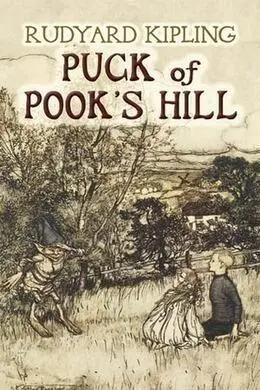
- Название:Puck of Pook's Hill
- Автор:
- Издательство:epubBooks Classics
- Жанр:
- Год:2014
- ISBN:нет данных
- Рейтинг книги:3 / 5. Голосов: 1
-
Избранное:Добавить в избранное
- Отзывы:
-
Ваша оценка:
Puck of Pook's Hill: краткое содержание, описание и аннотация
Предлагаем к чтению аннотацию, описание, краткое содержание или предисловие (зависит от того, что написал сам автор книги «Puck of Pook's Hill»). Если вы не нашли необходимую информацию о книге — напишите в комментариях, мы постараемся отыскать её.
Puck of Pook's Hill — читать онлайн бесплатно полную книгу (весь текст) целиком
Ниже представлен текст книги, разбитый по страницам. Система сохранения места последней прочитанной страницы, позволяет с удобством читать онлайн бесплатно книгу «Puck of Pook's Hill», без необходимости каждый раз заново искать на чём Вы остановились. Поставьте закладку, и сможете в любой момент перейти на страницу, на которой закончили чтение.
Интервал:
Закладка:
'"You owe me nothing but advice that you never took," said the Pater.
'"―to be unjust to any of your family. Indeed, I say you may make a good Tribune, but, so far as I am concerned, on the Wall you will live, and on the Wall you will die," said Maximus.
'"Very like," said my Father. "But we shall have the Picts and their friends breaking through before long. You cannot move all troops out of Britain to make you Emperor, and expect the North to sit quiet."
'"I follow my destiny," said Maximus.
'"Follow it, then," said my Father, pulling up a fern root; "and die as Theodosius died."
'"Ah!" said Maximus. "My old General was killed because he served the Empire too well. I may be killed, but not for that reason," and he smiled a little pale grey smile that made my blood run cold.
'"Then I had better follow my destiny," I said, "and take my men to the Wall."
'He looked at me a long time, and bowed his head slanting like a Spaniard. "Follow it, boy," he said. That was all. I was only too glad to get away, though I had many messages for home. I found my men standing as they had been put—they had not even shifted their feet in the dust, and off I marched, still feeling that terrific smile like an east wind up my back. I never halted them till sunset, and'—he turned about and looked at Pook's Hill below him—'then I halted yonder.' He pointed to the broken, bracken–covered shoulder of the Forge Hill behind old Hobden's cottage.
'There? Why, that's only the old Forge—where they made iron once,' said Dan.
'Very good stuff it was too,' said Parnesius calmly. 'We mended three shoulder–straps here and had a spear–head riveted. The Forge was rented from the Government by a one–eyed smith from Carthage. I remember we called him Cyclops. He sold me a beaver–skin rug for my sister's room.'
'But it couldn't have been here,' Dan insisted.
'But it was! From the Altar of Victory at Anderida to the First Forge in the Forest here is twelve miles seven hundred paces. It is all in the Road Book. A man doesn't forget his first march. I think I could tell you every station between this and―' He leaned forward, but his eye was caught by the setting sun.
It had come down to the top of Cherry Clack Hill, and the light poured in between the tree trunks so that you could see red and gold and black deep into the heart of Far Wood; and Parnesius in his armour shone as though he had been afire.
'Wait!' he said, lifting a hand, and the sunlight jinked on his glass bracelet. 'Wait! I pray to Mithras!'
He rose and stretched his arms westward, with deep, splendid–sounding words.
Then Puck began to sing too, in a voice like bells tolling, and as he sang he slipped from Volaterrae to the ground, and beckoned the children to follow. They obeyed; it seemed as though the voices were pushing them along; and through the goldy–brown light on the beech leaves they walked, while Puck between them chanted something like this:
'Cur mundus militat sub vana gloria Cujus prosperitas est transitoria? Tam cito labitur ejus potentia Quam vasa figuli quæ sunt fragilia.'
They found themselves at the little locked gates of the wood.
'Quo Cæsar abiit celsus imperio? Vel Dives splendidus totus in prandio? Dic ubi Tullius―'
Still singing, he took Dan's hand and wheeled him round to face Una as she came out of the gate. It shut behind her, at the same time as Puck threw the memory–magicking Oak, Ash and Thorn leaves over their heads.
'Well, you are jolly late,' said Una. 'Couldn't you get away before?'
'I did,' said Dan. 'I got away in lots of time, but—but I didn't know it was so late. Where've you been?'
'In Volaterrae—waiting for you.'
'Sorry,' said Dan. 'It was all that beastly Latin.'
A BRITISH–ROMAN SONG (A.D. 406)
My father's father saw it not, And I, belike, shall never come, To look on that so–holy spot— The very Rome—
Crowned by all Time, all Art, all Might, The equal work of Gods and Man, City beneath whose oldest height— The Race began!
Soon to send forth again a brood, Unshakeable, we pray, that clings, To Rome's thrice–hammered hardihood— In arduous things.
Strong heart with triple armour bound, Beat strongly, for thy life–blood runs, Age after Age, the Empire round— In us thy Sons,
Who, distant from the Seven Hills, Loving and serving much, require Thee,—thee to guard 'gainst home–born ills The Imperial Fire!
6
On the Great Wall
'When I left Rome for Lalage's sake
By the Legions' Road to Rimini,
She vowed her heart was mine to take
With me and my shield to Rimini—
(Till the Eagles flew from Rimini!)
And I've tramped Britain, and I've tramped Gaul,
And the Pontic shore where the snow–flakes fall
As white as the neck of Lalage—
(As cold as the heart of Lalage!)
And I've lost Britain, and I've lost Gaul,'
(the voice seemed very cheerful about it),
'And I've lost Rome, and, worst of all,
I've lost Lalage!'
They were standing by the gate to Far Wood when they heard this song. Without a word they hurried to their private gap and wriggled through the hedge almost atop of a jay that was feeding from Puck's hand.
'Gently!' said Puck. 'What are you looking for?'
'Parnesius, of course,' Dan answered. 'We've only just remembered yesterday. It isn't fair.'
Puck chuckled as he rose. 'I'm sorry, but children who spend the afternoon with me and a Roman Centurion need a little settling dose of Magic before they go to tea with their governess. Ohé, Parnesius!' he called.
'Here, Faun!' came the answer from Volaterrae. They could see the shimmer of bronze armour in the beech crotch, and the friendly flash of the great shield uplifted.
'I have driven out the Britons.' Parnesius laughed like a boy. 'I occupy their high forts. But Rome is merciful! You may come up.' And up they three all scrambled.
'What was the song you were singing just now?' said Una, as soon as she had settled herself.
'That? Oh, Rimini . It's one of the tunes that are always being born somewhere in the Empire. They run like a pestilence for six months or a year, till another one pleases the Legions, and then they march to that .'
'Tell them about the marching, Parnesius. Few people nowadays walk from end to end of this country,' said Puck.
'The greater their loss. I know nothing better than the Long March when your feet are hardened. You begin after the mists have risen, and you end, perhaps, an hour after sundown.'
'And what do you have to eat?' Dan asked promptly.
'Fat bacon, beans, and bread, and whatever wine happens to be in the rest–houses. But soldiers are born grumblers. Their very first day out, my men complained of our water–ground British corn. They said it wasn't so filling as the rough stuff that is ground in the Roman ox–mills. However, they had to fetch and eat it.'
'Fetch it? Where from?' said Una.
'From that newly invented water–mill below the Forge.'
'That's Forge Mill— our Mill!' Una looked at Puck.
'Yes; yours,' Puck put in. 'How old did you think it was?'
'I don't know. Didn't Sir Richard Dalyngridge talk about it?'
'He did, and it was old in his day,' Puck answered. 'Hundreds of years old.'
'It was new in mine,' said Parnesius. 'My men looked at the flour in their helmets as though it had been a nest of adders. They did it to try my patience. But I—addressed them, and we became friends. To tell the truth, they taught me the Roman Step. You see, I'd only served with quick–marching Auxiliaries. A Legion's pace is altogether different. It is a long, slow stride, that never varies from sunrise to sunset. "Rome's Race—Rome's Pace," as the proverb says. Twenty–four miles in eight hours, neither more nor less. Head and spear up, shield on your back, cuirass–collar open one hand's breadth—and that's how you take the Eagles through Britain.'
Читать дальшеИнтервал:
Закладка:
Похожие книги на «Puck of Pook's Hill»
Представляем Вашему вниманию похожие книги на «Puck of Pook's Hill» списком для выбора. Мы отобрали схожую по названию и смыслу литературу в надежде предоставить читателям больше вариантов отыскать новые, интересные, ещё непрочитанные произведения.




Обсуждение, отзывы о книге «Puck of Pook's Hill» и просто собственные мнения читателей. Оставьте ваши комментарии, напишите, что Вы думаете о произведении, его смысле или главных героях. Укажите что конкретно понравилось, а что нет, и почему Вы так считаете.