Cornelia Funke - Inkspell
Здесь есть возможность читать онлайн «Cornelia Funke - Inkspell» весь текст электронной книги совершенно бесплатно (целиком полную версию без сокращений). В некоторых случаях можно слушать аудио, скачать через торрент в формате fb2 и присутствует краткое содержание. Жанр: Фэнтези, Детская фантастика, на английском языке. Описание произведения, (предисловие) а так же отзывы посетителей доступны на портале библиотеки ЛибКат.
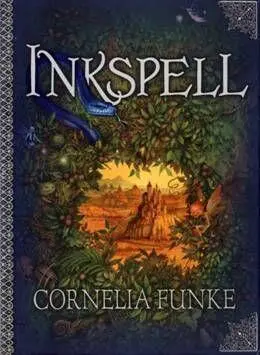
- Название:Inkspell
- Автор:
- Жанр:
- Год:неизвестен
- ISBN:нет данных
- Рейтинг книги:5 / 5. Голосов: 1
-
Избранное:Добавить в избранное
- Отзывы:
-
Ваша оценка:
Inkspell: краткое содержание, описание и аннотация
Предлагаем к чтению аннотацию, описание, краткое содержание или предисловие (зависит от того, что написал сам автор книги «Inkspell»). Если вы не нашли необходимую информацию о книге — напишите в комментариях, мы постараемся отыскать её.
Inkspell — читать онлайн бесплатно полную книгу (весь текст) целиком
Ниже представлен текст книги, разбитый по страницам. Система сохранения места последней прочитанной страницы, позволяет с удобством читать онлайн бесплатно книгу «Inkspell», без необходимости каждый раз заново искать на чём Вы остановились. Поставьте закладку, и сможете в любой момент перейти на страницу, на которой закончили чтение.
Интервал:
Закладка:
But they were allowed in to visit Violante. The prince would see neither his daughter-in-law nor his grandson. He had sent away even the physicians. He would have no one near him but his furry-faced page, Tullio.
"She's where she ought not to be, again!" The servant was whispering, as if he could be heard by the sick prince in his apartments as he led them through the castle. A carved likeness of Cosimo looked down on them in every corridor. Now that Meggie knew about Fenoglio's plans, the stony eyes made her even more uncomfortable. "They all have the same face!" Farid whispered to her, but before Meggie could explain why, the servant was beckoning them silently up a spiral staircase.
"Does Balbulus still ask such a high price for letting Violante into the library?" asked Fenoglio quietly as their guide stopped at his door, which was adorned with brass letters.
"Poor thing, she's given him almost all her jewelry," the servant whispered back. "But there you are, he used to live in the Castle of Night, didn't he? Everyone knows that those who live on the other side of the forest are greedy folk. With the exception of my mistress."
"Come in!" called a bad-tempered voice when the servant knocked. The room they entered was so bright that it made Meggie blink after walking through all those dark passages and up the dark stairs. Daylight fell through high windows onto several intricately carved desks. The man standing at the largest of them was neither young nor old, and he had black hair and brown eyes that looked at them without any cordiality as he turned to them.
"Ah, the Inkweaver!" he said, reluctantly putting down the hare's foot he held in his hand. Meggie knew what it was for; Mo had told her often enough. Rubbing parchment with a hare's foot made it smooth. And there were the colors whose names Mo had repeated over and over to her. Tell me again! How often she had plagued Mo with that demand! She never tired of the sound of them: lapis lazuli, orpiment, violet, malachite green. What makes them still shine like that, Mo? she had asked. After all, they're so old! What are they made of? And Mo had told her – told her how you made them, all those wonderful colors that shone even after hundreds of years as if they had been stolen from the rainbow, now protected from air and light between the pages of books. To make malachite green you pounded wild iris flowers and mixed them with yellow lead oxide; the red was made from murex shells and cochineal insects… They had so often stood together looking at the pictures in one of the valuable manuscripts that Mo was to free from the grime of many years. Look at those delicate tendrils, he had said, can you imagine how fine the pens and brushes must be to paint something like that, Meggie? He was always complaining that no one could make such implements anymore. And now she saw them with her own eyes, tiny pens as fine as hairs and brushes, whole sets of them standing in a glazed jug: brushes that could conjure up flowers and faces no bigger than a pinhead on parchment or paper. You moistened them with a little gum arabic to make the paint cling better. Her fingers itched to pick a brush out of the set and take it away with her for Mo… He ought to have come just for this, she thought, to stand here in this room.
An illuminator's workshop… Fenoglio's world seemed twice, three times as wonderful. Elinor would have given one of her little fingers to be standing here now, thought Meggie. She was about to move toward one of the desks to take a closer look at it all, the brushes, the pigments, the parchment, but Fenoglio held her back.
"Balbulus!" He sketched a bow. "And how is the master today?" There was no mistaking the mockery in his voice.
"The Inkweaver wants to see the Lady Violante," said the servant in a low voice.
Balbulus pointed to a door behind him. "Well, you know where the library is. Or perhaps we had better rename it the Chamber of Forgotten Treasures." He lisped slightly, his tongue touching his teeth as if it didn't have enough room in his mouth. "Violante is just looking at my latest work, or what she can see of it. I finished copying out the stories for her son last night. I'd rather have used the parchment for other texts, I must admit, but Violante insisted."
"Well, I'm sorry you had to waste your art on such frivolities," replied Fenoglio, without so much as glancing at the work Balbulus had before him at the moment. Farid did not seem interested in the picture, either. He looked at the window, where the sky outside shone a brighter blue than any of the paints sticking to the fine brushes. But Meggie wanted to see how good Balbulus was at his art, and whether his haughty attitude was justified. Unobtrusively, she took a step forward. She saw a picture framed in gold leaf, showing a castle among green hills, a forest, magnificently dressed riders among the trees, fairies fluttering around them, and a White Stag turning to flee. Never before had she seen such a picture. It glowed like stained glass – like a window placed on the parchment. She would have loved to look at it more closely, see the faces, the horses' harnesses, the flowers and clouds, but Balbulus cast her such an icy glance that she retreated, blushing.
"That poem you brought yesterday," said Balbulus in a bored voice, as he bent over his work again, "it was good. You ought to write such things more often, but I know you prefer writing stories for children or songs for the Motley Folk. And why? Just for the wind to sing your words? The spoken word is nothing, it hardly lives longer than an insect! Only the written word is eternal."
"Eternal?" Fenoglio made the word sound as if there could be nothing more ridiculous in the world. "Nothing's eternal – and what happier fate could words have than to be sung by minstrels? Yes, of course they change the words, they sing them slightly differently every time, but isn't that in itself wonderful? A story wearing another dress every time you hear it – what could be better? A story that grows and puts out flowers like a living thing! But look at the stories people press in books! They may last longer, yes, but they breathe only when someone opens the book. They are sound pressed between the pages, and only a voice can bring them back to life! Then they throw off sparks, Balbulus! Then they go free as birds flying out into the world. Perhaps you're right, and the paper makes them immortal. But why should I care? Will I live on, neatly pressed between the pages with my words? Nonsense! We're none of us immortal; even the finest words don't change that, do they?"
Balbulus had listened to him without any expression on his face. "What an unusual opinion, Inkweaver!" he said. "For my part, I think highly of the immortality of my work and very poorly of minstrels. But why don't you go in to Violante? She'll probably have to leave soon, to hear some peasant's woes or listen to a merchant complaining of the highwaymen who make the roads unsafe. It's almost impossible to get hold of acceptable parchment these days. Robbers steal it and offer it for sale in the markets at outrageous prices! Have you any idea how many goats must be slaughtered for me to write down one of your stories?"
"About one for each double spread," said Meggie, earning another icy look from Balbulus.
"Clever girl," he said, in a tone that made his words sound more like blame than praise. "And why? Because those fools the goatherders drive them through thorns and prickly bushes, without stopping to think that their skins will be needed for parchment!"
"Oh, come, I keep telling you!" said Fenoglio, steering Meggie and Farid toward the library door. "Paper, Balbulus. Paper is the material of the future."
"Paper!" she heard Balbulus mutter scornfully. "Good heavens, Inkweaver, you're even crazier than I thought."
Meggie had visited more libraries with Mo than she could count. Many had been larger than the Laughing Prince's, but few were more beautiful. You could still see that it had once been its owner's favorite place. The only trace of Cosimo here was a white stone bust; someone had laid roses in front of it. The tapestries on the high walls were finer than those in the throne room, the sconces heavier, the colors warmer, and Meggie had seen enough in Balbulus's workshop to guess what treasures surrounded her here. They stood chained to the shelves, not spine beside spine like the books in Elinor's library, but with the cut edge facing forward, because that was where the title was. In front of the shelves were rows of desks, presumably reserved for the latest precious acquisitions. Books lay on them, chained like sisters in the shelves, and closed so that no harmful ray of light could fall on Balbulus's pictures. In addition all the library windows were hung with heavy fabric; obviously the Prince of Sighs knew what damage sunlight did to books. Only two windows let in the light that might harm them. Her Ugliness stood in front of one window, bending so low over a book that her nose almost touched the pages.
Читать дальшеИнтервал:
Закладка:
Похожие книги на «Inkspell»
Представляем Вашему вниманию похожие книги на «Inkspell» списком для выбора. Мы отобрали схожую по названию и смыслу литературу в надежде предоставить читателям больше вариантов отыскать новые, интересные, ещё непрочитанные произведения.




Обсуждение, отзывы о книге «Inkspell» и просто собственные мнения читателей. Оставьте ваши комментарии, напишите, что Вы думаете о произведении, его смысле или главных героях. Укажите что конкретно понравилось, а что нет, и почему Вы так считаете.