Brian Aldiss - Helliconia Winter
Здесь есть возможность читать онлайн «Brian Aldiss - Helliconia Winter» весь текст электронной книги совершенно бесплатно (целиком полную версию без сокращений). В некоторых случаях можно слушать аудио, скачать через торрент в формате fb2 и присутствует краткое содержание. Год выпуска: 1985, ISBN: 1985, Издательство: Jonathan Cape, Жанр: Фантастика и фэнтези, на английском языке. Описание произведения, (предисловие) а так же отзывы посетителей доступны на портале библиотеки ЛибКат.
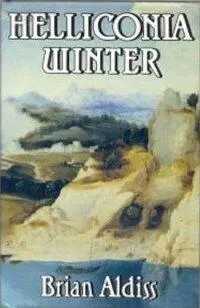
- Название:Helliconia Winter
- Автор:
- Издательство:Jonathan Cape
- Жанр:
- Год:1985
- ISBN:0-224-01847-7
- Рейтинг книги:5 / 5. Голосов: 1
-
Избранное:Добавить в избранное
- Отзывы:
-
Ваша оценка:
Helliconia Winter: краткое содержание, описание и аннотация
Предлагаем к чтению аннотацию, описание, краткое содержание или предисловие (зависит от того, что написал сам автор книги «Helliconia Winter»). Если вы не нашли необходимую информацию о книге — напишите в комментариях, мы постараемся отыскать её.
Helliconia Winter — читать онлайн бесплатно полную книгу (весь текст) целиком
Ниже представлен текст книги, разбитый по страницам. Система сохранения места последней прочитанной страницы, позволяет с удобством читать онлайн бесплатно книгу «Helliconia Winter», без необходимости каждый раз заново искать на чём Вы остановились. Поставьте закладку, и сможете в любой момент перейти на страницу, на которой закончили чтение.
Интервал:
Закладка:
“You see what I mean? If the race fails the exam, it destroys its planet and itself, and shows that it was unfit to cross that vital quarantine area space provides.
“Armageddon was unfit. Its people failed the exam. They destroyed themselves.”
“But you’re saying everyone everywhere was unfit. We never have found another space-going race.”
The leader laughed. “We’re still only on Earth’s doorstep, don’t forget. Nobody is going to come looking for us until they know we’re trustworthy.”
“And are we trustworthy?”
Amid general laughter, the leader said, “Let’s tackle Armageddon first. Maybe we can get the old place going again, if we press the right button.”
Further surveys showed what the world had once been. One notable feature was a considerable high- latitude sea which—before the nuclear disaster—had been only partially ice-covered. After the disaster, atmospheric contamination had cooled the umbrella of air, leaving the water of the high-latitude sea warmer than its overlying air. The air was in consequence heated from below, and moisture drawn upwards. Violent high-latitude storms had resulted, probably enough in themselves to finish off any survivors of the nuclear strike. Plentiful snow fell on middle-altitude ground, a plateau once covered by urbanisation. The major glaciation which set in became self-sustaining.
The Outlanders decided to drop what the leader had called vile weapons on the frozen high-altitude sea, in order to “get things started” again. But the ice wilderness remained an ice wilderness. Here, the local tutelary spirit, the biospheric gestalt, was dead.
They were now almost out of fuel. They decided to return to New Earth and conquer it. Their discoveries on Armageddon had provided them with a strategy. Their idea was that one—just one— thermonuclear device dropped over New Earth’s north pole would cause heavy rainfall, transforming the planet. The sea could be enlarged; the local zombies could make themselves useful by cutting canals. More kelp could be encouraged to grow, and eventually more oxygen released into the air. The calculations looked good. To the Outlanders, the decision to try just one more nuclear bomb was a sane one.
So they climbed into their ship, leaving Armageddon to its eons of frost.
For the people who lived on New Earth, one part at least of their only myth came true. The sky cracked and fell.
What were the vital differences here? Why could New Earth never recover, while Earth flourished and put forth new forms like the geo-nauts?
When the terrestrials developed their empathic link with the gossies of Helliconia, a new factor entered the universe. The terrestrials. w hether or not they knew it, were acting as a focus of consciousness for the whole biosphere. The empathic link was not a weak thing. It was a psychic equivalent of magnetism or gravity; it bound the two planets.
A more startling way of putting it would be to say that Gaia communicated directly with her lusty sister, the Original Beholder.
Of course it is speculation. Mankind cannot see into the greater umwelts about him. But he can train his ample senses to look for evidence. All the evidence suggests that Gaia and the Original Beholder made contact through their progeny’s projecting the link. One can only guess at the ripples of shock that contact caused—unless the second ice age and its ripples of remission provide evidence of that contact.
It is speculation that Gaia’s recovery was prompted by the refreshment of encountering a sister spirit in the void nearby.
There were the geonauts: serene, calm, apparently amiable, a new thing. They can be understood not as an evolutionary freak but as an inspiration born of a fresh and powerful friendship…
While on Helliconia, the august processes of the seasons were in undeniable stride.
In the northern hemisphere, small summer was nearly over. Frosty nights foretold colder nights ahead. In the winding passes of the Shive-nink Chain, frost already ruled, and the living creatures who ventured there were subject to that rule.
It was morning. A screaming windstorm, the frigid breath from the pole. The supplies were being stacked away. The phagor and Uuun-daamp were harnessing up their asokins. Seventeen days had elapsed since leaving Sharagatt. They had seen no sign that they were being pursued.
Of the three passengers Shokerandit had fared best. Toress Lahl had lapsed into speechlessness. She lay in the tent at night as if dead. Fashnalgid seldom spoke, except to curse. Their eyebrows and lashes were frosty white within a minute of leaving shelter, their cheekbones black with frostbite.
The last section of the trail ran above six thousand metres. To their right, in fuming cloud, was a solid mountain of ice. Visibility was down to a few feet.
Uuundaamp came to Shokerandit, eyes merry in his frosted face. “Today soft going,” he shouted. “Downhill through tunnel. You ’member tunnel, chief?”
“Noonat Tunnel?” It was an effort to talk in the wind.
“Yaya, Noonat. Tonight we be there. Takit drink, bit meal, occhara, gumtaa.”
“Gumtaa. Toress tired.”
The Ondod shook his head. “She soon make meat together asokin.
No much biwack gumtaa no more, eh?” He laughed with closed mouth.
Shokerandit sensed the man had something more to say. Simultaneously they turned their backs on the others working at lashing up the sledge. Uuundaamp folded his arms.
“Your friend got tail grow along face.” One quick sly look from his profile.
“Fashnalgid?”
“Your friend got tail along face. Team no like him. Team give plenty kakool. Make bad time. We lose that sherb in Noonat Tunnel, ishto?”
“Has he been molesting Moub?”
“Mole sting? No, he stick him prodo up Moub las’ night again. Biwack the bag, ishto? She no like. She full baby Uuundaamps.” He laughed. “So we lose in Tunnel, you see.”
“I’m sorry, Uuundaamp. Loobiss for telling me—but no smrtaa in Tunnel, please. I speak him friend in Noonat. No more biwack your Moub.”
“Chief, you better lose that friend. Else big kakool, I see.” He laughed and scowled, tapping his forehead, then turned abruptly on his heel.
The Ondod rarely showed anger. But they were treacherous—that Shokerandit knew. Uuundaamp remained friendly; without at least an appearance of friendship, the journey could never be made; but he had lost face by telling a human of his wife’s disgrace.
Shokerandit had been invited to copulate with Moub. Such was Ondod courtesy, and Shokerandit would have offended by declining the invitation. But Fashnalgid had done it uninvited, and had broken Ondod law. Ondod laws were simple and stark; transgression meant death, smrtaa. Fashnalgid would be killed without compunction. If Uuundaamp had decided to lose Fashnalgid in Noonat Tunnel, Shokerandit’s plea would count for nothing.
Both Toress Lahl and Fashnalgid shot him curious looks from their red-rimmed eyes. He gave them no word, though deeply troubled. Uuundaamp was always watching, and would see if Shokerandit passed Fashnalgid a warning. That would count as kakool.
The shaggy bulk of Bhryeer emerged from the murk, trudging down the length of the sledge. His eyes gleamed cerise as he swung his head momentarily to contemplate them. His morose gaze settled on Shokerandit. There was no interpreting the phagor’s expression.
He clicked his milt up one ice-encrusted nostril and then shouted above the wind, “Team ready go. Climb your plaze. Hoi’ tight.”
Harbin Fashnalgid pulled a flask from inside his skins, thrust the neck between his flaking lips, and swallowed. As he stowed the flask away, Shokerandit said, “Be advised, don’t drink. Hold tight, as he said.”
Читать дальшеИнтервал:
Закладка:
Похожие книги на «Helliconia Winter»
Представляем Вашему вниманию похожие книги на «Helliconia Winter» списком для выбора. Мы отобрали схожую по названию и смыслу литературу в надежде предоставить читателям больше вариантов отыскать новые, интересные, ещё непрочитанные произведения.





Обсуждение, отзывы о книге «Helliconia Winter» и просто собственные мнения читателей. Оставьте ваши комментарии, напишите, что Вы думаете о произведении, его смысле или главных героях. Укажите что конкретно понравилось, а что нет, и почему Вы так считаете.