Brian Aldiss - Helliconia Winter
Здесь есть возможность читать онлайн «Brian Aldiss - Helliconia Winter» весь текст электронной книги совершенно бесплатно (целиком полную версию без сокращений). В некоторых случаях можно слушать аудио, скачать через торрент в формате fb2 и присутствует краткое содержание. Год выпуска: 1985, ISBN: 1985, Издательство: Jonathan Cape, Жанр: Фантастика и фэнтези, на английском языке. Описание произведения, (предисловие) а так же отзывы посетителей доступны на портале библиотеки ЛибКат.
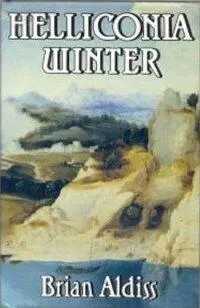
- Название:Helliconia Winter
- Автор:
- Издательство:Jonathan Cape
- Жанр:
- Год:1985
- ISBN:0-224-01847-7
- Рейтинг книги:5 / 5. Голосов: 1
-
Избранное:Добавить в избранное
- Отзывы:
-
Ваша оценка:
Helliconia Winter: краткое содержание, описание и аннотация
Предлагаем к чтению аннотацию, описание, краткое содержание или предисловие (зависит от того, что написал сам автор книги «Helliconia Winter»). Если вы не нашли необходимую информацию о книге — напишите в комментариях, мы постараемся отыскать её.
Helliconia Winter — читать онлайн бесплатно полную книгу (весь текст) целиком
Ниже представлен текст книги, разбитый по страницам. Система сохранения места последней прочитанной страницы, позволяет с удобством читать онлайн бесплатно книгу «Helliconia Winter», без необходимости каждый раз заново искать на чём Вы остановились. Поставьте закладку, и сможете в любой момент перейти на страницу, на которой закончили чтение.
Интервал:
Закладка:
The polyhedrons left no track. They sailed where they would. They moved slowly, but nothing could stop them, although brave men tried to. They were christened geonauts.
The geonauts multiplified and sailed the Earth.
The geonauts provided a new wonder. The old wonder remained. The great conchlike auditoria were still scattered across Earth, maintained by androids who had found no other function, having been pro- grammed to none.
On the holoscreens, the spring of the Great Year turned to summer just as the snows of Earth were dying. The history of the beautiful Myrdemlnggala, known as the Queen of Queens, was familiar to all. The new race found much to learn from that thousand-year-old story.
They attended. They gloried in the benevolent effect their empathy had on the gossies. But their own new world was calling urgently, with a fresh beauty that could not be resisted. A thousand years of spring was theirs.
But what of that unprecedentedly magnificent, quantally different something — that empathic Unking of two worlds? Were its traces visible to those capable of looking for signs?
So to the case of New Earth:
On the other planets also, some slight recovery had been made. There were no Mother Natures on the dead worlds of Mars and Venus. Their surface temperatures were generally intolerable, their atmospheres coffins full of carbon dioxide. Yet the unfortunate colonists who had settled there managed to survive, by wits and by technology.
These Outlanders had succumbed to a psychosis regarding Earth. Their generations were smothered by cosmic anomie. To Earth they would never return. They felt themselves dispossessed.
When advanced technology was again within their power—and they were quicker to solve technical problems than social ones — they built a starship and set off for the nearest planet which mankind had colonised earlier, so-called New Earth.
This was an all-male expedition. The men left their women at home, preferring to take with them on their journey svelte robotic partners, styled as abstract ideals of womanhood. They enjoyed coupling with these perfect metal images.
New Earth retained breatheable air. Its one small ocean remained surrounded by desert — desert and inhospitable mountain ranges. There was a spaceport on the equator, with a city nearby. The spaceport had not b een in use for ages. Nor had the city grown; the roads from it led nowhere. People lived in the city knowing nothing of that great ocean of space above their roofs.
The New Earthers were like neutered animals. Something vital and rebellious had gone from their spirits. They had no aspirations, no feeling for the immensities of space, no love for the world that was their home, no tremulous intimations at dawn and sunset. The degenerate language they spoke had no conditional tense. Music had been entirely lost as an art.
Hardly surprising. Their world was without spirit.
These New Earthers occasionally visited the shores of their salt sea. The visits were not to refresh themselves but to collect cartloads of the kelp which grew in the sea. The kelp was one of the few living things on the planet. The people of New Earth spread it on their fields, growing cereals brought from Earth ages previously.
They did not dream because they existed on a world which had never nurtured a Gaia figure. But they had a myth. They believed that they lived in a giant egg, of which the desert was the yolk and the cloudless sky was the shell. One day, said the myth, the sky would crack and fall. Then they would be born. They would acquire yellow wings and white tails, and they would fly to a better place, where trees like giant seaweeds grew everywhere in pleasant vales and it always rained.
When the Outlanders arrived, they did not like New Earth much.
They flew to examine the neighbouring planet, like New Earth the size of a terrestrial planet.
Whereas New Earth was a world of sand, its sister was a world of ice.
An observation drone was sent out to take computer-corrected photographs of the surface and of what lay below the ice.
It was a forbidding world. Glaciers engulfed mountain ranges. Trackless snowfields filled the lowlands. Helliconia in the grip of apastron winter was never as dead as this rigid globe.
The reconnaissance photographs showed frozen oceans beneath the ice. More. They showed the ruins of great cities and the routes of as-tonishly wide roads.
The Outlanders descended to the surface. Below an icefield remains of a vast building could be glimpsed. Fragments of it lay about the surface; some fragments had been carried far from source by the glacier. By blasting, the men got down to a sector of the ruins.
One of the first artefacts they brought up was a head, carved in a durable artificial material. The head was of an inhuman creature. In a slender tapering skull four eyes were set, lidless. Small feathers lay under the eyes. A short beak counterbalanced the backward thrust of the skull.
One side of the head was blackened.
“It’s beautiful,” a robot partner said.
“Ugly, you mean.”
“It was once beautiful to someone.”
Dating was not difficult. The city had been destroyed 3.2 thousand years earlier, at a time when New Earth was being strenuously colonised.
The whole planet had been destroyed by nuclear bombardment, and the avian race had perished with it.
The Outlanders called this planet Armageddon. They remained on the frigid surface for some while, discussing what should be done, spellbound by melancholy.
One of the powerful leaders spoke. “I think we might agree that we have found here on Armageddon an answer to one of the questions which has plagued mankind for many generations.
“How was it that when man went into space, he found no other intelligent species? It was always assumed that the galaxy would be full of life. Not so. How was it that there were scarcely any other planets like Earth?
“Well, we do realise that Earth is a pretty unusual place, where a number of fine specifications are met. Take just one example — the amount of oxygen in Earth’s atmosphere is close to twenty-one percent. If it was twenty-five percent or over, forest fires would be started by lightning — even damp vegetation would burn. On New Earth, the oxygen percentage is eighteen; there are no plants to lock away the carbon dioxide and release oxygen molecules. No wonder the poor boobies there live in a dream.
“Nevertheless, statistics suggest that there must be other planets like Earth. Maybe Armageddon was one. Suppose a race with a wide-ranging diet reaches supremacy and dominates the planet, as happened on Earth before the nuclear war. That race must use technology to do so — from the club and bow-and- arrow onwards. It masters the laws of nature.
“The time comes when technology is advanced enough for the race to choose alternatives. It can put out into space, or it can destroy its enemies with nuclear weapons.”
“Suppose there are no enemies on the planet?” someone called.
“Then the race invents them. The pressure of competition which technologies generate makes enemies necessary, as we know. And there’s my point. At that stage, poised for a whole new way of life, no longer to be confined to the planet of its birth, on the brink of major discoveries — right then that race is set the big examination question: Can I develop the international social skills required to bring my aggression under control? Can I excel myself and make a lasting truce with my enemies, so that we throw away these vile weapons for good and all?
Читать дальшеИнтервал:
Закладка:
Похожие книги на «Helliconia Winter»
Представляем Вашему вниманию похожие книги на «Helliconia Winter» списком для выбора. Мы отобрали схожую по названию и смыслу литературу в надежде предоставить читателям больше вариантов отыскать новые, интересные, ещё непрочитанные произведения.



Обсуждение, отзывы о книге «Helliconia Winter» и просто собственные мнения читателей. Оставьте ваши комментарии, напишите, что Вы думаете о произведении, его смысле или главных героях. Укажите что конкретно понравилось, а что нет, и почему Вы так считаете.