Brian Aldiss - Helliconia Winter
Здесь есть возможность читать онлайн «Brian Aldiss - Helliconia Winter» весь текст электронной книги совершенно бесплатно (целиком полную версию без сокращений). В некоторых случаях можно слушать аудио, скачать через торрент в формате fb2 и присутствует краткое содержание. Год выпуска: 1985, ISBN: 1985, Издательство: Jonathan Cape, Жанр: Фантастика и фэнтези, на английском языке. Описание произведения, (предисловие) а так же отзывы посетителей доступны на портале библиотеки ЛибКат.
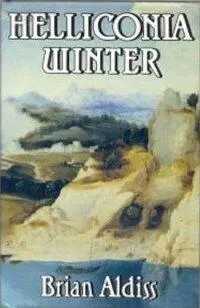
- Название:Helliconia Winter
- Автор:
- Издательство:Jonathan Cape
- Жанр:
- Год:1985
- ISBN:0-224-01847-7
- Рейтинг книги:5 / 5. Голосов: 1
-
Избранное:Добавить в избранное
- Отзывы:
-
Ваша оценка:
Helliconia Winter: краткое содержание, описание и аннотация
Предлагаем к чтению аннотацию, описание, краткое содержание или предисловие (зависит от того, что написал сам автор книги «Helliconia Winter»). Если вы не нашли необходимую информацию о книге — напишите в комментариях, мы постараемся отыскать её.
Helliconia Winter — читать онлайн бесплатно полную книгу (весь текст) целиком
Ниже представлен текст книги, разбитый по страницам. Система сохранения места последней прочитанной страницы, позволяет с удобством читать онлайн бесплатно книгу «Helliconia Winter», без необходимости каждый раз заново искать на чём Вы остановились. Поставьте закладку, и сможете в любой момент перейти на страницу, на которой закончили чтение.
Интервал:
Закладка:
Aganip was a lifeless planet, with an atmosphere consisting almost entirely of carbon dioxide, together with a little nitrogen. But the old base still stood, and offered something of a welcome.
The escapers built a small dome. There they lived in restricted circumstances. At first they sent out signals to Earth and then—being naturally unwilling to wait two thousand years for an answer — to the Avernus. But the Avernus had its own problems and did not reply.
The escapers had failed to understand the nature of mankind: that it, like the elephant and the common daisy, is no more and no less than a part and function of a living entity. Separated from that entity, humans, being more complex than elephants and daisies, have little chance of flourishing. The signals continued automatically for a long while.
No one heard.
XII
KAKOOL ON THE TRAIL
Ad when that massed human spirit we have called empathy reached out across space and communicated with the gossies of Helliconia, what then? Did nothing important happen—or did something unprecedentedly magnificent, something quantally different, happen?
The answer to that question will perhaps remain forever clouded in conjecture; mankind has its umwelt, however bravely it strives to enlarge that confining universe of its perceptions. To become part of a greater umwelt may prove biologically impossible. Or perhaps not. It must be sufficient to admit that if something unprecedentedly magnificent, something quantally different, happened, it happened in a greater umwelt than mankind’s.
If it happened, then it was a cooperation, and perhaps a cooperation of various factors not unlike the cooperation forced on differing individuals on the trail to Kharnabhar.
If it happened, then it left an effect. That effect can be traced by looking at the contrasting fates of Earth, where Gaia resided, and New Earth, which was without a tutelary biospheric spirit…
To start with the case of Earth, after which New Earth was named:
The intermission between the two postnuclear ice ages has been understood as the swing of a pendulum. Gaia was trying to regulate her clock. But it was less simple than that, just as the biosphere was less simple than the mechanism of a clock. The truth may be put more accurately. Gaia had been almost terminally ill. She was now convalescent, and subject to relapses.
Or, abandoning the dangers of personifying a complex process, it may be said that the carbon dioxide released by the deep oceans initiated a period during which the ice retreated. At the end of the period of greenhouse heating, there was an overshoot of the return to normal, as the whole biosphere and its ruined biosystems strove for adjustment. The ice returned.
This time, the cold was less severe, the spread of the ice caps less extensive, and the duration of the cold briefer. The period was marked by a series of oscillations, in the way that a clock’s pendulum gradually slows to a stationary median position. It was a time of discomfort for many generations of the thin-spread human race. In the remission in the 69005, for instance, there was a small war in what had once been India, followed by famine and pestilence.
Could that trivial war be likened to a convalescent’s tantrum?
The restlessness of the period awoke a corresponding restlessness in the human spirit. Fences were no longer going to be possible. The old world of fences had died, and was never going to be rebuilt.
“We belong to Gaia.” And with the declaration went the understanding that human beings were not exactly Gaia’s best allies. To see those best allies, a microscope was needed.
Throughout the ages—and long before the invention and development of nuclear weapons—there had been those who prophesied that the world would end because of man’s wickedness. Such prophecies were always believed, no matter how many times they had been proved wrong in the past. There was a wish for, as well as a fear of, punishment.
Once nuclear weapons were invented, the prophecies gained plausibility, although now they were couched in lay terms rather than religious ones.
Evidence, the more convincing because governments tried to suppress it, proved that the world could be ended at the touch of a button.
Eventually, the button was touched. The bombs came.
But human wickedness proved too feeble to end the world. Set against that wickedness were industrious microbes of which wickedness took little cognisance.
Large trees and plants disappeared. The carnivores, including man, disappeared from the scene for a while. They were superfluous to requirements. These large beings were merely the superstars in Earth’s drama. The dramatists themselves still lived. Under the soil, on the s eabeds of the continental shelves, thick microbial life continued Gaia’s story, undisturbed by radioactivity or increased ultraviolet. The eco- systems of unicellular life were rebuilding nature. They were Gaia’s pulse.
Gaia regenerated herself. Mankind was a function in that regeneration. The human spirit was triggered into a quantum leap in consciousness.
As nature had formed a diverse unity, so now did consciousness. It was no longer possible for a man or woman merely to feel or merely to think; there was only empathic thinkfeel. Head and heart were one.
One immediate effect was a mistrust of power.
There were people who understood what the greed for power in all its forms had done to the world. That chill faded from the mind. Humanity began truly to be adult and to live and enjoy with adult com- prehension. Men and women looked about at the territory they happened to occupy and no longer asked, “What can we get out of this land?” Instead, they asked, “What best experience can we have on this land?”
With this new consciousness came less exploitive ties and more ties everywhere, an abundance of new relationships. The ancient structure of family faded into new superfamilies. All mankind became a loose-knit superorganism. It did not happen at once, nor did it happen to everyone. There were those who could not undergo the metamorphosis. But their genes were recessive and their strain would die away. They were the insensible in a new world of new empathies. They were the only ones not smiling.
When more generations passed, the new race could feel itself to be the consciousness of Gaia. The ecosystems of unicellular life had been given a voice — had, in a sense, invented a voice for themselves.
Even as this was happening, the convalescence of the biosphere continued. While humanity evolved, an entirely new type of being was born to the Earth.
Many phyla had vanished for ever. The cummerbund of tropical forest with its various myriad lives had withered from the equator under the nuclear onslaught. Its fragile soils had been lost into the oceans and could not be recovered. Now a replacement of a startlingly different kind came forth.
The new thing was not born of the oceans. It came from the snows and frosts of the arctic. It fed on ultraviolet radiation and it began moving southward as the glaciers began a fresh retreat northwards.
The first men to meet the new thing fell back in astonishment.
White polyhedrons were slowly advancing. Some of the shapes were no larger than giant tortoises. Others reached as high as a man’s head.
Beyond their various planes, they had no features. No visible means of movement. No arms or tentacles. No mouths of any kind. No orifices. No eyes or ears. No appendages whatsoever. Just white polyhedrons. Some sides were perhaps less white than others.
Читать дальшеИнтервал:
Закладка:
Похожие книги на «Helliconia Winter»
Представляем Вашему вниманию похожие книги на «Helliconia Winter» списком для выбора. Мы отобрали схожую по названию и смыслу литературу в надежде предоставить читателям больше вариантов отыскать новые, интересные, ещё непрочитанные произведения.







Обсуждение, отзывы о книге «Helliconia Winter» и просто собственные мнения читателей. Оставьте ваши комментарии, напишите, что Вы думаете о произведении, его смысле или главных героях. Укажите что конкретно понравилось, а что нет, и почему Вы так считаете.