Robert Sawyer - Watch
Здесь есть возможность читать онлайн «Robert Sawyer - Watch» весь текст электронной книги совершенно бесплатно (целиком полную версию без сокращений). В некоторых случаях можно слушать аудио, скачать через торрент в формате fb2 и присутствует краткое содержание. Год выпуска: 2010, ISBN: 2010, Издательство: Ace Books, Жанр: Фантастика и фэнтези, на английском языке. Описание произведения, (предисловие) а так же отзывы посетителей доступны на портале библиотеки ЛибКат.
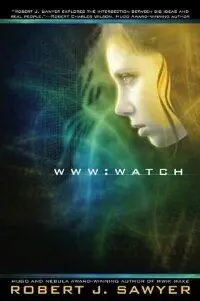
- Название:Watch
- Автор:
- Издательство:Ace Books
- Жанр:
- Год:2010
- ISBN:978-0-441-01818-5
- Рейтинг книги:5 / 5. Голосов: 1
-
Избранное:Добавить в избранное
- Отзывы:
-
Ваша оценка:
Watch: краткое содержание, описание и аннотация
Предлагаем к чтению аннотацию, описание, краткое содержание или предисловие (зависит от того, что написал сам автор книги «Watch»). Если вы не нашли необходимую информацию о книге — напишите в комментариях, мы постараемся отыскать её.
WATCH is convinced that Webmind represents a risk to national security and wants it purged from cyberspace. But Caitlin believes in Webmind’s capacity for compassion—and she will do anything and everything necessary to protect her friend.
Watch — читать онлайн бесплатно полную книгу (весь текст) целиком
Ниже представлен текст книги, разбитый по страницам. Система сохранения места последней прочитанной страницы, позволяет с удобством читать онлайн бесплатно книгу «Watch», без необходимости каждый раз заново искать на чём Вы остановились. Поставьте закладку, и сможете в любой момент перейти на страницу, на которой закончили чтение.
Интервал:
Закладка:
“Matt,” Caitlin replied.
Bash feigned not having heard correctly. “I’m sorry. I thought you said Matt.”
They were standing by the row of sinks. “I did.”
“Guy you were helping in math? Matt—what is it? Matt Royce?”
“Reese, and, yes, that’s him—although he hardly needed my help. He knows almost as much as I do.”
“Um, Cait, babe, I know you’re new to this seeing thing, but…”
“Yes?”
“He’s not exactly good-looking.”
“He’s symmetrical.”
“Sure he is—that harelip bisects his face nicely.”
“I like the way he looks. I like his eyes.”
Another girl came into the room and headed for one of the stalls. Bashira lowered her voice. “I know when you fall off a horse, you’re supposed to get right back on—but they don’t mean an actual horse, you know. You can do so much better.”
“Better than someone who shares my interests? Someone who is kind?”
Bashira pointed at the long sheet-metal mirror above the sinks. “Cait, have you looked at yourself in the mirror?”
“From time to time.”
“You’ve got it going on, girl. You’re hot.”
“Well, that’s nice, I suppose, but—”
“You could have anyone.”
“Is that all anybody cares about? How people look?”
“Well, no, but…”
“Besides, my mother and I were talking about this earlier. I get to choose who I find attractive.”
“You can’t just choose that,” Bashira said.
“No? What are you going to do when you get married? Your parents are going to arrange a marriage for you, right?”
“Well, that’s what they want to do, yes,” said Bashira.
“So, what if it’s someone you don’t find attractive at first? Are you going to go through life thinking he’s ugly, or are you going to choose to find him good-looking?”
“I… I don’t know,” Bashira said. “I don’t think you can… can program yourself that way.”
“Oh, yes, you can,” said Caitlin. “You totally can.”
“But, anyway, it’s not just about what you think,” Bashira said. “It’s about what other people think about Matt’s looks. They’ll judge your stature by who you’re with.”
“It isn’t all about hierarchies,” said Caitlin. “We’re not apes, you know.”
“But, Cait, don’t you see? You could have Trevor.”
“I don’t want him. Not anymore. I want Matt.” And then she added, unkindly, “You can have Trevor.”
Another facial expression Caitlin had never seen before, but she imagined it was what books referred to as looking crestfallen. “No, I can’t,” Bashira said softly after a moment. “You know that. My parents would kill me. I—I have to live vicariously through you.”
Caitlin was startled when the words Join the club flashed across her vision.
Caitlin had missed a lot of school already, what with the trip to Japan to have the implant inserted behind her eye, with the days she’d spent after gaining sight learning to interpret what she was seeing, and with the press conference to announce Dr. Kuroda’s success. But when she had gone to school, she’d always eaten in the cafeteria—and she knew that was where Trevor ate, too. And so when she and Matt rendezvoused outside the cafeteria’s doors, she said, “Why don’t we go somewhere else for lunch?”
He lifted his pale eyebrows. “Um, sure, okay. How ’bout Timmy’s?”
“What’s that?”
Matt smiled. “Right, right. You’re new to Canada. ‘Timmy’s’ is Tim Hortons. It’s, like, the number-one donut chain here—but they’ve also got good sandwiches, soups, and stuff like that. There’s one just a block away.”
Caitlin had heard the company’s commercials on TV, and, huge hockey fan that she was, she knew who Tim Horton had been: twenty-two seasons as a defenseman in the NHL, playing for the Leafs, the Rangers, the Penguins, and the Sabres.
They went by their lockers to dump stuff and get their jackets. Caitlin told Matt not to bother to lug his math textbook along, which made him smile—and then they headed outdoors. The sky was filled with clouds. As they walked along, Matt fell in on Caitlin’s right side, but that was the side she was blind on. Suddenly, stupidly, she didn’t want to explain that fact—she didn’t want to be anything less than perfect just then. And so she let him walk on that side, and she turned her head probably more often than was normal so that she could see him now and then.
As they came close to the donut shop, and she looked at the big sign, she was puzzled. The name was written in a kind of script that was difficult for her to read, but the one thing she should have been able to pick out—the apostrophe—seemed to be missing. “I don’t understand,” she said. “Why is it Hortons, plural?”
Matt laughed. “Well, it used to be Tim Horton’s—possessive, with an apostrophe- s. But, see, an apostrophe- s makes it English. And Quebec has this law against English-language signs. So lots of companies changed their names so they could use the same signage across Canada. ‘Tim Hortons’ without an apostrophe is just a name—not English or French—so it’s allowed. But look at that Wendy’s over there.” He pointed across the street.
“Which one is it?”
“Sorry. The building on the left.”
“Yes?” said Caitlin.
“Look at the end of the name.”
“Oh! What the heck is that?”
“It’s a maple leaf. Where they’d have the apostrophe in the name in the States, they’ve got a maple leaf here. Applebee’s and Denny’s do the same thing: A-p-p-l-e-b-e-e, maple leaf, s, and D-e-n-n-y, maple leaf, s.”
“This is one wack-job country you got here, Matt.”
He laughed again. “We make it work somehow. I mean, it’s a small thing for English Canada, and it makes French Canada happy, so why the heck not? Yeah, the cloning of Tim Horton is kinda crazy, I’ll give you that. But all the maple leaves are cool.”
They went into the Hortons, and Matt read the menu to her, explaining what kinds of sandwiches they offered—she could have read it herself, given time, but there were people in line behind them. She ordered chicken salad on a whole-wheat bun, a chocolate glazed donut, and a Coke. He ordered sliced turkey on a regular bun and a small coffee.
Caitlin opened her wallet—and found herself pausing to stare. She still had her bills folded in distinctive ways so that she could tell a five from a ten from a twenty by touch. But now she could read the large, clear numerals on the Canadian bills—not to mention see that the five was blue, the ten purple, and the twenty green. Would wonders never cease?
Realizing she was holding up the line, Caitlin handed over a ten, took her change, and then followed Matt to a table in a corner—one of those modular ones with chairs attached to it. “So,” she said, after some chitchat that she had to admit was pretty lame, “do you—um, do you have a girlfriend?” She was amazed at how dry her mouth had suddenly become.
She was surprised to see him appear—hurt, perhaps? Like maybe he thought she was teasing him. But at last he said simply, “No.”
She looked away, in case she was making him uncomfortable, and pleased herself by the figurative and—at that precise moment, literal—truth of her reply: “I’m not seeing anyone, either.”
He took a bite of his sandwich, and she took a bite of hers. She was afraid to say anything else, but—
But she was Barbara Decter’s daughter, for Pete’s sake! And her mother had told her, years ago, when Caitlin had asked about her parents’ relationship, that she had asked her father out the first time, and, eighteen months later, that it had been her, not him, who had popped the big question.
Читать дальшеИнтервал:
Закладка:
Похожие книги на «Watch»
Представляем Вашему вниманию похожие книги на «Watch» списком для выбора. Мы отобрали схожую по названию и смыслу литературу в надежде предоставить читателям больше вариантов отыскать новые, интересные, ещё непрочитанные произведения.




Обсуждение, отзывы о книге «Watch» и просто собственные мнения читателей. Оставьте ваши комментарии, напишите, что Вы думаете о произведении, его смысле или главных героях. Укажите что конкретно понравилось, а что нет, и почему Вы так считаете.