Hal Clement - Heavy Planet
Здесь есть возможность читать онлайн «Hal Clement - Heavy Planet» весь текст электронной книги совершенно бесплатно (целиком полную версию без сокращений). В некоторых случаях можно слушать аудио, скачать через торрент в формате fb2 и присутствует краткое содержание. Город: New York, Год выпуска: 2002, Издательство: Orb Books, Жанр: Фантастика и фэнтези, на английском языке. Описание произведения, (предисловие) а так же отзывы посетителей доступны на портале библиотеки ЛибКат.
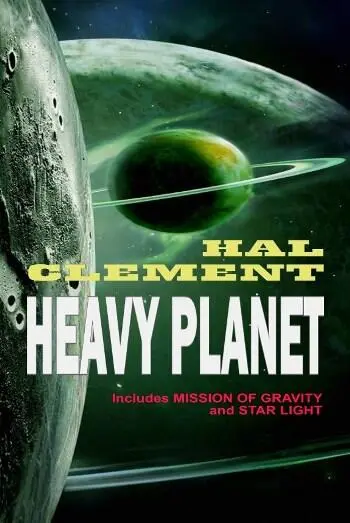
- Название:Heavy Planet
- Автор:
- Издательство:Orb Books
- Жанр:
- Год:2002
- Город:New York
- ISBN:нет данных
- Рейтинг книги:4 / 5. Голосов: 1
-
Избранное:Добавить в избранное
- Отзывы:
-
Ваша оценка:
Heavy Planet: краткое содержание, описание и аннотация
Предлагаем к чтению аннотацию, описание, краткое содержание или предисловие (зависит от того, что написал сам автор книги «Heavy Planet»). Если вы не нашли необходимую информацию о книге — напишите в комментариях, мы постараемся отыскать её.
Hal Clement is a Grand Master of SF, and the one most associated with the subgenre of hard SF. From his classic stories in Astounding in the 1940s through his novels of the 1950s and on to the recent
, he has made a lasting impression on SF readers, and on writers, too. For many of them, Clement’s work is the model of how to write hard SF, and this book contains the reasons why. Here are all the tales of bizarre, unforgettable Mesklin: the classic novel
and its sequel,
, as well as the short stories “Under” and “Lecture Demonstration.” Also included is “Whirligig World,” the famous essay Clement published in Astounding in 1953. It describes the rigorous process he used to create his intriguingly plausible high-gravity planet, with its odd flattened shape, its day less than eighteen minutes long, and its many-limbed, noble natives. Come to Mesklin and learn why
called
“one of the best loved novels in SF.”
Heavy Planet — читать онлайн бесплатно полную книгу (весь текст) целиком
Ниже представлен текст книги, разбитый по страницам. Система сохранения места последней прочитанной страницы, позволяет с удобством читать онлайн бесплатно книгу «Heavy Planet», без необходимости каждый раз заново искать на чём Вы остановились. Поставьте закладку, и сможете в любой момент перейти на страницу, на которой закончили чтение.
Интервал:
Закладка:
“I’m afraid there is, Doctor,” pointed out Estnerdole. “You can’t get into the tank. It’s lying on its right side, with the door underneath. Unless there is some outside connection you can reach to replenish the oxygen in your armor, you are rather limited in your supply.” The man was silent for several seconds, except for a brief muttering which the students could not make out clearly. “You’re right, Es,” he said at last. “It is an emergency after all, for me. Do you suppose you people are strong enough to turn the tank right side up?” The Mesklinites were somewhat doubtful, but clustered around to try. LaVerne, who shared the exaggerated idea of Mesklinite physical strength which was so common among human beings, was not surprised when the vehicle stirred under their efforts; indeed, he was disappointed when it lofted only a few millimeters. After some seconds it settled back where it had been, and one of the students reappeared from the narrow space underneath. “We can move it, but that’s all. We’d have to get this side up several body lengths before it would rock over the right way, and there’s nothing to stand on.” Destigmet wriggled into view behind the speaker. “I can think of only two things to do, and you’ve already suggested one of them,” he said. “The first is for someone to start climbing again. The other is for us to lift the tank once more, while you pack snow under it to hold it up and let us get a fresh purchase. Maybe we can work it up that way before you run out of air.”
“All right,” agreed LaVerne. “It would be better if I had something to serve as a shovel, but let’s get at it. I’m using oxygen just standing here worrying.” For a while it looked possible, if not really hopeful. Carrying the dusty snow in his armored hands proved impractical, but he found that he could do fairly well pushing a mass of it ahead of him as he crawled — and crawling was far easier than trying to walk. Essentially, he was sweeping rather than carrying. He managed to get what would have been several shovelfuls, if he had had a shovel, against the space at the edge of the tank where the Mesklinites had disappeared once more. At his call they strained upward again, and as quickly as he could he pushed the material into the widening space. “That’s all,” he reported when he had done his best, and the students relaxed again. So did the pile of snow. LaVerne, optimistic by nature, felt sure that the tank had not settled quite back to its original position, and kept trying; but after an hour which left him more exhausted than he had ever felt in his three Earth years on Mesklin, he had to admit that the idea was qualitatively sound but quantitatively inadequate. During those days, the student who was trying to climb the slope had made little progress. Once he had gotten nearly a third of the way before sliding most of the way back in a smother of white dust; four or five times he had lost the fight in the first yard or two. The rest of his attempts came between those limits. But it finally became evident that the man’s air was not going to be the real limiting factor. Destigmet pointed out another one to him. “Some time ago, Doctor, one of your fellows taught us about a fact he claimed was very basic — the Law of Conservation of Energy. If I have the terminology right, we can apply very large forces by your standards, but as that law should tell you, there is a limit to the amount of work we can do without food. None of us expected to need food in this class, and we brought none with us.” One of the others cut in. “Won’t people from the College start looking for us anyway? This class should have been over days ago.” LaVerne frowned invisibly behind the blood-stained face plate, which he had no means of cleaning. “They’ll be looking, but finding us will be another story,” he said. “They’d expect to see the tank miles away on the smooth surface of the peninsula. When they don’t, they’ll think we got swept into the sea, or went off to the forest country for some reason. They won’t look over this area closely enough to find the hole we left, I suspect. It’s possible we’ll get out of this with their help, but don’t count on it.” Estnerdole suddenly became excited. “Why not build a tower we can climb, with the water ice from the cliff? We can chip it out easily enough without tools, or even melt it out with the snow — no, that wouldn’t leave us any to work with, but—” His voice trailed off as more difficulties became apparent to him. LaVerne was pessimistic, too, after the just-completed practical demonstration of how much material would be needed even to prop up the tank. Then he brightened. “We could use the ice to get this machine upright — big chunks of it would be more practical and easier to move than the snow. Of course, even that doesn’t get us any closer to getting out of here; the tank certainly isn’t going to climb this sandhill even if I get into it. If only—” He paused, and the ensuing silence stretched out for long seconds. Even with the man hidden in his armor, the listeners got the impression that something had happened. Then he spoke again, and his tone confirmed the suspicion. “Thanks, Es. That does it. Start digging ice, gentlemen. We’ll be out of here in a couple of hours!” Actually, it took less than three days.
“You look bothered,” remarked Thomasian, LaVerne’s department head. “Delayed shock from your narrow escape, or what?”
“It wasn’t that narrow,” replied the teacher. “I had hours of air still in the suit when the spinner picked us up, and we could have worked the tank upright to get at more if I had needed it. You’d have searched the area closely enough to find that hole sooner or later.”
“Later would probably have been too late — and the really narrow squeak I was thinking of was the fall. Fifteen meters under three gees — sooner you than me. If it hadn’t been for that snow bank, we’d have had to cut you out of the flattened remains of that tank — not that it would have been worth doing. Of course any of your students should have been able to think of tossing pieces of water ice over the slope, especially after you’d discussed with them why the cuesta was so deeply undercut. So should you, for that matter—”
“Hogback,” LaVerne responded almost automatically. “Sure, all sorts of ideas are obvious afterward. At the time, I wasn’t quite sure that this one would work, even if I did sound as enthusiastic as I could and even though I did have experience to go by. Still, I was afraid it would simply melt holes in the slope; but it went fine. The liquid formed where the two ices met just soaked into the surrounding snow, spreading out and diluting the water ice until the mixture’s melting point came up to the local temperature again — and froze into a continuous mass. It was hard enough for Estnerdole to climb out and go for help in less than an hour, I’d guess; I didn’t actually time it.”
“What was the experience you could go by? And if it was so easy and safe, what’s bothering you?”
“The same thing. A teaching problem. They claim that Mesklinite psychology is enough like ours for teaching techniques to be about the same, effectively. They expect us to — er—‘relate’ new facts to known experience.”
“Of course. So?”
“So the experience in question should obviously be one familiar to the students, not just the teacher. What sparked this idea for me was the memory of sugar getting lumpy in the bowl when it gets damp. You know, I’m just a little shaky on the local biochemistry, chief — tell me: what do Mesklinites use for coffee, and what do they put in it?”
STAR LIGHT
1: PIT STOP
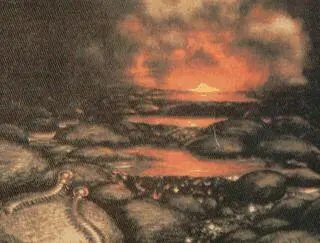
Beetchermarlf felt the vibrations die out as his vehicle came to a halt, but instinctively looked outside before releasing the Kwembly’s helm. It was wasted effort, of course. The sun, or rather, the body he was trying to think of as the sun, had set nearly twenty hours before. The sky was still too bright for stars to be seen, but not bright enough to show details on the almost featureless dusty snow field around him. Behind, which was the only direction he could not see from the center of the bridge, the Kwembly’s trail might have provided some visual reference; but from his post at the helm there was no clue to his speed. The captain, stretched out on his platform above and behind the helmsman, interpreted correctly the latter’s raised head. If he was amused, he concealed the fact. With nearly two human lifetimes spent on Mesklin’s unpredictable oceans he had never learned to like uncertainty, merely to live with it. Commanding a “vessel” he did not fully understand, travelling on land instead of sea and knowing that his home world was over three parsecs away did nothing to bolster his own self-confidence, and he sympathized fully with the youngster’s lack of it. “We’re stopped, helmsman. Secure, and start your hundred-hour maintenance check. We’ll stay here for ten hours.”
Читать дальшеИнтервал:
Закладка:
Похожие книги на «Heavy Planet»
Представляем Вашему вниманию похожие книги на «Heavy Planet» списком для выбора. Мы отобрали схожую по названию и смыслу литературу в надежде предоставить читателям больше вариантов отыскать новые, интересные, ещё непрочитанные произведения.


Обсуждение, отзывы о книге «Heavy Planet» и просто собственные мнения читателей. Оставьте ваши комментарии, напишите, что Вы думаете о произведении, его смысле или главных героях. Укажите что конкретно понравилось, а что нет, и почему Вы так считаете.