Walter Tevis - Mockingbird
Здесь есть возможность читать онлайн «Walter Tevis - Mockingbird» весь текст электронной книги совершенно бесплатно (целиком полную версию без сокращений). В некоторых случаях можно слушать аудио, скачать через торрент в формате fb2 и присутствует краткое содержание. Город: London, Год выпуска: 2007, ISBN: 2007, Издательство: Gollancz, Жанр: Фантастика и фэнтези, на английском языке. Описание произведения, (предисловие) а так же отзывы посетителей доступны на портале библиотеки ЛибКат.
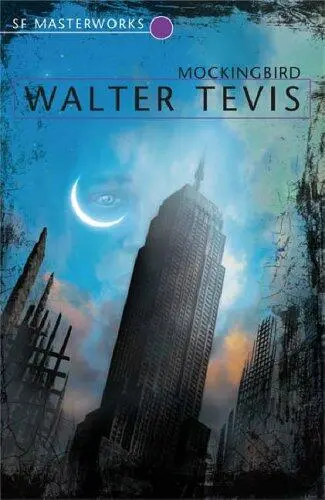
- Название:Mockingbird
- Автор:
- Издательство:Gollancz
- Жанр:
- Год:2007
- Город:London
- ISBN:978-0575079151
- Рейтинг книги:5 / 5. Голосов: 1
-
Избранное:Добавить в избранное
- Отзывы:
-
Ваша оценка:
Mockingbird: краткое содержание, описание и аннотация
Предлагаем к чтению аннотацию, описание, краткое содержание или предисловие (зависит от того, что написал сам автор книги «Mockingbird»). Если вы не нашли необходимую информацию о книге — напишите в комментариях, мы постараемся отыскать её.
Mockingbird
Review
From the Inside Flap “A moral tale that has elements of Aldous Huxley’s
,
, and
.”
—
“Set in a far future in which robots run a world with a small and declining human population, this novel could be considered an unofficial sequel to
, for its central event and symbol is the rediscovery of reading.”
—
“Because of its affirmation of such persistent human values as curiosity, courage, and compassion, along with its undeniable narrative power,
will become one of those books that coming generations will periodically rediscover with wonder and delight.”
—
“I’ve read other novels extrapolating the dangers of computerization but Mockingbird stings me, the writer, the hardest. The notion, the possibility, that people might indeed lose the ability, and worse, the desire to read, is made acutely probable.”
—
bestselling author ANNE MCCAFFREY “Walter Tevis is science fiction’s great neglected master, one of the definitive bridges between sf and literature. For those who know his work only through the movies, the lucid prose and literary vision of
and
will come as a revelation.”
—AL SARRANTONIO, Author of
saga
Mockingbird — читать онлайн бесплатно полную книгу (весь текст) целиком
Ниже представлен текст книги, разбитый по страницам. Система сохранения места последней прочитанной страницы, позволяет с удобством читать онлайн бесплатно книгу «Mockingbird», без необходимости каждый раз заново искать на чём Вы остановились. Поставьте закладку, и сможете в любой момент перейти на страницу, на которой закончили чтение.
Интервал:
Закладка:
“Yes, your honor.” The clerk turned and walked slowly out of the room. He limped badly, with one of his legs almost dragging behind him.
A few minutes later he returned with a pail of water and a sponge. He walked up to the judge and, dipping the sponge in water, began wiping off the judge’s face. Some of the yellow dust smeared, but most of it came off. Then he began cleaning the judge’s hands, slowly and awkwardly.
Spofforth appeared impatient. I did not know that there was such a thing as an impatient robot; but Spofforth was tapping a foot audibly. Then, abruptly, he strode to the seated judge, stooped, picked up the hem of the judge’s robe, and shook it vigorously. Dust flew everywhere. As it began to settle I saw that the spider web was gone.
Then Spofforth stood back and faced the judge. He told the clerk to stop and he stopped immediately, leaving a greenish stain on the judge’s left hand, still folded in his lap.
“Your services will not be needed for this hearing,” Spofforth told the clerk. “I will record the proceedings myself. While the hearing is in progress you may phone General Maintenance to send a City Cleaning and a City Repair robot immediately.”
The clerk looked at Spofforth stupidly. I think he was a Make Three—green lobes—and they are only a bit above moron robots. “The telephone doesn’t work,” he said.
“Then walk to General Maintenance. It’s about five blocks from here.”
“Walk?” the robot said.
“You clearly know how. Do you know where to go?”
“Yes, sir.” The clerk turned and began to limp toward the door. Spofforth said, “Wait,” and then, “Come here.”
The clerk turned around, came to him, and stood facing him. Spofforth bent down, took the clerk’s left leg in his hand, felt of it a moment, and then gave it an abrupt wrench. Something inside it made a heavy scraping sound. Spofforth stood up. “Now go,” he said.
And the clerk walked out of the court with his gait perfectly normal.
Spofforth turned and faced the judge again. The judge was cleaner now, but a bit streaked and rumpled.
“I call the court to session,” Spofforth said, just as our Civics class had taught us any citizen could do. They had never said anything about robots doing it, though. They had told us how important courts were for protecting our sacred rights to Privacy and Individuality, and how helpful a judge could be, but you somehow got the idea that it was a good idea to stay away from courts altogether.
The judge’s head came awake, although the rest of him remained motionless. “Who calls the court?” he said, in a deep, grave voice.
“I am a Make Nine robot,” Spofforth said quietly, “programmed for Detection and so empowered by the Government of North America.”
The rest of the judge woke up at that. He adjusted his robe, ran fingers through his grayish hair, then placed his chin in his hand and said, “The court is in session. What is the citizen robot’s request?”
Citizen robot? I had never heard that term before.
“A criminal case, Judge,” Spofforth said. “The defendant will give his name.” He turned to me. “Say your name, title, and place of residence.” And then, nodding toward the Truth Hole, “Be careful.”
I had almost forgotten about the Truth Hole. I avoided looking at it and said carefully, “My name is Paul Bentley. I am Professor of Mental Arts at Southeast Ohio University and my official residence is at Professor House on campus. Currently I live at the Arts Library of New York University, where I am temporarily employed by the Dean of Faculties.” I did not know whether I should say that Spofforth was the dean I worked for, but I did not.
“Very good, son,” the judge said. He looked at Spofforth. “What is the criminal charge?”
“There are three charges,” Spofforth said. “Cohabitation, Reading, and the Teaching of Reading.”
The judge looked at him blankly. “What is Reading?” he said.
Spofforth said nothing for a moment. Then he said, “You are a Make Seven, designed in the Fourth Age. Your Legal Program would not contain the charge. Consult your archives.”
“Yes,” the judge said. He flipped a switch on the arm of his huge chair and a voice somewhere said, “This is the Archives of Law for North America,” and the judge said, “Is there a civil crime called Reading? And is it a different crime to teach the first crime?”
The archives voice was a long time replying. I had never heard a computer take so long. Or maybe it was merely the way I felt. Finally the voice came back and said, “Reading is the subtle and thorough sharing of ideas and feelings by underhanded means. It is a gross invasion of Privacy and a direct violation of the Constitutions of the Third, Fourth, and Fifth ages. The Teaching of Reading is equally a crime against Privacy and Personhood. One to five years on each count.”
The judge switched off the computer. Then he said, “This is clearly a grave business, young man. And you are charged with Cohabitation also.” Then, to Spofforth, “With what has he cohabited? Man, woman, robot, or beast?”
“With a woman. They have lived together for seven weeks.”
The judge nodded and turned to me. “That is not as grave as the other, young man. But it is a serious risking of Individuality and Personhood and it has been known often to lead to far more serious behavior.”
“Yes, Judge,” I said. I started to say that I was sorry, but I realized just in time that I was not at all sorry—just frightened. I could have lost a finger.
“Is there anything else?” the judge asked Spofforth.
“No.”
The judge looked at me. “Take your hand from the Honesty Regulator and rise and face the court.”
I took my hand out of the Truth Hole and stood.
“How do you plead, guilty or not guilty?” the judge said.
No longer having my hand in the box, I could have lied. But then I supposed my hand would be put back in if I said “not guilty” and we proceeded to have a trial. And, indeed, I have found out from another prisoner here that that is exactly the case. Almost everyone pleads guilty.
I looked at the judge and said, “Guilty.”
“The court commends your honesty,” the judge said. “You are sentenced to six years in the North American Penitentiary, at hard labor for the first two years.” The judge lowered his head slightly and looked at me sternly. “Come forward,” he said.
I walked up to his chair. He rose, slowly, and then reached out his arms. His large hands, one still with the green stain, grasped my shoulders. I felt something stinging my skin, like a drug in-jection. And I went unconscious.
I awoke in this prison.
That is all I can write today. My writing hand and arm ache from what I have already written. Besides, it is late and I must do physical work tomorrow.
DAY NINETY
My room—or “cell”—at the prison is not much bigger than a small thought bus, but it is comfortable and private. I have a bed, a chair, a lamp, and a TV wall with a small library of recordings. The only recording I have played so far is of a dance-and-exercise program, but I did not feel like dancing and took the BB out of the holder before the program was finished.
There are about fifty other prisoners in identical cells in the same building; we all leave for work together after breakfast. In the mornings I work in a prison shoe factory. I am one of fourteen inmate inspectors. The shoes are made, of course, by automatic equipment; my job is to examine one shoe out of each fourteen for flaws. A moron robot watches over us and I have been warned that if I do not pick up a shoe after the man on my left picks one up, each time, I will be punished. I have found that it is not really necessary to look at the shoe, so I do not. I merely pick up one out of each fourteen.
Читать дальшеИнтервал:
Закладка:
Похожие книги на «Mockingbird»
Представляем Вашему вниманию похожие книги на «Mockingbird» списком для выбора. Мы отобрали схожую по названию и смыслу литературу в надежде предоставить читателям больше вариантов отыскать новые, интересные, ещё непрочитанные произведения.





Обсуждение, отзывы о книге «Mockingbird» и просто собственные мнения читателей. Оставьте ваши комментарии, напишите, что Вы думаете о произведении, его смысле или главных героях. Укажите что конкретно понравилось, а что нет, и почему Вы так считаете.